Fenton Free Library expands adaptive yoga for elders and mobility-limited
Learn how the library added chair- and mat-based adaptive yoga with slower cues, props, and low-cost access to support older adults and people with limited mobility.

1. New adaptive yoga series launched at Fenton Free Library
The Fenton Free Library recently launched an expanded adaptive yoga program designed to make movement more accessible to local residents. The initiative adds both chair- and mat-based class options and adjusts pacing so everyone, including elders and people with mobility limitations, can participate safely and comfortably. This community-driven change reflects the library’s role as a low-barrier wellness hub, not just a place for books.
2. Chair-based sessions for seated practice
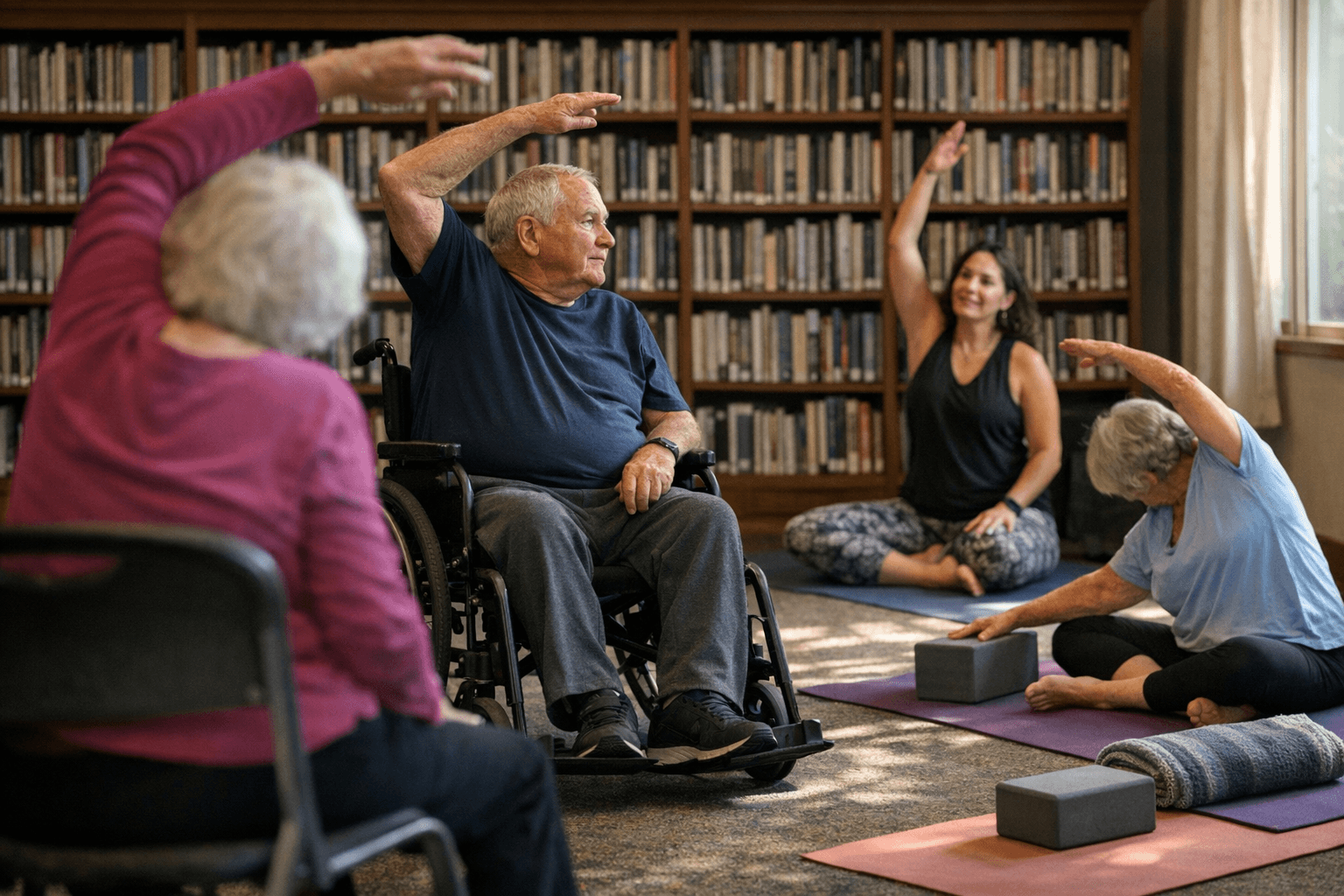
Chair yoga sessions allow participants to explore flexibility, breath work, and gentle strength while seated, reducing fall risk and removing the need to get up and down from the floor. Instructors lead modified poses and transitions that can be done from a standard chair, making sessions ideal for people with balance issues, chronic pain, or limited hip and knee mobility. These classes keep the focus on breath-led relaxation and mobility rather than advanced postures, so newcomers can feel confident joining.
3. Mat-based adaptive classes with gentle options
Mat-based adaptive classes remain available but are tailored with extra options, shorter holds, alternative entries and exits for poses, and accessible transitions to kneeling or seated positions. Instructors emphasize safe alignment and offer prop-assisted variations so participants can work on flexibility and strength at their own pace. The mat sessions bridge restorative and therapeutic approaches, giving people who can use mats a chance to build gentle stability and joint range.
4. Slower pacing and clearer verbal cues
A core adjustment in these offerings is deliberately slower pacing and the use of slower verbal cues to guide movement and breath. The instructional style prioritizes clarity, timing each movement with the breath and allowing extra seconds for participants to respond and reposition. For community members with hearing or processing differences, the slowed cadence and repetition reduce confusion and make instruction more inclusive.
- a sturdy chair for seated balance and transitions
- blocks to reduce reach and support standing poses
- straps to extend reach safely
5. Props and assistive tools emphasized
Classes make regular use of accessible props, blocks, straps, bolsters, folded blankets, and chairs, to support alignment and reduce strain. Typical setups might include:
These props turn challenging poses into achievable options and let instructors meet a wide spectrum of abilities within a single group.
6. Focus on breath-led relaxation and gentle strength
Organizers stress breath-led relaxation as a central benefit, pairing mindful breathing with slow movement to calm the nervous system and reduce stress. Gentle strength-building is integrated through functional movements that support everyday tasks, standing up from a chair, reaching, and basic balance work. Together, these elements help participants improve mobility while feeling less intimidated by traditional yoga language and pace.
7. Clear target audience: older adults and mobility-limited residents
The program is explicitly aimed at older adults and people with limited mobility, making it a dedicated space for those who often find general community classes too fast or physically demanding. By designing sessions around common aging concerns, arthritis, balance decline, low back stiffness, the library ensures practical benefits for daily life. This clarity in audience also helps potential participants know the class environment will be patient, respectful, and paced for their needs.
8. Community access: free or low-cost and hosted locally
A key advantage is community access: classes are offered through the library at no or low cost, lowering financial and logistical barriers to participation. Hosting at a trusted local institution removes intimidation many feel about gyms or private studios, and it creates a regular, reliable schedule for seniors and caregivers. The library setting also encourages cross-program participation, so attendees might pair yoga with other social or learning events.
9. Social connection built into programming
Beyond physical benefits, the program emphasizes social connection: small-group formats and consistent meeting times foster friendships and reduce isolation. For many elders, the chance to chat before or after class and see familiar faces weekly is as valuable as the movement session itself. That social thread strengthens community resilience and gives participants additional motivation to keep attending.
10. Media coverage and available video report
The expansion was featured in a short video report, which includes instructor interviews and footage of an adaptive class in action. The story’s page lists the publication date and links to the broadcast segment, offering readers a quick visual primer on what to expect before they attend. Watching the segment is a practical way to preview class tone, instructor style, and the setup so you can decide which session fits your needs.
11. How to prepare and what to expect when you attend
When you plan to join, wear comfortable clothes, bring water, and, if you have them, a yoga mat and any personal support devices you use daily (cane, etc.). Expect instructors to offer multiple versions of each pose and encourage you to choose options that feel safe; they’ll often ask about comfort and prior injuries at the start. If you’re unsure which class to pick, start with a chair session and ask staff about drop-in policies and schedules.
12. Practical takeaway for readers and community next steps
This programming shows how civic spaces can diversify health offerings to meet real, local needs, your library can be a wellness partner. If you’re interested, call or visit the Fenton Free Library to check schedules and confirm cost, or watch the broadcast segment to get a feel for the class. Attend with curiosity and an open breath: small, consistent movement plus social connection can yield tangible improvements in flexibility, relaxation, and daily confidence.
Know something we missed? Have a correction or additional information?
Submit a Tip