India Launches 10 Yoga Protocols to Combat Diabetes, Hypertension, and Heart Disease
India's AYUSH ministry unveiled 10 yoga protocols at Yoga Mahotsav 2026, prescribing 30-60 minute daily sessions for diabetes, hypertension, and heart disease.
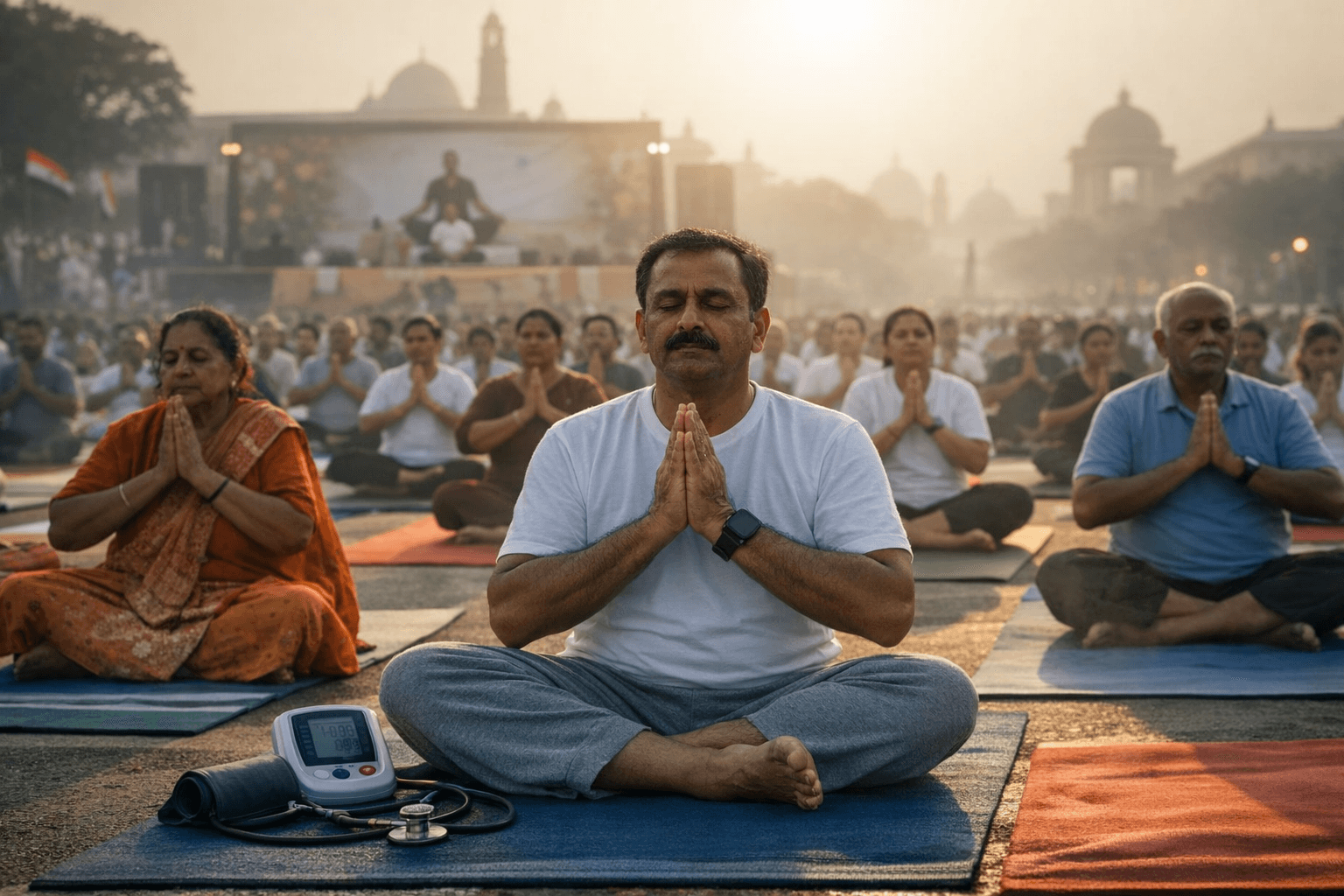
Union Ayush Minister Prataprao Jadhav launched 10 structured yoga protocols for non-communicable diseases at Yoga Mahotsav 2026 in New Delhi, giving yoga practitioners with chronic conditions the first nationally standardized framework for therapeutic practice. The protocols, titled "Yoga Protocol for Non-Communicable Diseases and Target Groups," cover diabetes mellitus, hypertension, cardiovascular disease, bronchial asthma, obesity, and several other population-specific target groups, and were presented at Vigyan Bhawan as part of the ministry's 100-day countdown to the 12th International Day of Yoga.
Each of the 10 modules is built around progressive daily sessions of 30 to 60 minutes, combining asanas, pranayama, breathwork, meditation, and guided relaxation. The framework is not one-size-fits-all: every protocol includes condition-specific safety considerations, contraindications, and adaptations for varying fitness and health levels. The diabetes module, for example, emphasizes metabolic-supportive postures and breathwork targeting glycaemic regulation, while cardiac and respiratory modules prioritize gentle mobilization, breathing retraining, and monitored progression rather than exertion-based flows.
The protocols were developed at the Morarji Desai National Institute of Yoga, which holds WHO Collaborating Centre status for Traditional Medicine (Yoga) under the designation WHOCCIND-118. That institutional standing matters: it means the framework was built with reference to clinical trials, MDNIY research output, and international evidence standards, rather than being purely tradition-derived. Jadhav framed the launch explicitly as a shift in national health strategy, saying the protocols aim "to shift the focus from illness to wellness, reducing long-term healthcare pressures."
For the roughly 77 million Indians living with diabetes and the tens of millions managing hypertension, the practical question is whether these protocols are ready to follow without clinical supervision. The short answer, from the published evidence and the ministry's own framing, is: not entirely. The modules are designed for integration into primary-care outreach and supervised wellness programs, not for independent self-prescription. Each protocol specifies contraindications, and several, including the cardiac module, call for monitored progression, meaning a qualified yoga therapist or clinician should be in the loop before someone with a recent cardiac event begins increasing intensity.
The wider evidence base for yoga in NCD management is promising but uneven. A 2024 systematic review and meta-analysis published in PLOS One found that yoga shows potential as a concomitant treatment for arterial hypertension, but concluded that evidence quality remains low, largely because most randomized controlled trials rely on single-point clinical blood pressure readings rather than the multi-session measurements current guidelines require. The diabetes literature is similarly mixed: multiple Indian and international trials show reduced medication dependence and improved fasting glucose after structured yoga programs, but few are large-scale or long-duration enough to drive clinical guidelines.
That gap is precisely what the MDNIY framework is designed to help close. By standardizing modules across conditions, the initiative creates a basis for outcomes research, instructor training, and eventually insurer or public-health program adoption. Observers have noted that without independent outcome monitoring and rigorous referral pathways, wide clinical rollout carries real risk, particularly if practitioners or instructors treat "evidence-informed" as equivalent to "clinically validated for self-use."
The framework is publicly available through AYUSH and MDNIY channels. If you carry a diagnosis of any of the 10 target conditions, the most responsible first step is bringing the relevant protocol to your physician and a certified yoga therapist before modifying your practice around it. The modules give them, and you, a common language and a structured starting point that did not exist before April 1.
This article was produced by Prism’s automated news system from verified source data, official records, and press releases, then run through automated quality and moderation checks before publishing. The system is built and supervised by the people who set the standards it runs under. Read our full AI policy.
Did this article answer your question?