India's MDNIY Earns WHO Yoga Research Centre Status Through 2029
New Delhi's MDNIY has been re-designated as a WHO Collaborating Centre through 2029, hosting 53 delegates from the Second WHO Global Summit on Traditional Medicine.
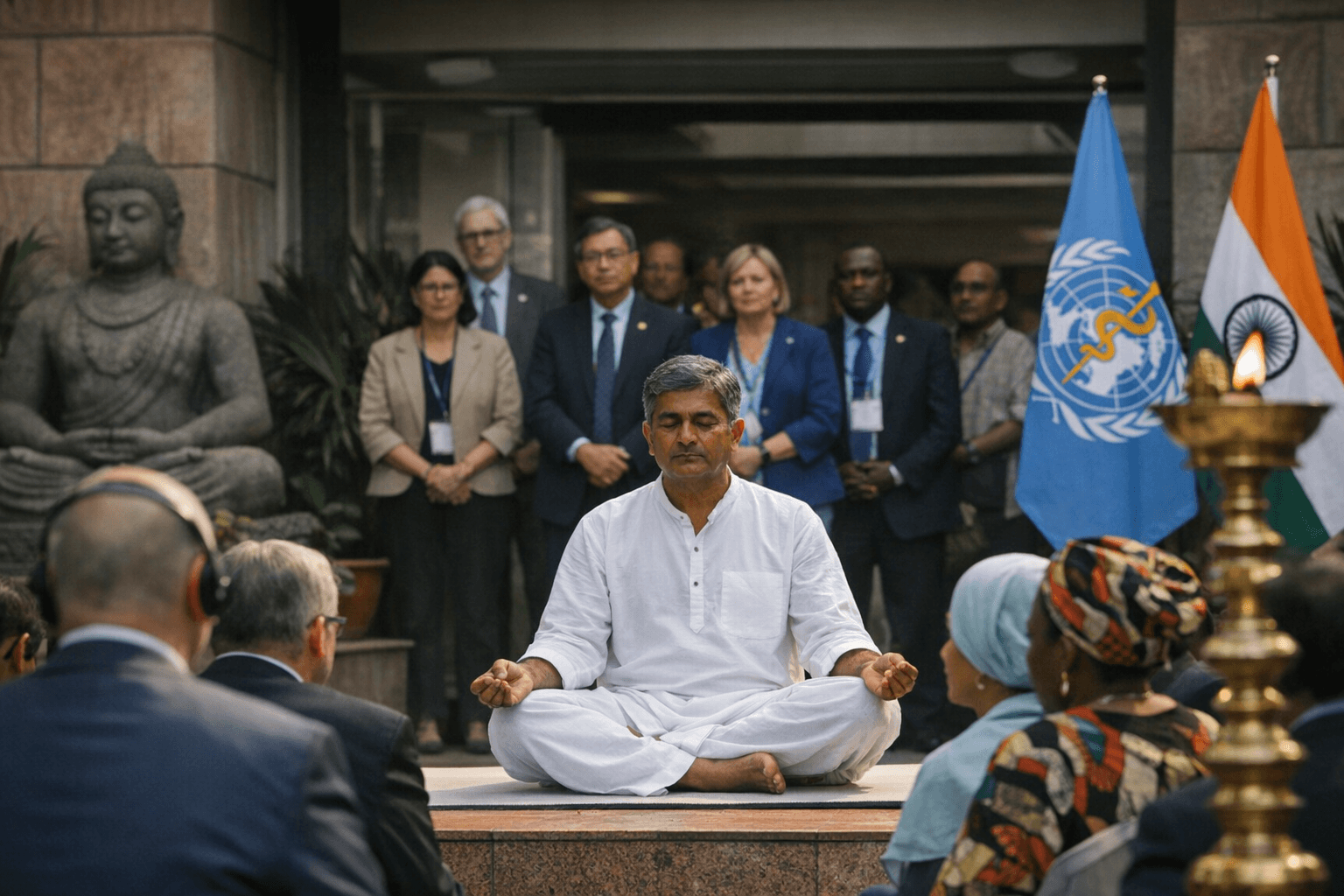
The Morarji Desai National Institute of Yoga has secured its place at the center of global yoga science, earning re-designation as a WHO Collaborating Centre for Traditional Medicine (Yoga) for the 2025-2029 term. The New Delhi institute, operating under India's Ministry of Ayush, has held this status under WHO SEARO since April 2013, and the renewed mandate now aligns its work directly with the WHO Traditional Medicine Strategy 2025-2034.
The re-designation arrives as MDNIY deepens a research agenda focused squarely on noncommunicable diseases. Working alongside partners including AIIMS Delhi, Lady Hardinge Medical College, the Central Council for Research in Unani Medicine, and the Institute of Nuclear Medicine & Allied Sciences, Delhi, the institute is developing technical guidelines and advancing research on yoga-based interventions for diabetes, obesity, and stress-related disorders. Unnamed international organisations are also contributing to that effort, with the stated goal of demonstrating yoga's potential as a scalable, cost-effective, and evidence-backed tool for preventive healthcare.
That framing, yoga as public health intervention rather than cultural heritage alone, was on full display in December when a delegation of 53 participants visited MDNIY as part of the Second WHO Global Summit on Traditional Medicine. MDNIY Director Dr Kashinath Samagandi led a presentation for the group, emphasizing what he called the seamless integration of yoga with modern medicine and its reach into sectors like defence and education.
The delegates also toured the institute's NABH-accredited OPD, research wing, and library. For many, it was their first direct look at how India has built institutional infrastructure around yoga as a medical discipline. Dr Tibo Jean-Marie Compaore, who works with a traditional medicine centre in Burkina Faso, came away encouraged: "I am very happy that WHO has brought in this global summit on traditional medicine," he said, adding that he planned to share his experience at MDNIY when he returned home.
Kinga Jamphel, Director General of Bhutan's Ministry of Health, connected the visit directly to NCD management priorities his country shares. "We came to understand how MDNIY has strengthened in various areas like research and yoga therapy over the years, especially in the treatment of non-communicable diseases," Jamphel said. "For us, this visit was a valuable learning experience and we are also looking forward to the collaboration."
Union Minister Prataprao Jadhav has also emphasized research and digital innovation as pillars of the institute's expanded role, though no technical guidelines have yet been published and no clinical outcome data from MDNIY's intervention research has been made publicly available. The 2025-2029 designation period will be the measure of how far that research agenda actually travels.
This article was produced by Prism’s automated news system from verified source data, official records, and press releases, then run through automated quality and moderation checks before publishing. The system is built and supervised by the people who set the standards it runs under. Read our full AI policy.
Did this article answer your question?