Major Study Finds Dance Outperforms Yoga and Antidepressants for Depression Relief
A 218-trial BMJ meta-analysis found dance scored nearly double yoga's effect size for depression relief; here's what the gap means for your practice.
Dance outscored antidepressants, yoga, and every other exercise modality tested in a network meta-analysis of 218 clinical trials, with University of Queensland lead researcher Michael Noetel attributing the gap to a combination that most yoga sessions don't replicate: rhythm, sustained exertion, and live social connection.
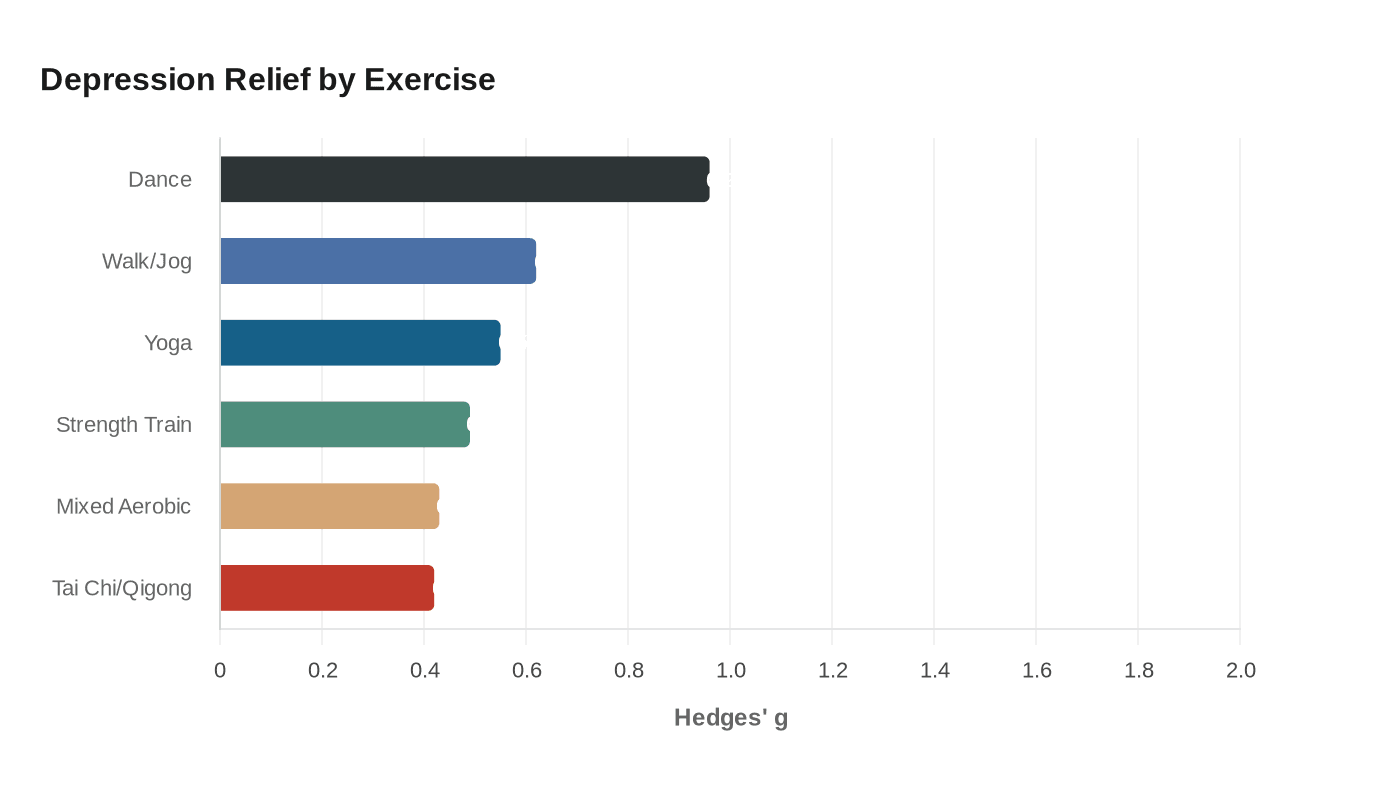
The study, published in The BMJ in February 2024, pulled data from 14,170 participants across 495 trial arms. Dance posted a Hedges' g of -0.96 against active controls, nearly double yoga's clinically meaningful score of -0.55, and higher than walking or jogging (-0.62), strength training (-0.49), mixed aerobic exercise (-0.43), and tai chi or qigong (-0.42). "Between the physical activity, social interaction, and the infusion of music, I'm not surprised that dance performed well," Noetel said.
The gap isn't an indictment of yoga. Yoga and strength training earned the highest acceptability ratings of all modalities tested, based on the lowest participant dropout rates. A -0.55 effect size is a legitimate, measurable antidepressant outcome. The question the data raises is narrower: which specific variables drove dance's number that high, and how many are currently missing from a standard yoga class?
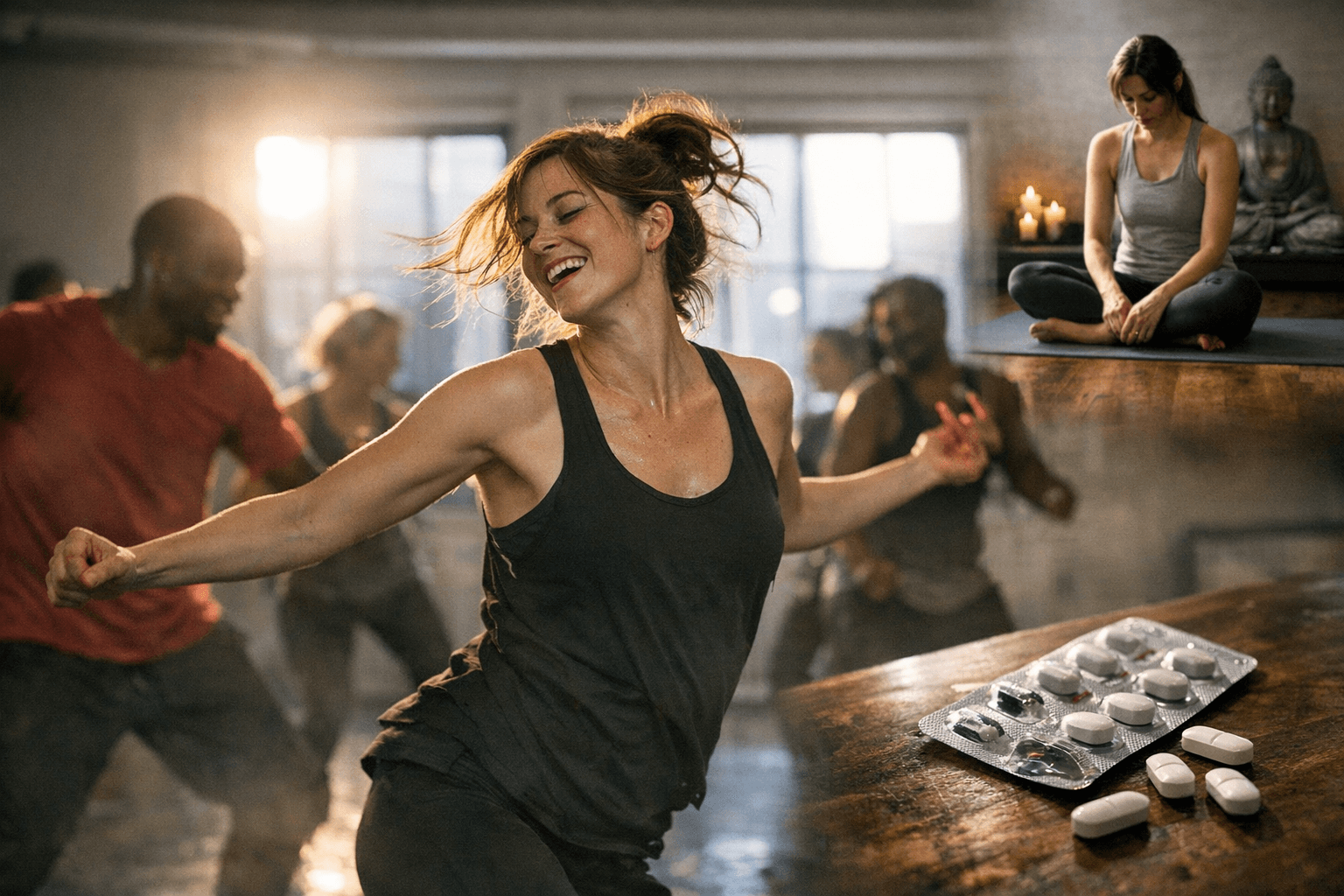
The answer points to three mechanisms. Cardiovascular intensity drives neurotransmitter release, particularly dopamine and serotonin, at a volume that slow or restorative flows rarely achieve. Music synchronizes movement with an external rhythmic signal, a neurological trigger that yoga's breath-paced sequences approximate but don't fully replicate. And co-presence in a shared physical experience generates social bonding effects that solo home practice cuts entirely.
Only 15 of the 218 trials focused specifically on dance, and Noetel noted that researchers called for more large-scale studies before dance could be considered a standalone treatment. That caveat carries practical weight for anyone managing diagnosed depression: exercise of any kind, yoga included, is an adjunct to professional care, not a replacement.
For practitioners whose yoga functions as mood maintenance rather than clinical treatment, the study maps the levers clearly. Committing to group Vinyasa or Power classes over solo home sessions captures the social variable. Practicing with a driving playlist and holding sequences long enough to sustain an elevated heart rate addresses the cardio and rhythm gaps. Neither change requires abandoning the practice's structural integrity; both make the neurochemistry work harder.
Yoga's highest-performing formats already combine breath, movement, and community in ways that closely approach what dance does measurably well. The Noetel meta-analysis is a precise tool for identifying which dials to turn.
This article was produced by Prism’s automated news system from verified source data, official records, and press releases, then run through automated quality and moderation checks before publishing. The system is built and supervised by the people who set the standards it runs under. Read our full AI policy.
Did this article answer your question?