New Moon Yoga Flow Blends Vinyasa, Sound Bath, and Reflection
A two-hour New Moon workshop folded vinyasa, breathwork, journaling, and a sound bath into one immersive reset built for both yogis and reflection-seekers.

What this kind of moon practice offers
Sound Waves: New Moon Yoga Flow and Sound Journey shows why moon-themed yoga keeps pulling people in: it gives you a clear structure, a strong seasonal frame, and a feeling that the evening is doing more than just filling a class slot. The format leaned into breath, music, reflection, and reset, which makes it feel part ritual, part wellness service, and part social outing.
The appeal is easy to understand. A standard yoga class asks you to move; this kind of event asks you to move, listen, write, settle, and leave with a different nervous system state than the one you brought in. That broader promise is exactly why these hybrid sessions keep showing up across wellness calendars.
How the evening was built
The workshop was described as a two-hour immersive experience, and that length matters. It is long enough to create a full arc, but short enough to feel approachable for people who want a special evening without committing to a retreat-style format. The sequence combined vinyasa yoga, meditation, gentle breathwork, journaling, intention setting, a live soundscape with healing instruments, and a restorative sound bath to close.
That order is part of the appeal. It begins with motion, moves into stillness, and ends with sound-assisted restoration. In other words, the class is designed to guide the body downshift by step, rather than asking participants to leap straight from a busy day into silence.
Why the new moon frame matters
The Aries New Moon framing gives the event a symbolic anchor, and that kind of timing is a major reason moon-based gatherings remain popular. A new moon naturally suggests reset, intention, and beginnings, which makes it a useful theme for people who like their wellness practice to feel tied to a larger cycle.
That symbolism also helps the event reach beyond a purely athletic yoga crowd. Experienced practitioners may come for the ritual structure and the intention-setting, while others may be drawn in more by reflection, atmosphere, and the promise of a guided evening that feels meaningful without requiring advanced poses.
Why sound bath yoga keeps growing
The pairing of yoga and sound work is one of the most visible crossover trends in modern wellness, and this event hits that lane directly. By combining movement, mindfulness, and sensory wellness in a single offer, it packages several popular desires into one experience: to stretch, to slow down, and to be carried by sound at the end.
That matters from a practical standpoint. People who might skip a routine drop-in class are often more willing to attend something that feels event-like, immersive, and special. The sound bath closes the loop by turning the final phase of the workshop into a recovery moment rather than a simple ending.
What you are really getting: spiritual branding, sensory wellness, or both
The strongest reading of this format is that it is both. The moon theme, the intention setting, and the reflective elements give the evening spiritual branding. The yoga sequencing, breathwork, and restorative soundscape make it a sensory wellness experience with real structure.
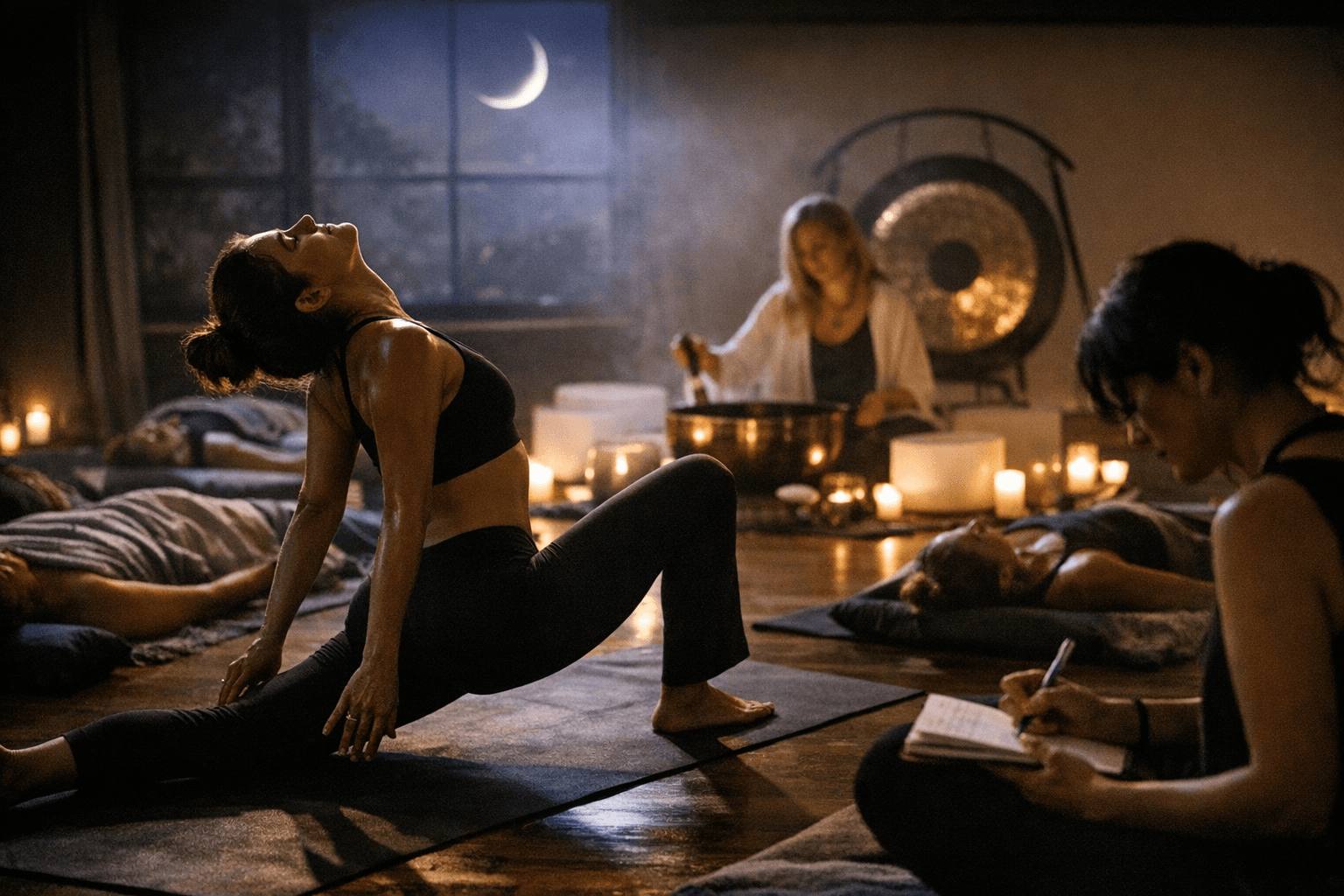
That blend is why these events work across different motivations. If you come for spirituality, the ritual language gives the night meaning. If you come for stress relief, the pacing and sound design do the heavy lifting. If you come for yoga, you get a practice that is less about output and more about regulation.
Who is most likely to value it
This kind of event will usually resonate with a few clear groups. It is a strong fit for regular practitioners who already understand vinyasa and want a softer, more reflective format. It is also likely to appeal to people who are curious about yoga but may not want a class that feels fitness-first.
The structure also makes sense for anyone looking for an intentional evening out rather than a quick drop-in. Because it includes journaling and intention setting, it works especially well for people who like to process what they are feeling instead of simply stretching through it. The atmosphere is likely to matter as much as the movement.
- People who want a guided reset instead of a high-energy workout
- Practitioners who like ritual, seasonality, and symbolic framing
- Wellness consumers who respond to sound baths and meditation
- Newer students who prefer a welcoming, experience-driven format
Why this format keeps appearing on local event platforms
From a business perspective, the model is efficient and easy to position. A two-hour workshop can carry more perceived value than a regular class because it feels curated, layered, and limited. That makes it attractive to studios and event organizers trying to stand out in a crowded wellness market.
It also reflects a bigger shift in yoga programming. Yoga is increasingly sold as an experience economy product, not just a class on a schedule. When a workshop includes vinyasa, meditation, breathwork, journaling, live instruments, and a sound bath, it can speak to people who are buying mood, atmosphere, and reset as much as they are buying instruction.
What to expect from a session like this
If you step into a moon-themed yoga flow like this, the practical expectation is a slow build. The movement portion should warm the body and settle attention, the breathwork and meditation should narrow the focus, and the journaling and intention setting should give the evening a reflective edge. The sound bath then acts as the final descent, helping the whole experience land.
That flow is why the format feels so complete. It does not stop at exercise, and it does not rely only on ambiance. Instead, it turns yoga into a full evening practice, one that uses movement and sound to make the reset feel deliberate.
The result is a format that keeps finding an audience because it understands what many yoga participants want now: less rush, more meaning, and a clear pathway from motion into stillness.
This article was produced by Prism’s automated news system from verified source data, official records, and press releases, then run through automated quality and moderation checks before publishing. The system is built and supervised by the people who set the standards it runs under. Read our full AI policy.
Did this article answer your question?