Prince-themed yoga classes turn movement into music and self-expression
Prince Practice turns a yoga class into shared movement, memory, and release, showing why artist-led formats can build real belonging.

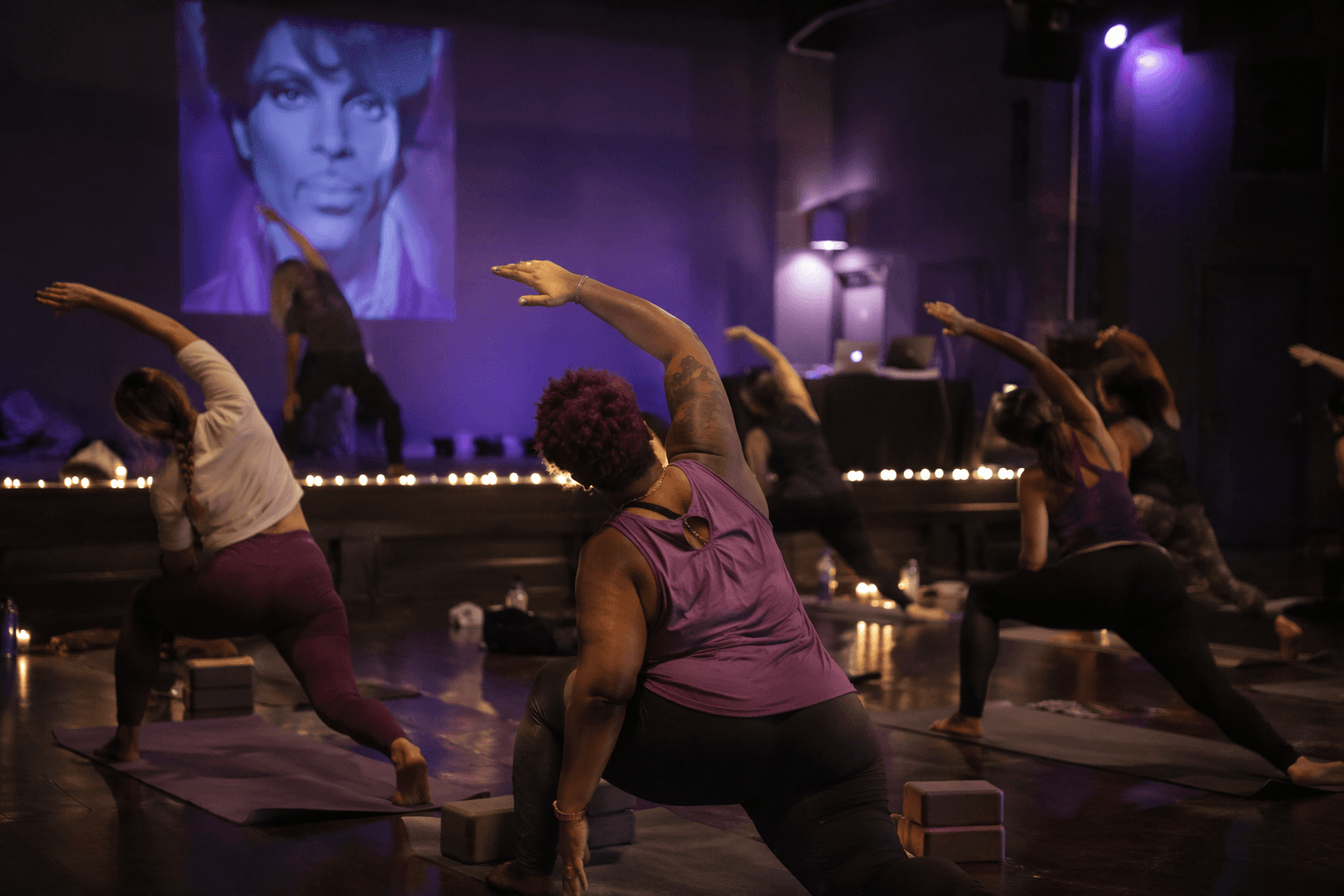
Prince-themed yoga is not just a clever playlist choice anymore. In Reggie Hubbard’s Prince Practice, the room moves through Warrior 2 and other familiar shapes while Prince’s music drives the pace, the energy, and the emotional temperature, turning a standard class into something closer to a communal performance. What looks playful at first quickly reveals a bigger point: music can help yoga feel more personal, more accessible, and more rooted in identity.
Why Prince gives the class its power
Prince Rogers Nelson carries a cultural weight that makes this format land differently than a generic tribute class. Born in Minneapolis on June 7, 1958, and gone on April 21, 2016, he helped define the Minneapolis Sound, a mix of R&B, funk, rock, pop, punk, and new wave that still feels unmistakably his. MNopedia says he sold more than 100 million albums, won seven Grammys, and an Oscar, which helps explain why his music can anchor a class that is meant to feel both celebratory and precise.
That history matters inside Hubbard’s seasonal structure. Prince Practice classes begin each year on April 21 and run through June 7, linking the practice to both the anniversary of Prince’s death and his birthday. The calendar gives the class more than novelty. It gives it a built-in rhythm of remembrance, making each session feel like part tribute, part reopening of creative energy.
How the class actually moves
The appeal of Prince Practice is not just that Prince is playing in the background. Hubbard actively cues movement, encouragement, and even air guitar, which changes the room from a sequence of shapes into an interactive event. The vibe is playful, but the structure is intentional: students are being invited to move, listen, and respond rather than simply follow along.
That is why the class can feel equal parts celebration and performance art. Hubbard shares little-known details about Prince, then brings students back to the body, reminding them to feel into the moment and move freely. The result is a practice that keeps yoga’s physical discipline intact while adding a stronger sense of personality and release.
The format also has a proven draw. Hubbard’s first online Prince-themed class, during the pandemic, brought in 120 people, including Prince’s nephew, President LenNard Nelson. That kind of turnout is a useful signal for studios and teachers watching how event-style yoga can pull in both loyal practitioners and people who are coming for the cultural hook.
The deeper reason it resonates
What gives Hubbard’s approach staying power is that he treats music as a route into presence, not a distraction from it. The class is built around intuitive movement, self-expression, and release that is both political and emotional. In other words, the music is not decoration. It becomes the cue that helps practitioners move through stress, memory, joy, and grief all at once.
That emphasis matches Hubbard’s own relationship to yoga. His yoga journey began in 2014, and he is now a 500-hour certified teacher. Before that, he worked in politics, serving as Congressional Liaison and senior political strategist for MoveOn from 2017 to 2021, with earlier roles tied to Kerry/Edwards 2004, the 2008 Democratic National Convention, and Bernie Sanders’ 2016 campaign. Those credentials help explain why his teaching is so comfortable with both activism and embodiment.
Hubbard has described yoga as something that helped him move anger into deep breathing, clarity, and compassion, after starting practice as an outlet for rage at societal inequalities. That arc is central to why Prince Practice feels like more than a themed workout. The class becomes a way to process stress without flattening it, which is a useful model for studios looking for programming that does more than fill a schedule.
What accessibility looks like in this model
Active Peace Yoga pushes that idea further by saying its mission is to make yoga accessible regardless of race, gender, body type, or practice level. It also says the work is meant to create healing space for individual healing and collective liberation. Those are not abstract branding lines in this context. They shape the way the class is presented, who it is meant to welcome, and why the format can feel less like a niche event and more like an open invitation.
Hubbard’s teaching profile also points to a broad reach beyond the usual studio crowd. He has taught Members of Congress, congressional staff, labor unions, healthcare leaders, and progressive organizations, and Active Peace Yoga notes partnerships with the Kripalu Institute, including grief and BIPOC male healing retreats. That range suggests he is using music-driven yoga not only as expression, but as a bridge across communities that do not always show up in the same room for a traditional class.
A recent studio event listing goes even further, describing a Prince tribute session as a quasi-dance party and an ecstatic, blissful experience. That language reflects a wider live-event culture around tribute yoga and sound-bath programming, where the class itself becomes the product, not just the afterthought.
- The strongest takeaways for studios are simple: center a real artist, not a random theme.
- Build the calendar around meaningful dates, as Prince Practice does with April 21 and June 7.
- Keep the cues active and embodied, so the class feels participatory rather than performative.
- Make accessibility explicit, so the room feels open to different races, bodies, genders, and experience levels.
When standard event coverage starts to blur together, this is the kind of class that cuts through. Prince Practice shows that a yoga room can hold memory, music, and movement at the same time, and that when the structure is thoughtful enough, a tribute class can become a genuine site of belonging.
This article was produced by Prism’s automated news system from verified source data, official records, and press releases, then run through automated quality and moderation checks before publishing. The system is built and supervised by the people who set the standards it runs under. Read our full AI policy.
Know something we missed? Have a correction or additional information?
Submit a Tip