Review finds yoga modestly lowers blood pressure in obesity, especially Asians
Yoga lowered blood pressure a little, not a lot. The clearest signal came from 23 Asian trials, with systolic pressure down 4.35 mmHg.

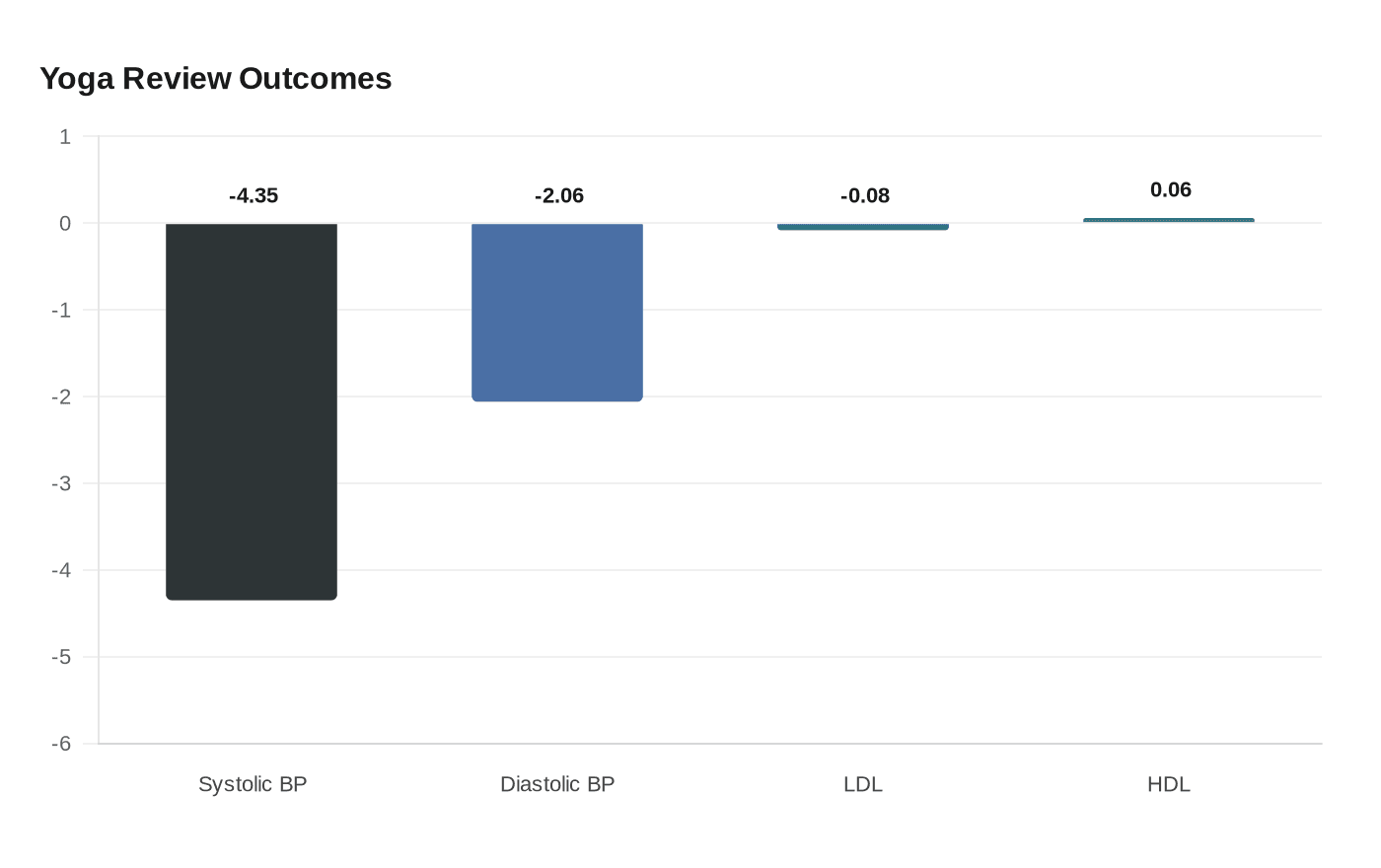
Yoga did not emerge as a cure for obesity-related heart risk, but it did move the numbers in the right direction. A review published April 22, 2026 in PLOS Global Public Health pooled 30 randomized controlled trials with 2,689 participants and found yoga was linked to an average 4.35 mmHg drop in systolic blood pressure and a 2.06 mmHg drop in diastolic pressure.
The gains were modest, which is the key point for anyone weighing yoga against diet changes, medication, or other exercise. The same review found only small shifts in lipids, with LDL cholesterol down 0.08 mmol/L and HDL cholesterol up 0.06 mmol/L. Signals for glucose control, redox balance, and inflammation were possible, but the evidence was uncertain, so the data do not show that yoga can reliably stand in for broader cardiometabolic treatment.
The strongest signal came from Asia. Twenty-three of the 30 studies were conducted in Asian countries, with the rest in the United States, Germany, and Australia. The review also used body mass index thresholds of more than 23 kg/m² in Asian countries and more than 25 kg/m² elsewhere to define overweight or obesity, reflecting the different cutoffs used in the studies it analyzed.
Subgroup analyses pointed to ethnic differences and dose-response effects, and the trials generally favored at least 180 minutes of yoga per week. Even so, the exact dose needed for benefit remains unclear, and the studies were not built to recruit people with obesity specifically. People with comorbidities such as diabetes or heart disease were excluded, which limits how far the findings can be stretched into more complicated real-world cases.
That matters when reading the headline result. The review supports yoga as a low-cost, accessible add-on for blood pressure and lipid management, especially in Asian populations, but not as proof that yoga alone can correct obesity-related cardiometabolic risk. The authors said the findings support including yoga in clinical guidelines for overweight or obesity, while also calling for more high-quality trials in both Asian and non-Asian populations before the results can be generalized with confidence.
The new data also fit a wider pattern. A 2022 systematic review and meta-analysis of 53 randomized trials with 13,191 participants found yoga was associated with lower total cholesterol, LDL cholesterol and triglycerides, along with a small rise in HDL. Taken together, the evidence keeps yoga in the category of helpful and practical, but still modest, alongside the rest of a heart-health plan.
This article was produced by Prism’s automated news system from verified source data, official records, and press releases, then run through automated quality and moderation checks before publishing. The system is built and supervised by the people who set the standards it runs under. Read our full AI policy.
Did this article answer your question?