Yoga and Tai Chi Deliver Similar Health Benefits, But Cultural Pathways Diverge
A new systematic review finds yoga and tai chi deliver comparable health benefits across cardiopulmonary function, pain, and anxiety, but their paths to global reach couldn't be more different.
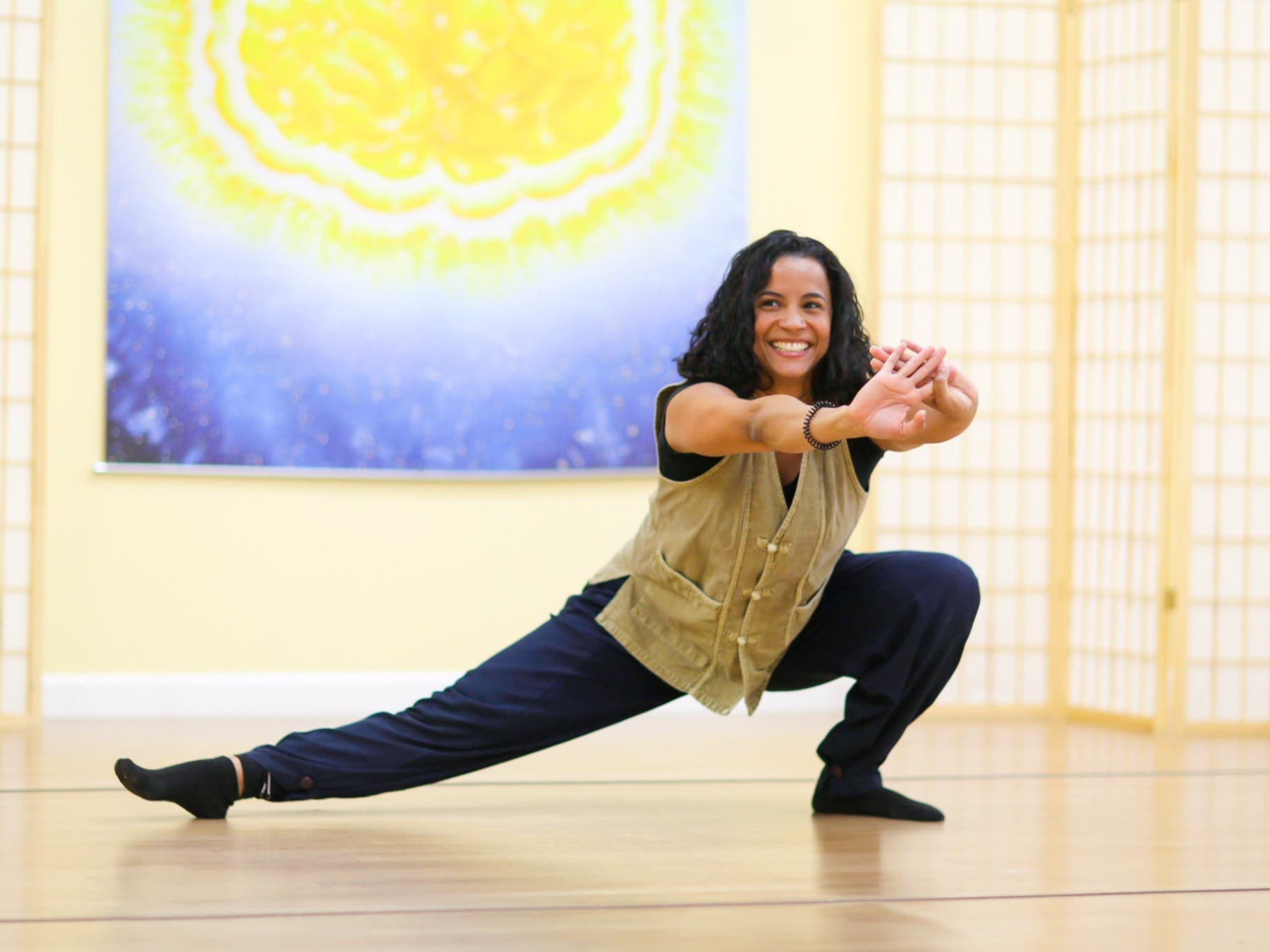
The escalating burden of non-communicable diseases has pushed researchers to look harder at cross-culturally adaptive interventions, and yoga and tai chi are both valuable mind-body practices whose distinct health governance pathways had never been systematically compared — until now.
A cross-cultural systematic review published in Frontiers in Public Health on March 23, 2026 set out to compare the health promotion effects of yoga and tai chi across cardiopulmonary function, chronic pain, and anxiety, and to evaluate their cultural dissemination pathways and sustainability performance. The final analysis included studies by category: cardiopulmonary function (112), chronic pain management (89), and mental health and anxiety reduction (73), alongside cultural and policy analysis.
Despite similar global trajectories, yoga and tai chi are rooted in distinct cultural and philosophical foundations. Yoga emphasizes individual spiritual growth, drawing on concepts like prana (vital energy) and dhyana (meditation), whereas tai chi embodies collective harmony through the Daoist concept of heaven and humanity. This ontological heterogeneity, the review argues, underpins their distinct cultural logics.
Those logics play out in strikingly different governance structures. Yoga, disseminated largely through commercial channels, has grown into a $42-billion global industry, whereas tai chi has followed a state-led path of standardization and institutionalization. The review formalizes this contrast with two explicit pathway labels: tai chi's trajectory is characterized as "state-led — institutional standardization — community embedding," while yoga's is labeled "networked — market-driven — individual adaptation." Tai chi was standardized as the 24-form simplified routine by the Chinese government in 1956 and was included in WHO chronic disease management strategies, reflecting exactly that institutional logic. Yoga's market-driven reach tells a different quantitative story: key indicators of yoga's global dissemination include strong social media influence with over 50 million Instagram hashtags, a global market size of $115 billion, and AI application coverage in 87 countries.
The comparative visualizations in the review's Figure 5 lay out the trade-offs across five scored dimensions: marketization, popularity, standardization, authenticity, and evidence level. The study's comparative framework examined health benefits by synthesizing clinical trial evidence, cultural sustainability by analyzing patterns in global digital and academic discourse, and policy integration models for scalability. Yoga leads in marketization and evidence volume, with yoga benefiting from a far larger and more mature body of clinical research, particularly in mental health, which must be accounted for in any comparative analysis to avoid systematic bias. Tai chi, meanwhile, scores higher on cultural authenticity and institutional support. Visualizations demonstrate tai chi's superior performance in cultural preservation across all dimensions, particularly in ritual practices (79.5 vs. 7.5%) and movement standardization (78.5 vs. 49.0%), while revealing yoga's adaptive advantages in modern terminology substitution (76%) and apparatus adaptation (72%).

To analyze how both practices spread globally, the review applied three cross-cultural communication frameworks: Appadurai's Global Cultural Flows theory, which excels in dynamism and applicability; Hobsbawm's Invention of Tradition theory, which shows advantages in constructiveness and criticality; and Hofstede's Cultural Dimensions model, which scores highest in quantifiability.
The review's conclusion resists ranking one practice above the other. The two practices are described as "not in a simple relationship of superiority or competition; rather, they offer complementary practice models for the global public health field, applicable to different governance structures and cultural contexts." India's market-driven AYUSH framework contrasts sharply with China's state-supported public provision model, and the review suggests that both frameworks carry lessons for public health systems worldwide, depending on whether a government prioritizes fidelity and scale or participation and personalization.
Comparative analyses of yoga and tai chi remain scarce, with existing research often confined to clinical domains or single cultural frameworks, which makes this synthesis a rare attempt to bridge the clinical and the cultural in a single head-to-head review. Whether policymakers take the bait and start treating governance model as a health variable is, for now, an open question.
This article was produced by Prism’s automated news system from verified source data, official records, and press releases, then run through automated quality and moderation checks before publishing. The system is built and supervised by the people who set the standards it runs under. Read our full AI policy.
Did this article answer your question?