Yoga Journal shares 15-minute yin practice for back pain relief
Less intensity may be the smarter move for tension-driven back pain, and Yoga Journal’s 15-minute yin sequence leans hard into that idea.
Less effort, more relief
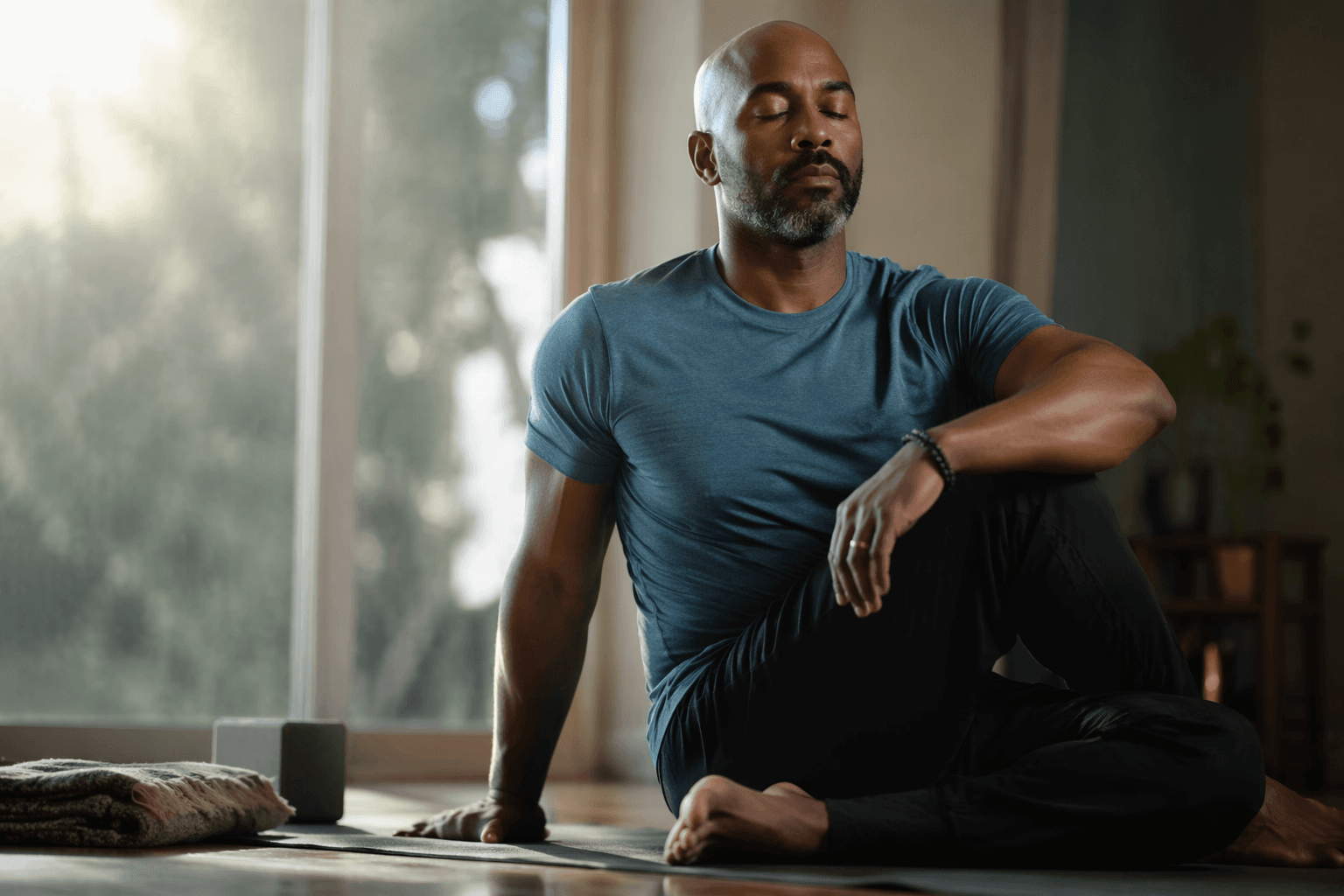
For back pain that feels tight, nagging, and built up from daily wear, the answer in Yoga Journal’s new 15-minute yin sequence is not to push harder. Katie McGrath’s practice, published May 20, 2026, makes a counterintuitive case for slowing down, holding longer, and letting the body soften before it asks for anything more.
That framing lands in a very real pain landscape. The National Center for Complementary and Integrative Health says about 80% of adults experience low-back pain at some point in their lives, while the Centers for Disease Control and Prevention reported that 24.3% of U.S. adults had chronic pain in 2023 and 8.5% had high-impact chronic pain. In other words, this is not a niche yoga concern. It is a widespread, everyday problem, and a short home practice built around calm rather than intensity is exactly the kind of format that meets readers where they are.
Why this short yin sequence stands out
The appeal of the practice is in how little it asks for. Instead of a fast flow or a mobility grind, the sequence uses long holds of about 2 to 5 minutes in forward bends, back bends, side bends, and twists. The whole point is to give the nervous system and connective tissue enough time to respond, rather than forcing a result in the first few breaths.
That matters because the article is explicit about what not to do: never force painful sensations. The tone is therapeutic without claiming to cure anything, which is part of why it feels credible. It treats back pain as something that may improve through patience, breath, and gentle shape rather than performance.
How the sequence is organized
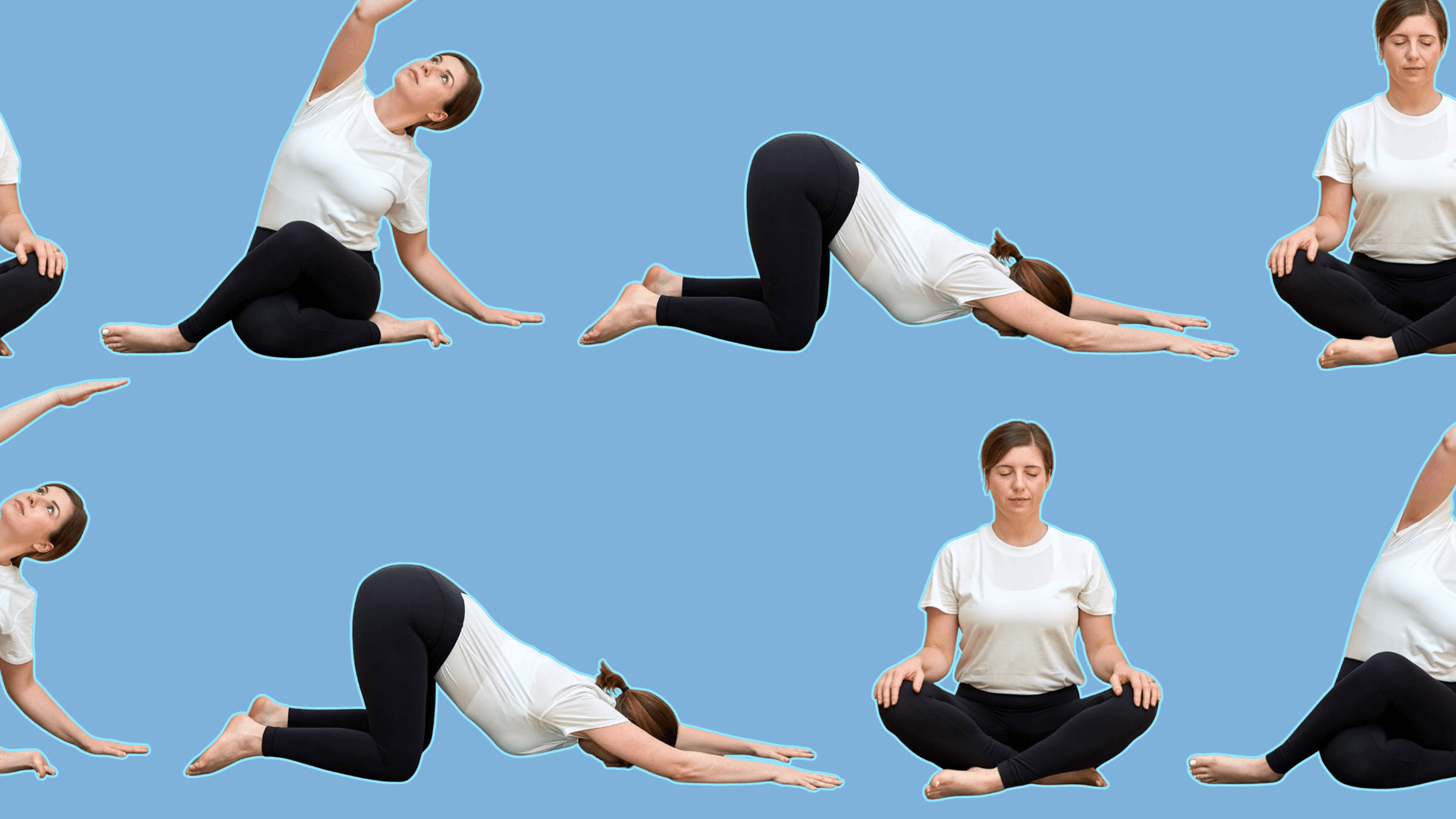
The practice begins with Puppy Pose to target the upper back and shoulders, then moves into Child’s Pose for the lower back. From there, the sequence keeps its focus on floor-based, accessible shapes that can be held long enough to settle into the tissue and the breath.
Just as important, the sequence does not assume every body will tolerate every posture in the same way. If a pose does not feel right, the article offers a practical alternative: lie on the back and hug the knees in. That kind of built-in flexibility makes the practice usable for people with desk-related stiffness, training soreness, or the kind of general back wear that arrives after too much sitting and too little recovery.
Props are part of the practice, not an afterthought
One of the most useful details in the sequence is how clearly it normalizes support. A yoga mat folded for extra cushioning, plus a blanket or block, can make the difference between a pose that feels restorative and one that feels irritating. That is especially relevant in yin, where staying still for several minutes can magnify pressure if the body is not properly supported.
The prop advice also reinforces the larger message of the piece: yin is not about enduring discomfort to prove anything. It is about creating enough ease for the body to settle. For readers used to being told to stretch harder or move faster, that shift can be surprisingly effective, especially when the pain is driven by tension rather than injury.
What the broader evidence says
The sequence arrives with encouraging but careful context from the evidence base. The National Center for Complementary and Integrative Health says there is low- or moderate-quality evidence that yoga may help chronic low-back pain. The American College of Physicians took that a step further in its 2017 guideline for nonradicular low back pain, strongly recommending yoga as an initial nonpharmacologic option for chronic low back pain.
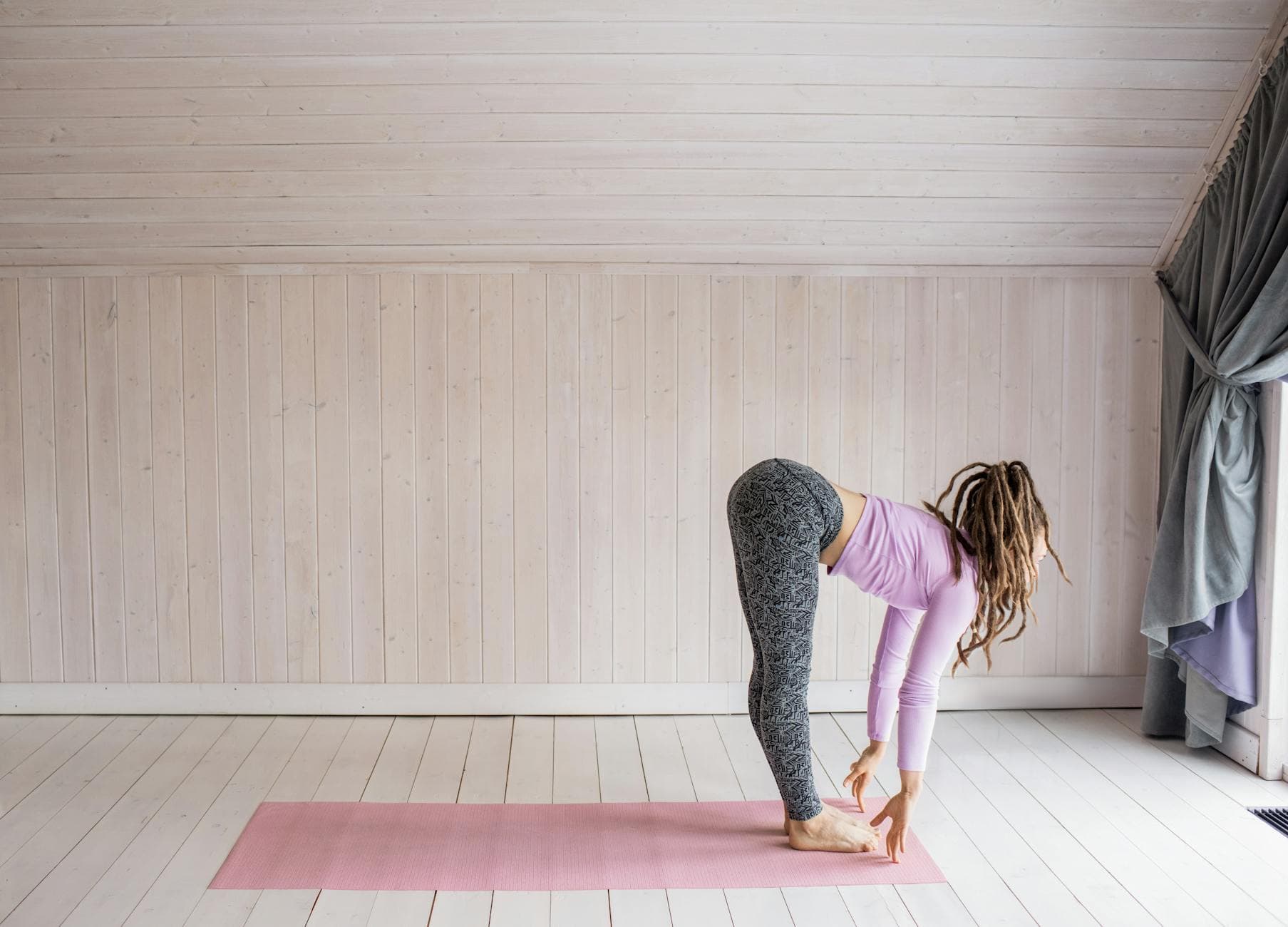
That said, the research picture is not simplistic. A 2022 systematic review and meta-analysis summarized by NCCIH found yoga was associated with short-term improvements in pain intensity, pain-related disability, mental health, and physical functioning when compared with passive control. At the same time, a 2022 Cochrane review found yoga versus no exercise produced only small and clinically unimportant improvements in back-related function and pain.
That mixed evidence helps explain the tone of McGrath’s sequence. It is not sold as a miracle fix. It is framed as a measured, low-pressure way to explore whether slower work can take the edge off tension and help the back feel more usable.
Why yoga keeps showing up in back-care conversations
Part of the reason this kind of piece resonates is that yoga remains widely practiced in the United States. CDC data show that 16.9% of U.S. adults practiced yoga in 2022, and women were more than twice as likely as men to practice, at 23.3% versus 10.3%. The CDC also notes that interest in complementary health approaches has increased over the past 20 years, with yoga among the biggest gainers.
That makes a 15-minute yin back sequence a smart fit for online yoga publishing. It is short enough to try at home, structured enough to feel guided, and gentle enough to speak to readers who are already tired of aggressive solutions. The format is accessible, repeatable, and rooted in a recognizable yoga logic: hold, breathe, soften, repeat.
For anyone dealing with recurrent tension, the practical takeaway is simple. Set aside 15 minutes, fold the mat for knee support, keep a blanket and block nearby, and start with a shape you can actually stay in. If the body says no, swap in a supported alternative. The power of this sequence is not in doing more, but in finally doing less, long enough for relief to have a chance.
This article was produced by Prism’s automated news system from verified source data, official records, and press releases, then run through automated quality and moderation checks before publishing. The system is built and supervised by the people who set the standards it runs under. Read our full AI policy.
Did this article answer your question?