Yoga May Help Lower Blood Pressure in Adults With Overweight, Obesity
A meta-analysis of 30 randomized trials found yoga cut systolic blood pressure by 4.35 mmHg and diastolic by 2.06 mmHg in adults with overweight or obesity.
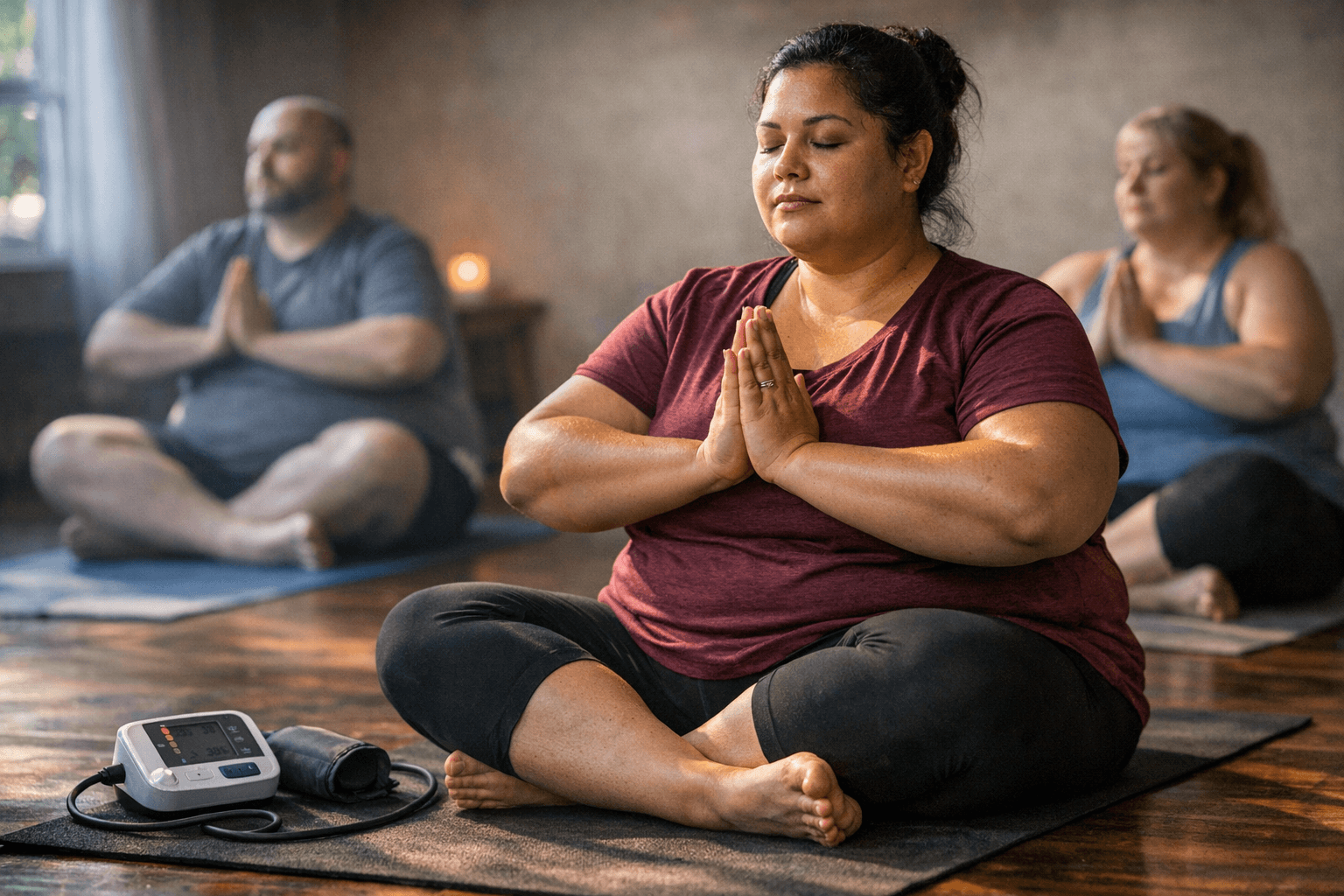
Yoga showed its clearest cardiometabolic signal in blood pressure, where a new meta-analysis found average drops of 4.35 mmHg in systolic pressure and 2.06 mmHg in diastolic pressure among adults with overweight or obesity. The review pooled 30 randomized controlled trials with 2,689 participants, and 23 trials with 2,313 participants went into the quantitative meta-analyses published in PLOS Global Public Health on April 22, 2026.
The findings matter because they frame yoga less as a feel-good add-on and more as a realistic adjunct to standard cardiometabolic care. The review also found modest lipid changes, including LDL cholesterol down 0.08 mmol/L and HDL cholesterol up 0.06 mmol/L. That is not a replacement for medication, weight management, or primary care follow-up, but it does suggest yoga can move numbers that doctors actually track.
The evidence, though, came with clear limits. Most of the studies did not specifically recruit people with obesity, even if baseline body mass index still fell into overweight or obesity ranges. In one subgroup, 25 of 28 studies did not explicitly enroll people with obesity. The authors also said the literature did not establish a clean dose-response relationship, even though the trials tended to favor at least 180 minutes of yoga per week.

That makes the practical takeaway narrower and stronger at the same time. Yoga appears promising for people who can benefit from a lower-barrier form of exercise, especially when more intense training is hard to sustain. But the review did not prove causality, and it did not settle how much yoga is enough to produce a reliable effect.
The evidence base was also heavily weighted toward Asia, with 23 of the 30 studies conducted in Asian countries. The authors called for more high-quality trials in non-Asian populations and in people with comorbidities such as diabetes or heart disease before the findings can be considered broadly generalizable. Still, the paper said the results could support inclusion of yoga in clinical guidelines for people with overweight or obesity, a sign that a long-standing studio practice is getting a closer look in mainstream preventive care.
This article was produced by Prism’s automated news system from verified source data, official records, and press releases, then run through automated quality and moderation checks before publishing. The system is built and supervised by the people who set the standards it runs under. Read our full AI policy.
Did this article answer your question?