Yoga Offers Professionals a Powerful Path to Managing Work Stress
Filipino worker stress hit 72% in 2024 — here's how 5-to-15-minute yoga blocks woven into your commute, screen breaks, and lunch hour can change that number for you personally.
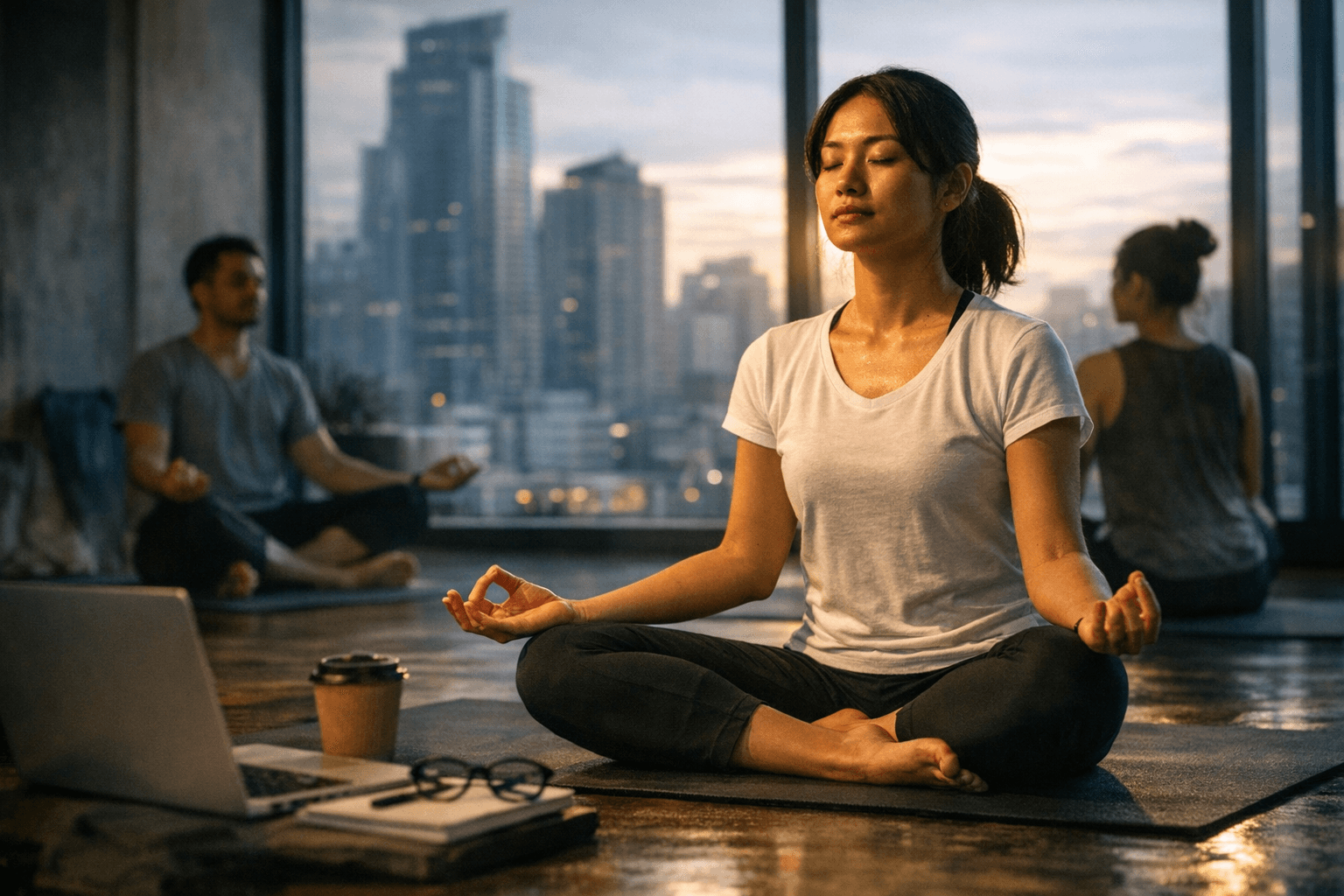
Picture a typical workday in Manila: a jeepney or MRT commute with shoulders already hunched before 9 a.m., six to eight hours in front of screens, back-to-back video calls that run long, and a brain that is still processing Slack notifications at 10 p.m. It is not a dramatic edge case. According to a MindNation 2024 Well-Being Survey drawing on more than 13,000 respondents, reported stress among Filipino workers rose from 57% to 72% in just two years. Reports of worry surged even higher, jumping 21 points from 47% to 68% over the same period. PhilSTAR Life flagged these numbers as a signal that professionals urgently need practical, low-barrier tools for stress management, and yoga keeps rising to the top of that list.
The Scale of the Problem at Your Desk
The AXA Mind Health Study found that 87% of Filipinos report work-related mental health issues, a figure that exceeds the global average, and the consequences are tangible: 85% of Filipino employees are contemplating stepping back from work, with 68% considering quitting or changing jobs altogether. These are not abstract wellness statistics. They represent real attrition risk for teams and real burnout risk for individuals sitting at desks with sedentary, screen-heavy workloads.
Research consistently shows that stress especially affects employees whose work requires low levels of physical activity, such as those in office jobs. The irony is that the same stillness that makes desk work cognitively demanding is precisely what makes yoga such a targeted solution: it reintroduces deliberate movement, breathwork, and nervous system regulation into a body that has been locked in one posture for hours.
What Yoga Actually Does to a Stressed Body
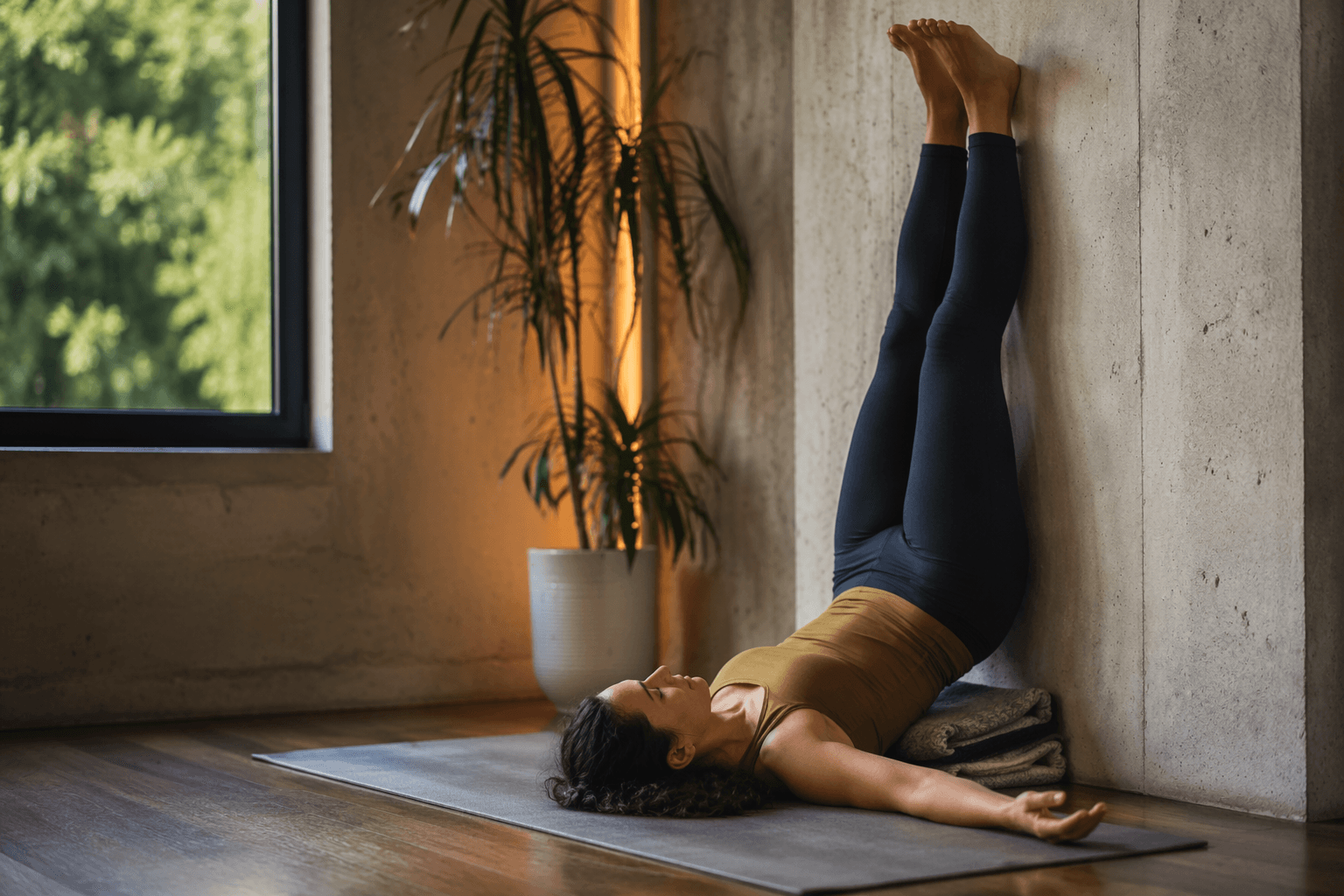
Yoga has been practiced for more than 5,000 years and is known for physical benefits such as flexibility and balance, but it also provides significant mental benefits, including reduction of stress, anxiety, and depression. Modern science has moved well beyond anecdote on this point. A 2024 pilot study published in Frontiers in Public Health found that yoga significantly reduces cortisol measured in saliva during both wakefulness and sleep. Cortisol is the primary stress hormone; when it stays chronically elevated through a demanding workweek, it disrupts sleep, concentration, and immune function.
A 2024 systematic review in the journal Stress and Health found that all four studies measuring cortisol showed significant reductions favoring yoga and meditation intervention conditions, and 21 out of 28 studies in the review reported statistically significant results for reduced stress reactivity. Crucially, some of those results came from single sessions. You do not need a 90-minute vinyasa class to move the needle; a single session of yoga or its components, including meditation and breathing techniques, is enough to reduce acute stress reactivity.
Fitting Yoga Into the Workday: The 5-to-15 Minute Framework
The barrier most professionals cite is time, and that barrier dissolves once you stop thinking about yoga as something that requires a mat, a studio, and an hour of your schedule. The workday already contains natural insertion points.
*The morning commute window (5 minutes before you leave)*
Before stepping out the door, a brief seated pranayama practice takes under five minutes and sets your nervous system baseline for the day. Try three rounds of alternate nostril breathing (Nadi Shodhana): close the right nostril, inhale through the left for four counts, hold for four, exhale through the right for four. Reverse. This balancing breathwork can be done on a chair, on the MRT, or at your kitchen table with coffee still brewing.
*The screen break (5–10 minutes, mid-morning or mid-afternoon)*
Every 90 minutes of screen time is a natural reset point. A printable five-pose desk sequence that requires zero floor space:
- Seated Cat-Cow (1 minute): Hands on knees, spine rounds and arches in sync with breath. Reverses the forward-hunch of screen posture immediately.
- Chair Pigeon (90 seconds each side): Cross one ankle over the opposite knee, hinge forward slightly. Releases hip flexors compressed by sitting.
- Seated Spinal Twist (1 minute each side): Right hand to left knee, twist from the base of the spine. Stimulates the parasympathetic nervous system.
- Standing Forward Fold at the desk edge (1 minute): Hands on desk, walk feet back, hinge at hips, let the head drop. Decompresses the lumbar spine and triggers a mild vagal response.
- Three-Part Breath (Dirga Pranayama) (2 minutes): Belly, ribs, chest fill on the inhale; reverse on the exhale. Clinically the fastest route to activating rest-and-digest mode.
Print this, tape it to your monitor, and treat it like a mandatory screen-lock reminder.
*The lunch hour (15 minutes of real practice)*
A 15-minute midday session is where the stress-reduction research is most decisive. A short flow of Sun Salutation A repeated four times (roughly six minutes), followed by a seated forward fold, a reclined twist, and two minutes of Savasana, addresses both the physical tension of a morning at the keyboard and the cortisol spike that peaks around midday for most office workers. You do not need to change clothes for this. A quiet meeting room with the chairs pushed aside is enough.
Where to Practice in the Philippines
The "where" question has three tiers, and all of them are expanding.
*Corporate classes*: An increasing number of BGC, Ortigas, and Makati-based companies have begun offering in-office yoga sessions as part of employee wellness programs, often running 45 minutes before business hours or during lunch. If your company does not offer this yet, a single HR proposal citing the MindNation data on 72% worker stress tends to move the conversation quickly.
*Studio drop-ins*: Metro Manila has a dense network of accessible studios, including Firefly Mission Yoga in Quezon City (which offers donation-based community classes), Yoga+ in BGC, and Circuit Makati's wellness wing. Many offer lunchtime express classes of 45–60 minutes priced for professionals doing drop-ins, meaning no membership is required.
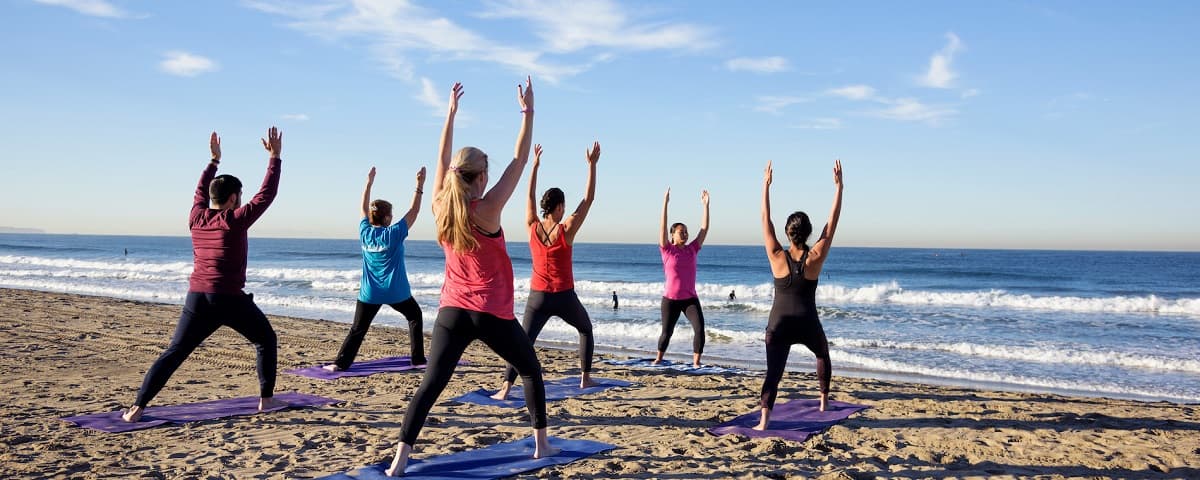
*Community and lunchtime sessions*: Free and low-cost community yoga sessions run weekly in open public spaces including Rizal Park and several Poblacion-area courtyards. These peer-led sessions have no prerequisites; practitioners of all levels show up with travel mats and leave with measurably lower heart rates.
Starting Today, Not Eventually
The MindNation numbers do not indicate a wellness trend. They describe a workforce that is quietly overwhelmed, and the trajectory from 2022 to 2024 suggests the pressure is intensifying rather than easing. A PMC systematic review and meta-analysis confirmed the effectiveness of workplace yoga interventions in reducing perceived stress in employees, and the barrier to entry is now as low as a five-minute breathing exercise between your 10 a.m. and 11 a.m. calendar blocks.
Yoga's staying power in professional wellness conversations is not about spiritual aspiration or achieving a perfect Warrior II. It is about having a repeatable, evidence-grounded method for intervening in your own stress response before it compounds across a 10-hour workday. The research is settled. The 15-minute window exists. The sequence is above. The only remaining variable is whether you treat it as optional.
This article was produced by Prism’s automated news system from verified source data, official records, and press releases, then run through automated quality and moderation checks before publishing. The system is built and supervised by the people who set the standards it runs under. Read our full AI policy.
Did this article answer your question?