Yoga poses that help you relax fast and ease stress
These five gentle shapes are less about perfect form and more about letting the pose do the work. The evidence for yoga’s stress and sleep benefits gives that calm, practical approach real weight.
A quick reset does not have to mean forcing your body into a deeper stretch or chasing a perfect calm. The real shift comes when you choose shapes that let you soften, breathe, and be held, which is why these poses keep showing up whenever yoga turns toward stress relief and sleep readiness. In that frame, relaxation is not a personality trait. It is a practice, and it can start in just a few minutes.
Why calm yoga works
The strongest through-line in this kind of practice is simple: reduce strain, slow the breath, and give the nervous system fewer reasons to stay on alert. That idea matches broader public-health guidance, too. The National Center for Complementary and Integrative Health says yoga research suggests benefits for general wellness, including relieving stress, supporting good health habits, and improving mental and emotional health, sleep, and balance. The Centers for Disease Control and Prevention also names yoga among relaxation techniques for emotional well-being and stress management.
Sleep is part of the same picture. CDC guidance says getting enough sleep can help reduce stress and improve mood, and research has backed up yoga’s role there as well. A nationwide randomized controlled trial found yoga improved global sleep quality in post-treatment cancer survivors, while later reviews and meta-analyses continued examining its effects on insomnia, fatigue, anxiety, and quality of life. That makes gentle, supported practice more than a wellness aesthetic. It is a low-cost tool with a real place in the stress-and-sleep conversation.
Set up the practice so the pose holds you
The most useful relaxation advice in this category is not to push harder, but to make the pose easier. Props are part of that strategy, not an afterthought. Blocks, blankets, bolsters, bed pillows, a cozy sweater, and even an eye mask can all help you access more ease and stay there longer.
That matters because the goal is not depth. It is release. If a shape asks you to brace, clamp, or hold your breath, it is no longer doing the job this piece is about. The best relaxation poses reward surrender, softness, and comfort, and they work especially well when you give yourself permission to use support generously.
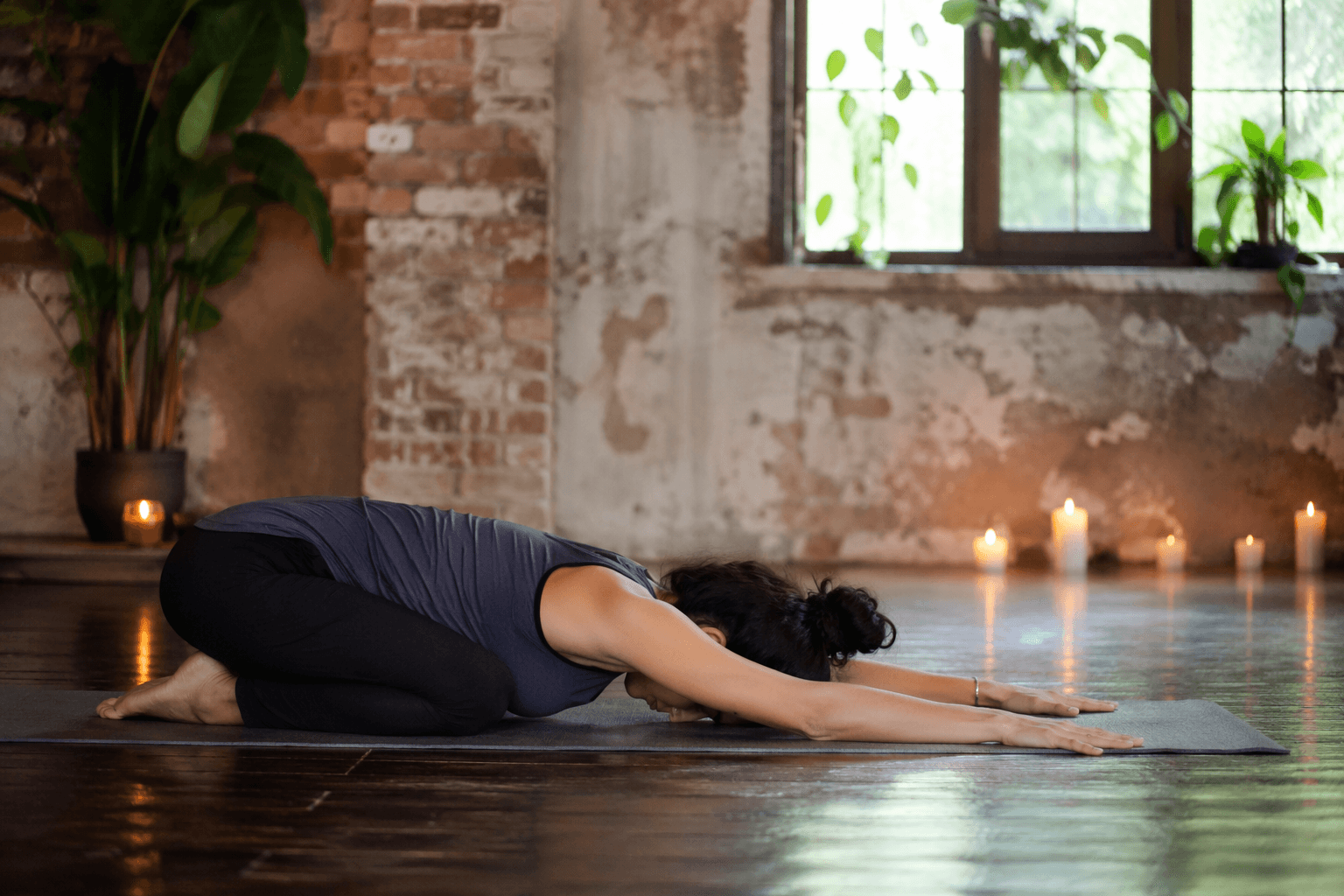
Child’s Pose: the pause that turns you inward
Child’s Pose is one of the clearest examples of doing less and getting more. It functions as a pause point, a place to turn awareness inward and step out of the constant forward drive of the day. What makes it useful for relaxation is not a big stretch or an intense sensation, but the way it creates a small pocket of quiet where breathing and attention can settle.
This is also where the “let the pose hold you” idea becomes concrete. A folded blanket under the knees, a bolster under the torso, or a pillow beneath the chest can make the shape feel more restorative and less compressed. In the right version of Child’s Pose, you are not chasing range. You are giving your body permission to stop.
Cat/Cow: movement that matches the breath
Cat/Cow brings the breath into direct contact with spinal motion, which is part of why it can feel so regulating. As the spine rounds and arches in sync with inhalation and exhalation, the sequence creates a simple rhythm the body can follow. That pairing of breath and movement can help the nervous system settle because it interrupts the sharper, more fragmented pacing that often comes with stress.
This is a useful pose pair when you need a transition rather than a full downshift. A few slow rounds can help you notice where you are gripping through the jaw, shoulders, or low back. Because the movement is so familiar and unthreatening, it often works well as an entry point before moving into longer holds.
Legs Up the Wall: a fast wind-down
If the goal is to come down quickly, Legs Up the Wall is the standout among the supported shapes here. It is described as one of the quickest ways to wind down, and it has a practical reputation for a reason: the shape is simple, low effort, and easy to sustain. The legs are elevated, the back is supported by the floor, and the body gets a clear signal that it can stop working so hard.
The pose is also associated with easing anxiety, headaches, and insomnia, which gives it particular relevance for people trying to bridge the gap between a stressed-out afternoon and a more sleep-ready evening. You can make it even more comfortable with a folded blanket under the hips or an eye mask to block out light. The point is not to maximize sensation. It is to give the body fewer demands and more support.
Reclining Bound Angle Pose: restorative, but still energizing
Reclining Bound Angle Pose offers a different kind of calm. It opens the chest, hips, and thighs while still feeling restorative, which can make it especially useful when you want ease without drifting into heaviness. The shape can feel expansive rather than collapsed, and that distinction matters for practitioners who want relaxation without losing a sense of vitality.
One of the most grounding details in this pose is the hand placement: one hand on the heart and one on the belly. That small choice creates a tactile reminder to keep breathing and to notice the rise and fall of the body from the inside. With a bolster, blankets, or pillows underneath, the posture becomes a supported rest position rather than a deep stretch to endure.
A modern stress tool, not a miracle claim
What makes this whole approach compelling is how practical it is. The calming effect does not depend on perfect alignment, advanced flexibility, or a long practice window. It comes from choices that lower effort and invite the breath back in. That is exactly why the same basic yoga advice keeps resurfacing in public-health guidance and in Yoga Journal’s own ongoing coverage of relaxation and insomnia: people keep needing accessible ways to recover.
The most useful test for any “calming” yoga advice is whether it actually helps you soften, breathe, and settle without making the body work harder than it needs to. These five poses pass that test because they are built around support, not strain. If stress is running the day, the simplest move is often the most effective one: lie down, prop yourself up, and let the pose hold you long enough for your system to notice the difference.
This article was produced by Prism’s automated news system from verified source data, official records, and press releases, then run through automated quality and moderation checks before publishing. The system is built and supervised by the people who set the standards it runs under. Read our full AI policy.
Know something we missed? Have a correction or additional information?
Submit a Tip