Yoga props improve alignment, comfort and safe progress
Blocks and bolsters are not shortcuts in yoga, they are the tools that make alignment, recovery and steady progress possible.
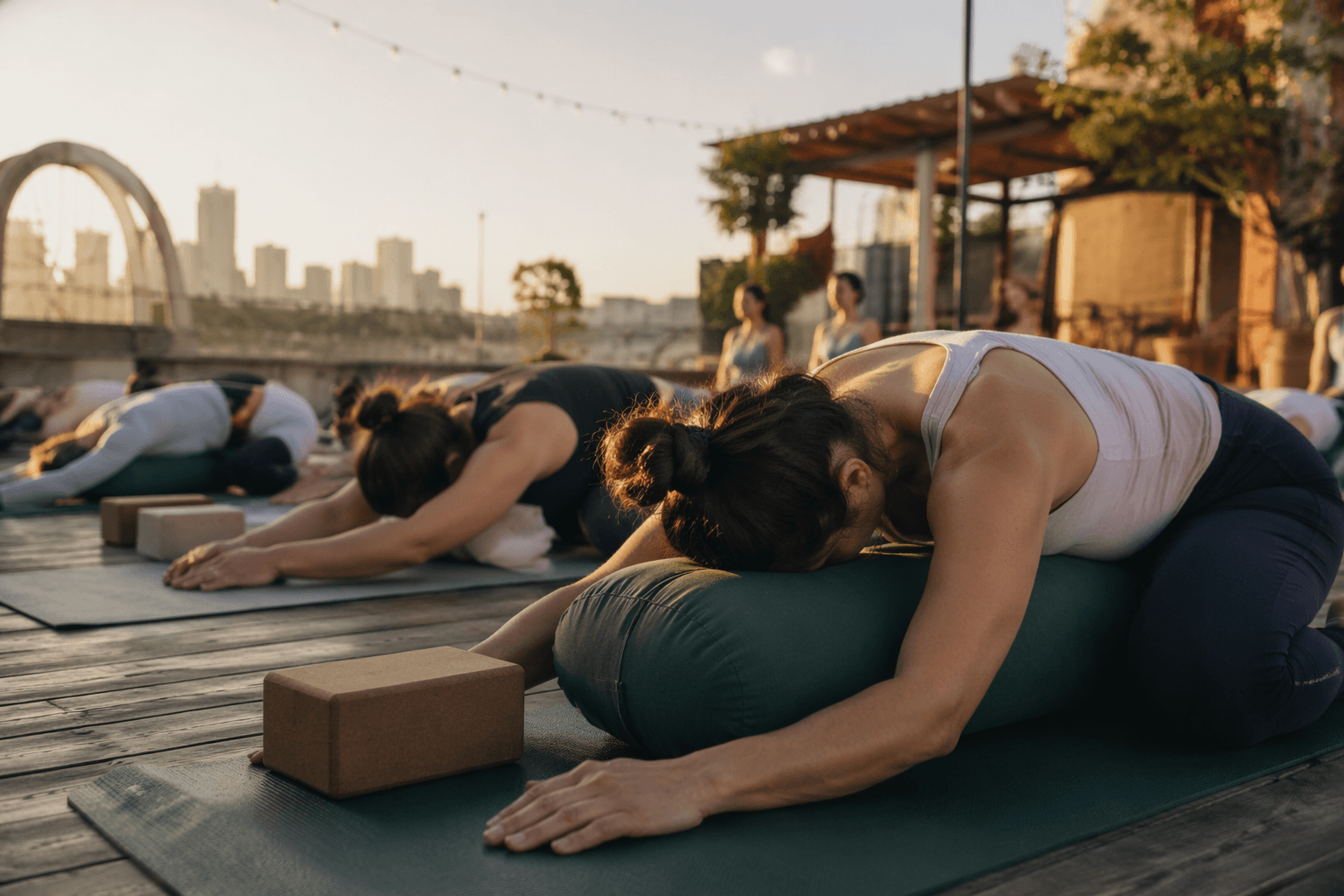
Props can change a yoga session from a struggle into usable information. A block, bolster or strap does not signal that the pose has failed; it can show you how the pose is supposed to feel when the body has enough support to stay organized, breathe and work with control.
Props as alignment, not apology
YOGI TIMES frames props as an essential part of a smart practice, not something to hide from. That idea matters most when a pose starts to feel forced, unpleasant or out of alignment. In that moment, the shape is no longer serving its purpose, and the prop becomes a way to recover the point of the posture instead of chasing the picture of it.
Blocks and bolsters help beginners modify poses, increase comfort and improve alignment, but they are just as valuable for experienced practitioners who want to deepen their work safely. The guide keeps returning to a simple standard: correct sensation matters more than looking finished. Props give you a way to learn what a posture should feel like from the inside, which is especially useful when you are practicing at home without a teacher to adjust the room for you.
That approach also changes how you think about progress. Rather than pushing harder for more shape, you can use support to create enough stability to notice muscle activation, length and balance. In other words, the prop is not the point, but it helps you reach the point.
Support for pain, injury and real-life recovery
The same logic applies when pain or injury changes what your body can tolerate. YOGI TIMES says props can reduce intensity, adapt a pose to a new reality and help prevent further harm. That makes them part of recovery, not a consolation prize for not being able to do more.
This is where the broader medical context fits. The World Health Organization released its first-ever guideline on chronic low back pain in December 2023, aimed at nonsurgical management in primary and community care settings for adults, including older people. The National Institute of Arthritis and Musculoskeletal and Skin Diseases notes that low back pain can come from mechanical or structural problems, inflammatory conditions and other medical causes, which makes a one-size-fits-all posture unrealistic.
Seen that way, props are part of the safety conversation. They let you adjust the practice to the body in front of you rather than forcing the body to conform to a shape it may not be ready for. REI’s yoga guidance makes a similar point, saying props help make yoga more accessible across physical ability, age and experience levels.
Progress without strain
Props are often introduced to beginners, but the more interesting story is how they support long-term development. A well-placed block or bolster can supply just enough support to extend flexibility and range of motion gradually, without turning the session into a fight. They can also help you stay in a posture long enough to feel how the body organizes itself, which is where a lot of real learning happens.
One clear example is King Pigeon, where a strap can help coordinate the hips and arms even if the full expression of the pose is not yet available. That kind of adaptation keeps the work honest. You are still meeting the shape, but you are doing it in a way that preserves alignment and gives the body time to adapt.
That patience matters in home practice, where it is easy to mistake effort for progress. A prop can slow the pose down enough to reveal where you are bracing, collapsing or overreaching. Once you can feel that, the practice becomes less about surviving the pose and more about understanding it.
Why this history matters
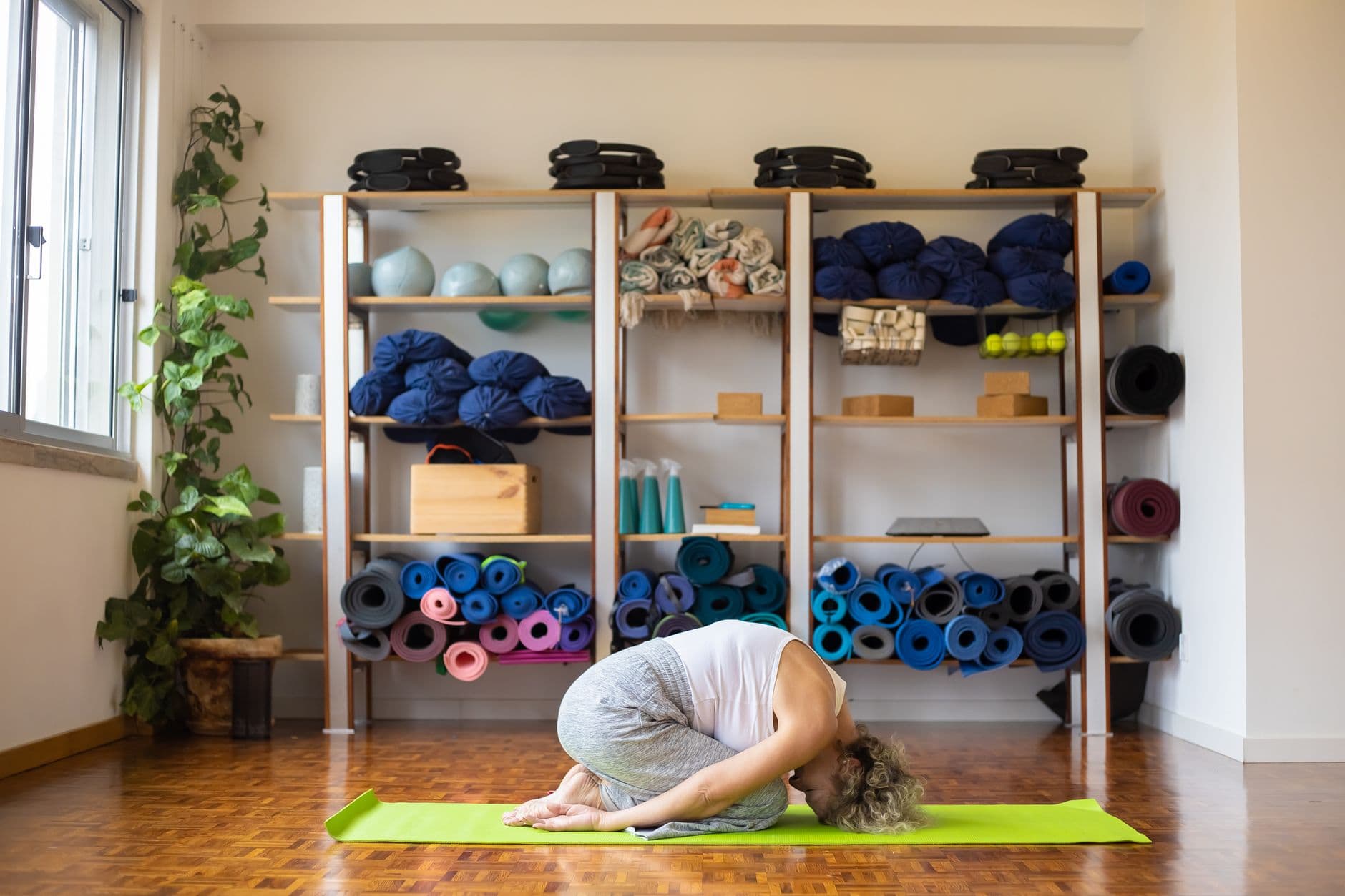
Yoga did not always include the tools many practitioners now treat as standard. Yoga Journal’s history coverage says that in the late 1960s and early 1970s there were no props in the yoga room, only bodies. Props later became part of yoga’s evolution as the practice expanded.
Iyengar Yoga helped define that shift. Yoga Journal describes it as a style built on precision, alignment, timing, sequencing and the use of props, and says props grew out of B.K.S. Iyengar’s innovation. A restorative yoga overview goes even further, noting that many restorative practices are based on Iyengar’s teachings and often use blocks, straps, blankets and bolsters, with poses held for five minutes or more.
That history reframes props as a cultural development, not a side note. Modern yoga moved from a body-only ideal toward a supported practice that can be more therapeutic, more inclusive and more sustainable over time. For anyone trying to practice regularly for years, that evolution is not cosmetic. It changes who gets to stay in the room and how long they can keep practicing.
Evidence, not just intuition
The case for props also sits beside a growing body of research on yoga itself. A PubMed-indexed study of Iyengar yoga for nonspecific chronic low back pain randomized 60 subjects, with 30 assigned to yoga and 30 to conventional exercise therapy. Another randomized trial design looked at 320 predominantly low-income minority adults with chronic low back pain, comparing yoga, physical therapy and education.
A separate review found strong evidence for short-term benefit and moderate evidence for long-term benefit of yoga for pain and disability in chronic low back pain, although comparisons with exercise and usual care were less certain. And in rehabilitation research, a comparative study examined yoga plus physiotherapy in 212 patients after various nonsurgical knee injuries. Together, those figures point to a practice that is being studied as a real movement intervention, not just a wellness trend.
That is why the details around alignment and support matter so much. If yoga is part of the conversation around pain, mobility and recovery, then props are not optional flourishes. They are part of how the practice stays adaptable enough to meet actual bodies.
The useful goal is steadiness
The most persuasive thing about props is how ordinary they make progress feel. They let a beginner find shape, give an injured practitioner reassurance and give a seasoned student a more refined way to explore the posture. They also make it possible to rest without losing the thread of practice, as anyone who has needed a bolster under the knees in Savasana after injury can tell you.
That is the real lesson running through the guide: if a pose has to be forced, it is already asking for help. A block, bolster or strap can turn that moment into clearer alignment, greater comfort and safer progress, which is exactly how a practice lasts.
This article was produced by Prism’s automated news system from verified source data, official records, and press releases, then run through automated quality and moderation checks before publishing. The system is built and supervised by the people who set the standards it runs under. Read our full AI policy.
Did this article answer your question?