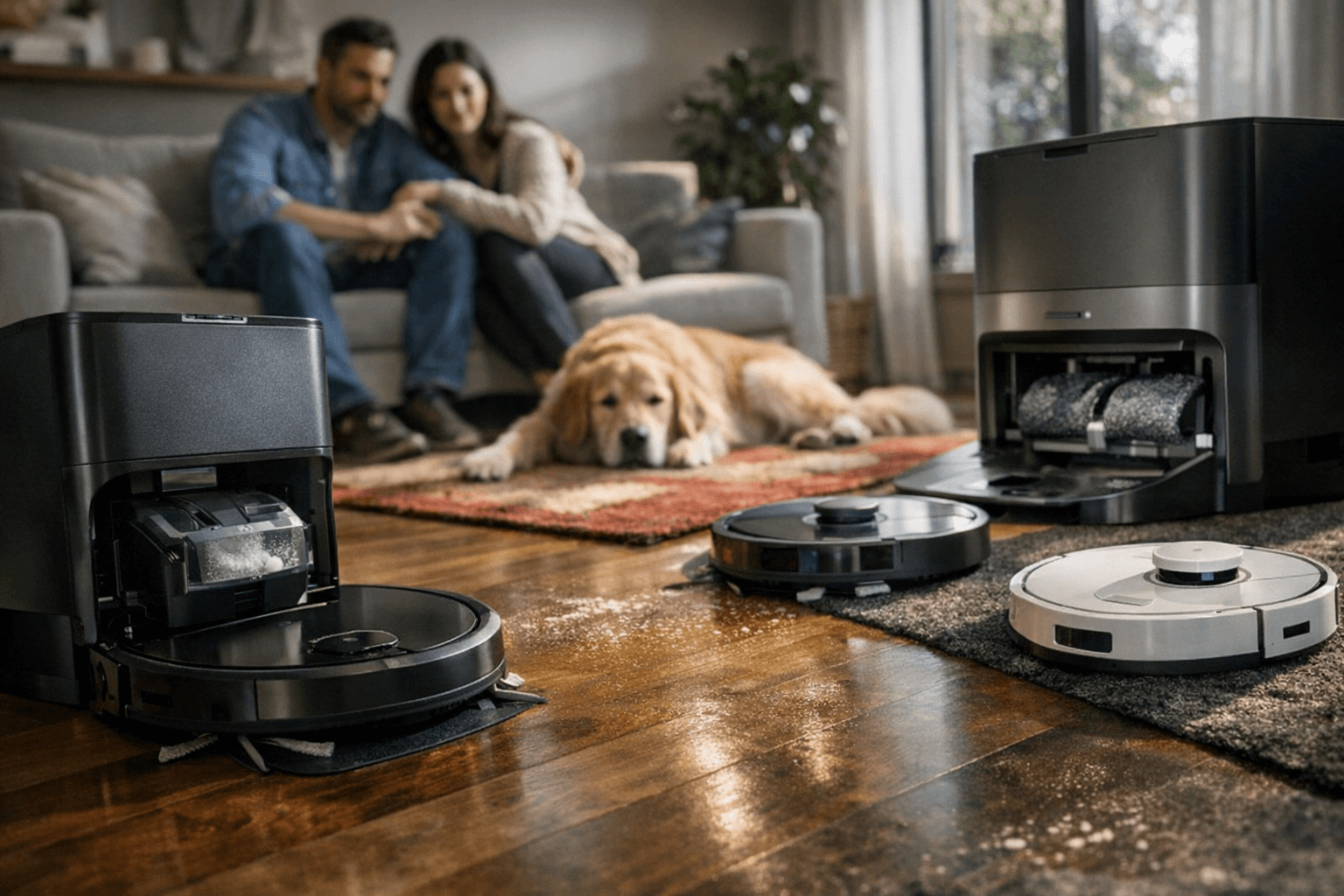
די-ג’יי-איי נכנסת לשוק השואבים הרובוטיים: 3 דגמים, עד 25,000 פסקל
DJI has entered Israel’s robot-vacuum fight with ROMO: three models, 25,000 Pa suction, and a premium service pitch built for a crowded market.
What DJI is really changing for Israeli buyers
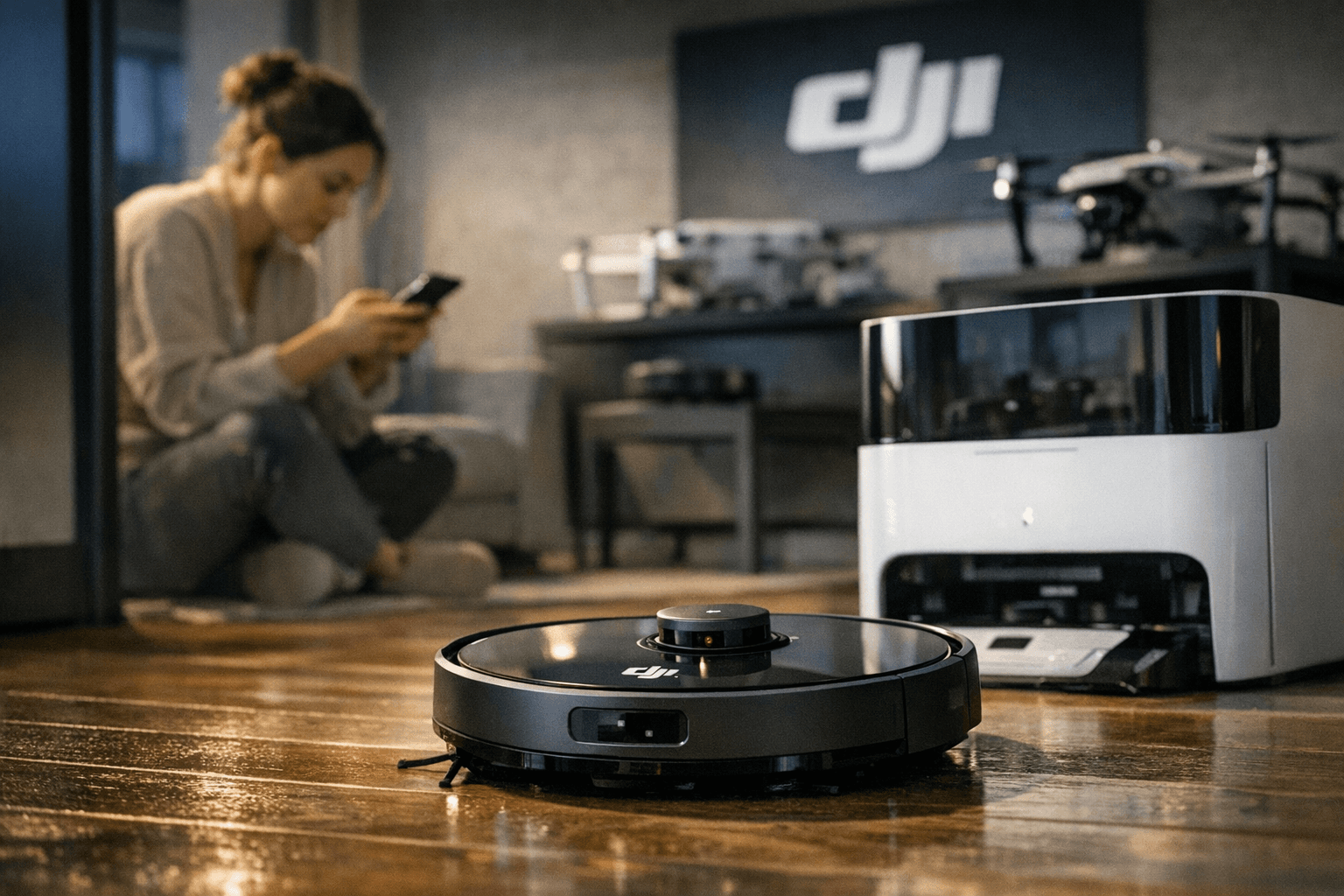
DJI is not entering the robot-vacuum market to play the discount game. ROMO arrives in Israel as a three-model line built on the same cleaning core, and that is the point: the fight is no longer about whether a robot can vacuum, but whether it can map a messy apartment, avoid chair legs, handle wet cleaning, and keep working without turning into a weekend maintenance project.
For Israeli buyers, that matters more than brand nostalgia. DJI is known for drones and imaging, not for floor care, but ROMO uses that reputation to make a simple promise: if the company can read the sky with precision, it can probably read a living room too. The real question is whether that promise translates into better daily use than Roborock, Dreame and ECOVACS, or whether this is just another strong name walking into an already packed aisle.
ROMO S, A and P are not three different cleaners
Which model changes what, and what stays the same?
The important detail is that ROMO S, ROMO A and ROMO P share the same core platform. All three come with up to 25,000 Pa suction, a 5,000mAh battery, up to three hours of runtime, and roughly two and a half hours of charging time. They also lean on DJI’s sensor stack, including wide vision and LiDAR, which is where the company’s drone background becomes a real product advantage.
| Model | Positioning | Main difference | Europe launch price |
|---|---|---|---|
| ROMO S | Entry model | Basic design and dock setup | €1,299 |
| ROMO A | Mid-tier | More transparent look | €1,599 |
| ROMO P | Flagship | Transparent design, UV treatment for the dust bag, odor reduction in the dock | €1,899 |
That structure tells you a lot about DJI’s strategy. The company is not selling three different vacuums with three different cleaning abilities; it is selling one cleaning engine wrapped in three levels of finish, convenience and dock sophistication. In other words, the upgrade path is about ownership experience more than raw floor performance.
Why DJI’s sensing stack matters more than the suction number
Does LiDAR and wide vision actually change the cleaning result?
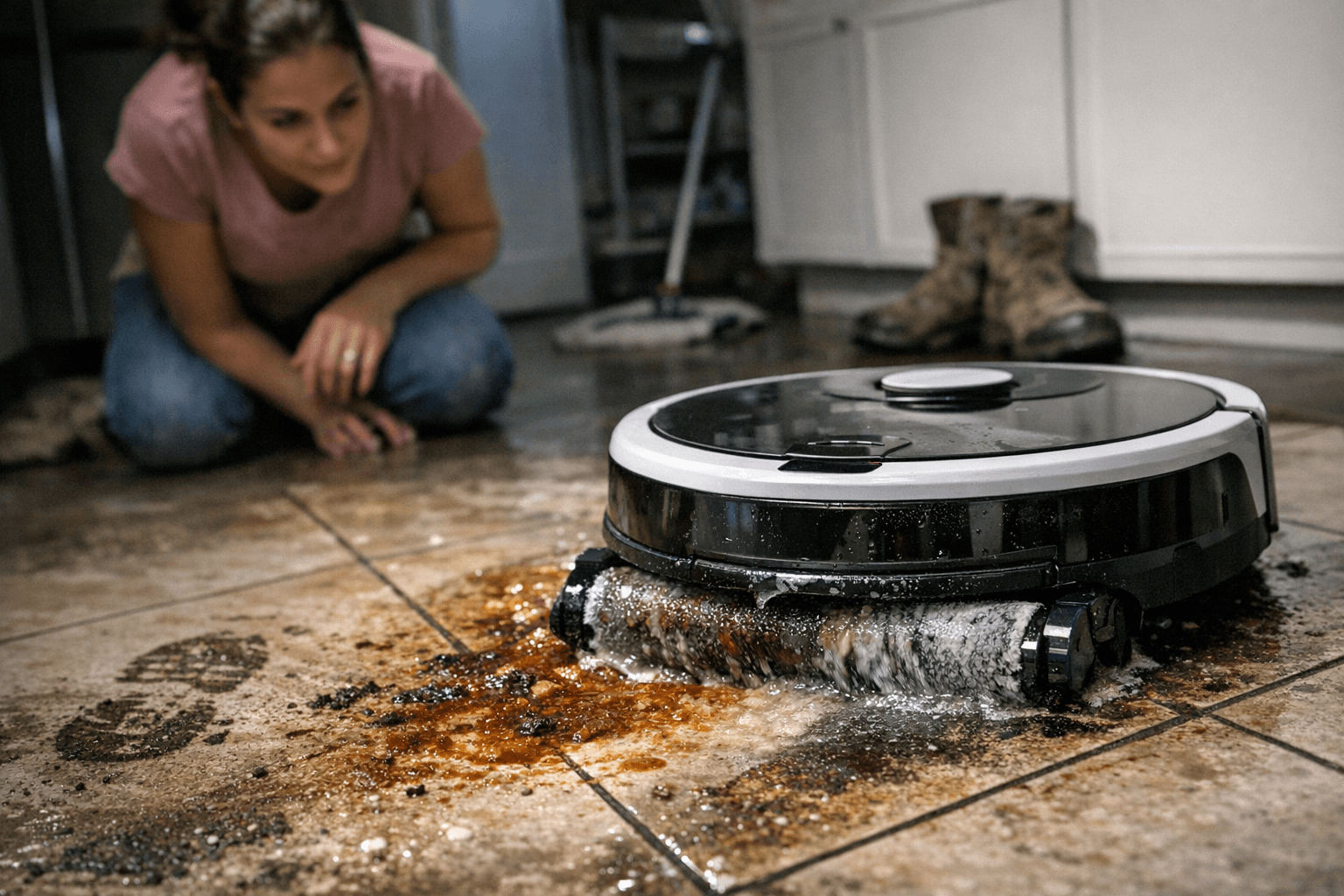
Yes, but only if the software is good enough to use the hardware well. DJI says ROMO P can identify obstacles at millimeter level, and the dock is built around high-pressure water-jet self-cleaning, with a design intended to run for up to 200 days without maintenance. That combination points to a very specific battle: less time spent unclogging, wiping and babysitting, more time letting the machine do its job.
This is where DJI has an edge on paper. Drone companies live or die by sensor fusion, obstacle detection and path planning, and those are exactly the skills a premium robot vacuum needs in a home full of cables, socks, toys and low furniture. If ROMO delivers on that DNA, the benefit is not just cleaner floors, but fewer rescue missions when the robot gets confused by a dining chair or a dark rug.
Still, specs are not the same as trust. A robot vacuum can look brilliant in a showroom and still annoy people at home if its app is clumsy, if the mop path is inconsistent, or if the dock becomes a cleaning chore of its own. That is why the first-generation label matters so much here.
How DJI stacks up against Roborock, Dreame and ECOVACS
Why this is already a crowded market, not a blank canvas
DJI is entering a category that has been growing fast. Global smart-vacuum shipments reached 6.17 million units in the second quarter of 2025, up 20.5% year over year, and home cleaning robot shipments reached 15.352 million units in the first half of 2025, up 33% year over year. Robot vacuums alone made up 73.4% of the home-cleaning robot market in that period, so this is not a side niche anymore. It is a mainstream appliance war.
That war is already well underway in Israel. Roborock ranked first in robot-vacuum shipments in Israel in the first quarter of 2025, while ECOVACS held a 13.6% global share and Dreame remained one of the most visible players in the premium wash-vac segment. In practical terms, that means Israeli consumers already compare maps, mopping pressure, dock cleaning and obstacle avoidance like they compare phone cameras.
DJI’s best argument is not that it is the cheapest or the loudest. Its argument is that it brings a different kind of engineering culture into the room, one shaped by aerial sensors, stabilization and machine vision. If that translates into smoother navigation and fewer edge-case failures, ROMO can carve out a premium niche fast. If it does not, the market already has enough strong alternatives to punish a weak first generation.
Why local service may decide the sale in Israel
What Bandai Magnetik adds that a spec sheet cannot
In Israel, service is not a footnote. Bandai Magnetik backs DJI products bought from authorized retailers with official importer warranty, home pickup and return to the lab, and support on weekdays from 09:00 to 17:00. The local support structure also includes collection points in Herzliya Pituah and Caesarea, plus a lab in Herzliya Pituah.
That matters because robot vacuums are not like a kettle or a charger. They have motors, pumps, dust bags, rollers, water tanks, sensors and dock systems that can fail in ways a user cannot fix at home. A company that wants to sell a premium floor robot in Israel has to prove it can repair it quickly, not just advertise it well.
This is especially true for a first-generation line. Buyers in Tel Aviv, Ra’anana or Modi’in may be impressed by 25,000 Pa suction, but they will care more about whether a failed wheel motor or dock glitch gets solved in days rather than weeks. The official warranty, pickup service and local lab presence are not extras. They are part of the product.
The pricing signal is clear: DJI is not coming in cheap
Is ROMO a price-cutting move or a premium escalation?
The European launch prices tell the story. At €1,299 for ROMO S, €1,599 for ROMO A and €1,899 for ROMO P, DJI is not trying to undercut the market. It is aiming straight at the upper tier, where buyers already expect serious mapping, strong suction and a dock that reduces chores instead of adding them.
That positioning is important for Israel because it shapes the entire competitive conversation. If ROMO lands as a premium import, the pressure on Roborock, Dreame and ECOVACS will not be a broad price collapse. It will be a tighter, more specific fight over who gives the best mix of navigation, mopping, app quality and after-sales support for the money.
So the short answer to the question of what DJI changes is this: it probably does not start a cheap-price revolution. It raises the bar on sensors, dock automation and brand prestige, while forcing buyers to ask a tougher question about value.
What still needs to be checked in real homes
Can DJI turn drone-grade engineering into daily floor reliability?
That is the real test. Drone hardware lives in the air, but a robot vacuum lives in dust, water, hair, thresholds and clutter, and those are much harsher conditions than a glossy launch video. ROMO has the right ingredients: LiDAR, wide vision, millimeter-level obstacle sensing, strong suction and a more advanced dock.
What will decide its fate is boring, practical stuff. Does it avoid cables cleanly in a Haifa apartment? Does it handle pet hair without constant intervention? Does the dock stay clean over months, and does the app stay stable after the first wave of users puts it under pressure?
If DJI gets those basics right, ROMO can become more than another flashy arrival. It can become the model that shows how a drone company can translate airborne precision into a smarter home robot, and that would matter well beyond one launch cycle.
שאלות נפוצות
Is DJI’s ROMO built to beat Roborock on price?
No. The European pricing places ROMO in the premium tier, so the competition is about features, navigation and service rather than discounting.
What is the biggest difference between ROMO S, A and P?
The cleaning core is the same. The differences are mostly design and dock features, with ROMO P adding UV treatment for the dust bag and odor management.
Why does the local warranty matter so much in Israel?
Because robot vacuums are complex appliances with docks, pumps, sensors and motors. A local importer warranty, pickup service and nearby lab can decide whether the product feels premium or risky.
Is DJI’s drone background actually relevant here?
Yes, if DJI’s sensor and navigation know-how translates well to home mapping. LiDAR, wide vision and obstacle detection are exactly the tools a high-end robot vacuum needs.
יודעים משהו שפספסנו? יש לכם תיקון או מידע נוסף?
שלחו טיפ