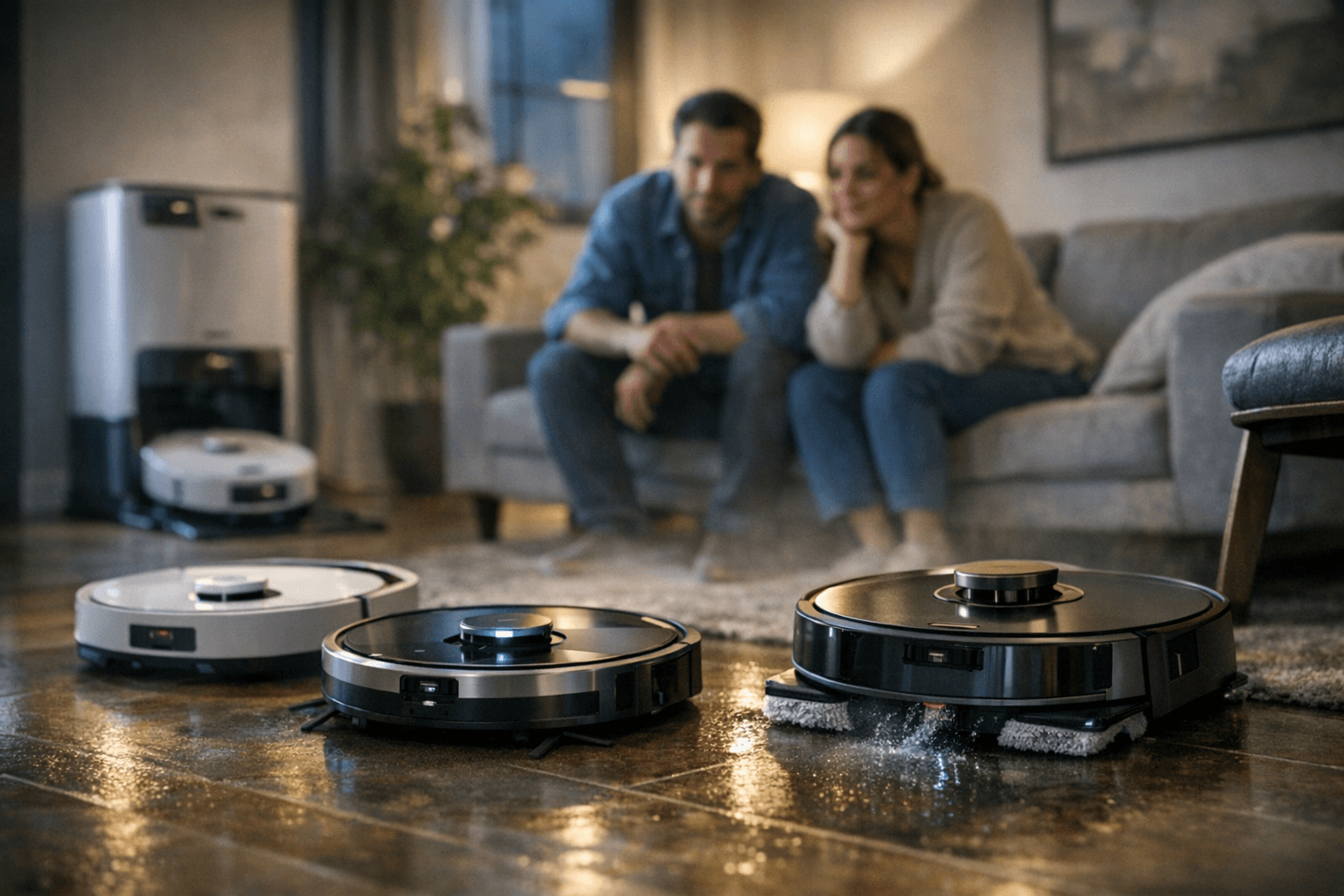
שואב רובוטי חכם באמת: מצלמות, בינה מלאכותית ושטיפה מתקדמת לבית עמוס
Xiaomi’s new 6 Pro turns cameras and AI into tools, not décor, with 30,000Pa suction and a self-cleaning wash cycle built for cluttered homes.
When a robot vacuum can recognize cables, toys, pet mess and low furniture instead of just bumping around them, the upgrade starts to feel real. That is the promise behind Xiaomi’s latest push: more cameras, more AI, stronger suction and a base station that handles the dirty work with far less human intervention.
For Israeli homes, that matters in a very practical way. A narrow hallway in a Tel Aviv rental, a play area full of Lego, a cat that sheds on the rug and a living room crowded with low tables are exactly the kind of spaces where “smart” either pays off or becomes an expensive gimmick.
When cameras stop being a gimmick
What 30,000Pa and triple cameras change in a cluttered home
The Mi Robot Vacuum 6 Pro, launched in China on April 9, 2026, is Xiaomi’s clearest attempt yet to make visual recognition part of everyday cleaning. It pairs 30,000Pa suction with a triple-camera array, LiDAR navigation and claims to identify 280 obstacle types and 47 stain types.
That combination matters because it shifts the robot from simple path planning to scene reading. In a house with charging cables, children’s toys, socks, pet bowls and chair legs, the difference is not cosmetic. A vacuum that can see the obstacle before it touches it is less likely to stall in the middle of the room and more likely to finish the job without a rescue mission.
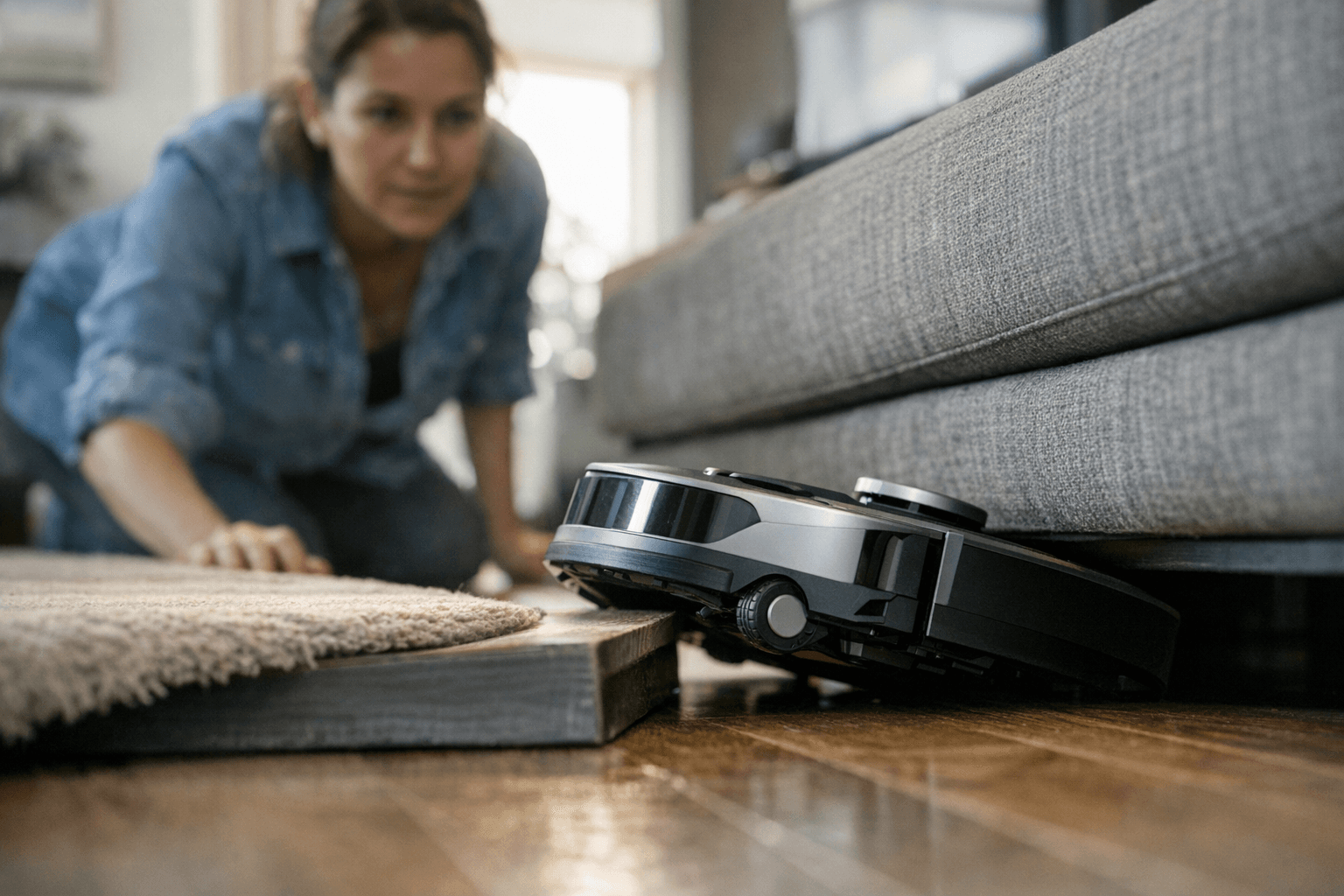
The hardware also reflects that shift. Xiaomi built the 6 Pro to stand just 90 mm tall by using a retractable internal LiDAR mechanism, while side arms extend to reach corners and skirting boards. It can also cross obstacles up to 4 cm high, which is useful in homes where rugs, thresholds and uneven transitions are part of daily life rather than showroom staging.
Why 280 obstacles and 47 stain types matter more than app control
The real value of AI in a robot vacuum is not the app. It is whether the machine can make a better decision before the user has to intervene. A robot that only maps the room is still a robot that needs babysitting; a robot that distinguishes between dust, dried spill marks and pet mess can change how it cleans each patch of floor.
That is why the 6 Pro’s stain recognition is more interesting than its marketing gloss. If the machine treats a sticky kitchen splash differently from loose crumbs in the hallway, it can move from generic cleaning to targeted cleaning. In a busy home, that means fewer missed spots and fewer repeat passes.
The trade-off is privacy. A front-facing camera and a real-time home view are genuinely useful, but they also mean a robot vacuum is no longer a blind appliance. For Israeli buyers, that makes the decision sharper: if the camera helps the robot avoid chaos in a crowded apartment, the upgrade has a functional case; if the home is mostly open and uncluttered, the premium starts to look harder to justify.
The hardware race behind the marketing
From 2,700Pa to 35,000Pa: how Xiaomi pushed the category
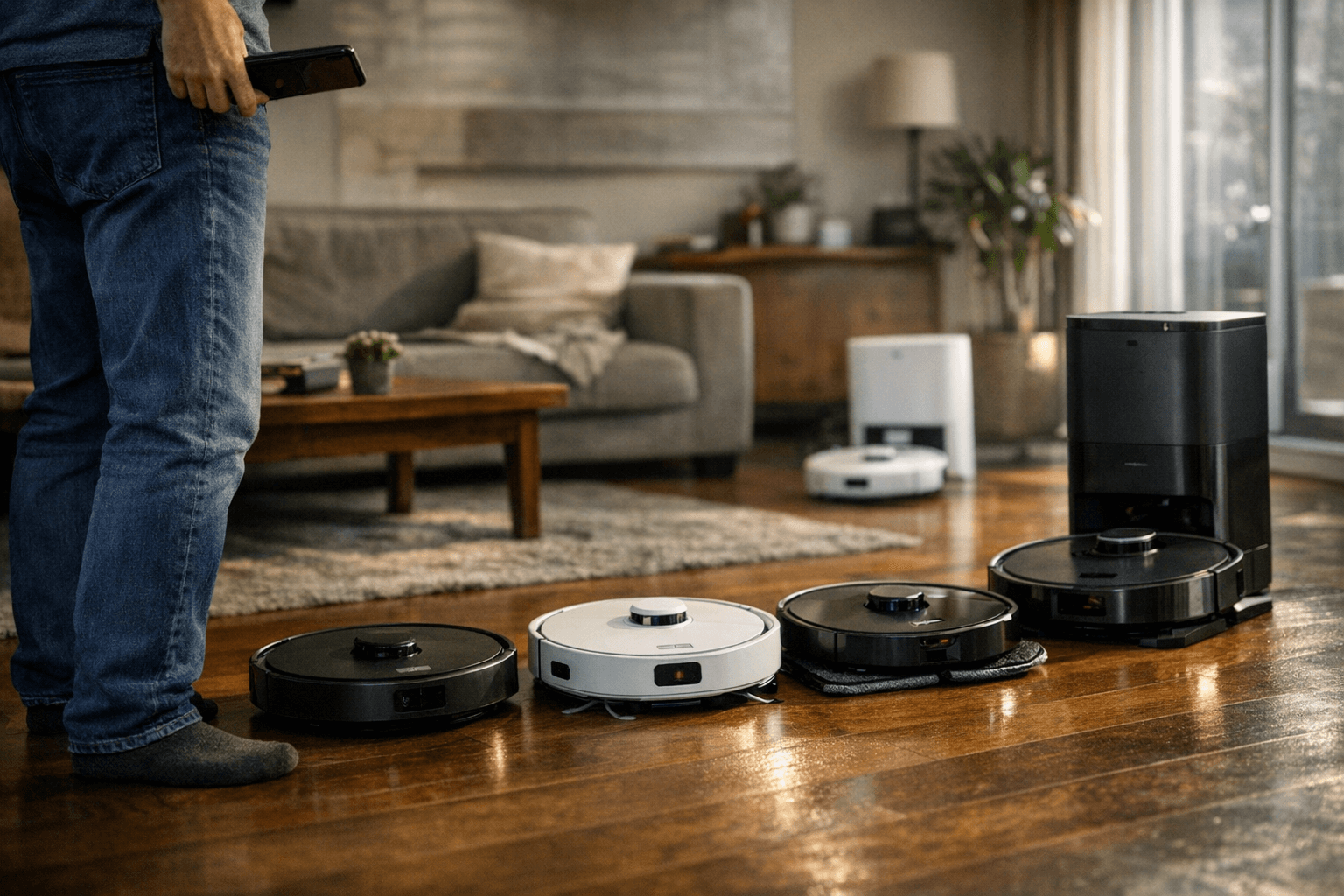
Xiaomi’s own product line shows how quickly the category has moved. The Mi Robot Vacuum-Mop 2 had 2,700Pa suction. The Robot Vacuum 5 Pro moved to 20,000Pa. The new 6 Pro reaches 30,000Pa, while the Mi Robot Vacuum and Mop 6 Max, launched in China on March 11, 2026, goes up to 35,000Pa.
That is not a small jump. It shows how robot vacuums have gone from useful helpers to serious cleaning machines, especially on carpets, along edges and in homes that accumulate more debris than a tidy apartment can hide. The trend also makes one thing clear: suction alone is no longer enough to stand out, so brands now lean harder on vision systems, obstacle detection and smarter navigation.
The 5 Pro, launched globally in September 2025, already pointed in that direction. It combines AI obstacle avoidance, a front HD camera for real-time home view and obstacle marking, and an AI triple-camera detection system made up of an RGB camera, two infrared cameras and an infrared 3D dot projector. In other words, the category had already crossed from basic avoidance into active recognition before the 6 Pro arrived.
Why 9.5 cm clearance and 90 mm height decide real-world usability
A robot vacuum can advertise huge suction figures and still fail if it cannot get under furniture. Xiaomi’s 5 Pro uses a dToF Smart Retractable Radar and can fit under furniture with as little as 9.5 cm of clearance. The 6 Pro pushes that logic further with a slimmer 90 mm body, made possible by the retractable LiDAR sensor.
That is the kind of detail that matters in real homes. Low sofas, TV stands and beds are exactly where dust gathers, and they are also the places most vacuums avoid. If a robot can lower its radar or retract its sensor to enter those spaces, it is solving one of the most annoying everyday cleaning problems.
The 6 Max adds another angle to the hardware race. Xiaomi sells it in China in two versions, a water tank model priced at 6,599 yuan and a water supply and drainage version at 6,999 yuan. The price gap says a lot about where the segment is heading: full automation is no longer a niche luxury feature, but a main selling point.
Wet cleaning is becoming the real differentiator
What the hot-wash, hot-dry base station actually solves
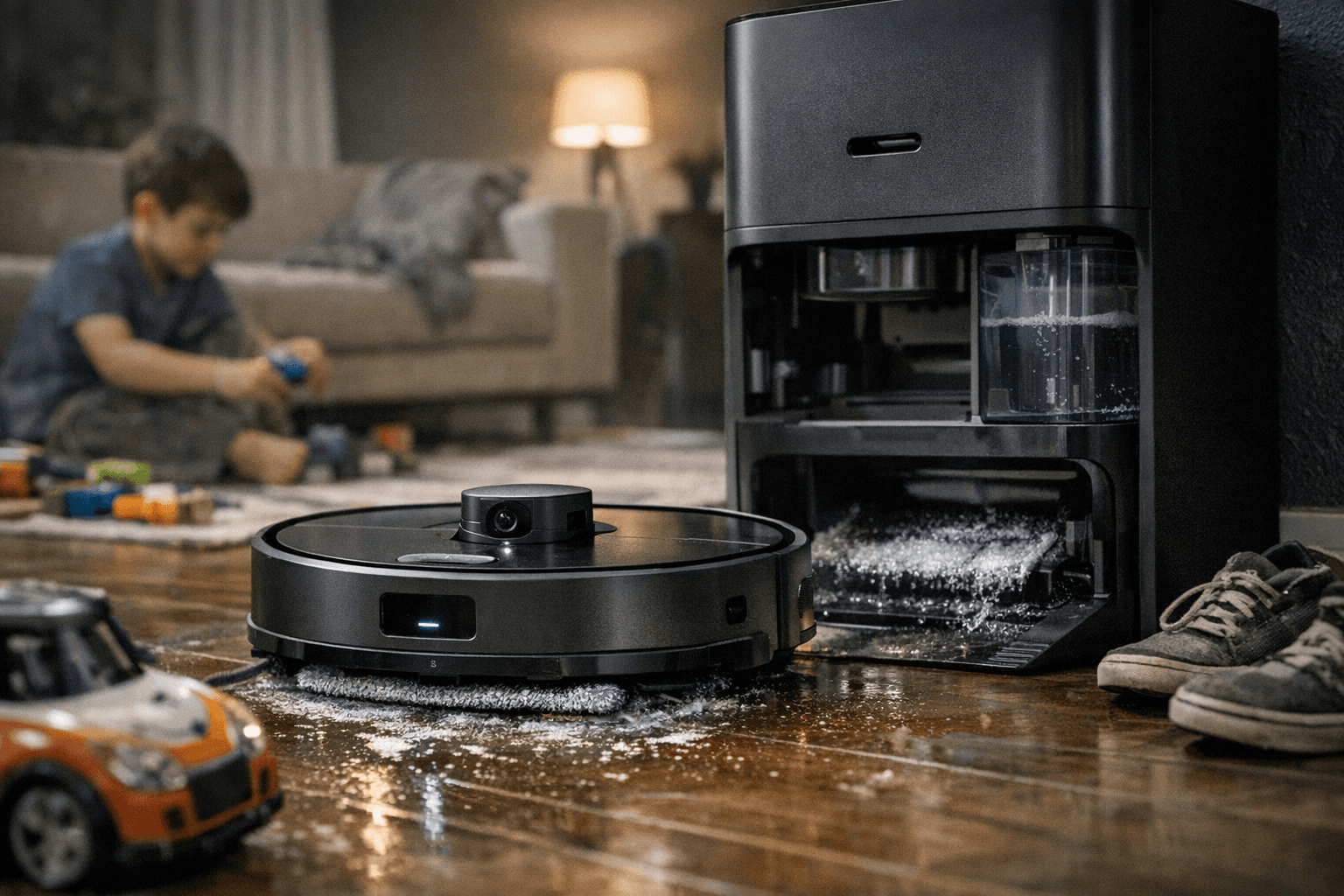
The biggest step forward is not only in the robot, but in the dock. Xiaomi’s 5 series comes with a self-emptying station that washes the mop with hot water, dries it with hot air and empties dust automatically. The base station includes a 2.5 liter auto-empty dust bag and a 4 liter water tank.
The 6 Pro takes the same logic further. Its dock washes the roller with 85°C water and dries it with 50°C hot air, which is aimed at preventing wet grime from being dragged from one room to another. That matters more than it sounds, because a wet mop that stays dirty can spread mess instead of removing it.
This is also where the new roller system becomes important. A roller that keeps getting clean water and uses an internal scraper to stop dirty water from lingering is better suited to kitchens, entryways and homes with pets. In other words, the machine is not just wiping the floor. It is trying to manage contamination as it goes.
When a compact plumbed dock makes sense in a busy apartment
Xiaomi offers the 6 Pro dock in a standard version and a compact version with a direct connection to the home’s plumbing. That sounds like a small engineering detail, but in practice it changes maintenance from a chore into a background process.
For a family that runs the vacuum daily, fewer water refills and less manual emptying mean the device gets used more often and with less friction. In a home where the robot is expected to clean after lunch crumbs, sand from shoes and pet hair on a near-daily basis, that difference is not minor.
It is also the point where the AI story becomes a household story. If the robot can identify obstacles, wash its own roller, dry itself and empty its dust bin, then the owner is no longer buying a gadget. The owner is buying time.
What Israeli buyers should watch before paying extra
The gap between showroom demos and floor-level reality
The sharpest question is not whether the robot can impress in a demo. It is whether it can survive the mess of real life. A polished video can make any vacuum look clever; a home with toys on the floor, cables under the desk, chair legs in a dining nook and a dog bed in the corner is a much harsher test.
That is why the biggest gains show up in homes that are already hard to clean. If the floor is mostly open, the added cameras and AI may feel like overkill. If the home is crowded, compact and always changing, the upgrade starts to make sense very quickly.
For Israeli consumers, that calculation is tied to price. A high-end robot vacuum easily turns into a four-digit-shekel purchase once it reaches the local market, so the question is not only what the device can do, but whether it will do it often enough to justify the outlay. In that sense, the 6 Pro is less a luxury toy than a test case for the next phase of the category.
Which homes truly benefit from cameras, AI and advanced washing
The best fit is a house that combines clutter with routine mess. Think of a home with children, pets, low furniture and narrow passages where a robot must navigate around obstacles instead of simply vacuuming an empty floor. In those conditions, camera-based recognition and hot-water mop maintenance are not extras. They are the features that decide whether the robot becomes part of the routine or gets pushed aside after two weeks.
The wider market is moving in the same direction. Independent testing now treats obstacle avoidance as its own category because real-world performance varies so much by model, and that is exactly where the value conversation has moved in 2026. The winning robot is not the one with the biggest app feature list. It is the one that gets through a messy home without getting stuck, leaving stains behind or asking for constant help.
שאלות נפוצות
Is camera-based obstacle avoidance really useful, or just marketing?
It is useful when the home has visible clutter, such as cables, toys, pet items and low furniture. In a cleaner, more open layout, the benefit is smaller and the extra cost is harder to justify.
What is the practical difference between 20,000Pa, 30,000Pa and 35,000Pa?
Higher suction helps on carpets, edge cleaning and heavier debris, but it does not replace good navigation. The jump matters most when stronger suction is paired with better obstacle detection and smarter mop management.
Why does the dock matter as much as the robot itself?
Because a robot vacuum only stays convenient if maintenance stays low. Hot-water washing, hot-air drying and auto-emptying reduce the amount of manual work needed to keep the machine useful every day.
Who should pay for the 6 Pro level of features?
Anyone with a cluttered home, frequent floor mess and a strong need to reduce daily maintenance. If the home is simple and open, a lower-tier model may deliver most of the value without the premium.
יודעים משהו שפספסנו? יש לכם תיקון או מידע נוסף?
שלחו טיפ