מתחם עבודה מוגן ברמת גן: רצף עבודה בביטחון בזמן אזעקות
Ramat Gan turned its theater into a protected work zone with fast Wi‑Fi, a nearby shelter, and free weekday access for remote workers caught between sirens.
What Safe Work changes for remote workers
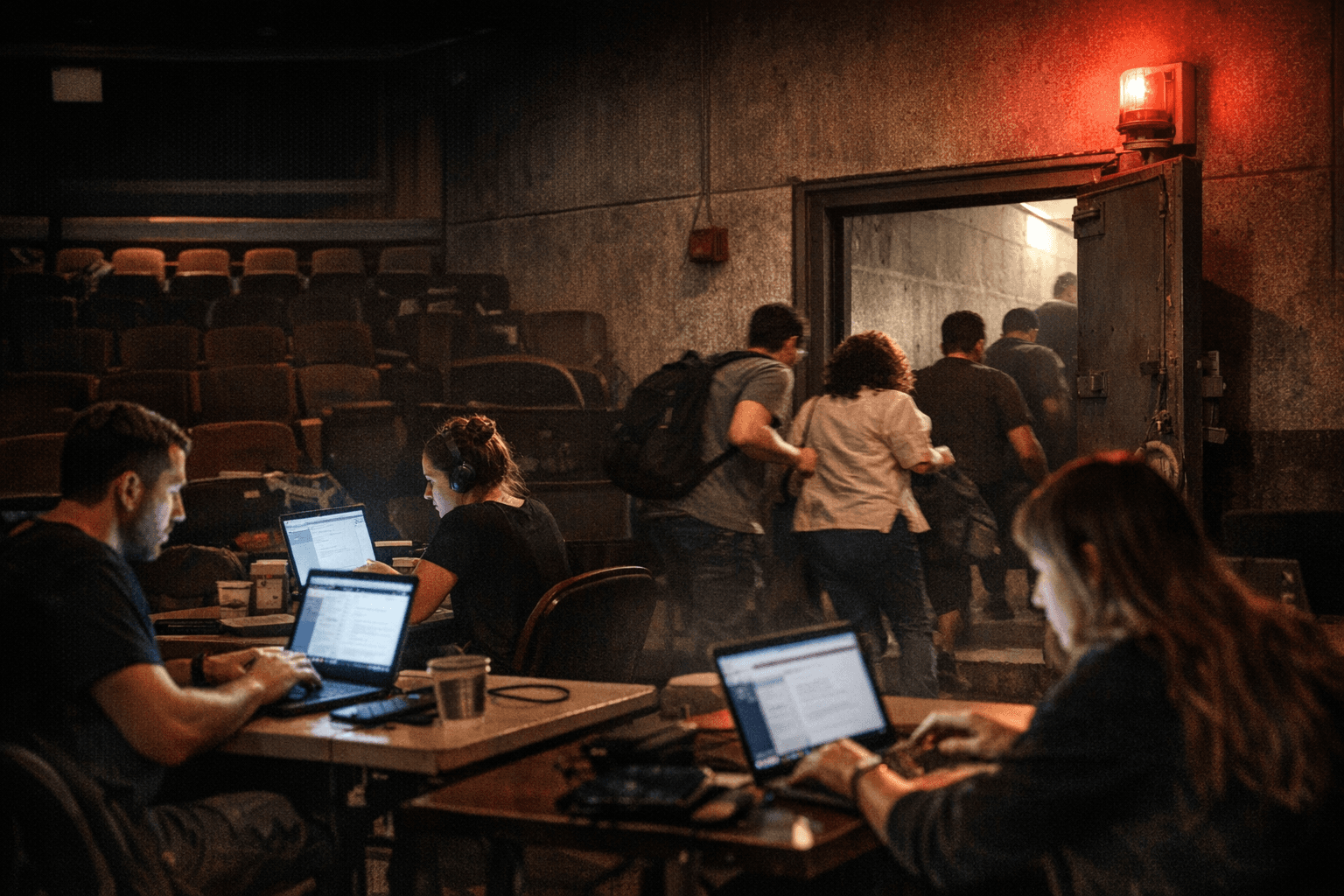
When a siren breaks the home office, the workday usually dies with it. Ramat Gan is trying to give that day back with Safe Work, a municipal workspace inside Ramat Gan Theater that pairs quiet desks with a large protected area right next door.
The setup is simple, and that is exactly why it matters. The room is open Sunday through Thursday from 09:00 to 16:00, entry is free, and the city has built it around the biggest pain point in work-from-home life during emergencies: you can keep working without choosing between productivity and safety.
The practical details that matter first
| Feature | Details |
|---|---|
| Location | Ramat Gan Theater |
| Hours | Sunday to Thursday, 09:00 to 16:00 |
| Entry | Free, subject to Home Front Command instructions |
| Facilities | Fast wireless internet, comfortable workstations, cafeteria, large adjacent protected space |
Why a municipal safe workspace matters during sirens
Remote work looks flexible until the alarms start. In a normal week, the challenge is focus; in a tense security period, the challenge is continuity. Safe Work is Ramat Gan’s answer to the gap between an apartment and a fully protected public room, and that gap is what usually breaks the workday.
Mayor Carmel Shama Hacohen has framed the city’s approach as an effort to preserve as much routine as possible while emergency conditions continue. The point is not just comfort. It is to let residents keep working and studying remotely without losing the basic sense of control that a home office cannot always provide when sirens keep coming.
What is inside Safe Work at Ramat Gan Theater
The space is set up as a quiet work environment with fast Wi-Fi, comfortable desks, and a cafeteria. Just as important, there is a large protected space adjacent to the workspace, so people do not have to scramble across the city when an alert hits.
That combination turns Safe Work from a symbolic gesture into an operational tool. A remote worker can sit down, open a laptop, and keep the day moving, then step into the protected area if the situation changes. In a country where the siren can arrive in the middle of a call, that matters more than polished branding or a fancy design concept.
Who can use it and how access works
The city has presented Safe Work as a place for residents who need to work or study remotely in safety. Access is free, so the barrier is not payment or membership, but simply reaching the theater during operating hours and following Home Front Command instructions.
That free-entry model is not a small detail. During emergencies, any workspace that adds payment friction or complicated booking rules loses its value fast. Ramat Gan has stripped the model down to the essentials: arrive, sit, connect, and keep going.
The emergency backdrop behind the launch
Why Ramat Gan needed this now
The reason Safe Work exists is the scale of disruption inside the city. By April 1, Ramat Gan had faced nearly 150 sirens in 30 days. The city also endured strikes or threats from Iranian missiles, cluster munitions, and falling shrapnel in residential neighborhoods.
That is not a background detail. It is the business case. When a city is living under repeated alerts, work-from-home stops being a lifestyle choice and becomes a logistics problem. Safe Work is Ramat Gan’s attempt to solve one piece of that problem with municipal infrastructure instead of leaving each worker to improvise alone.
What else the city is doing beyond the desks
Safe Work sits inside a broader municipal emergency response. The city has also pushed community measures that include distributing games and mattresses to shelters, cleaning and maintaining shelters, and running activities for children in protected spaces.
There is also support aimed at older residents and people with disabilities, plus a city emergency apparatus that has been operating around the clock. That broader package matters because the work hub only works if the rest of the civil-defense system is functioning too. A protected desk is useful; a protected city is better.
Can other cities copy this model right away?
Why the Ramat Gan formula is easy to replicate
The Ramat Gan model is not built on expensive construction. It relies on a municipal venue, a protected space close to the work area, stable internet, a clear weekday schedule, and free access. That makes it one of the few emergency responses that other cities could reasonably copy fast.
A city with a theater, community center, library, or municipal hall that already has shelter access can move quickly if it is willing to reassign space. The real hurdle is administrative will, not architecture. If local authorities want a working template for continuity during sirens, this is it: open an existing indoor venue, attach it to a protected area, and keep the rules simple.
What still determines whether it works
The model succeeds only if the details stay practical. Workers need reliable internet, enough desks to avoid crowding, clear opening hours, and an entrance policy that does not collapse under pressure. Ramat Gan has already shown the basic formula: keep it free, keep it central, and keep it tied to the emergency guidance people already follow.
That is why Safe Work is more than a feel-good municipal initiative. It is a test of whether a city can turn emergency management into something that keeps people employed, connected, and calm enough to keep working.
שאלות נפוצות
Who is Safe Work for?
Safe Work is aimed at residents who need a safe place to work or study remotely during periods of sirens and heightened security tension. It is designed for everyday use during emergency conditions, not as a one-off showcase.
Where is it located?
The workspace operates inside Ramat Gan Theater, with a large protected area right next to the work zone. That layout is the core of the model, because it reduces the time and stress involved in getting to shelter.
What are the opening hours?
Safe Work is open Sunday through Thursday, from 09:00 to 16:00. Those hours make it usable for a full workday, especially for people who need a stable place to log in after repeated interruptions at home.
What services are available there?
The space includes fast wireless internet, comfortable workstations, a cafeteria, and an adjacent protected area. In practice, that means people can keep working, take short breaks, and move quickly to safety if needed.
Can other municipalities build something similar?
Yes, and the Ramat Gan version shows how. A city that already has a municipal building with shelter access can repurpose space, add Wi-Fi and desks, and open it free of charge during set hours. That is a response other cities in Israel can copy without waiting for a major construction project.
יודעים משהו שפספסנו? יש לכם תיקון או מידע נוסף?
שלחו טיפ