Academy Awards Red Carpet Shines With Emerald Drops and Statement Gemstones
Emerald drops and bold colored stones took center stage at the 98th Academy Awards, proving high jewelry remains the red carpet's most compelling accessory story.
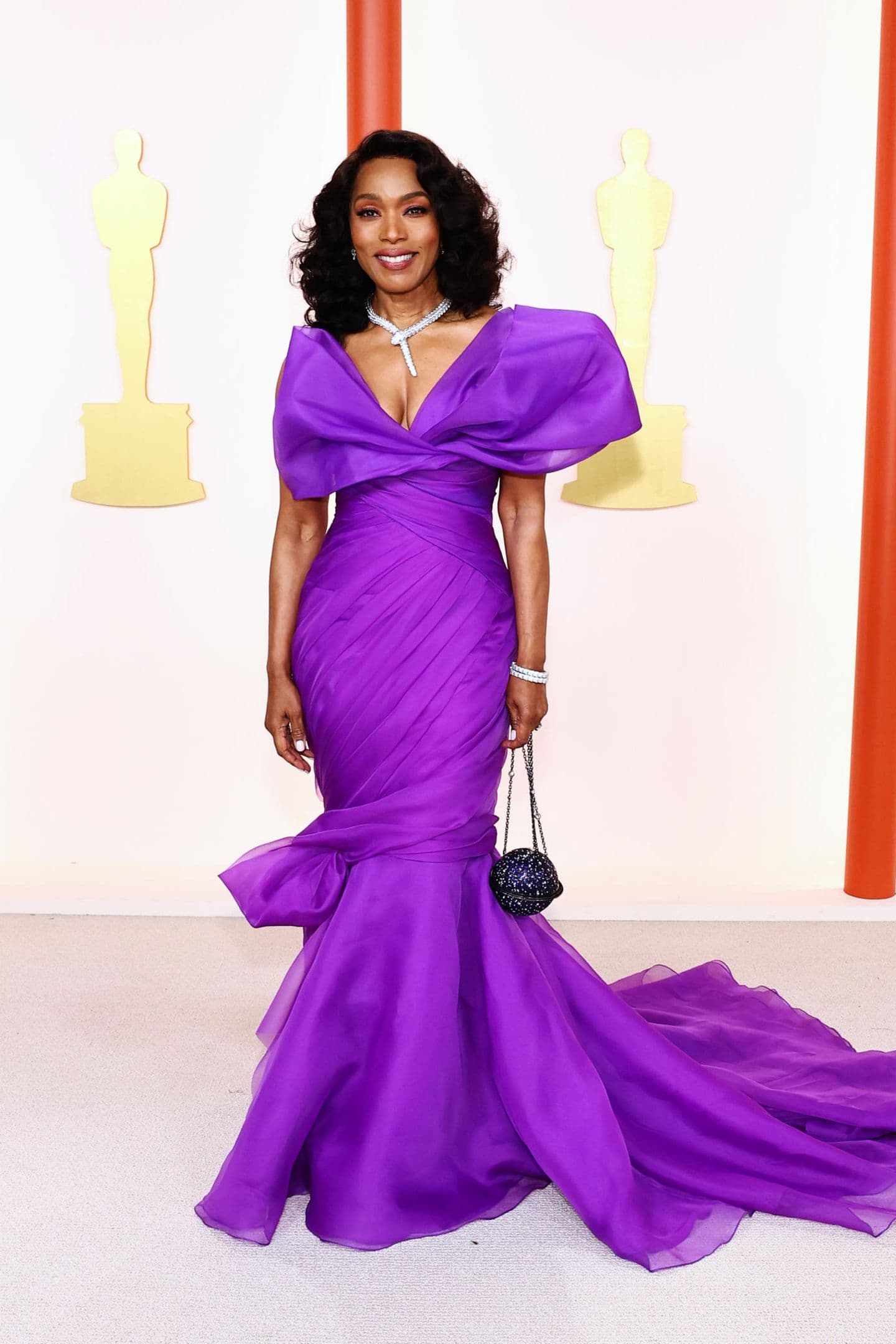
The 98th Academy Awards delivered its customary parade of couture and diamonds, but this year's red carpet told a more nuanced gemstone story. Among the ten standout jewelry moments highlighted from the ceremony, it was colored stones, and emerald drops in particular, that commanded the most attention. High jewelry has always been the silent co-star of Hollywood's biggest night, but the visible pivot toward vivid, intentional color signals something worth examining closely.
The Return of Color as a Statement
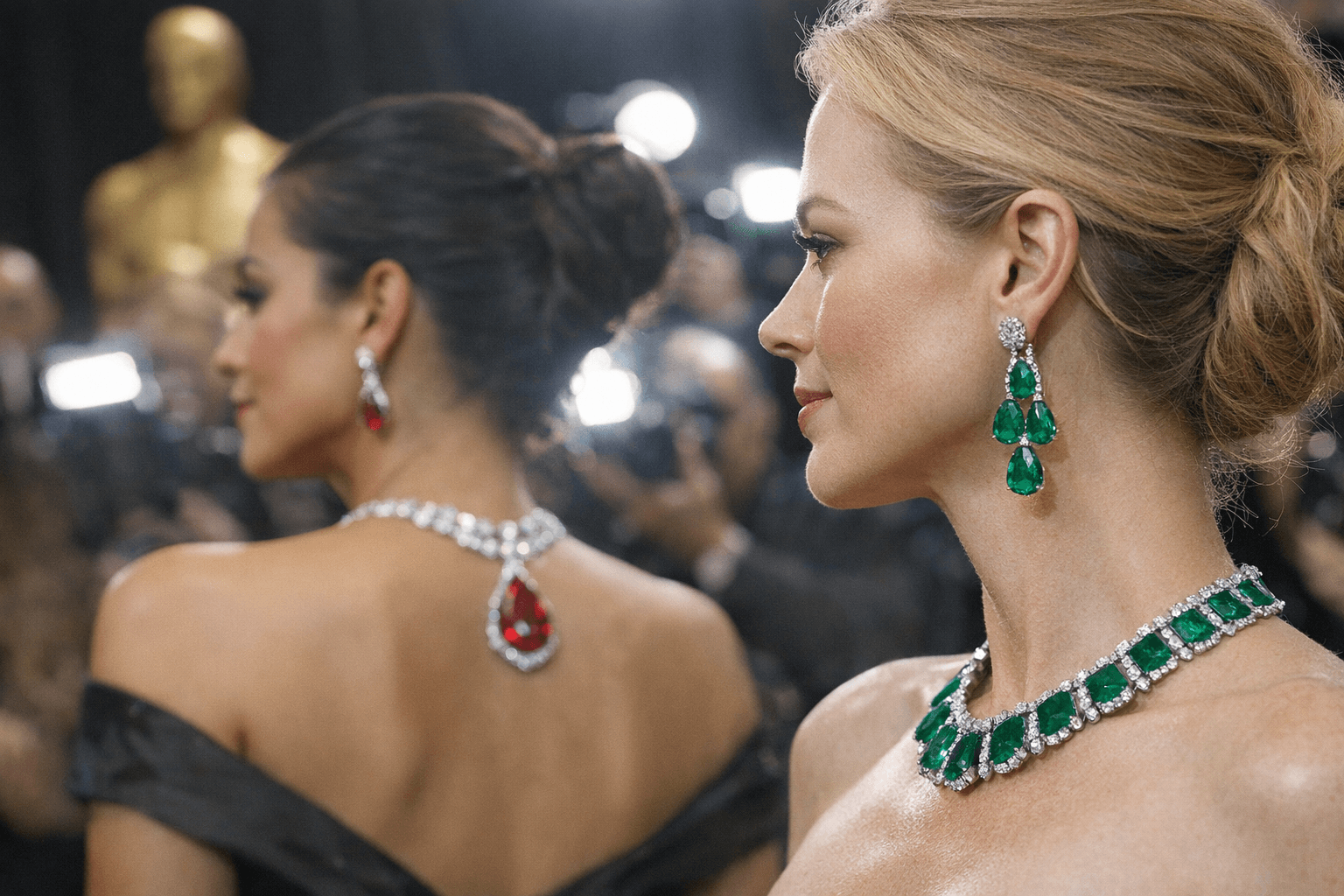
Emeralds have a long and complicated history in high jewelry. Unlike diamonds, whose value metrics are relatively standardized, emeralds are graded on a spectrum that rewards depth of color, clarity, and the characteristic internal fractures that gemologists call "jardin," meaning garden. A truly fine Colombian emerald with strong saturation and minimal treatment can command prices that rival top-grade diamonds of equivalent carat weight. When emerald drops appear on the Academy Awards red carpet, they are rarely costume jewelry. They are declarations.
The 98th ceremony's embrace of emerald drops reflects a broader industry momentum. Fine jewelry houses have spent the past several seasons championing colored gemstones as the sophisticated alternative to all-white diamond looks, and the Oscars audience seemed to receive that message.
What Makes a Red Carpet Jewelry Moment
Not every piece worn on a red carpet earns the distinction of a "standout jewelry moment." The ten pieces highlighted from this year's ceremony were selected for their visual impact, their provenance, and the conversation they started. Red carpet high jewelry operates at the intersection of fashion and investment: pieces are often loaned from major houses, insured for figures that dwarf the gowns they accompany, and returned before the after-parties begin.
The mixed use of colored gemstones seen at the 98th Academy Awards reflects a deliberate styling philosophy. Colorless diamonds read as neutral, as background luxury. A vivid green emerald, a deep blue sapphire, or a saturated ruby enters into dialogue with the garment it accompanies. Styling teams and jewelry houses negotiate these pairings carefully, and when the combination works, it becomes the photograph that circulates for years.
Emerald Drops: Anatomy of a Look
Drop earrings set with emeralds are deceptively technical objects. The challenge for any jeweler crafting them is balancing the weight of the stone against the delicacy of the setting and the mechanics of movement. Emeralds rank 7.5 to 8 on the Mohs hardness scale, making them softer than sapphires or rubies, and their characteristic inclusions mean that bezel settings or protective prong configurations are often preferred over fully open designs that expose the girdle to impact.
On a red carpet, drop earrings function kinetically. They catch light as a wearer turns to the camera, oscillating gently in a way that solitaire studs cannot replicate. The theatrical quality of a well-made emerald drop, where the stone's color shifts from blue-green to pure green as it moves through changing light, is precisely the quality that reads well on camera and translates to the kind of image that defines a ceremony's visual legacy.
High Jewelry and the Colored Stone Renaissance
The industry context behind this red carpet moment is worth understanding. The past several years have seen auction houses and jewelry fairs report sustained demand for colored stone pieces, particularly those with documented provenance. Emeralds from Colombia's Muzo and Chivor mines carry premiums for their geographic origin, and Zambian emeralds are increasingly recognized for their distinctive bluish-green hue and often superior clarity.
For buyers and collectors watching the Academy Awards, a high-profile wearing of emerald drops by a well-dressed celebrity functions as market signal as much as fashion moment. It validates the color, the stone type, and by extension the category of piece. Fine jewelry retailers and auction specialists have long understood that a single red carpet appearance can shift consumer interest for an entire season.
Statement Stones Beyond Emeralds
The ten standout moments from the 98th Academy Awards were not limited to emeralds alone. The broader theme was the use of statement stones: pieces where a single significant gemstone, or a curated grouping of vivid colored stones, anchored the entire jewel. This approach contrasts with the pavé-heavy, all-over-diamond aesthetic that dominated red carpets of earlier decades.
Statement stone jewelry demands a different kind of confidence from the wearer. There is nowhere to hide when a single large gemstone is the entire argument of a piece. The stone must be exceptional, the setting must serve rather than compete, and the overall scale must be calibrated to the person wearing it. When these elements align, the result is the kind of jewelry moment that stops conversation.
The Craft Behind the Spectacle
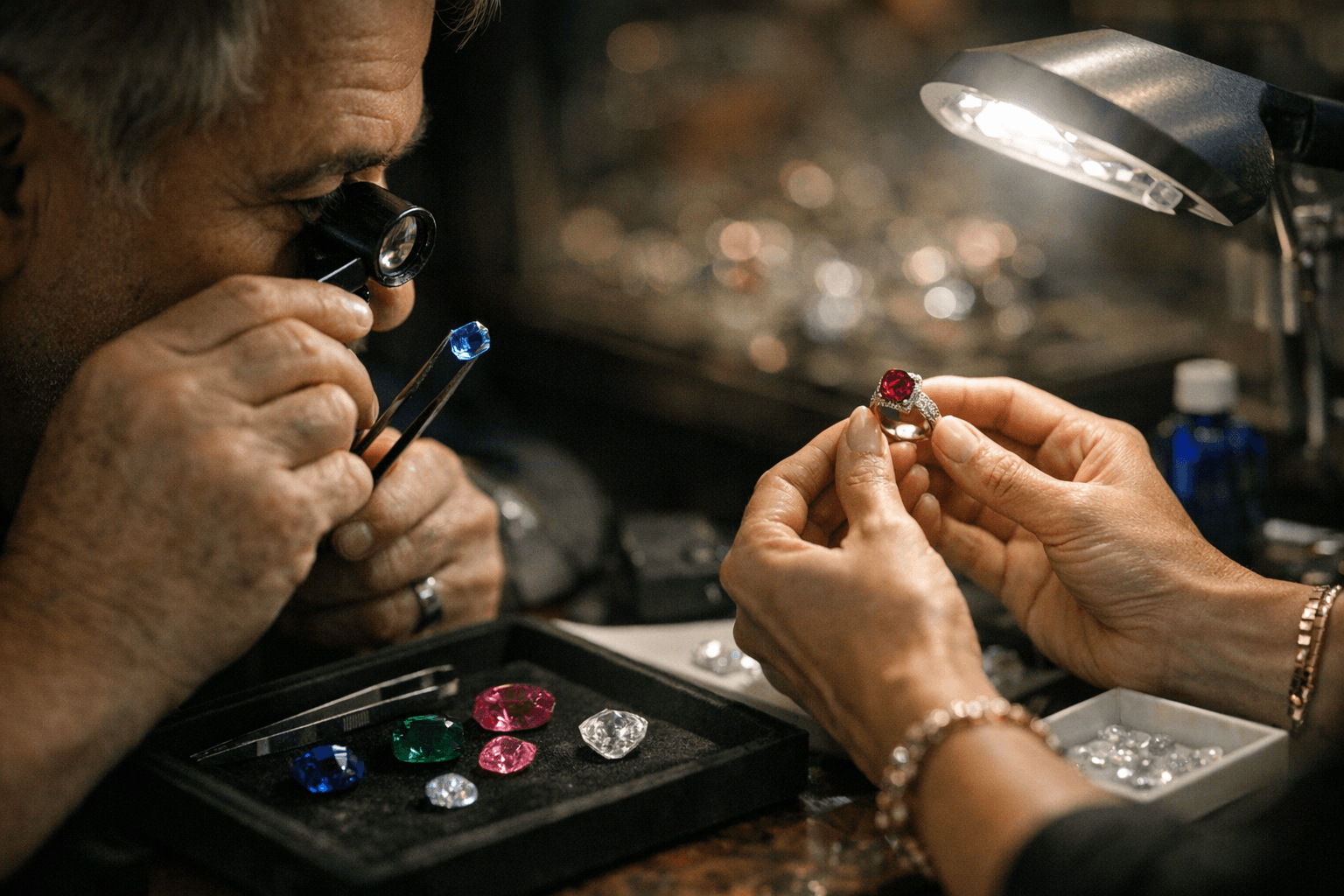
What the camera captures in two seconds on a red carpet represents months or years of work by gemologists, lapidaries, and bench jewelers. A significant emerald drop begins with the selection of rough material, which may travel from a mine in Colombia or Zambia through a cutting center in Jaipur or Idar-Oberstein before reaching a jeweler's atelier in Paris, Geneva, or New York.
The lapidary who cuts an emerald for a drop earring makes consequential decisions about how to orient the stone within the rough to maximize color saturation while minimizing visible inclusions. These cuts are not reversible. The final weight and shape determine the entire design language of the finished piece, including the metalwork required to hold it safely while allowing it to move with the grace that drop settings demand.
Provenance and the Ethical Question
For those of us who cover jewelry with an eye toward where materials originate, red carpet moments carry a question that the photographs alone cannot answer: what do we know about these stones? The colored gemstone supply chain remains significantly less standardized than the diamond industry, where the Kimberley Process, whatever its limitations, established at least a framework for documentation.
Emeralds in particular present provenance challenges. Colombian emerald mining has historically involved a complex network of artisanal, small-scale, and large commercial operations, with varying labor and environmental standards. Certification from organizations like the Gemological Institute of America can confirm geographic origin and treatment status, but does not certify ethical mining conditions. For high jewelry worn to the world's most photographed event, these questions deserve more than silence.
What This Means for Birthstone Buyers
Emerald is the birthstone for May, and the visibility it receives at major cultural events like the Academy Awards has a measurable effect on demand. When shoppers begin exploring emerald pieces in the weeks following a high-profile red carpet moment, they enter a market that spans extraordinary range: from heat-treated stones of modest clarity available for a few hundred dollars to museum-quality Colombian pieces that belong in a different conversation entirely.
Understanding the difference requires attention to treatment disclosure. A responsible jeweler will specify whether an emerald has been treated with cedar oil or resin, which is standard industry practice to fill surface-reaching fractures, and will grade the extent of that treatment. Pieces described simply as "natural emerald" without further qualification are offering incomplete information.
The Broader Birthstone Conversation
The Academy Awards red carpet moment arrives at a time when birthstone jewelry is experiencing renewed cultural relevance across multiple generations. Younger buyers are approaching colored stones not simply as sentimental tokens but as genuine investment-grade alternatives to diamond jewelry. The visibility of emerald drops on a stage watched by millions reinforces that colored stones can carry the weight of a serious fine jewelry statement.
This shift has practical implications for how birthstone pieces are made and sold. Houses that once reserved their finest colored stone work for bespoke commissions are now applying that level of craft to accessible collection pieces, because the audience for quality has grown. The ten jewelry moments from the 98th Academy Awards are, in that sense, more than a red carpet list. They are a measure of where the industry's appetite has moved, and where the next generation of serious jewelry collectors is looking.
The emerald drops that caught the camera's eye at this year's ceremony represent a category of object worth understanding deeply before purchasing: stones with geological histories measured in hundreds of millions of years, shaped by human hands over months, worn for three hours under television lights, and capable of holding their value across generations when chosen with care and documented with rigor.
Know something we missed? Have a correction or additional information?
Submit a Tip