AGTA Spotlights April Diamonds With Bold Settings and Fancy Color Options
AGTA's April diamond showcase reveals the stone's modern range, from fancy pink and yellow colors to toi et moi pairings, with a buyer's guide on exactly what your money gets.
The Stone That Outlasts Everything
The ancient Greeks named it *adamas*, meaning unconquerable. Hindu texts from the 4th century BC called it *vajra*, the thunderbolt, and believed the stone formed when lightning struck rock. Medieval physicians prescribed powdered diamond as a cure, while warriors wore it as armor against enemy blades. Every civilization that encountered the diamond invented a mythology equal to its hardness, and that instinct has not disappeared. It has simply migrated to the jewelry case.
Diamond is the only mineral to score a 10 on the Mohs hardness scale, the only substance that can scratch itself, and the birthstone assigned to April in both the modern and traditional lists. The American Gem Trade Association's annual April member showcase makes clear that the stone's cultural moment is as charged as ever, with AGTA members presenting a wide field of rings, necklaces, and earrings that push well beyond the colorless round brilliant. Textured metalwork, mixed-gold constructions, fancy-color stones in pink and yellow, toi et moi pairings, and bezel settings built for daily wear are all present in the current trade landscape. If you're shopping for an April birthday, or simply paying attention to where fine jewelry is headed, this is the moment to understand what you're actually buying.
The Buyer's Checklist: Four Cs, One Certificate, One Setting Question
Before evaluating any specific piece, the most protective thing you can do as a buyer is run every diamond through five criteria: cut, color, clarity, carat weight, and certification. These are not formalities. They are the only framework that lets you compare diamonds honestly across jewelers and price points.
- Cut is the most important of the four Cs for a diamond's visual impact. A well-cut stone returns light to your eye efficiently; a poorly cut stone leaks it. The GIA grades cut for round brilliants on a scale from Excellent to Poor. Ask for Excellent or Very Good.
- Color is graded D (colorless) through Z (visibly yellow or brown). The colorless range, D through F, commands the highest premiums. G through J, described as near-colorless, offer significant savings with minimal visible difference, especially in yellow gold settings.
- Clarity grades range from Flawless (FL) to Included (I3). Eye-clean stones, those with no inclusions visible to the naked eye, typically fall between VS2 and SI1. Paying for FL or IF when you can't see the difference without magnification is money left on the table.
- Carat weight is a measure of mass, not size. Two one-carat diamonds can look strikingly different depending on their cut proportions and shape.
- Certification means an independent grading report from GIA or AGS accompanies the stone. These reports are non-negotiable for any purchase above $1,000. Without one, you are accepting the seller's assessment of quality rather than an independent lab's.
The sixth variable, and one the AGTA showcase underscores with particular emphasis this season, is setting. Bezel settings, which encase the diamond's girdle in a continuous metal rim, offer maximum protection for stones worn daily. They are the right choice for family necklaces, pieces intended for children's gifts, or wearers with active lifestyles. Prong settings, either four or six claws, expose more of the stone's surface to light and produce more brilliance, but prongs can catch on fabric and require periodic inspection. If you're buying a piece meant to live on the body every day, bezel durability is worth more than prong sparkle.
Fancy Color and the Rise of the Non-White Diamond
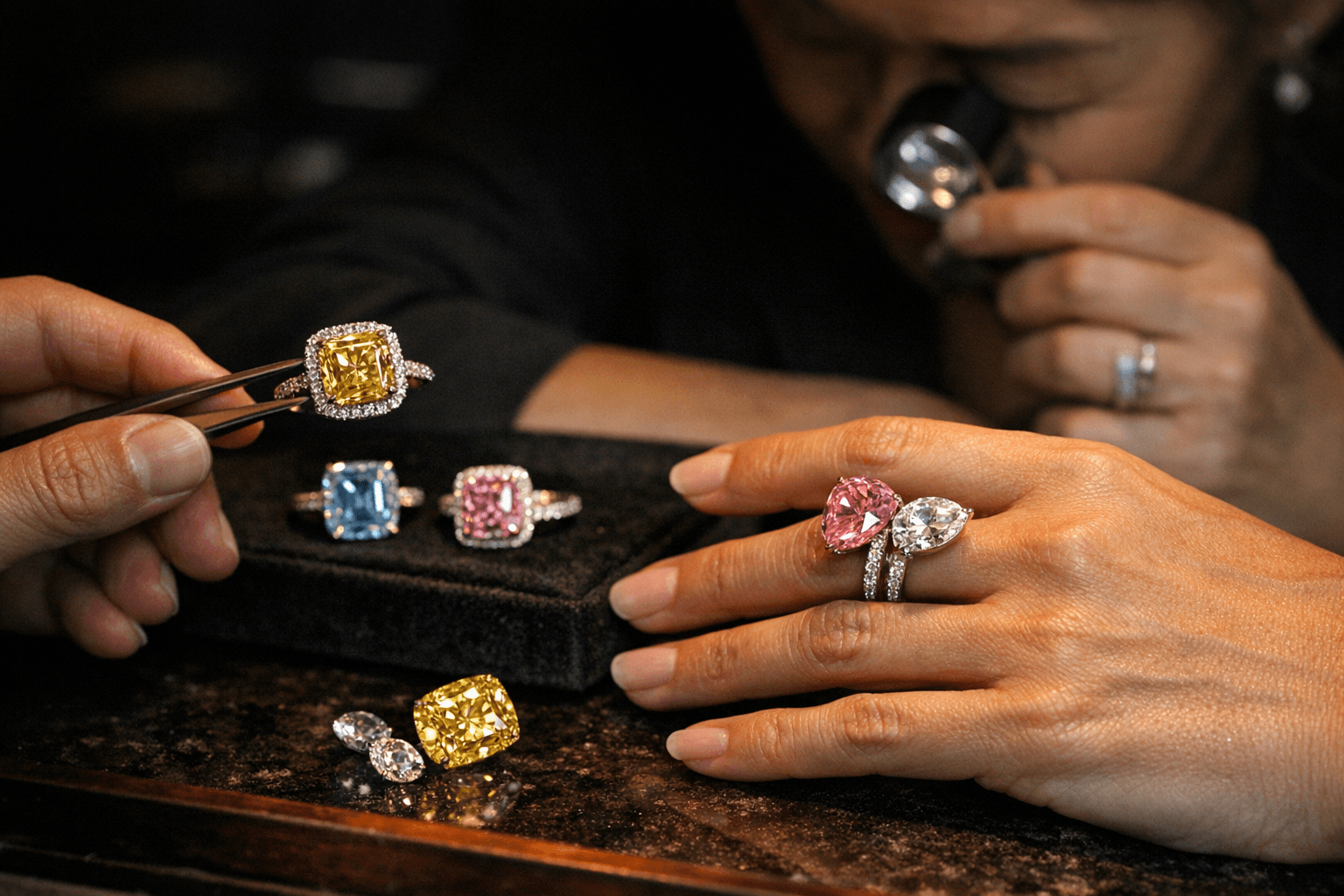
Fancy color diamonds are seeing remarkable growth in 2026, with yellow, pink, blue, green, and champagne stones offering an expressive alternative to the traditional white diamond. AGTA's member showcase reflects this directly. Where past April showcases were anchored in colorless stones, current offerings lean into the full chromatic range of the diamond family.
Yael Designs has produced a ring in 18K white, rose, and yellow gold combining a 3.76 ct. brown diamond with pink diamonds (0.85 ctw.), yellow diamonds (0.81 ctw.), and white diamonds (0.26 ctw.) in a single composition. The piece is instructive: it illustrates how mixed-color diamond rings work as wearable color theory, with each tone warming or cooling the others. Assael, meanwhile, pairs a 4.02 ct. yellow radiant-cut diamond with an 11.1-11.3 mm cultured golden South Sea pearl in 18K yellow gold, a combination that turns the pearl's organic warmth into a foil for the stone's saturated fire.
Pink diamonds occupy a different market tier entirely. Natural pink diamonds, particularly those from the now-closed Argyle mine in Western Australia, have seen significant appreciation since the mine's 2020 closure reduced global supply to a trickle. Any natural pink diamond with provenance documentation commands serious attention. Lab-grown pink diamonds have expanded accessibility at the lower end of the price range, though they carry different long-term value characteristics.
The Toi et Moi Moment
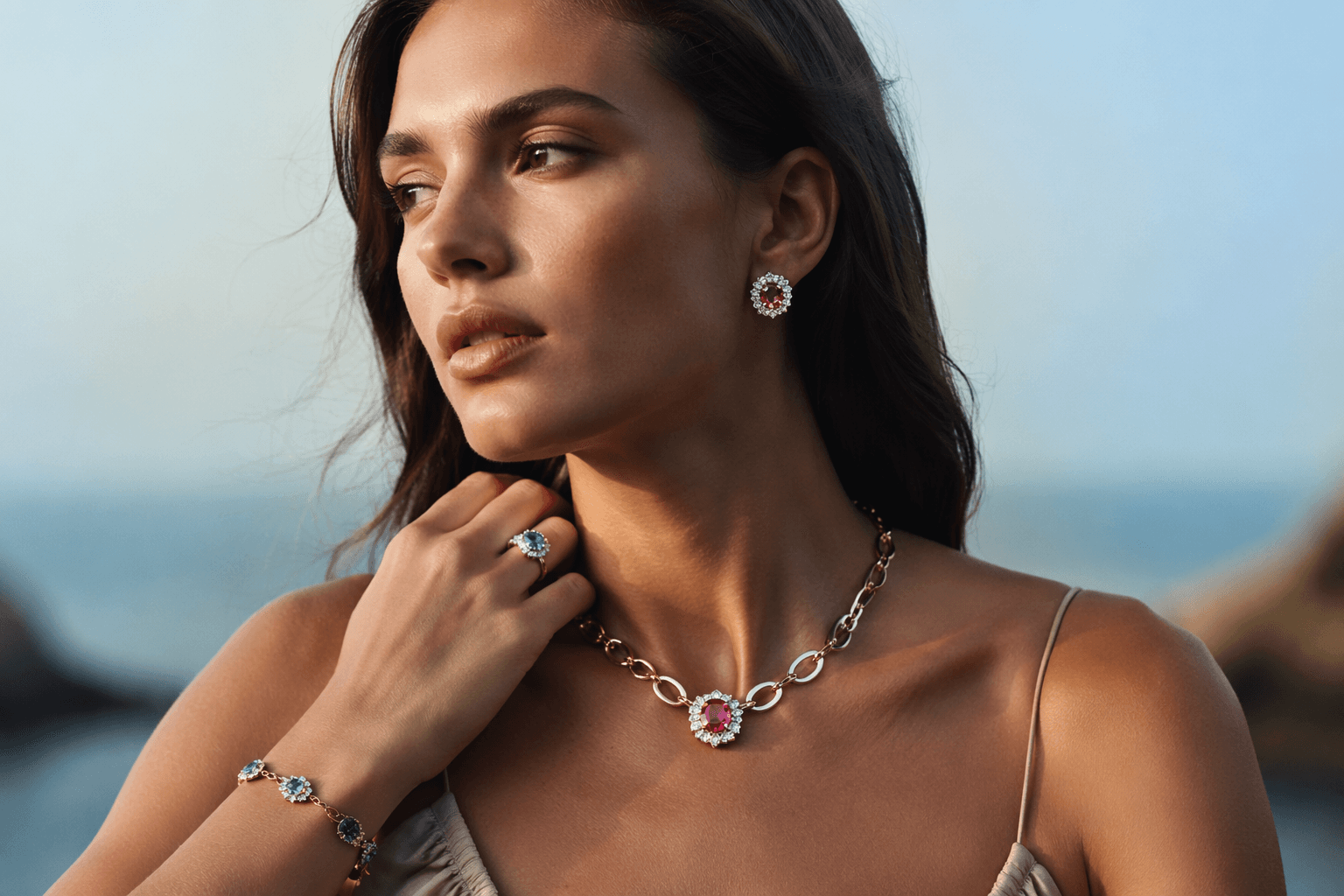
Toi et moi settings, where two stones sit side-by-side on a single band, are among 2026's most prominent design trends, giving wearers a way to express duality, partnership, or a simple preference for stones that tell more than one story. In the context of diamond birthstone jewelry, the format opens up creative possibilities: a colorless diamond paired with a pink or yellow fancy, a diamond beside a pearl, or a diamond with a colored gemstone representing a second family member's birth month. AGTA members have embraced this pairing logic across categories this spring, particularly in the Mother's Day gifting season, where multi-stone family pieces carry obvious emotional weight.
A Price and Quality Ladder
Understanding what your money actually buys at each budget tier prevents the most common mistake in diamond shopping: assuming that spending more automatically means getting more. Here is a realistic guide to what the market currently offers.
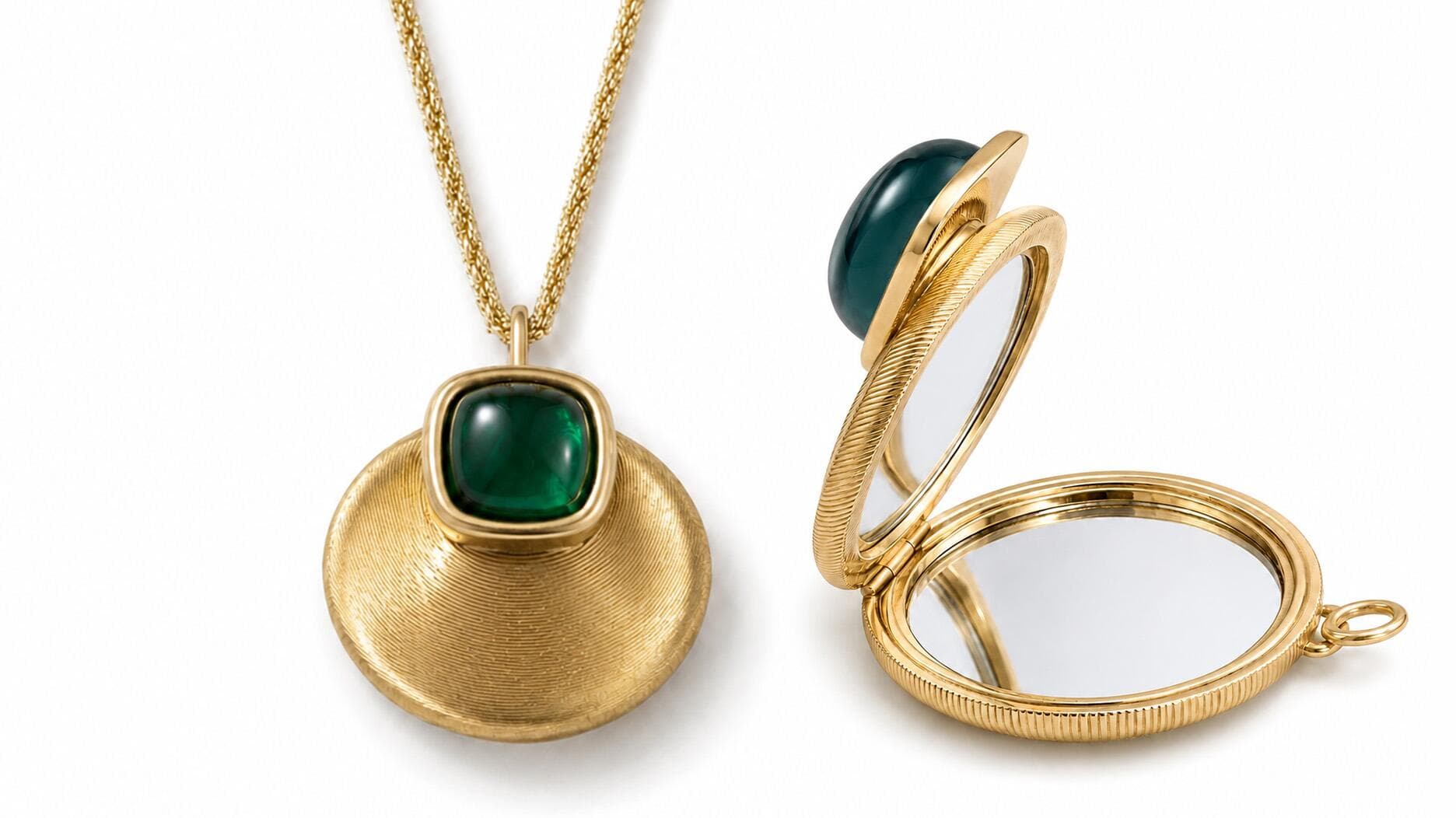
Around $500: At this budget, a certified center stone is generally out of reach, but well-crafted diamond accent and pave pieces are viable. Aurelie Gi's Polaris necklace in 14K recycled yellow gold with 0.272 ctw. in diamonds is one such example, available at $920 but illustrative of the segment: small total carat weights in quality gold settings, where craftsmanship carries more value than stone size.
Around $1,500: This is where a GIA-certified round brilliant in the 0.30-0.39 carat range enters the picture. A diamond in the 0.30-0.39 carat range can run anywhere from $1,500 per carat for a K color, SI2 clarity stone up to $4,000 or more per carat for a D color, IF clarity gem. At $1,500 total budget, a near-colorless (G-H), eye-clean (SI1) stone in a 14K gold solitaire setting is achievable. Artistry Ltd.'s 14K white gold necklace with 1.05 ctw. in round full-cut diamonds represents the kind of understated, well-made design available in this range.
$5,000 and above: This is where certified quality becomes meaningfully visible. A well-cut round brilliant diamond with SI1-VS2 clarity and F-H color in the one-carat range averages $5,500 to $8,795 depending on the specifics of the individual stone. At $5,000, you can realistically obtain a 0.75-0.90 ct. round or cushion-cut diamond in an 18K setting with a full GIA report. TAP by Todd Pownell's teardrop earrings in mixed darkened 14K white and 18K yellow gold with inverted diamonds at 1.90 ctw. and priced at $4,356 demonstrate what design ingenuity and mixed-metal construction can accomplish at the upper edge of this tier.
The Questions to Ask Before You Buy
When you're standing at the case, or browsing trade member inventory, these are the questions that separate confident purchases from hopeful ones:
- "Does this stone have a GIA or AGS grading report, and can I see it?"
- "What is the cut grade on this report?"
- "Is the color grade based on the stone alone, or does the setting affect the appearance?"
- "Is this a bezel, prong, or other setting, and what maintenance does it require?"
- "Is this diamond Kimberley Process certified as conflict-free?"
- "What is the total diamond weight, and what is the weight of the center stone alone?"
- "If I'm comparing two stones at the same price, which has the better cut grade?"
That last question is the most important. Cut is the variable that determines how much life a diamond shows in the room. A G-color, VS2 diamond with an Excellent cut grade will outperform a D-color, FL diamond with a Good cut in every ambient lighting condition you will ever actually encounter. AGTA members understand this, and the boldness of the current showcase, from Goshwara's five-carat "Inside-Outside" earrings in 18K yellow gold to Assael's platinum rings pairing diamonds with rare natural pearls, reflects a trade community confident that design and stone quality, not stone size alone, is what drives lasting value.
The ancient world was right about one thing: a diamond is unconquerable. What the AGTA's April members are proving is that its range of expression is equally limitless.
*Piece prices and specifications reference AGTA member offerings from the organization's annual April birthstone showcase. Stone pricing benchmarks reflect independent market data from GIA-affiliated sources and fine jewelry specialists.*
Wait, I need to format this properly per instructions. Let me finalize:
The Stone That Outlasts Everything
The ancient Greeks named it *adamas*, meaning unconquerable. Hindu texts from the 4th century BC called it *vajra*, the thunderbolt, and believed the stone formed when lightning struck bare rock. Medieval physicians prescribed powdered diamond as a tonic, while soldiers wore it as a talisman against enemy blades. Every civilization that encountered the diamond invented a mythology equal to its hardness, and that instinct has not disappeared. It has simply migrated to the jewelry case.
Diamond is the only mineral to score a 10 on the Mohs hardness scale, and the only substance capable of scratching itself. It is April's birthstone in both the modern and traditional lists, and the American Gem Trade Association's annual member showcase this spring makes clear that the stone's cultural moment is as charged as ever. AGTA members are presenting rings, necklaces, and earrings that push well beyond the colorless round brilliant: textured metalwork, mixed-gold constructions, fancy-color stones in pink and yellow, toi et moi pairings, and bezel settings built for daily wear. If you are shopping for an April birthday or simply paying attention to where fine jewelry is headed, this is the season to understand what you are actually buying.
The Buyer's Checklist: Four Cs, One Certificate, One Setting Question
Before evaluating any specific piece, the most protective thing you can do as a buyer is run every diamond through five criteria: cut, color, clarity, carat weight, and certification. These are not formalities. They are the only framework that lets you compare diamonds honestly across jewelers and price points.
- Cut is the most important of the four Cs for a diamond's visual impact. A well-cut stone returns light to your eye efficiently; a poorly cut stone leaks it. The GIA grades cut for round brilliants on a scale from Excellent to Poor. Ask for Excellent or Very Good.
- Color runs from D (colorless) through Z (visibly warm or yellow). The D-through-F range commands the highest premiums. G through J, described as near-colorless, offer significant savings with minimal visible difference to the naked eye, especially in yellow gold settings.
- Clarity ranges from Flawless (FL) to Included (I3). Eye-clean stones, those with no inclusions visible without magnification, typically fall at VS2 to SI1. Paying for FL or IF clarity when you cannot see the difference is money spent on a laboratory certificate rather than on beauty.
- Carat weight measures mass, not visual size. Two one-carat diamonds can look strikingly different depending on their cut proportions and shape.
- Certification means an independent grading report from GIA or AGS accompanies the stone. These reports are non-negotiable for any purchase above $1,000. Without one, you are accepting the seller's assessment of quality rather than an independent laboratory's.
The sixth variable, and one the AGTA showcase underscores with particular emphasis this spring, is setting type. Bezel settings encase the diamond's girdle in a continuous metal rim, offering maximum durability. They are the right choice for family necklaces, pieces intended for active wearers, or stones that will live on the body every day. Prong settings, in four or six claws, expose more of the stone's surface to light and produce more brilliance, but prongs can catch on fabric and require periodic inspection. If you are choosing a piece for longevity, bezel durability often outweighs prong sparkle.
Fancy Color and the Non-White Diamond
Fancy color diamonds are seeing remarkable growth in 2026, with yellow, pink, blue, green, and champagne stones offering an expressive alternative to the traditional white diamond. The AGTA showcase reflects this directly. Where earlier April showcases were anchored in colorless stones, the current trade offering leans into the full chromatic range of the diamond family.
Yael Designs shows a ring in 18K white, rose, and yellow gold combining a 3.76 ct. brown diamond with pink diamonds totaling 0.85 ctw., yellow diamonds at 0.81 ctw., and white diamonds at 0.26 ctw. in a single composition. The piece functions as wearable color theory: each tone warms or cools the others, and the three-gold construction amplifies the effect. Assael, meanwhile, pairs a 4.02 ct. yellow radiant-cut diamond with an 11.1 to 11.3 mm cultured golden South Sea pearl, a combination that turns the pearl's organic warmth into a foil for the stone's saturated fire.
Pink diamonds occupy a different market tier entirely. Natural pink diamonds, particularly those with Argyle provenance from the Western Australian mine that closed in 2020, have seen significant appreciation as global supply has tightened. Any natural pink with documentation commands serious consideration. Lab-grown pink diamonds have expanded accessibility at lower price points, though they carry different long-term value characteristics.
The Toi et Moi Moment
Toi et moi settings, where two stones share a single band, are among the most prominent design trends of 2026, giving wearers a way to express duality, partnership, or a simple preference for stones that tell more than one story. In the context of April birthstone jewelry, the format opens compelling possibilities: a colorless diamond paired with a pink or yellow fancy, a diamond beside a pearl, or a diamond alongside a colored gemstone representing a second family member's birth month. AGTA members have embraced this pairing logic across categories this spring, particularly in the Mother's Day gifting season, where multi-stone family pieces carry obvious emotional and narrative weight.
Textured metalwork, which the AGTA showcase highlights as a signature of current member design, complements toi et moi pairings by adding visual complexity at the band level. Rather than relying on stone size alone for impact, these pieces use surface treatment and metal combination to create jewelry that rewards close attention.
A Price and Quality Ladder
Understanding what your money buys at each budget tier prevents the most common mistake in diamond shopping: assuming that spending more automatically means getting more. Here is a realistic guide to what the current market offers.
*Around $500:* At this budget, a GIA-certified center stone is generally out of reach, but well-crafted diamond accent pieces in quality gold settings are viable. Aurelie Gi's Polaris necklace in 14K recycled yellow gold with 0.272 ctw. in diamonds, available at $920, sits just above this threshold and illustrates the segment: smaller total carat weights in thoughtfully designed settings where craftsmanship carries more weight than stone size.
*Around $1,500:* This is where a GIA-certified round brilliant in the 0.30 to 0.39 carat range enters the picture. A diamond in that weight range can run anywhere from $1,500 per carat for a K color, SI2 clarity stone up to $4,000 or more per carat for a D color, IF clarity gem. At a $1,500 total budget, a near-colorless (G-H), eye-clean (SI1) stone in a 14K gold solitaire is achievable. Artistry Ltd.'s 14K white gold necklace with 1.05 ctw. in round full-cut diamonds represents the kind of understated, well-made design available at this level.
*$5,000 and above:* This is where certified quality becomes meaningfully visible in both the stone and the setting. A well-cut round brilliant with SI1-VS2 clarity and F-H color in the one-carat range averages $5,500 to $8,795 depending on the specifics of the individual stone. At the $5,000 mark, a 0.75 to 0.90 ct. round or cushion-cut in an 18K setting with a full GIA report is realistic. TAP by Todd Pownell's teardrop earrings in mixed darkened 14K white and 18K yellow gold, set with inverted diamonds at 1.90 ctw. and priced at $4,356, demonstrate what design ingenuity in mixed-metal construction can accomplish at the top of this tier.
What to Say When You're at the Counter
The gap between browsing and buying confidently comes down to a handful of direct questions. Use these as a script:
- "Does this stone have a GIA or AGS grading report, and can I see it?"
- "What is the cut grade on the report?"
- "Is this a bezel or prong setting, and what maintenance does it require?"
- "Is the total diamond weight the same as the center stone weight, or does it include accent stones?"
- "Is this diamond Kimberley Process certified as conflict-free?"
- "If I'm comparing two stones at the same price, which has the better cut grade?"
That final question is the decisive one. Cut determines how much life a diamond shows under any lighting condition you will actually encounter. A G-color, VS2 stone with an Excellent cut grade will outperform a D-color, FL diamond with a Good cut in virtually every context outside a gemological laboratory. AGTA members understand this distinction deeply, which is why the current showcase ranges from Goshwara's five-carat "Inside-Outside" earrings in 18K yellow gold to platinum rings pairing diamonds with rare natural pearls: design ambition and stone quality, not carat weight alone, define what makes a diamond piece worth keeping for decades.
The ancient world was right about one thing: a diamond is unconquerable. What the AGTA's spring members are proving is that its range of expression is equally without limit.
This article was produced by Prism’s automated news system from verified source data, official records, and press releases, then run through automated quality and moderation checks before publishing. The system is built and supervised by the people who set the standards it runs under. Read our full AI policy.
Did this article answer your question?