Alex Monroe celebrates 40 years with a ruby snake ring
Alex Monroe’s 40th-anniversary ruby snake ring uses 76 stones from Madagascar and Mozambique to turn July’s birthstone into a $16,409 statement.
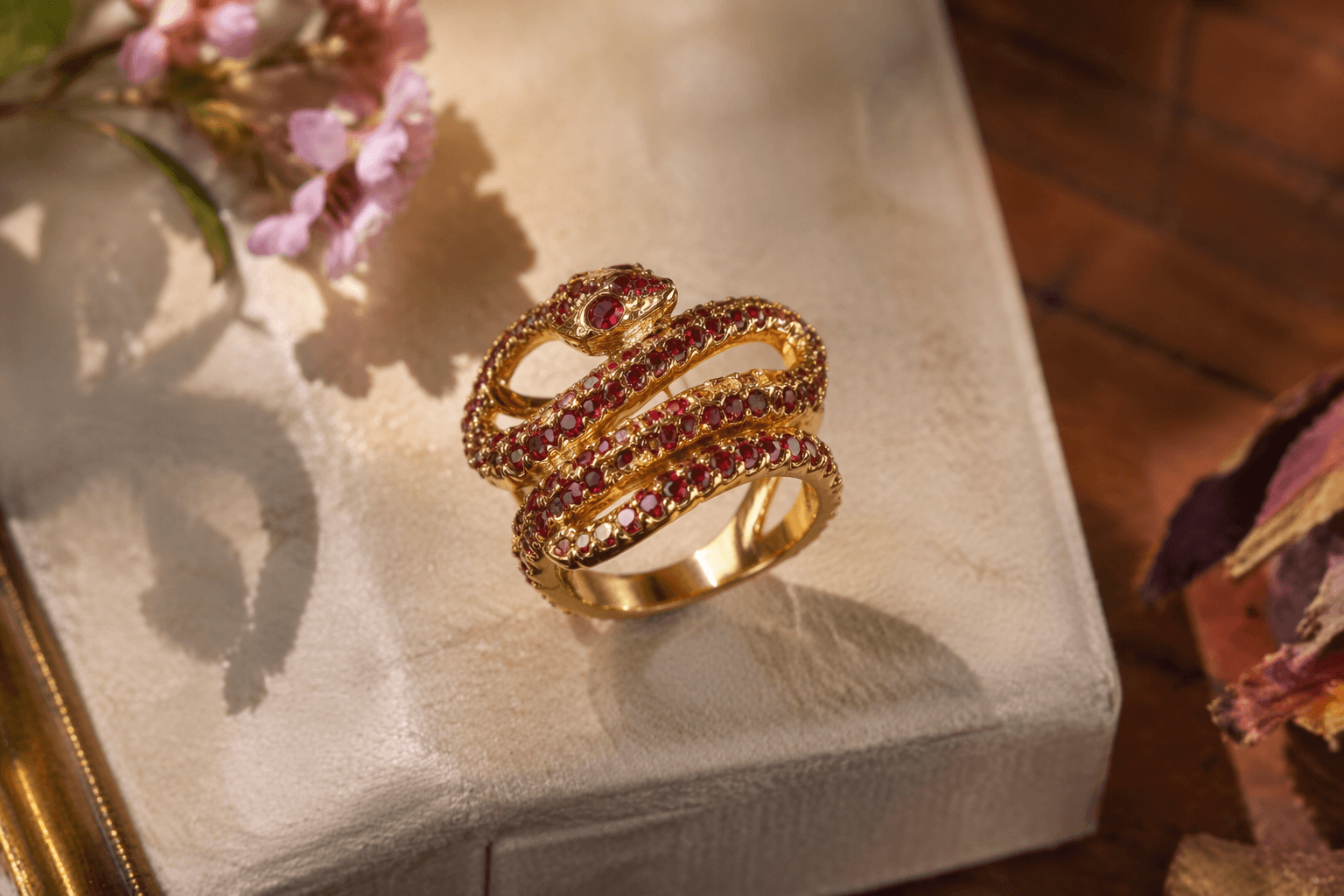
Alex Monroe marked its 40th anniversary with a ruby snake ring that trades ruby’s usual polish for something more sculptural, more sly and far more likely to catch a younger collector’s eye. Created with Edinburgh jeweler Balint Samad, the piece uses 76 rubies in varied sizes to build the look of snakeskin shimmer across the band, and JCK places the price at $16,409.
The choice of partner matters. Balint Samad’s work is rooted in bold colours, classic shapes and irreverent design, a vocabulary that suits a serpent ring meant to convert ruby skeptics. Rather than framing the stone as stiff or ceremonial, Alex Monroe and Samad gave it motion and texture, letting the gem read as fashion jewelry with enough technical detail to feel collectible.
The anniversary piece also lands inside a bigger brand story. Alex Monroe says it has been hand-making jewellery in England for 40 years, and that its first collection arrived in 1987. In 2026, the celebration includes limited-edition ruby pieces and one-of-a-kind fine jewellery, among them a ruby-set anniversary necklace and a ruby Bumblebee necklace limited to 20 pieces. The brand is using ruby as its milestone stone, but the snake ring is the clearest signal that the category can still feel fresh when the design does the talking.
That strategy also reframes how the brand handles birthstones more broadly. Alex Monroe’s hand-engraved, polished gemstone signet rings are star-set with 12 different gemstones, and the company says buyers can choose a birthstone, a gem with spiritual significance or simply a favourite colour. Put beside that more traditional line, the snake ring reads as a deliberate reset: ruby not as a formal heirloom alone, but as a sharp, wearable object that carries provenance, craftsmanship and enough attitude to pull in buyers who might otherwise pass it by.
This article was produced by Prism’s automated news system from verified source data, official records, and press releases, then run through automated quality and moderation checks before publishing. The system is built and supervised by the people who set the standards it runs under. Read our full AI policy.
Did this article answer your question?