Alexandrite, June's Color-Changing Birthstone, Shifts from Green to Red
Alexandrite's near-100% color shift from forest green to vivid red can push its price past $70,000 per carat, making light source the most important tool any buyer owns.
Long before gemmologists had a name for it, ancient peoples believed that certain stones carried the light of two worlds inside them. The breastplate of Aaron, as described in Exodus, was set with twelve gems thought to hold divine fire, shifting in appearance with the movements of the priest who wore them. That mythological idea of a stone that changes, that refuses to be one fixed thing, finds its most spectacular modern expression in alexandrite, one of June's three birthstones and arguably the most scientifically astonishing gem in the mineral kingdom.
A Stone Named for a Future Tsar
Alexandrite was first documented in 1830, when miners working Russia's Ural Mountains encountered a chrysoberyl unlike any previously recorded. Finnish mineralogist Nils Gustaf Nordenskjold is credited with identifying the first samples, pulled from the same emerald-bearing pegmatites that had made the Urals famous. The gem was named in honor of Alexander II, the heir apparent to the Russian throne, who was still a youngster at the time of discovery. The choice was not merely ceremonial: alexandrite's red and green hues happened to mirror the national military colors of imperial Russia, giving the stone immediate patriotic resonance. A 43-carat Ural alexandrite now held in the British Museum gives some sense of what the finest early material looked like at scale.
The Physics of the Color Change
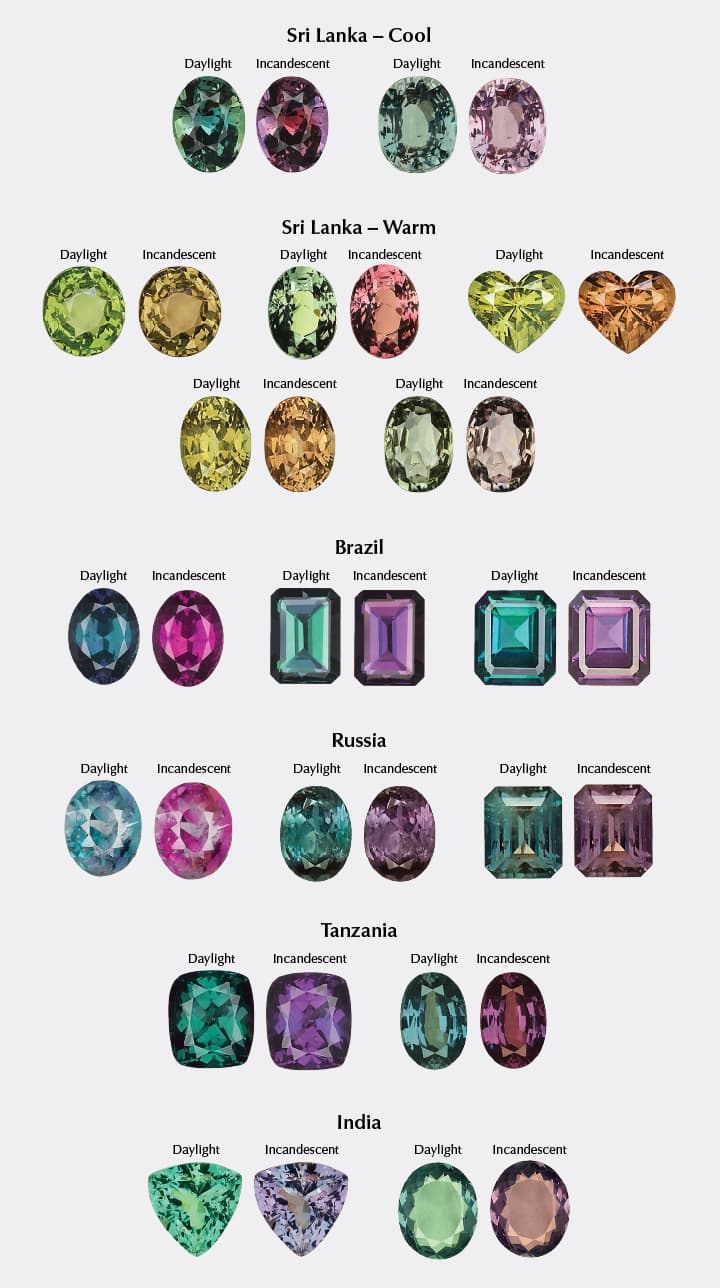
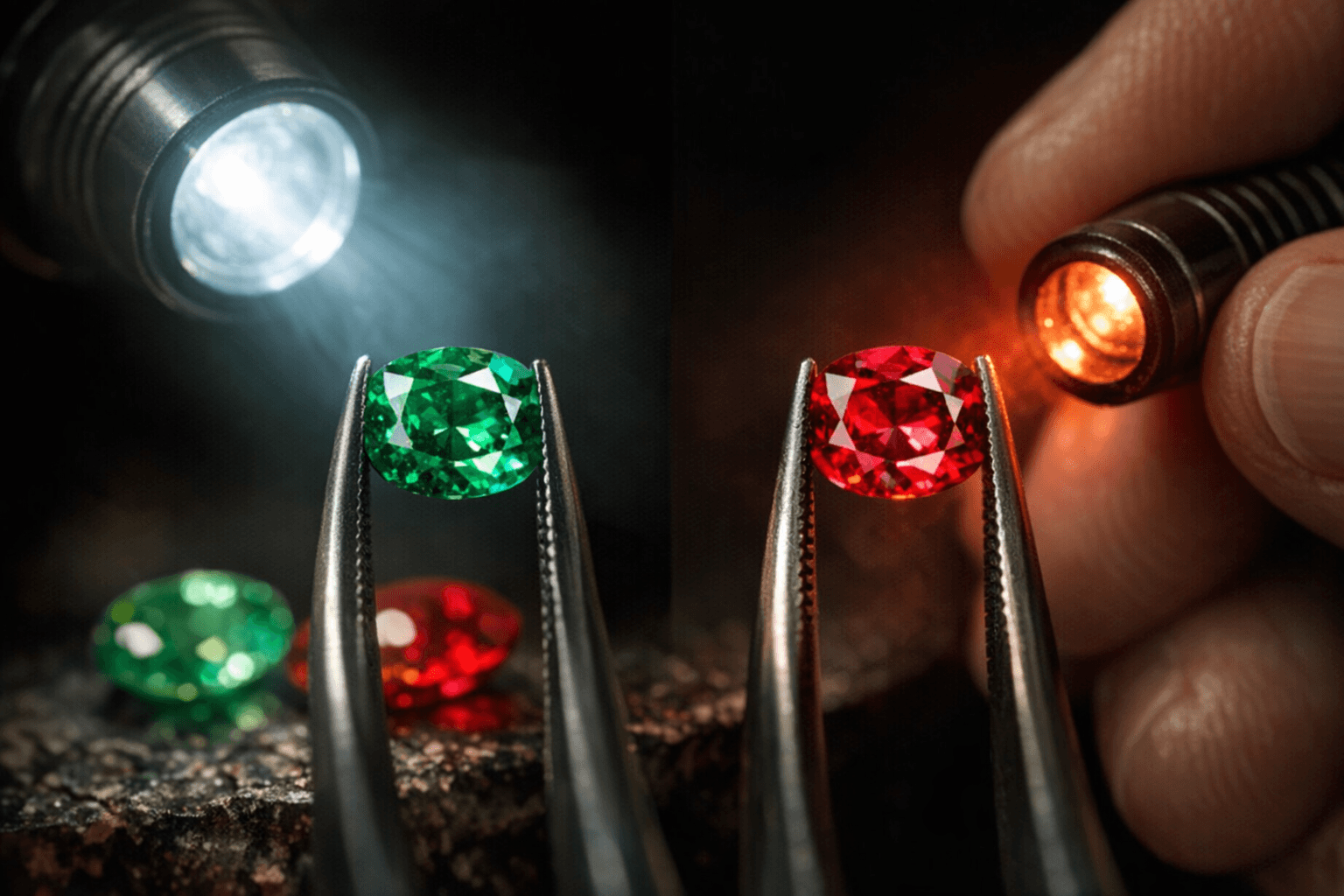
What makes alexandrite extraordinary is a phenomenon called metamerism: the stone absorbs and transmits light differently depending on the spectral composition of its illuminant. Trace amounts of chromium embedded in the chrysoberyl crystal lattice are responsible. Under daylight or fluorescent light, which is rich in blue and green wavelengths, the stone transmits green. Under incandescent or candlelight, which skews toward the red end of the spectrum, the chromium allows those red wavelengths through instead. The result is a stone that reads as a lush, forest green at noon and transforms to a raspberry or purplish red by lamplight. Other gems produce mild color shifts, but alexandrite's change is dramatic enough to seem implausible, which is precisely why it commands the prices it does.
Physical Properties and Why They Matter for Wear
Alexandrite belongs to the chrysoberyl family, a beryllium aluminate, and registers 8.5 on the Mohs hardness scale. That places it above sapphire in toughness and makes it one of the most durable colored gemstones available for fine jewelry. It is doubly refractive, with a refractive index between 1.746 and 1.755. For practical purposes, this hardness profile means alexandrite is genuinely suitable for rings and pieces subject to daily contact, including engagement rings, a growing category as buyers seek alternatives to diamonds with stronger personal meaning.
Where Alexandrite Comes From
The Ural deposits that produced those first benchmark-quality stones are largely exhausted. The majority of alexandrite available today originates from Brazil, Sri Lanka, Tanzania, and India, with smaller deposits elsewhere in East Africa. Each origin has a distinct chemical signature that advanced labs can read through trace-element analysis: chromium dominance indicates Russian or Brazilian material, while vanadium is more characteristic of East African and Sri Lankan stones. This matters commercially. Russian Ural alexandrite still commands a premium at every quality level, followed closely by Brazilian stones. Beyond those two origins, provenance has less influence on price for mid-range material; what dominates is the strength of the color change itself.
What Actually Drives Price: A Value Rubric
Color change intensity is the single most decisive factor in alexandrite valuation, outweighing clarity, cut, and even carat weight at most quality tiers. The ideal specimen shifts from a pure, saturated green or blue-green in daylight to a vivid red under incandescent light, with no muddiness, brownish undertones, or grey masking either hue. Stones that achieve close to 100% of that ideal shift are extremely rare and sit at the peak of the market.
Pricing breaks down roughly as follows:
- Entry-level: Natural alexandrite with a weak or indistinct color change, under 1 carat, generally falls below $2,000 per carat. Exercise caution here; poorly shifting stones are sometimes sold with inflated descriptions online.
- Mid-range: Stones with a genuine, visible color shift and reasonable clarity trade wholesale between $7,000 and $20,000 per carat. Origin begins to matter here, with Brazilian stones outpricing equivalent Tanzanian material.
- Collector grade: Fine-quality natural alexandrite under 1 carat can reach $15,000 per carat at retail. The price jump above 1 carat is severe: stones over that threshold trade between $50,000 and $70,000 per carat, reflecting the geological rarity of producing a clean, strongly shifting crystal at that size.
The carat-weight threshold is significant because most alexandrite rough emerges small. The vast majority of cut stones weigh 2 carats or less, and even 1-carat specimens with strong color change are genuinely uncommon. When evaluating any listing or appraisal, weight the color-change description most heavily, then check clarity, then confirm origin documentation. A muddy-shifting 2-carat stone is worth far less than a vivid-shifting half-carat one.
The Lookalikes: What You Are Actually Buying
The alexandrite market has an imitation problem with several distinct layers, and understanding each is practical self-defense.
*Synthetic alexandrite* is grown in laboratories using flux or Czochralski (pulling) methods. These stones are chemically similar to their natural counterparts but lack the geological inclusions that form over millions of years in the earth. They tend to display unnaturally perfect color changes and, under magnification, may contain gas bubbles or curved growth striations that are absent in natural material. Synthetic alexandrite is a legitimate product when disclosed as such, and lab-grown stones are priced accordingly. The problem is when they are presented without disclosure.
*Color-change sapphire* is perhaps the most common natural-stone lookalike. These corundum stones can shift from blue to purple or greenish to reddish, and untrained eyes frequently confuse them with alexandrite. The refractive index separates them: color-change sapphire measures 1.762-1.770, meaningfully higher than alexandrite's 1.746-1.755.
*Color-change spinel* is singly refractive with an index stopping at approximately 1.73, below alexandrite's range. A simple refractometer test distinguishes it immediately.
At-Home Tests and What to Request on a Lab Report
The most accessible at-home step is also the most revealing: test the stone under multiple, distinctly different light sources. Take it outdoors at midday, then bring it under a bare incandescent bulb or a candle. True alexandrite should show a clear, legible shift between green and red. A stone that produces only a faint or greyish muddy version of that change is likely either low-quality natural material, a simulant, or a color-treated imitation.
For any stone above $2,000 in value, a report from a recognized gemological laboratory is non-negotiable. GIA, the American Gemological Laboratories (AGL), and IGI all issue reports that confirm whether a stone is natural alexandrite or synthetic, describe the color-change quality, and in many cases identify probable origin through trace-element analysis. When requesting a report, specifically ask for: confirmation of species (chrysoberyl variety alexandrite, not a lookalike), a color-change description (strength and hue pair), and origin determination if the premium justifies it.
Settings and Design Considerations
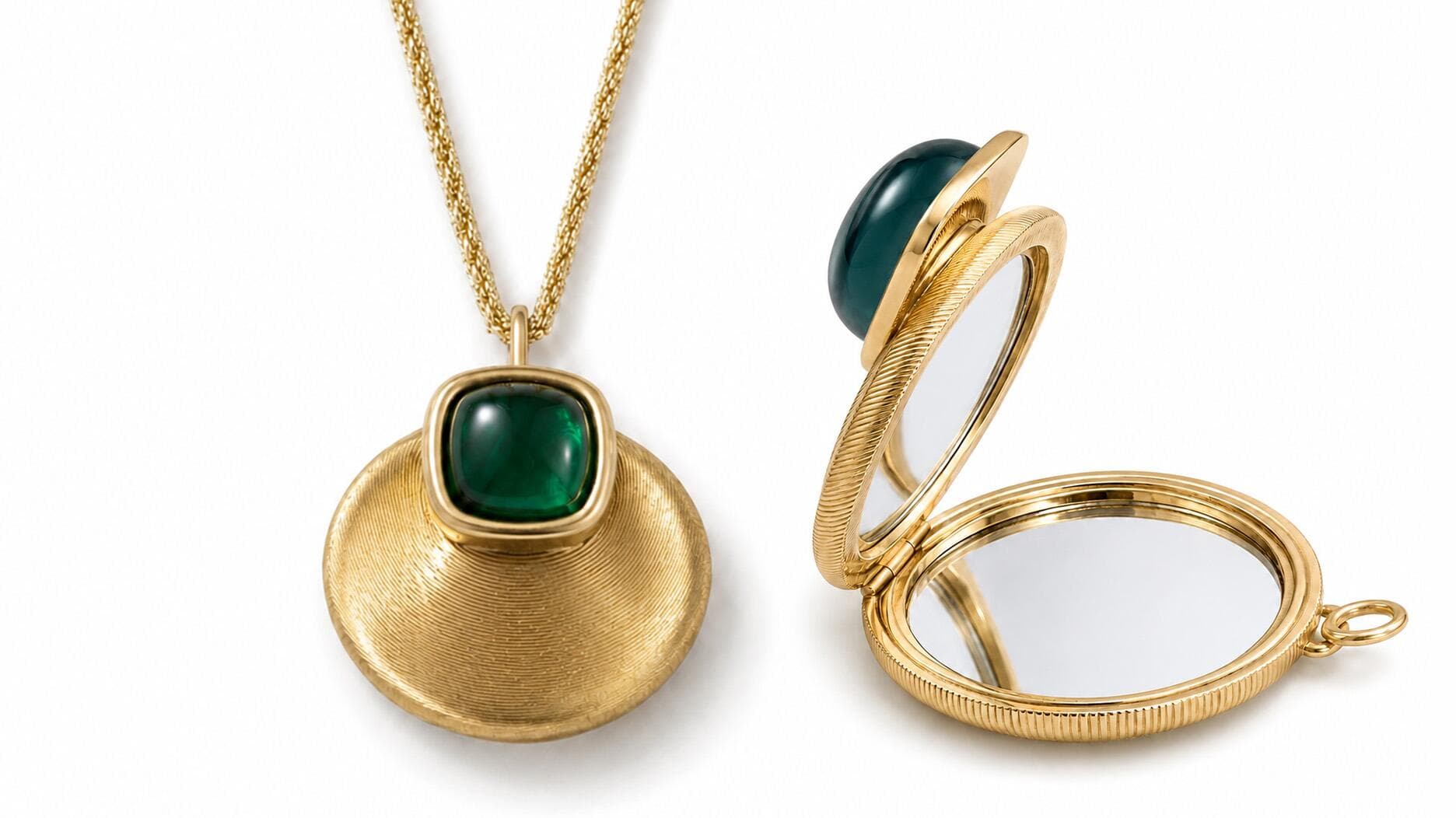
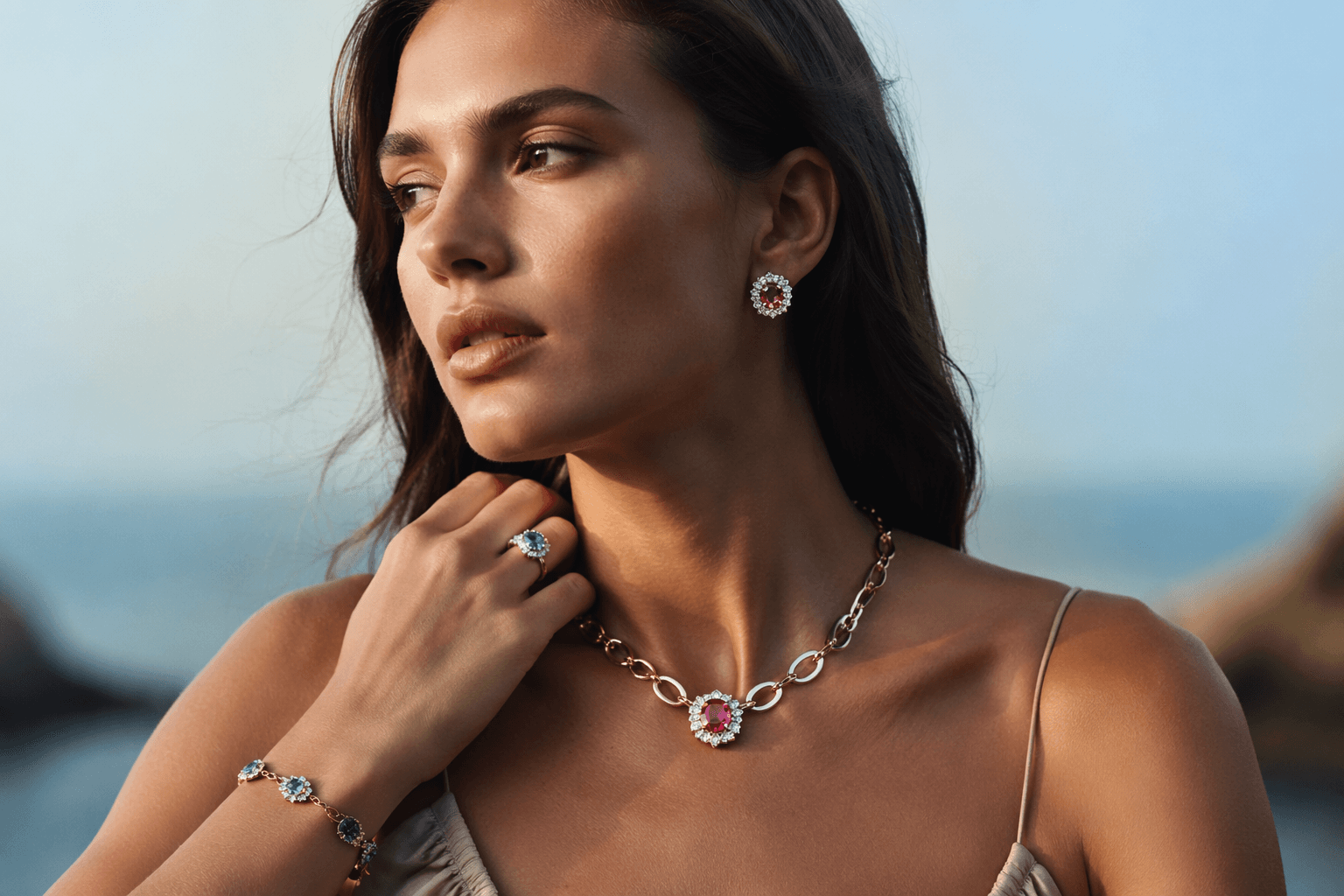
Because alexandrite's entire value proposition is its color shift, the setting should never work against that phenomenon. Open-back prong settings and claw settings allow maximum light passage through the stone from all angles, enabling the chromium to do its optical work. Bezel settings are beautiful and protective given the stone's hardness, but full bezels can restrict light entry; half-bezels or low-profile bezels are a workable compromise if the aesthetic demands it. White gold and platinum are the natural metal pairings: they read as neutral under both daylight and lamplight, letting the stone's green-to-red transformation register without the competition of a warm yellow gold ground. Rose gold can be used deliberately, as its warm tone flatters the red phase, but it slightly suppresses the cool green reading in daylight.
In multi-stone family pieces, alexandrite is increasingly set alongside diamonds, which amplify the light delivery that makes the shift visible, and alongside lighter-colored gems that let the alexandrite function as the chromatic anchor of the composition.
The Investment Case
No natural gemstone rewards careful research quite like alexandrite. Unlike diamonds, where grading scales are codified and broadly understood, alexandrite valuation is still largely a connoisseur's market: buyers who understand that color-change strength, not carat weight, is the governing variable will consistently find better value than those who rely on size alone. A fine 0.75-carat stone with a near-complete green-to-red shift from a documented Brazilian origin is not merely a piece of jewelry. It is a measurable optical event, backed by geological scarcity, that the market has historically rewarded. The breastplate of Aaron may be legend, but the chromium atom in a Ural alexandrite is entirely, remarkably real.
This article was produced by Prism’s automated news system from verified source data, official records, and press releases, then run through automated quality and moderation checks before publishing. The system is built and supervised by the people who set the standards it runs under. Read our full AI policy.
Did this article answer your question?