American Gem Society Guide Covers Every Birthstone, History, and Buying Tips
Every birthstone carries centuries of lore — here's what the American Gem Society says about provenance, history, and how to buy each stone wisely.
Birthstones sit at the intersection of personal meaning and gemological craft. The stone assigned to your birth month might be a deep red garnet or a shifting opal, a sapphire blue enough to stun or a pale aquamarine that catches winter light. But how those assignments came to be, and what separates a well-sourced stone from a dubious one, matters as much as the beauty you hold in your hand.
Where the birthstone calendar comes from
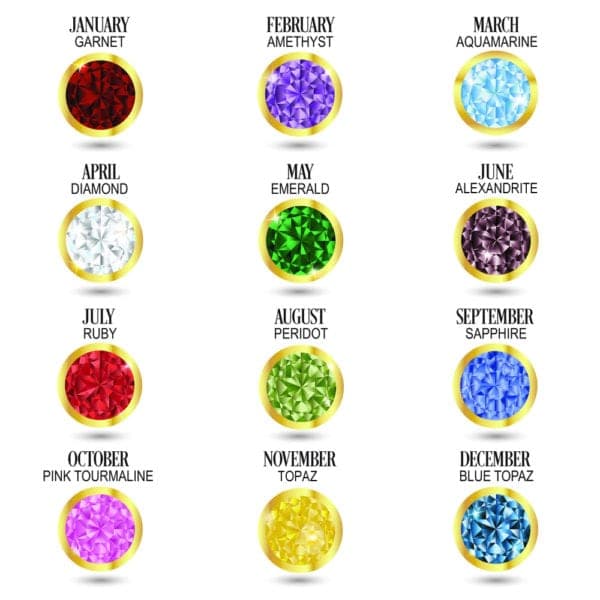
The tradition of assigning gemstones to months of the year traces back thousands of years, with roots in the twelve stones of Aaron's breastplate described in the Book of Exodus and later connected to the twelve signs of the zodiac by first-century historian Flavius Josephus. The calendar as most jewelers recognize it today was largely standardized in 1912 by the American National Retail Jewelers Association, with subsequent updates, including additions by the American Gem Society and other gemological bodies, reflecting both newly available stones and shifting consumer tastes.
The American Gem Society, one of the most respected credentialing organizations in the trade, maintains an authoritative reference covering both traditional and modern birthstone assignments. Traditional assignments often reflect historical availability and cultural significance, while modern lists have expanded to include alternatives such as tanzanite for December and spinel for August, giving buyers more options at varied price points and ethical sourcing profiles.
Month by month: what you're actually choosing
January's garnet is almost universally recognized, but "garnet" is not a single stone; it is a family of minerals that includes deep red almandine, orange hessonite, and the rare green demantoid. A January birthstone ring set with a vivid Mozambique red garnet in a simple bezel will photograph beautifully, but a piece set with a Mali garnet, yellow-green and glassy, is equally legitimate and far less common.
February's amethyst, a purple variety of quartz, was once considered as precious as ruby or emerald until large deposits were discovered in Brazil. Today it is affordable enough for statement cuts, and a well-cut cushion amethyst in a deep Siberian purple, the most prized color grade, can anchor a cocktail ring without the four-figure price tag of rarer stones.
March offers two options: aquamarine and bloodstone. Aquamarine, a pale blue variety of beryl, is closely related to emerald and morganite. The finest specimens come from Brazil and show a pure, light blue with no greenish tint. Bloodstone, a dark green chalcedony flecked with red jasper, has a far older symbolic history and appears frequently in intaglio seals and medieval religious art.
April's diamond needs little introduction, but the sourcing conversation around diamonds remains urgent. The Kimberley Process Certification Scheme was designed to exclude conflict stones, but critics have noted its limitations. If provenance matters to you, ask specifically for a Canadian, Australian, or Botswana-origin diamond with chain-of-custody documentation, or consider a lab-grown stone, which the American Gem Society recognizes as a legitimate category with its own grading standards.
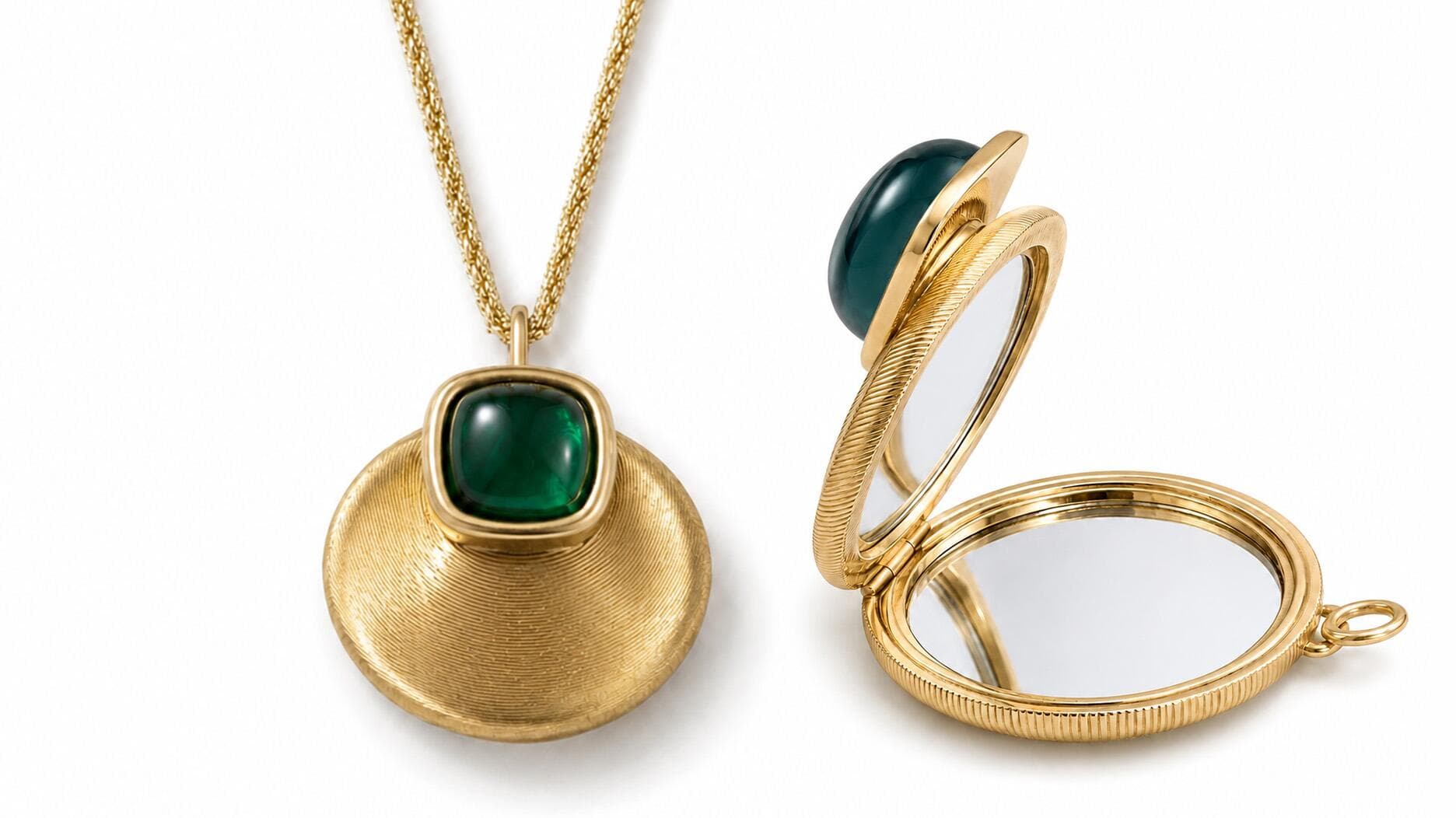
May's emerald is among the most emotionally resonant of all birthstones. Colombian emeralds remain the benchmark for color, a saturated bluish-green that no other origin quite replicates. Inclusions in emerald, called jardin, are expected and do not carry the same stigma as inclusions in diamonds; a heavily included emerald oiled with cedar resin to improve clarity is industry-standard practice, but buyers should ask about the degree of treatment.
June has three assigned stones: pearl, alexandrite, and moonstone. Pearl is the only organic gemstone on the list, produced by living mollusks. Wild pearls are exceptionally rare; most pearls today are cultured, meaning a nucleus was implanted to initiate the process. Japanese Akoya pearls, Tahitian black pearls, and South Sea pearls occupy very different price brackets. Alexandrite, a rare chrysoberyl that shifts from green in daylight to red under incandescent light, is one of the most coveted stones in the trade. Natural alexandrite with strong color change commands extraordinary prices; synthetic alexandrite offers the same optical phenomenon at a fraction of the cost, though disclosure is legally required.
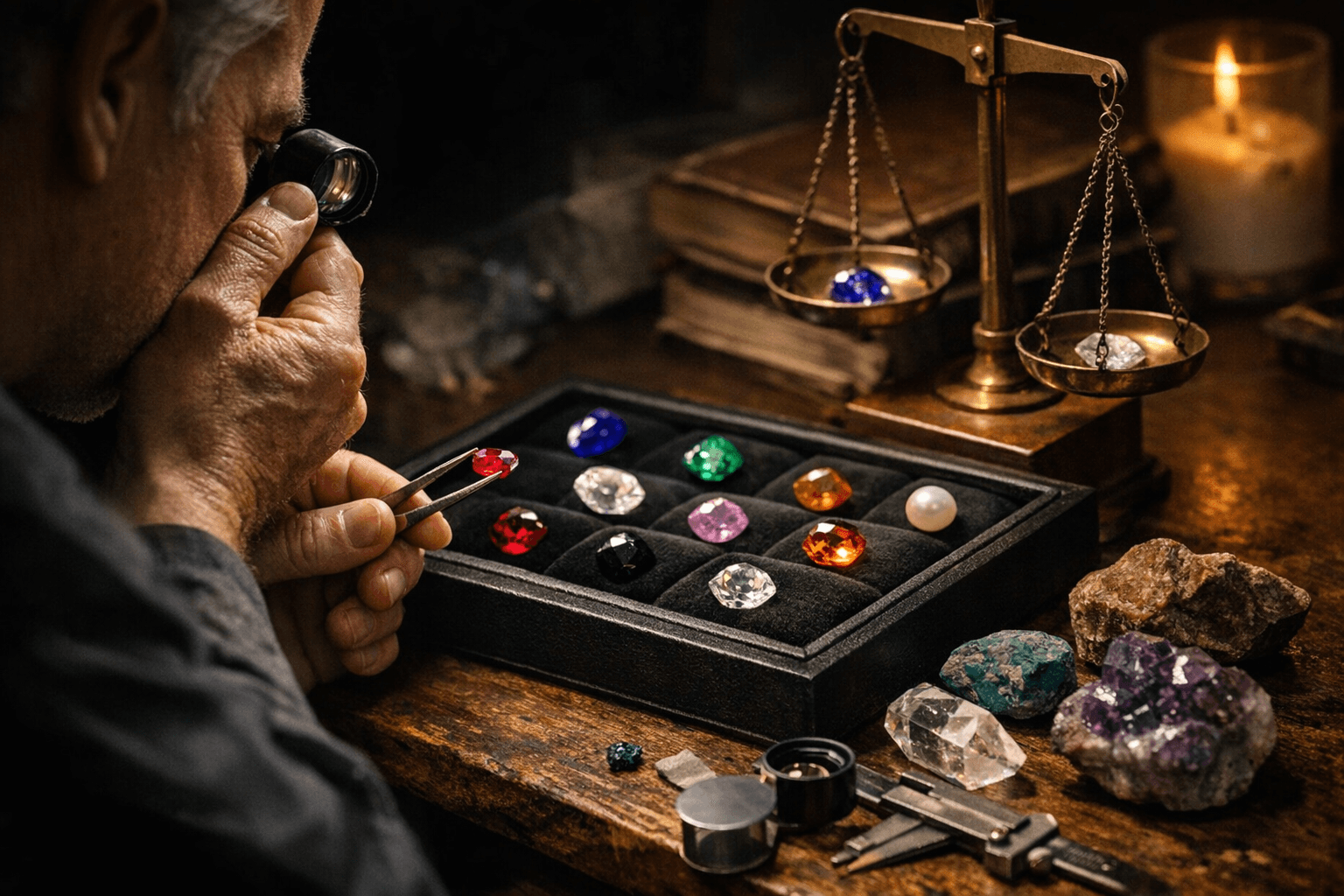
July's ruby and October's opal are, in different ways, two of the most complex buying decisions on the list. Ruby, the red variety of corundum, is heavily treated in the trade. Heat treatment to improve color and clarity is accepted and widespread; glass filling is more controversial and significantly reduces resale value. Ask for a laboratory certificate from the Gemological Institute of America or the American Gem Society Laboratories confirming treatment status. Opal's play-of-color, the spectral flash across its surface, makes it uniquely vulnerable to misrepresentation. Solid opals, doublets (a thin opal layer bonded to a backing), and triplets (with an additional protective cap) look similar to untrained eyes but carry very different values.
August now has three options: peridot, spinel, and sardonyx. Peridot, one of the few gemstones formed deep in the earth's mantle and sometimes arriving via meteorite, has a distinctive lime-green color that cannot be confused with anything else. Spinel's addition in 2016 was long overdue; for centuries, red spinels were mistaken for rubies, and the 170-carat "Black Prince's Ruby" set in the British Imperial State Crown is in fact a spinel.
September's sapphire, November's topaz and citrine, and December's tanzanite, turquoise, and zircon complete the calendar with their own layered histories. Blue sapphire from Kashmir, now essentially a historical source, commands the highest premiums of any colored stone per carat. Tanzanite, discovered only in 1967 near Mount Kilimanjaro in Tanzania, has a single source mine and a genuinely limited supply, which gives its market dynamics unusual volatility.
Certifications that actually mean something
When buying birthstone jewelry, third-party grading reports are your most reliable tool. The American Gem Society Laboratories issues grading reports with a particular emphasis on cut quality. The Gemological Institute of America issues widely recognized color, clarity, cut, and carat reports for diamonds, and origin and treatment reports for colored stones. The Gübelin Gem Lab and SSEF Swiss Gemmological Institute are the preferred authorities for high-value colored stones where origin matters to price.
Ask any retailer these questions before purchasing:
- Has this stone been treated, and if so, how? Is the treatment stable and reversible?
- Does it come with a laboratory certificate, and from which lab?
- For diamonds, is there documented country of origin?
- For pearls, is this natural, cultured, or imitation?
- For lab-grown stones, is that disclosed in writing on the receipt?
What makes birthstone jewelry worth the investment
The setting matters as much as the stone. Softer stones, like opal (Mohs hardness 5.5 to 6.5) and pearl (2.5 to 4.5), should not be set in rings worn daily without protective settings; bezels and low-profile prongs reduce the risk of chipping. Harder stones, such as sapphire, ruby, and diamond (corundum at 9, diamond at 10), tolerate more exposed settings. A well-made piece in recycled 18-karat gold with a certified stone and a clean chain of custody is an investment in material and meaning. The American Gem Society's educational framework exists precisely to help buyers ask these questions before money changes hands.
Birthstone jewelry is among the most personal category in fine jewelry, tied to birth, memory, and identity. The best pieces hold up to scrutiny: sourced honestly, crafted carefully, documented clearly. That is a standard worth holding.
This article was produced by Prism’s automated news system from verified source data, official records, and press releases, then run through automated quality and moderation checks before publishing. The system is built and supervised by the people who set the standards it runs under. Read our full AI policy.
Did this article answer your question?