Antique Aquamarine and Diamond Jewelry Trends Make Perfect March, April Birthstone Gifts
Antique aquamarine and diamonds are commanding rising prices at auction, making vintage birthstone jewelry the most compelling gift choice for March and April.
Auction salerooms are busy right now, and prices for vintage gems are rising. That convergence of demand and value makes this a particularly compelling moment to consider antique birthstone jewelry, whether you are searching for a gift for someone born in March or April, or reconsidering a piece already sitting in a drawer at home.
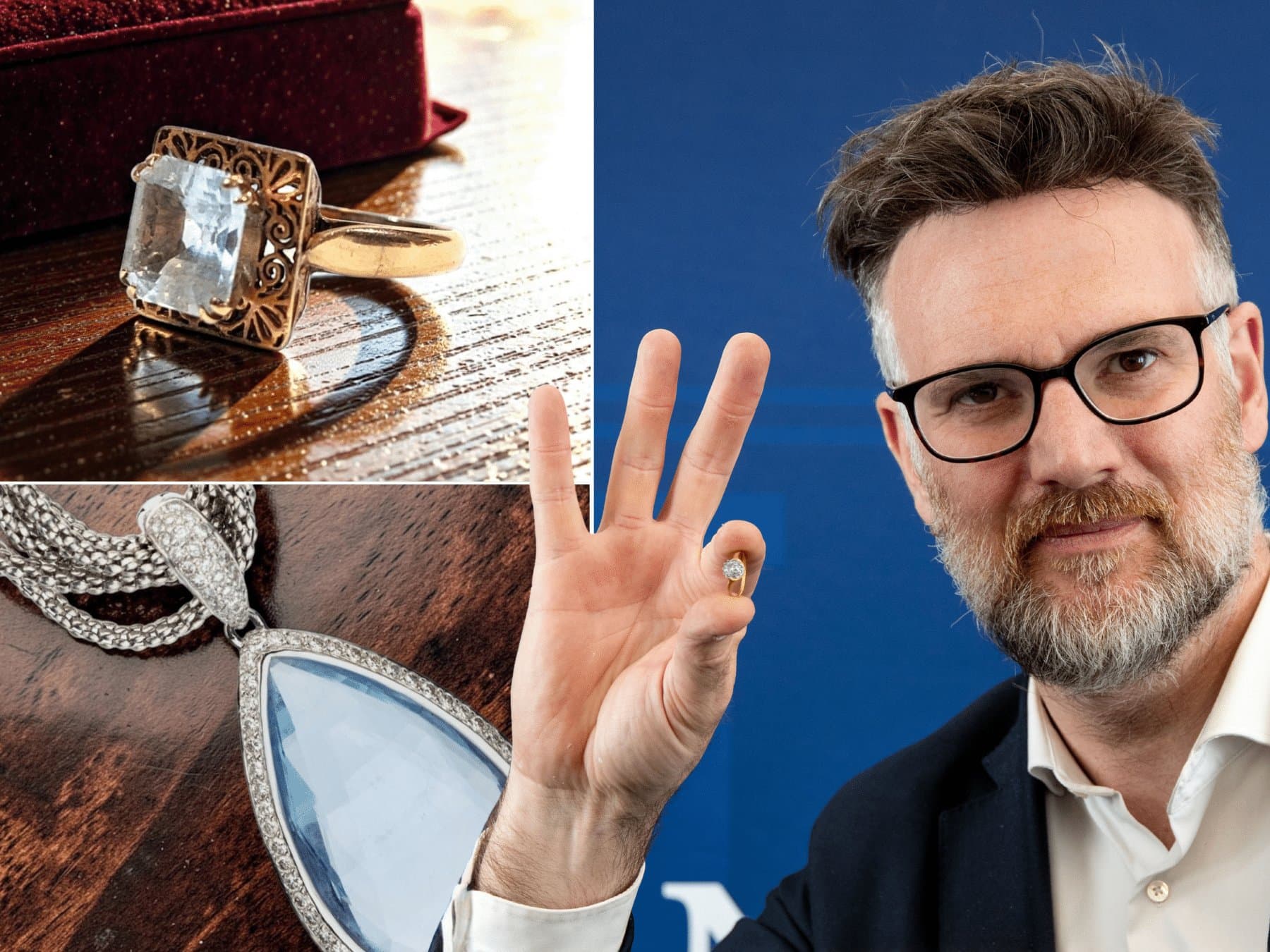
Charles Hanson of Hansons Auctioneers has identified two stones driving the current wave of interest: aquamarine for March birthdays and diamonds for April. Both are appearing with increasing frequency at auction, and both are benefiting from a broader cultural appetite for pieces with provenance, craftsmanship, and the kind of depth that new jewelry simply cannot manufacture.
Aquamarine: March's Stone and a Rising Star in Engagement Jewelry
Aquamarine's name arrives directly from the Latin: aqua for water and marina meaning "of the sea." That oceanic etymology is not incidental. Ancient Romans believed the stone could protect those travelling across open water, and its associations with safety and calm have persisted across centuries. It is also considered a symbol of youth and happiness, qualities that make it particularly resonant as a gift.
What has changed recently is who is wearing it and how. More and more couples are now opting for aquamarine as a unique engagement ring or statement piece, drawn in part by the current appetite for calming baby-blue tones. The stone's versatility is a genuine asset: it reads with equal conviction in a spare, minimalist setting and in a bold cocktail-style mount. That flexibility, combined with its status as a romantic alternative to diamonds, has pushed aquamarine into conversations it was rarely part of a generation ago.
When assessing any aquamarine piece, value is determined by four factors: weight, colour, cut, and clarity. The most prized stones carry a deep, saturated blue with strong transparency; pale or overly included specimens trade at a significant discount. At auction, a well-cut, well-coloured antique aquamarine in a considered setting can represent exceptional value compared to its equivalent in a contemporary retail environment.
Diamonds: April's Birthstone and the Return of the Statement Stone
For those born in April, diamonds remain the birthstone of record, and Hansons' recent saleroom activity underscores why antique diamond jewelry deserves serious attention. An antique cushion-cut diamond set in an 18ct gold ring sold at Hansons for £750. A topaz and diamond set 18ct white gold ring, cited by the firm as an example of the "big is beautiful" trend, sold for £220. Both figures reflect the accessible entry points that antique and vintage jewelry can offer compared to new retail pricing for equivalent stones.
The cushion cut is itself a lesson in jewelry history. Developed in the 19th century and dominant through the Victorian and Edwardian eras, it was specifically designed to maximise brilliance under candlelight rather than electric illumination. As Hansons described one such piece: "Shimmering with history, it was designed to look perfect for sparkling in Georgian candlelight." Some pieces in this category carry provenance reaching back approximately 200 years, with origins traced to India or Brazil, the two principal sources of diamonds before the South African discoveries of the late 1800s.
The broader trend Hanson identifies is a meaningful reversal of a long-standing convention. Historically, engagement rings were made to be worn daily and were relatively restrained; large, dramatic stones were the preserve of cocktail rings, reserved for evenings and occasions. That restraint has given way. Big stones are back when popping the question, and antique jewelry offers the scale and character that many contemporary pieces, even at significant price points, struggle to match.
Why Antique Jewelry Outperforms Its Modern Equivalent
Part of the appeal is practical. Antique and vintage pieces were made during periods when labor costs relative to materials were structured differently, meaning the craftsmanship embedded in a Georgian or Victorian ring is often extraordinary when measured against what you would pay for comparable handwork today. A cushion-cut diamond in a hand-engraved 18ct gold band from 200 years ago carries decades of accumulated character that no new piece can replicate.
There is also the matter of sustainability, which has become an increasingly meaningful factor for buyers across all price points. Antique jewelry is, by definition, the most sustainable option available: no new mining, no new smelting, no new environmental footprint. For couples choosing an engagement ring, aquamarine's serene color and ethical provenance through the antique market make a persuasive combination.
The aesthetic case is equally strong. Aquamarine's baby-blue hue sits with remarkable ease across metals: yellow gold deepens the stone's warmth, white gold and platinum enhance its cool clarity, and rose gold introduces a romantic contrast. In antique settings, particularly the milgrain-edged platinum mounts of the Edwardian period, the stone achieves a delicacy that modern machine-finished pieces rarely approach.
Getting a Vintage Piece Valued
If you already own antique jewelry, or have inherited pieces you suspect may be more significant than you know, Hansons Auctioneers is offering two free valuation sessions in Cheshire. On April 14, experts will be available at the Pavilion By Francs in Hale, Altrincham from 9.30am to 11.30am, and again in the afternoon at St Johns Knutsford Church Centre on Church Hill in Knutsford, from 1pm to 3pm. Both sessions are walk-in and free of charge.
These events are worth taking seriously. The same market conditions that are pushing auction prices upward, that busy saleroom activity and the rising appetite for vintage gems, mean that pieces sitting unworn in jewelry boxes may be worth considerably more than their owners realize. A free professional assessment from a specialist is the most reliable first step toward understanding what you actually have.
The Broader Case for Birthstone Jewelry With History
Birthstone gifts have always carried a particular kind of intimacy: the gesture acknowledges not just taste but identity. When the piece in question is antique, that intimacy deepens. An aquamarine ring made in the Georgian period or an Edwardian diamond cluster is not simply a birthstone gift; it is an object with its own history, likely worn by someone else on occasions we can only imagine, now beginning a new chapter.
That layered meaning is precisely what the current market seems to understand. Prices for vintage gems are rising because buyers have recognized something that auction specialists have known for years: a well-chosen antique piece offers craftsmanship, character, and value in a combination that the contemporary market rarely matches. For March and April birthdays, aquamarine and diamonds in antique settings make that case with particular force.
This article was produced by Prism’s automated news system from verified source data, official records, and press releases, then run through automated quality and moderation checks before publishing. The system is built and supervised by the people who set the standards it runs under. Read our full AI policy.
Did this article answer your question?