Birthstone jewelry chart explains each gem’s meaning and history
Birthstones are more than sentimental tokens: the right gem can carry history, resale appeal and real gifting logic.
Why birthstones still matter
Birthstone jewelry begins as a personal gesture and ends as a smart buying decision. A stone tied to a birth month brings instant meaning, but it also gives the piece a clearer identity, whether the goal is an heirloom, a wedding jewel or a gift that feels more considered than a generic charm.
That is part of why the category has never really faded. The Gemological Institute of America describes birthstones as a colorful introduction to gemstones that appeals across gender, age, nationality and religion, and the commercial scale is hard to ignore: Statista projects worldwide jewelry revenue at US$408.64 billion in 2026. In the United States alone, the Centers for Disease Control and Prevention reported 3,596,017 births in 2023, which helps explain why birthstone gifts continue to cycle through generations with almost no loss of relevance.
Where the chart came from
The modern birthstone list used in the United States was standardized in 1912, when the National Association of Jewelers released its modern version of the chart. The tradition itself is much older, commonly traced to the biblical breastplate of Aaron, which held 12 gemstones representing the 12 tribes of Israel, and later European customs that attached stones to the calendar between the 16th and 18th centuries.
The modern chart also shifted the emphasis. It leans toward transparent gemstones, which is why the list reads so cleanly now, with diamonds, emeralds, rubies and sapphires standing beside softer stones such as aquamarine, amethyst and garnet. Britain’s National Association of Goldsmiths developed its own version of the list as well, and that chart has also evolved over time, proof that birthstones have always been a living tradition rather than a fixed law.
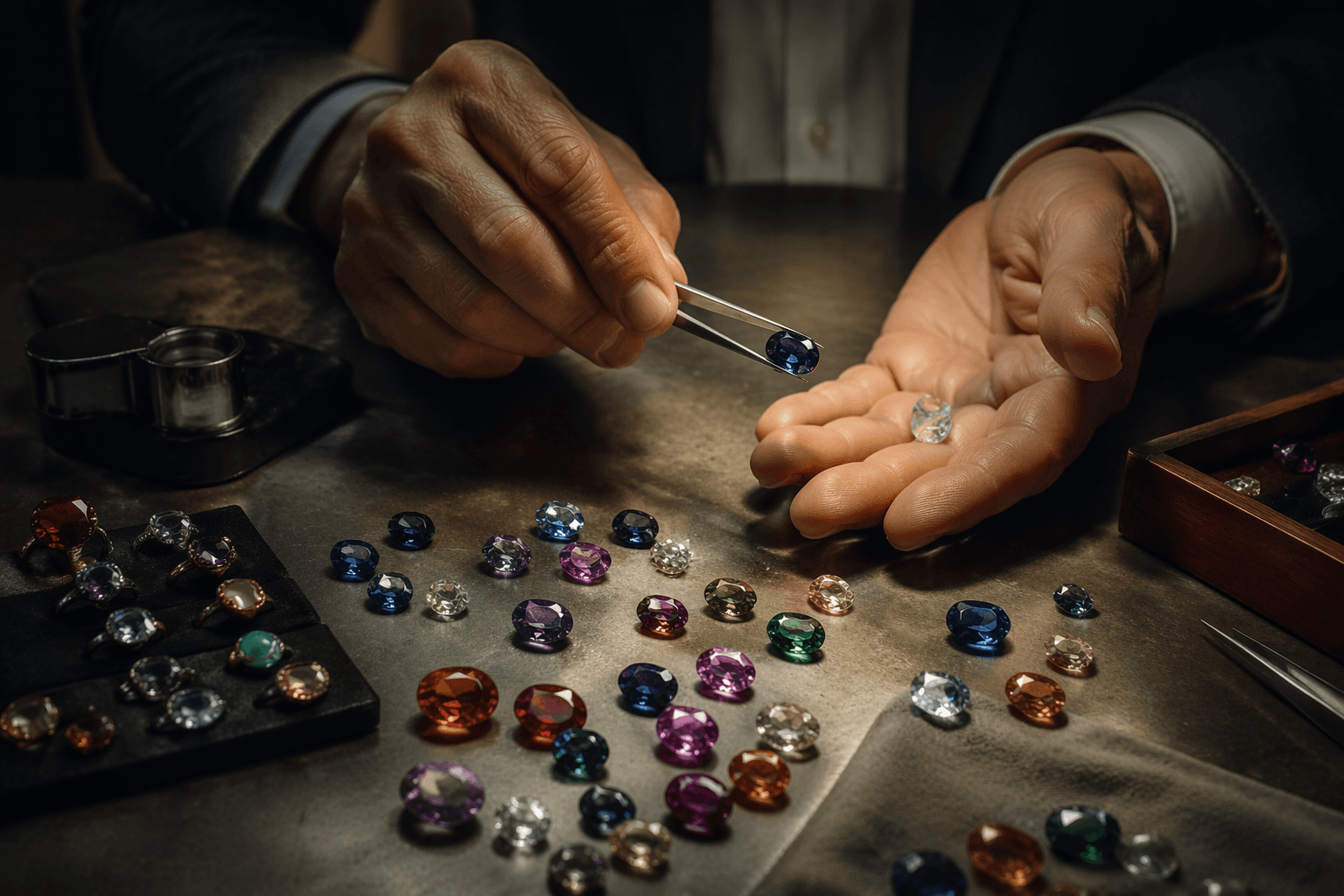
The American Gem Society has been helping make jewelry buying easier and safer since 1934, and that consumer-first mindset matters here. Birthstones may be rooted in symbolism, but the best pieces still reward the same close looking as any fine jewel: cut, color, clarity, setting and wearability.
January through march: depth, color and value
January belongs to garnet, a stone that proves birthstone jewelry does not need to be loud to feel substantial. Deep red garnet offers one of the most approachable ways into fine color, while rarer garnet varieties can move into collector territory, especially when the saturation is strong and the cut lets the stone glow rather than flatten.
February is amethyst, and it remains one of the most accessible birthstones in the modern chart, which is part of its charm. The best stones have a saturated violet tone that looks richer than costume jewelry purple, and that depth gives amethyst a quiet prestige even though it is often easier to acquire than the headline stones of the chart.
March brings aquamarine, a gem whose appeal lies in restraint. The palest stones are affordable and airy, while stronger blue examples carry more cachet because the color reads with greater authority in a ring or pendant. Aquamarine is especially elegant in bezel settings, where its clean, glassy surface can feel modern without losing its softness.
April through june: the stones most closely tied to ceremony
April is diamond, and it is the one birthstone that sits fully inside engagement culture. The Gemological Institute of America identifies diamond as April’s birthstone, and its long-standing place in engagement rings and wedding bands gives it an authority that no other gem month can quite match. Even when buyers are not shopping for a bridal piece, diamond remains the clearest prestige marker on the chart.
May belongs to emerald, the most dramatic green in the birthstone calendar. It carries strong collector appeal because fine color matters so much here, and because emeralds often read as occasion stones rather than everyday basics. Smaller stones or more saturated cabochon-style pieces can make the category more approachable, but the mythic quality of emerald is exactly what keeps it desirable.
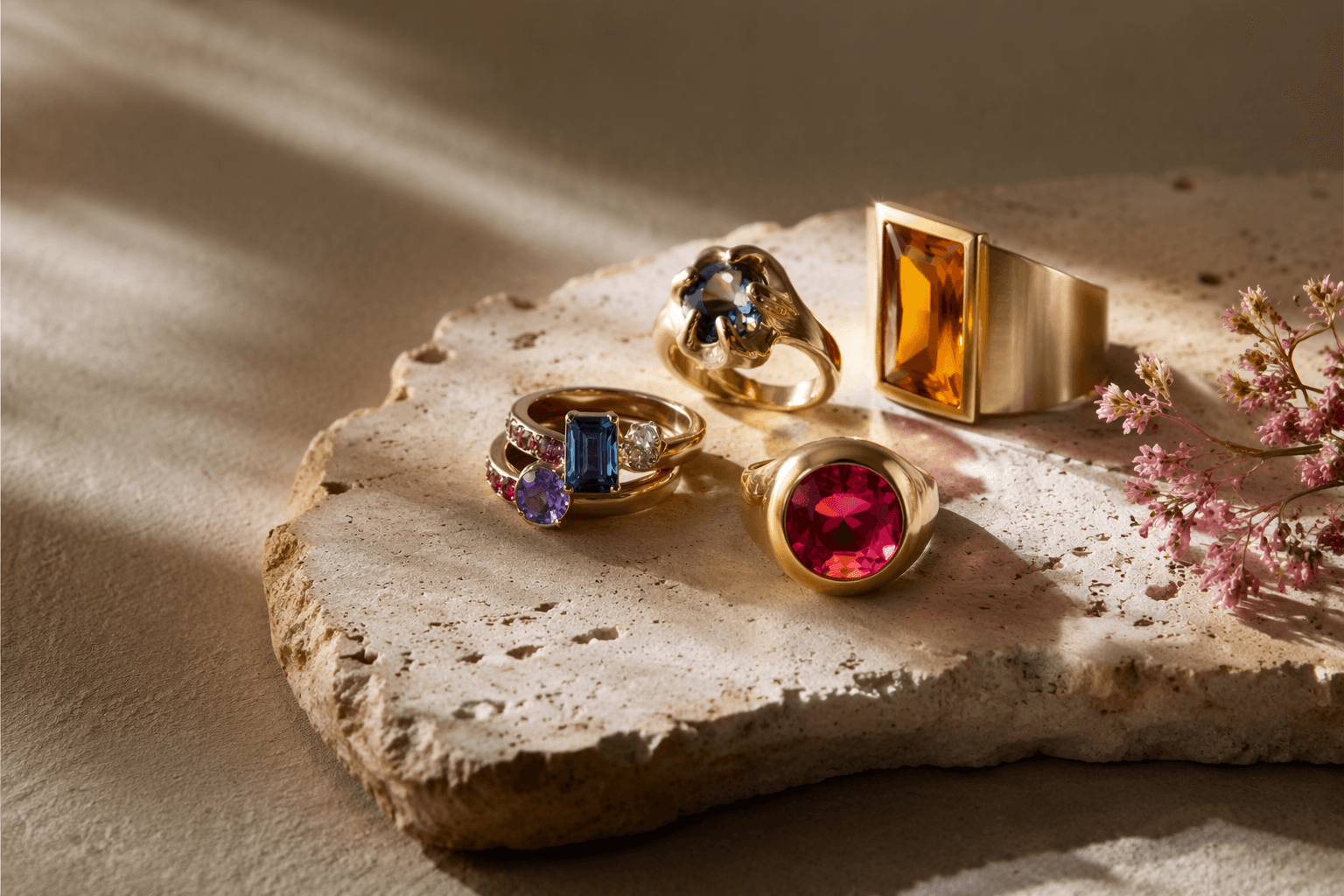
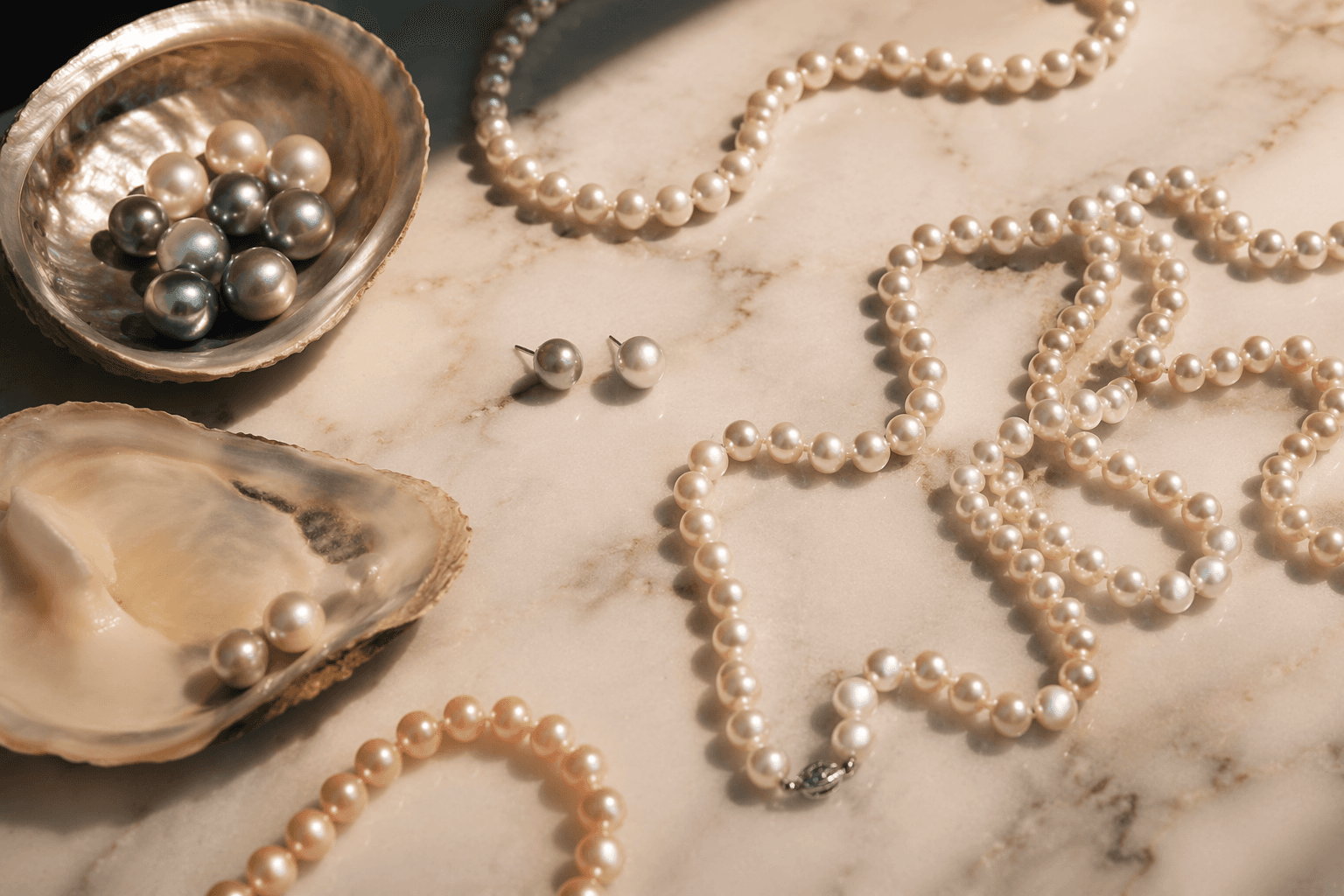
June is unusually rich because it has three birthstones: pearl, alexandrite and moonstone. That trio tells the whole story of modern birthstone jewelry, from the classicism of pearl to the rarity of alexandrite and the dreamlike shimmer of moonstone. Alexandrite is the collector prestige play, pearl is the enduring staple, and moonstone gives the month a softer, more affordable romanticism.
July through september: strong color and enduring recognition
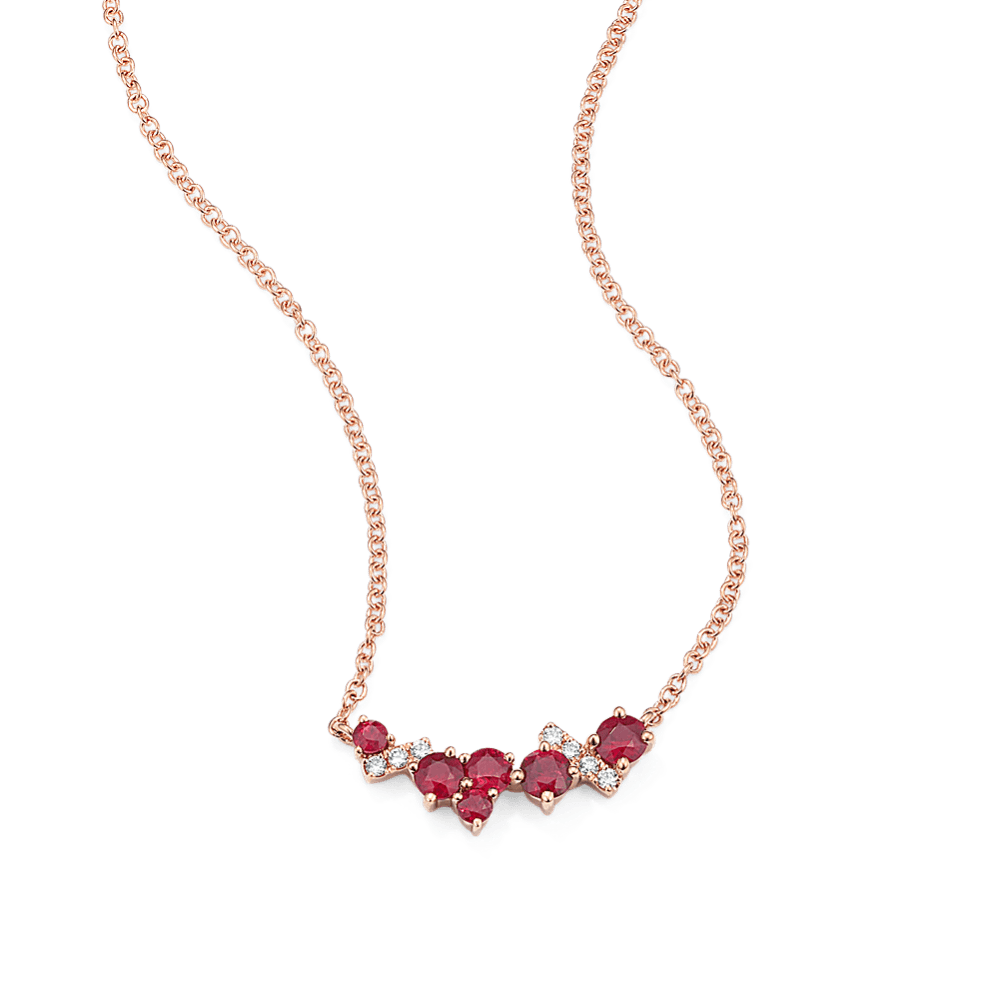
July is ruby, a stone so tied to passion, power and vitality that it almost never needs an introduction. Fine ruby has real collector prestige, especially when the color is vivid and the stone still feels alive in low light. It is also one of the birthstones where symbolism and market demand align neatly: love, intensity and permanence all feed its desirability.
August, like June, now has multiple birthstones, and the modern chart gives it three choices. Peridot is the most familiar, spinel adds a more connoisseurly edge, and sardonyx keeps the month anchored to tradition. That range makes August especially flexible, with peridot offering an accessible route and spinel carrying the strongest collector appeal.
September is sapphire, a birthstone that has earned its status through both durability and restraint. Its deepest blue examples remain among the most recognizable jewelry stones in the world, and that recognition is part of the market value. Sapphire also works beautifully in settings that protect the edges, especially bezels and low-profile mounts, which is one reason it feels as suited to everyday wear as it does to heirloom dressing.
October through december: romance, personality and modern variety
October splits between opal and tourmaline, and the pairing captures two very different moods. Opal has cult prestige because its play of color is unlike any other gemstone effect, while tourmaline offers a broader spectrum and a more accessible entry point. Together they give October one of the most expressive ranges on the chart, especially for buyers who want something less expected than the classic red, blue or green birthstones.
November is usually associated with topaz and citrine, two stones that carry warmth rather than grandeur. Imperial topaz can command collector attention, while citrine remains a friendly, approachable choice for everyday jewelry and gift buying. November’s appeal is less about rarity than glow, which is often exactly what makes a piece easy to wear.
December closes the year with another trio: tanzanite, turquoise and zircon. Tanzanite has become the prestige name in the group, turquoise brings a strong decorative history, and zircon offers bright brilliance that many buyers overlook. The variety makes December especially useful for gifting, because the birth month can be translated into several different visual languages.
How to read the chart as a buyer
The smartest birthstone jewelry choices are the ones that balance meaning with material reality. Diamonds still lead when the goal is ceremony and longevity; emerald, ruby and sapphire remain the clearest collector stones; and month-spanning options like pearl, amethyst, garnet, aquamarine, turquoise and citrine make the category inviting for smaller budgets without stripping away the symbolism.
That balance is exactly why birthstones keep holding their place in the jewelry box. They are personal enough to feel intimate, recognizable enough to feel polished and varied enough to move from a first pendant to an heirloom ring without losing their appeal.
This article was produced by Prism’s automated news system from verified source data, official records, and press releases, then run through automated quality and moderation checks before publishing. The system is built and supervised by the people who set the standards it runs under. Read our full AI policy.
Know something we missed? Have a correction or additional information?
Submit a Tip