June birthstone pearls, value, types and care guide
June’s pearls are the most romantic birthstone to buy well, because value lives in luster, surface, size, and origin. Learn which pearls are worth the premium, and how to keep them luminous for years.
The pearl case for June, made practical
June gives you three birthstones, pearl, alexandrite, and moonstone, but pearls remain the most legible entry point for fine jewelry because they carry history, wear beautifully, and span a wide range of prices. Their appeal has always been part symbolism, part surface: ancient Greeks linked them to divine tears, and the oldest known pearl jewelry was found with a Persian princess who died in 520 BC. That long pedigree still matters, but for modern buyers the real question is simpler and sharper: what makes one pearl worth far more than another?
The answer is not mystery. It is measurement, surface, and origin. If you are buying pearl jewelry as a gift, a first fine-jewelry piece, or the kind of heirloom you want to keep in rotation rather than in a safe, understanding value is what keeps the purchase from being sentimental in the wrong way. A beautiful pearl is easy to admire. A well-chosen one is also worth the price.
What actually drives pearl value
The Gemological Institute of America uses seven factors to judge pearl value: size, shape, color, luster, surface quality, nacre quality, and, for jewelry with two or more pearls, matching. That framework is the best buying tool you can have, because it explains why two pearls that look similar at first glance can sit at very different price points.
Size matters first because larger pearls are generally rarer when the other factors are equal. Luster is next, and arguably the most seductive of the lot: the best pearls seem to glow from within rather than merely reflect light on top. Surface quality matters just as much, since blemishes, pits, or irregular texture lower value. Nacre quality affects both beauty and longevity, while matching becomes crucial in strands, earrings, and suites where visual consistency is part of the design.
Shape also changes the equation. Round pearls are typically prized more highly than irregular baroque pearls, which means the classic sphere usually commands the strongest premium. That does not make baroque pearls less desirable, but it does make them a smarter value play when you want character over perfection. Color influences price too, though the most important buying lesson is this: pay for the qualities you can see and will wear, not for a vague sense that pearl jewelry should simply cost more because it is a birthstone.
Natural versus cultured: the pricing divide that matters most
Before cultured pearls existed, natural pearls were so rare that only the richest nobles could afford them. That scarcity still defines their place in the market. Natural pearls remain exceptional, and rarity is part of why they occupy the far end of the value spectrum.
The modern pearl market changed in Japan in the 1890s, when Mikimoto Kōkichi pioneered commercial cultured pearl production. That breakthrough transformed pearls from aristocratic rarity into wearable luxury for a much broader audience. It also created the buying reality that still exists today: cultured pearls can offer excellent beauty, better accessibility, and more options across sizes and styles, while natural pearls sit in a far more rarefied category.
For most shoppers, that means cultured pearls often deliver the strongest price-to-value ratio. You are not paying for myth alone. You are paying for a gem that can offer generous size, strong luster, and polished craftsmanship at a level that makes pearl jewelry genuinely attainable. Natural pearls, by contrast, are about rarity, provenance, and collecting. They make sense when historical significance and exclusivity are part of the appeal, not just the look.
Which pearl style feels worth it
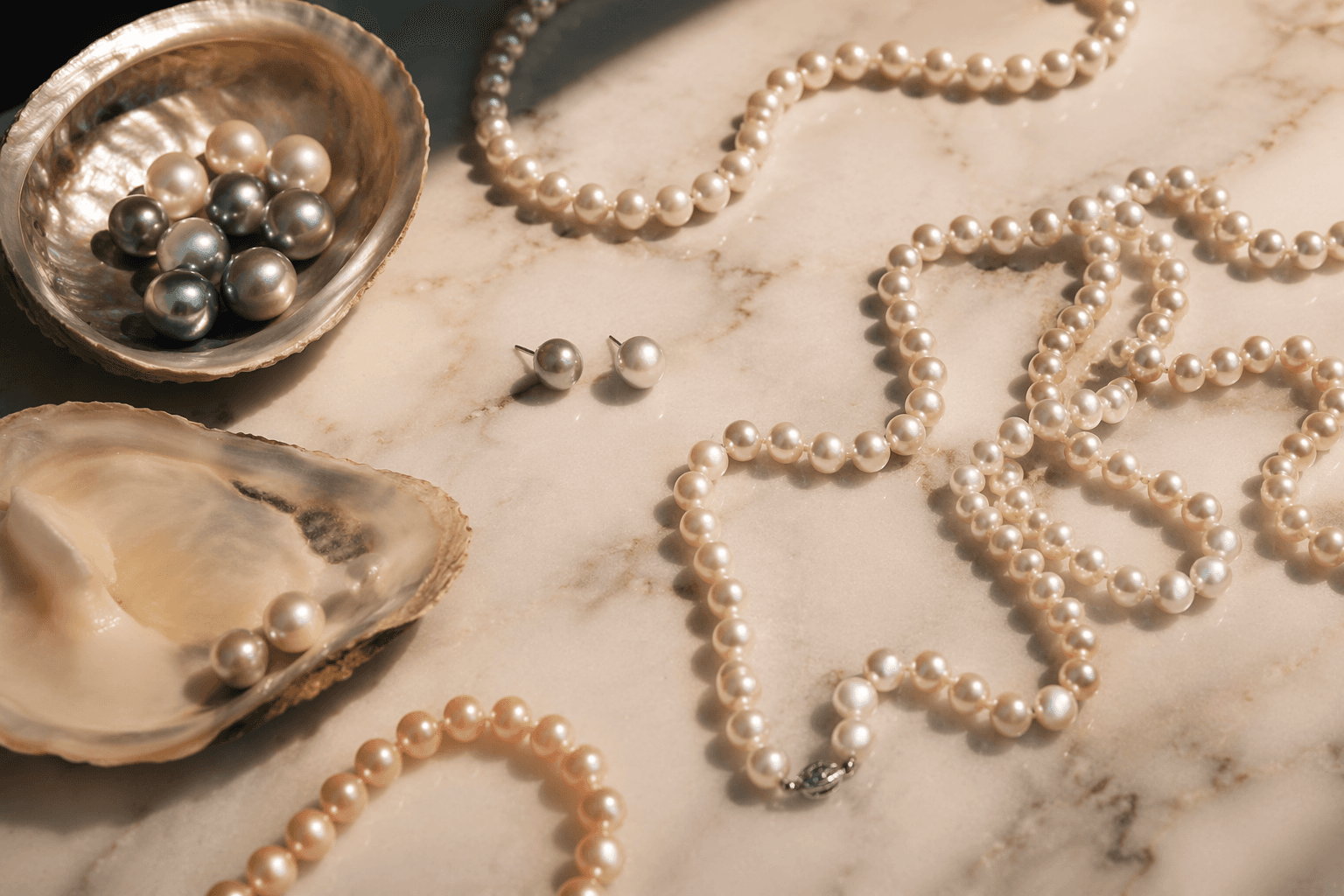
Pearls are not all asking the same thing from your budget. A strand of well-matched pearls tends to cost more because matching is part of the value equation and because the eye reads consistency as luxury. A pair of pearl studs, especially when the surface is clean and the luster is sharp, can be one of the most efficient ways to buy quality because the design is simple and the gem does the speaking.
Baroque pearls are often the most forgiving choice for shoppers who want personality and strong visual impact without paying for perfect roundness. Their irregular shape can be a feature rather than a flaw, especially in pendants or sculptural earrings where the setting lets the pearl feel intentionally modern. Round pearls remain the benchmark for formality and classic wearability, which is why they still anchor the most traditional strands and heirloom pieces.
If you are choosing among pearl jewelry styles, think in terms of long-term wearability as much as first impression. Earrings and pendants are generally easier to live with than a full strand, because they are less likely to show wear unevenly and they can move from day to evening with little friction. A necklace asks more from the pearl, and from the maker, because the matching has to hold across the entire line.
How to care for pearls so they stay luminous
Pearls are delicate gems. GIA places them around 2.5 to 5 on the Mohs scale, which is one reason they deserve more attention than many buyers expect. Their beauty can survive years of wear, but only if you protect the surface and preserve the nacre.
- Wipe pearls clean after wear with a soft cloth.
- Store them in a soft pouch or case, separate from harder jewelry.
- Keep them away from perfume, hairspray, cosmetics, perspiration, harsh chemicals, acids, and chlorine.
- Avoid intense heat and light, which can dehydrate pearls and crack the nacre.
- Treat dyed, impregnated, or coated pearls with extra caution, since those treatments can change over time.
This is where pearl jewelry becomes less like a gemstone accessory and more like a living surface. Pearls reward contact, but not neglect. A necklace worn often and cleaned gently will usually look better over time than one exposed to chemicals, heat, and careless storage. The goal is not fragility for its own sake. It is stewardship.
The smartest June pearl purchase
Pearls remain one of the most meaningful June birthstones because they work on several levels at once: they are historically loaded, visually serene, and flexible enough to suit a first-time buyer or a collector. The best purchase is not necessarily the largest pearl in the case. It is the one whose luster is strong, whose surface is clean enough for the price, whose shape fits the design, and whose origin matches your budget and expectations.
That is why pearl buying is less about chasing a single ideal than about reading the stone honestly. A cultured pearl with excellent luster and good surface quality can be a wiser purchase than a larger stone with weak glow. A baroque pearl can be a more satisfying choice than a perfectly round one if you want something sculptural and personal. And a well-made pearl jewel, stored and worn with care, can stay beautiful long after trendier birthstones have lost their point.
This article was produced by Prism’s automated news system from verified source data, official records, and press releases, then run through automated quality and moderation checks before publishing. The system is built and supervised by the people who set the standards it runs under. Read our full AI policy.
Know something we missed? Have a correction or additional information?
Submit a Tip