Birthstone Jewelry Rises with Bold Color, Meaning, and Choice
Birthstones feel current when spring 2026's sculptural shapes, bold color, and ethical sourcing meet the month's private meaning.
Why birthstones are suddenly looking so modern
Birthstone jewelry works now because it already knows how to do what spring 2026 wants: make adornment feel intentional. L’Officiel’s read on the season centers silhouette, color, and materiality, while JCK points to sculptural metals, totemic pendants, and utility-inspired adornment as the shapes driving spring-summer 2026. Birthstones slot cleanly into that language, because a gem tied to a month arrives with a story before it ever reaches a chain or a setting.
That story has real historical weight. The modern month-by-month birthstone list was created in 1912 by the American National Association of Jewelers, and the American Gem Society notes that what was once criticized for commercialism is now widely accepted as the official birthstone list. The category has also proved unusually broad: the Gemological Institute of America says birthstones appeal to audiences around the world regardless of gender, age, nationality, or religion, and curator Terri Ottaway has underscored that reach in an exhibit that brought together more than 250 objects. In other words, this is not niche sentimentality. It is a global jewelry language.
The market context helps explain why birthstone pieces are resonating as both gifts and self-purchases. Statista projects worldwide jewelry revenue at US$408.64 billion in 2026, and 75% of sales are expected to come from non-luxury jewelry. That is a shareable stat for a simple reason: the biggest jewelry category is not the rarefied one, but the accessible one, where a birthstone ring or pendant can carry as much emotional weight as a far pricier piece.
Silhouette: when the stone becomes the shape
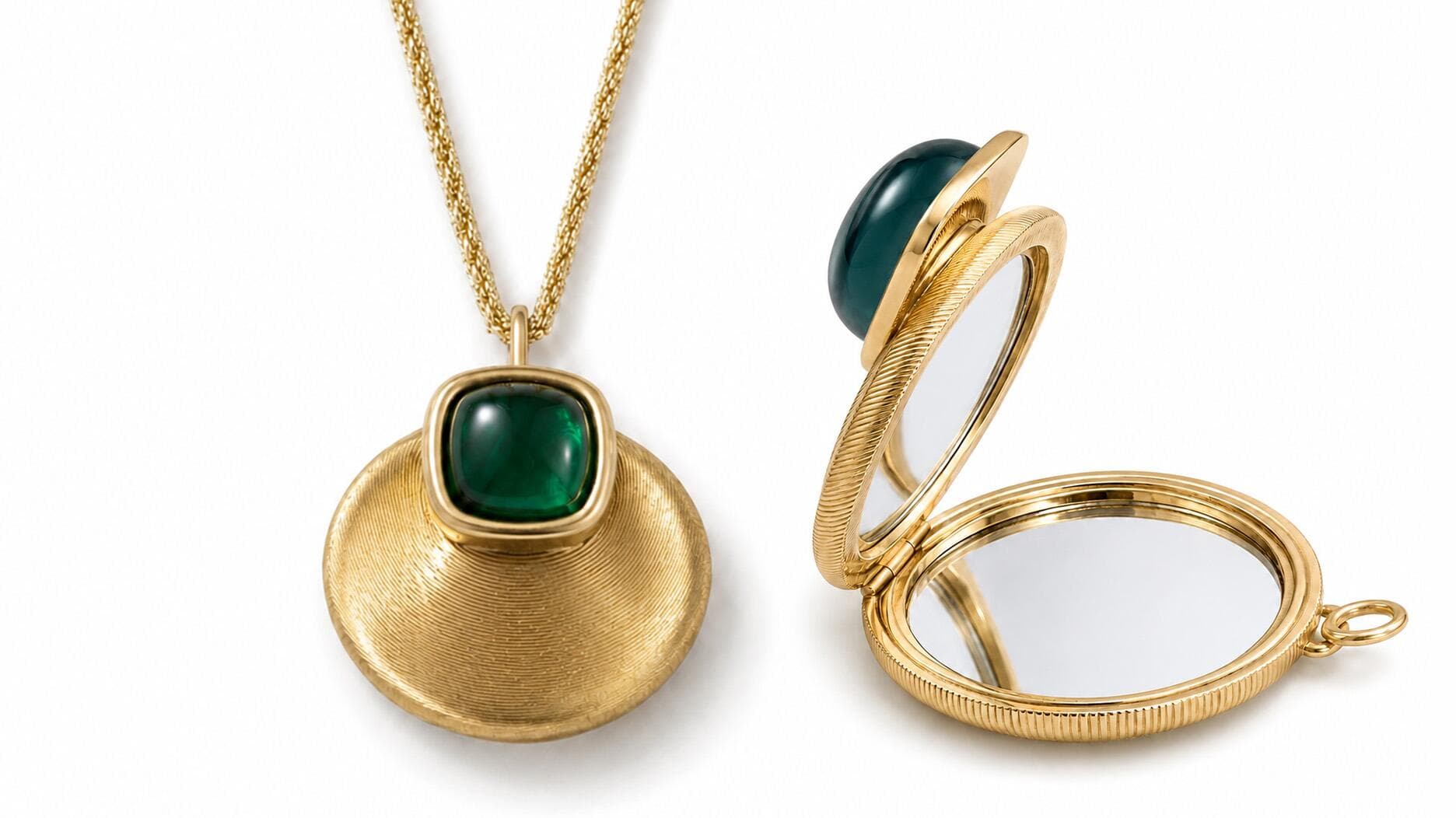
Spring’s strongest birthstone pieces are not shy about line and proportion. The new emphasis on silhouette means a stone does not have to sit passively inside a classic mount; it can anchor a sculptural pendant, hang from a utility-leaning chain, or swing from a long tassel that gives the piece movement. That is where birthstone jewelry escapes the feeling of a keepsake shop and starts to look like fashion.
This is the most natural lane for months with stones that hold the eye from a distance. April’s diamond reads cleanly in a bezel or a sharp solitaire, while May’s emerald, July’s ruby, September’s sapphire, and October’s tourmaline all take well to bolder architectural settings. Even a small stone feels more current when the silhouette around it is decisive, not dainty for the sake of being dainty.
Color: the easiest way to make birthstone jewelry feel new
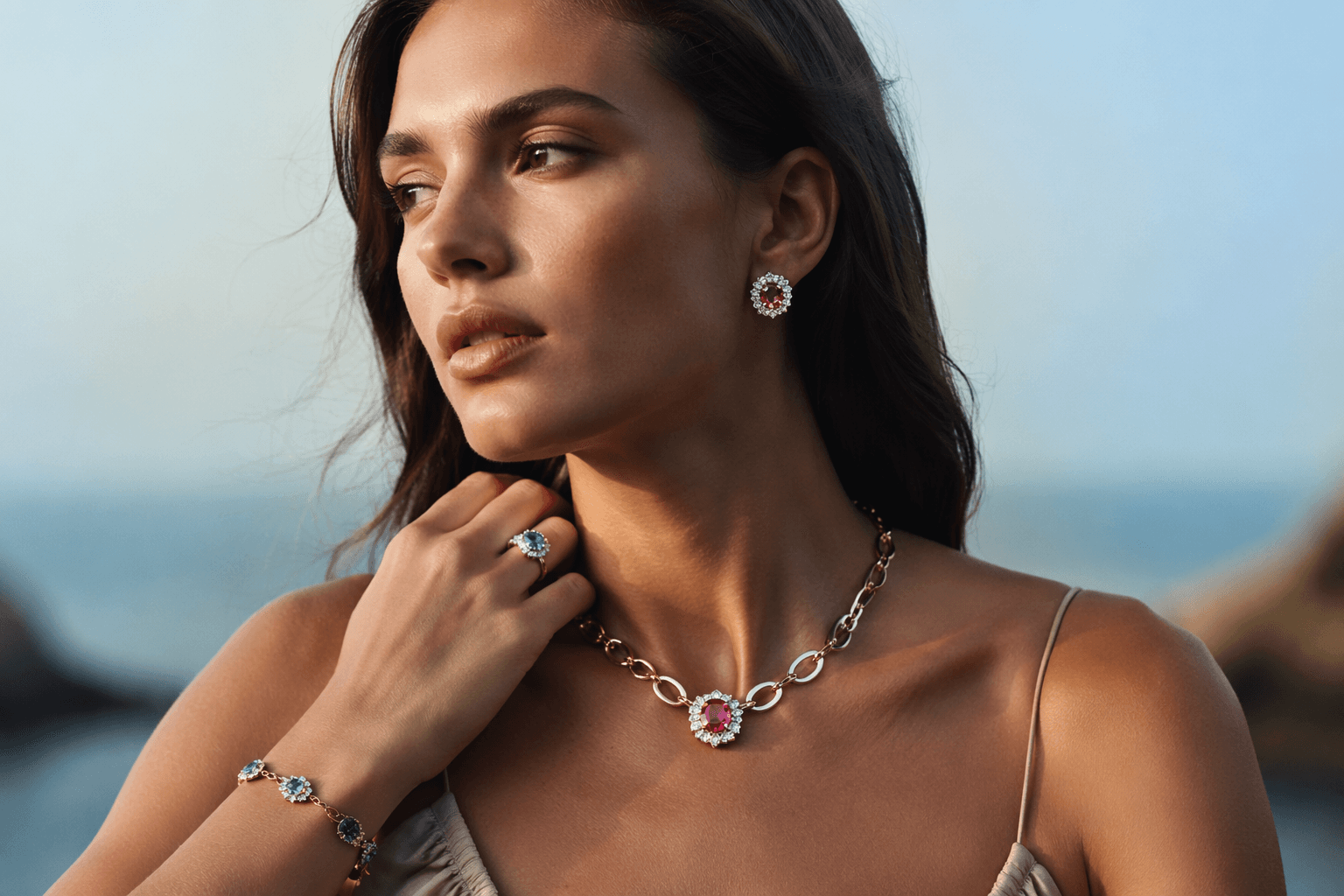
Color is doing more of the talking this season, and birthstones have the advantage of arriving pre-loaded with it. L’Officiel’s spring frame treats color as central rather than decorative, which is why saturated stones can feel more relevant than polished metal alone. February’s amethyst, March’s aquamarine, May’s emerald, July’s ruby, September’s sapphire, October’s tourmaline, November’s topaz, and December’s blue topaz all sit naturally in that conversation.
The most compelling color story may be June’s alexandrite, a stone whose changing appearance gives the category a built-in element of surprise. That kind of transformation is exactly what makes a reader stop, and exactly what makes a piece memorable enough to be passed on. If spring 2026 is asking jewelry to feel expressive, alexandrite answers without having to try very hard.
Materiality: pearls, beads, diamonds, and texture change the mood
Materiality is where classic birthstone jewelry sheds its old-school stiffness. Pearls, beads, and diamond accents are being reworked into more intentional pieces, and that matters because a birthstone does not need to be the only thing making a statement. A pearl can soften a sharp chain, a bead can give a pendant rhythm, and a small diamond accent can sharpen a colored stone without stealing its identity.
June is the clearest pearl month, and it also has alexandrite and moonstone in the Gemological Institute of America’s list, which gives it unusual range for designers who want softness, shimmer, or changeable light. August’s peridot, spinel, and sardonyx work especially well with bead-like repetition and textured strands, while December’s turquoise, blue zircon, tanzanite, and blue topaz invite mixed materials that keep the color from feeling flat. Even a small row of diamonds can make January’s garnet or March’s aquamarine feel more contemporary, especially when the metal setting is clean and restrained.
Tassels deserve a mention here too. Used sparingly, they can make a birthstone feel less precious in the old-fashioned sense and more alive in motion, which is exactly the point of spring’s high-fashion function.
The months that give you the most choice
Some months simply offer more room to personalize. The Gemological Institute of America lists March with aquamarine and bloodstone, June with pearl, alexandrite, and moonstone, August with peridot, spinel, and sardonyx, and December with turquoise, blue zircon, tanzanite, and blue topaz. That flexibility makes these months especially useful if you want a piece that feels less predictable and more individual.
The International Gem Society’s modern chart is more streamlined, assigning January garnet, February amethyst, March aquamarine, April diamond, May emerald, June alexandrite, July ruby, August peridot, September sapphire, October tourmaline, November topaz, and December blue topaz. The difference between the two approaches is useful, not confusing: one emphasizes traditional variety, the other gives the market a neat monthly map. For a buyer, that means more than one correct answer, which is exactly why birthstone jewelry can be styled as personal rather than prescribed.
Why provenance matters as much as polish
The strongest trend line behind 2026 jewelry is not just color or scale, but ethical sourcing. Jewelers Mutual says buying behavior, ethical sourcing, and innovations in gem cutting are shaping the year ahead, which is a reminder that a meaningful stone should come with a meaningful backstory. If a piece is sold on sentiment, the sourcing should not be vague.
That means asking better questions before you buy. Where was the stone cut, how was it sourced, and what gives the setting its value beyond shine? In a market where most jewelry sales are projected to be non-luxury, the pieces that endure will be the ones that make their materials legible and their symbolism specific.
Birthstone jewelry is rising because it bridges all of that at once: color, identity, and design. In Spring 2026, the best piece is not the most ornate one, but the one whose shape, stone, and material tell the same story.
This article was produced by Prism’s automated news system from verified source data, official records, and press releases, then run through automated quality and moderation checks before publishing. The system is built and supervised by the people who set the standards it runs under. Read our full AI policy.
Did this article answer your question?