Birthstones by Month, What Each Gem Means and Why It Matters
Birthstones began as protective talismans, then became a modern gift code. June, August and December each have three stones, which is why the chart still shifts.

How the modern birthstone chart took shape
Birthstones began as a language of protection long before they became a shopping shorthand. Ancient cultures in Mesopotamia and the Greco-Roman world linked gems to good health, warding off evil and personal meaning, but the U.S. list was standardized only in 1912, when the American National Retail Jewelers Association established the official chart that Jewelers of America still traces as its origin.
That first modern list did not freeze the tradition in place. In 1952, the Jewelry Industry Council of America revised the chart, adding alexandrite to June, citrine to November and pink tourmaline to October, while also replacing December’s lapis lazuli with zircon and reshaping March, which is why different reputable guides still present slightly different versions today.
That flexibility is the key to understanding why birthstone jewelry feels so personal. June, August and December each carry three stones on mainstream charts, and consumers still draw from both modern and traditional lists, including options such as pearl, moonstone, sardonyx, opal, turquoise, tanzanite and blue topaz. Zodiac signs have their own gemstone associations too, though they do not always line up with the month chart.
Birthstones by month
January: Garnet
Garnet is January’s stone, but it is far more interesting than the red gem most people picture. The family spans red, purplish, green, yellow and orange stones, and its symbolism has long included protection, vitality, love and light.
That range makes garnet one of the most versatile birthstones in jewelry. It works as a deep, wine-colored classic, but it can also read unexpectedly fresh in green or orange, which is why January gifts often feel more individual than formulaic.
February: Amethyst
Amethyst is the purple variety of quartz, and its color can run from pale lilac to rich royal purple. Its old meaning centers on sobriety, clear thinking and quick wit, a story rooted in Greek etymology and wine-laced mythology.
It is also one of the easiest birthstones to wear daily because the stone brings drama without becoming severe. That balance, between regal color and approachable price, is exactly why amethyst remains so widely loved.
March: Aquamarine and bloodstone
March offers two very different moods. Aquamarine evokes the sea, with blue to slightly greenish blue tones that suggest purity of spirit and soul, while bloodstone carries a harder-edged symbolism tied to health and strength.
If you want the softer, more luminous choice, aquamarine is the easy answer. If you want something more talismanic and old-world, bloodstone gives March a darker, more protective charge.
April: Diamond
April belongs to diamond, the stone whose name comes from the Greek adamas, meaning invincible or unbreakable. Its history runs from Indian riverbeds and fourth-century BCE trade to the first recorded diamond engagement ring in 1477, so the gem carries both antique authority and modern romance.
That is why diamond remains the most instantly legible birthstone of all. When someone chooses it for April, they are not just choosing brilliance, but a symbol of endurance that has already lived many lives in history.
May: Emerald
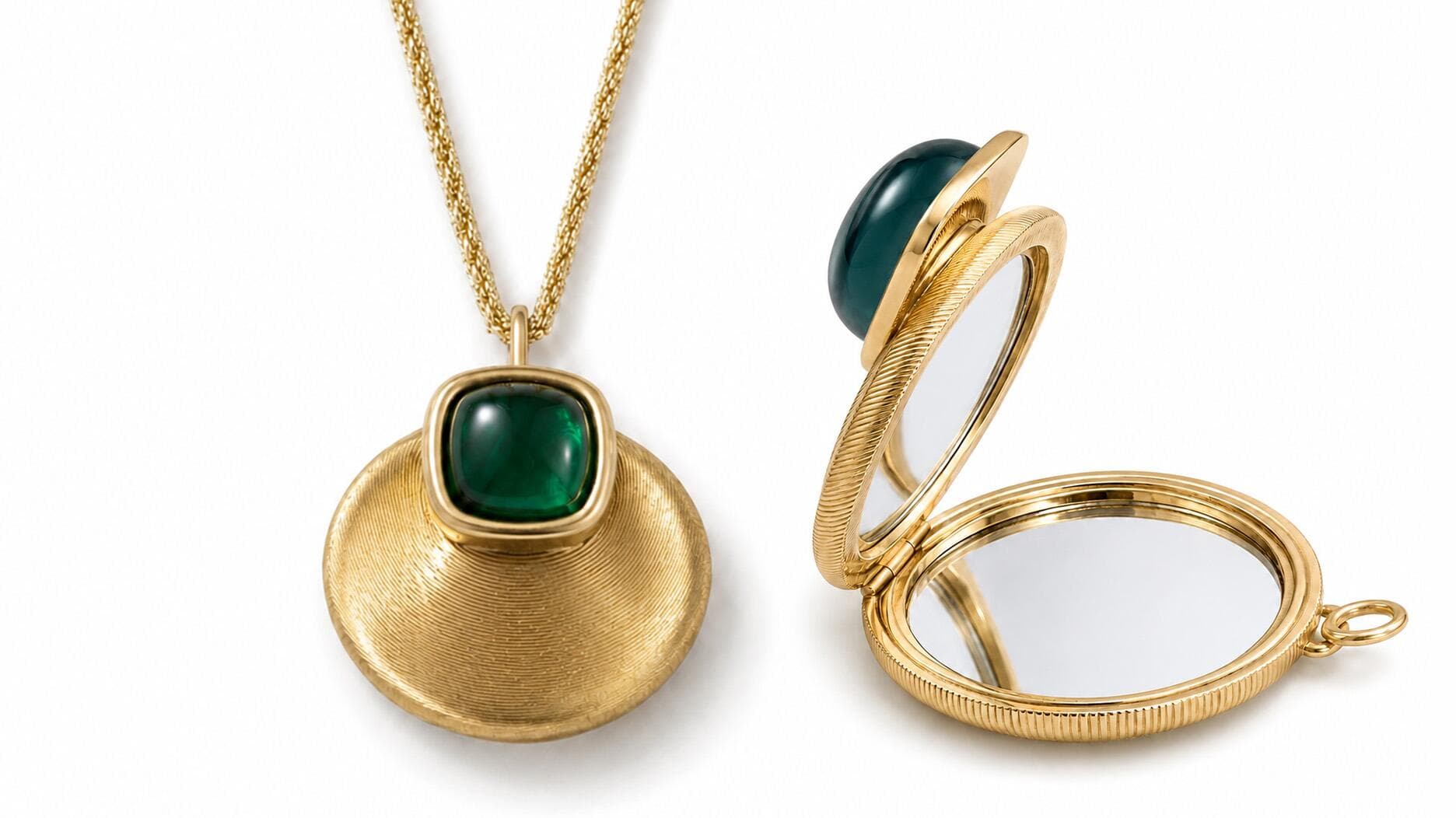
May is emerald, the green beryl whose color mirrors spring growth and has long been associated with royalty. GIA links the stone to Egyptian pharaohs, Cleopatra and the Inca world, which gives emerald a rare kind of cultural density, equal parts garden and crown jewel.
Emerald also reminds shoppers that beauty can be scarce. The geology required to produce fine examples is unusually specific, which is why the stone feels so luxurious even before it is set in gold or platinum.
June: Pearl, alexandrite and moonstone
June is the month that best explains why birthstone charts expanded beyond a single gem. Pearl brings organic softness, alexandrite offers dramatic color change, and moonstone gives the month its most ethereal glow, which is why June is one of only three months with three birthstones.
Choose pearl if you want the most classic and immediately giftable option. Choose alexandrite if rarity and a shifting personality matter more, or moonstone if the mood you want is romantic, luminous and slightly off-center.
July: Ruby
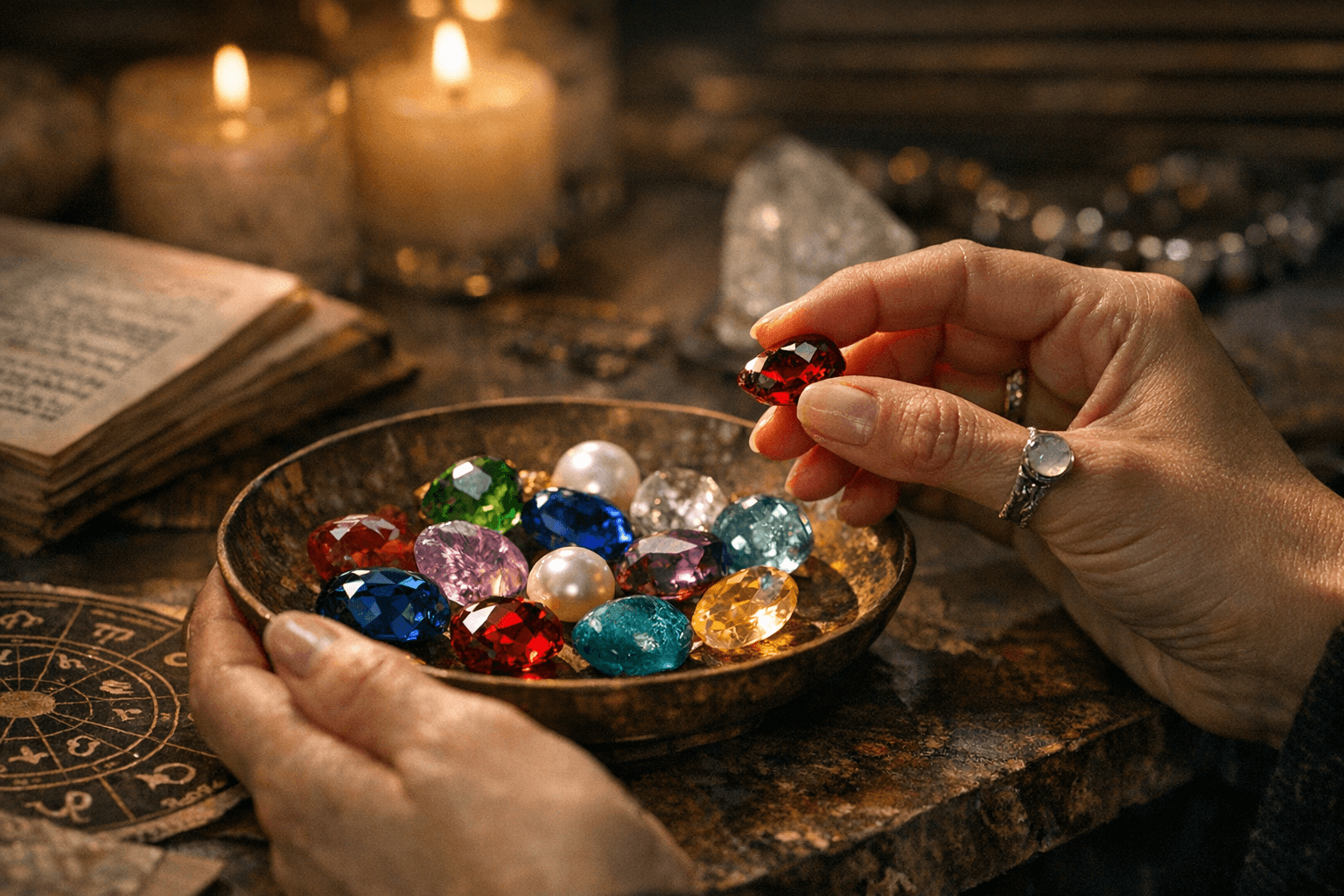
Ruby is July’s stone, and it is hard to imagine a more emotional red. GIA calls it the king of precious gems, while its name, from the Latin ruber, makes its symbolism plain: passion, love and success.
The finest rubies are prized for a deep red with a hint of purple, a color often described in the trade as pigeon’s blood. That intensity is why ruby still reads as one of the most consequential gift stones in the calendar.
August: Peridot, spinel and sardonyx
August has one of the richest birthstone stories. Peridot glows in yellow-green, spinel was long mistaken for ruby, and sardonyx is the original August stone, with a history that stretches back more than 4,000 years.
This is the month to choose when you want color with some surprise in it. Peridot feels bright and solar, spinel offers a painter’s palette, and sardonyx brings a carved, ancient note that feels especially appealing if you like birthstones with archaeological weight.
September: Sapphire
September belongs to sapphire, the birthstone of sincerity, truth, faithfulness and nobility. Blue sapphire has long been linked to royalty, and that association was renewed for a global audience when Princess Diana’s sapphire engagement ring became one of the most recognizable jewels of the modern era.
Sapphire is also one of the great arguments for choosing the official stone over an alternate. It is a name almost everyone recognizes, and its symbolism has enough gravity to make the gift feel formal without feeling stiff.
October: Opal and tourmaline
October is the month of visual abundance. Opal’s play-of-color has inspired beliefs about lightning, prophecy and hope, while tourmaline is prized for one of the widest color ranges in the gem world, from vivid greens to pinks, blues and multicolored crystals.
If opal is the poetic choice, tourmaline is the chromatic one. Pick opal when you want shimmer and mystery, or choose tourmaline when you want a broader palette and a more contemporary look.
November: Topaz and citrine
November’s two stones are among the most approachable in the birthstone calendar. Topaz appears in nearly every color, while citrine is the transparent yellow-to-brownish-orange variety of quartz, long used in jewelry and usually more affordable than many of its colored-stone peers.
That combination makes November especially practical for gifting. Topaz gives you breadth, citrine gives you warmth, and both let you keep the symbolism without being locked into a single look or price point.
December: Turquoise, zircon and tanzanite, plus blue topaz on some charts
December is where birthstone charts vary most visibly. GIA and Geology.com list turquoise, zircon and tanzanite, while International Gem Society also includes blue topaz, which is why December births can feel like an entire color family rather than a single stone.
Turquoise brings ancient, earth-toned history and a blue-green range tied to Egypt and other old civilizations; zircon adds an unexpectedly rich palette and old-world lore; tanzanite brings saturated blue-violet drama from a single source in northern Tanzania. Blue topaz adds a cleaner, brighter modern note when that is the look you want.
How to choose the right birthstone
For the most widely recognized U.S. version, start with the 1912 list and its 1952 additions. For the most personal version, let color and meaning lead: aquamarine feels serene, ruby feels fervent, sapphire feels ceremonial, and garnet or citrine can feel more intimate and easier to wear every day.
That is the quiet genius of birthstone jewelry. It is rooted in an old system of symbolism, refined by 1912 standardization, expanded by later updates and still open enough to make a birthday gift feel personal rather than prescribed.
This article was produced by Prism’s automated news system from verified source data, official records, and press releases, then run through automated quality and moderation checks before publishing. The system is built and supervised by the people who set the standards it runs under. Read our full AI policy.
Did this article answer your question?