Ruby Birthstone Jewelry Shines With Rarity, Royal History, Lasting Appeal
Ruby’s July status is only the beginning: chromium-fired color, royal provenance, and scarcity push the best stones into serious jewelry territory.
Why ruby still defines July
Ruby earns its July birthstone status because it delivers immediate visual drama: a red so vivid it feels almost lit from within. It is the red variety of corundum, the same mineral family as sapphire, and its color comes from chromium, which gives the gem its signature fire. That chemistry is part of the appeal, but so is the story around it, because ruby has long been tied to power, protection, and prestige.
The modern U.S. birthstone list dates to 1912, when the American National Retail Jewelers Association, now Jewelers of America, established the roster still in use today. Ruby has remained the official July stone ever since, while the broader birthstone tradition reaches much farther back, often to the biblical breastplate of Aaron, which held 12 gems for the 12 tribes of Israel. That older lineage gives ruby jewelry a sense of continuity that makes a modern ring or pendant feel connected to something far larger than a seasonal gift.
What ruby color should look like
Color is the first thing to judge, and in ruby that means more than just “red.” The most desirable stones have a rich, lively red that stays vivid in different light, without sinking too far into brown or too much darkness. Because ruby belongs to corundum, the same species as sapphire, small differences in trace elements matter enormously, and chromium is what pushes the stone into ruby territory rather than another shade of sapphire.
This is where buying gets practical. A ruby that looks strong in a jewelry case but dulls in lower light will not carry the same presence on the hand or at the throat as one with real saturation and balance. For a birthstone piece, that matters more than a collector’s vocabulary, because the stone has to work in everyday life, not just under showroom lighting.
Why size changes the price so fast
Ruby is one of the clearest examples of rarity driving value. Fine-quality rubies over one carat are very rare, and GIA notes that the price per carat rises significantly as size increases. In other words, ruby does not scale the way many buyers expect: once you move from small stones to larger ones, the jump in price can be dramatic.
That is also why ruby can command the highest per-carat prices of all colored stones. International Gem Society says record ruby prices have exceeded $1,000,000 per carat, a figure that explains why a truly fine ruby is treated less like a decorative accent and more like a concentrated asset of color. For shoppers, this means a modestly sized ruby with excellent hue and clarity can be more compelling than a larger stone that looks sleepy or overly included.
Natural, treated, and lab-grown: the terms that matter
A serious ruby listing should be clear about origin and enhancement. Natural ruby comes from the earth, while lab-grown ruby has the same basic chemistry and appearance but was created in a controlled environment; both can be beautiful, but they do not carry the same rarity or pricing story. If a stone has been treated, disclosure matters, because treatments can affect both appearance and value.
Heat treatment is common in ruby and is often used to improve color or clarity, but it should be stated plainly. The key buying habit is simple: ask what the stone is, how it was improved, and whether that information appears in writing. In ruby, vagueness is not a detail, it is a red flag.
The royal history behind the stone
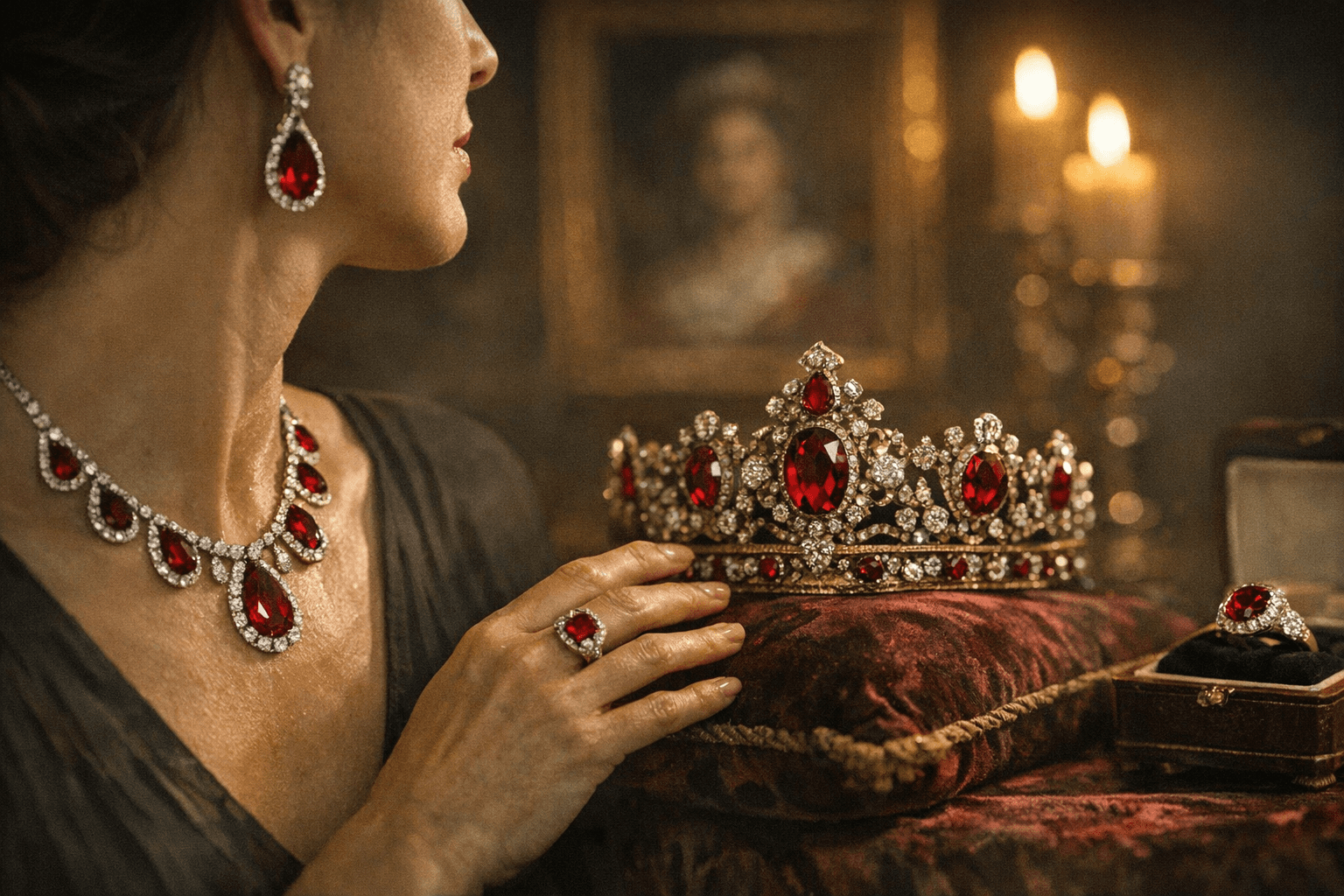
Ruby’s aura comes from more than color alone. Jewelers of America has long described the gem as one favored by kings and queens, and GIA notes that rubies have been prized in royal regalia. That association is not decorative marketing fluff; it is part of why ruby still reads as one of the most authoritative gems in jewelry.
The stone’s geographic pedigree deepens that reputation. Important ruby sources include Myanmar’s Mogok Valley, Madagascar, Cambodia, Sri Lanka, and Vietnam, names that recur whenever high-quality ruby is discussed. Mogok Valley in particular has become almost synonymous with exceptional ruby, and that geographical specificity matters because provenance often shapes both desirability and price.
How to wear ruby in real life
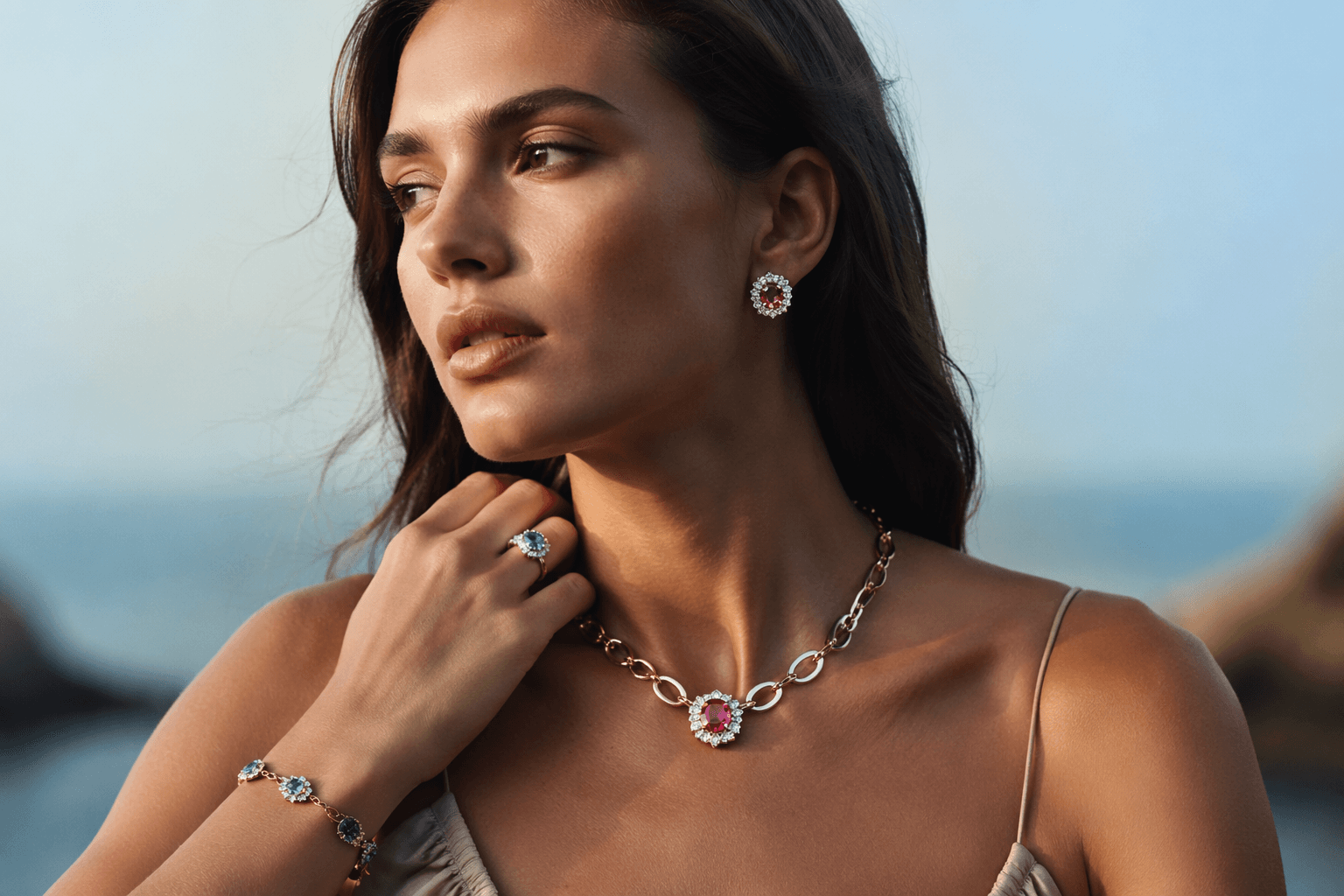
Ruby’s durability is part of its lasting appeal. It is exceptionally durable and well suited for everyday jewelry, which is why it appears so often in rings, bracelets, necklaces, and earrings. That makes it unusually versatile for a birthstone: it can be set as a daily signature piece or reserved for something more formal without feeling fragile or precious in the wrong way.
Its status as a summer stone also makes sense on the body. Ruby’s heat, brightness, and saturated red feel made for July, and that seasonal link gives it a cultural shorthand that buyers recognize instantly. In recent jewelry coverage, industry voices at Jewelers of America have also pointed to renewed consumer interest in ruby designs and July birthstone pieces, a reminder that the stone’s appeal is not just historical but current.
What to remember before you buy
If you are choosing ruby jewelry, start with color, then ask the harder questions about origin, treatment, and size. A fine ruby that is over one carat can become exponentially more expensive because the best material is so scarce, and the market rewards exceptional color more than simple weight. The strongest piece will not just mark July, it will tell the long story of a gem that has moved from ancient tradition to royal vaults to modern jewelry counters without losing any of its authority.
This article was produced by Prism’s automated news system from verified source data, official records, and press releases, then run through automated quality and moderation checks before publishing. The system is built and supervised by the people who set the standards it runs under. Read our full AI policy.
Did this article answer your question?