GIA Birthstone Hub Maps Month-by-Month Gems, Lore, and Multiple Stones
GIA’s birthstone hub clarifies the month-by-month map, from Exodus to modern revisions, and shows which months carry more than one gem.
A tradition older than the calendar
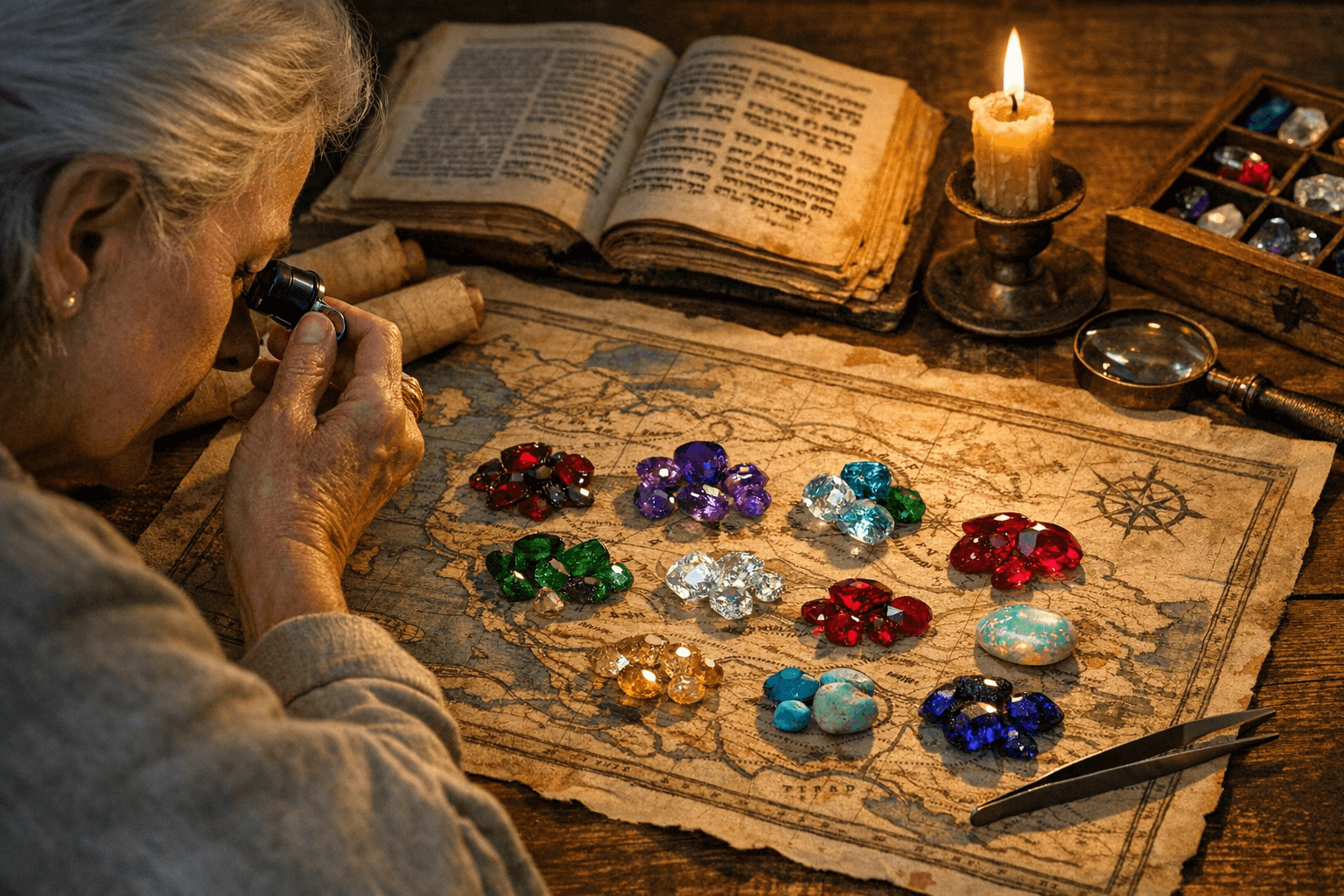
Birthstones begin as scripture and end in the jewelry box, which is part of their enduring appeal. The most common historical thread runs back to the book of Exodus, where the priestly breastplate of Aaron was described as carrying 12 stones tied to the tribes of Israel, a symbolic framework that helped shape later birthstone traditions. GIA’s month-by-month hub makes that legacy legible for modern readers, turning a centuries-old idea into a clear, navigable guide to birthstone meaning, color, and gemstone identity.
That matters because birthstones are not fixed relics. They are living conventions, revised as gem availability changes and as consumers learn more about the stones themselves. GIA’s broader educational ecosystem, including the Gem Encyclopedia, places birthstones inside a larger gemological conversation rather than treating them as isolated charms.
How the official list took shape
In the United States, the modern birthstone list dates to 1912, when it was established by the American National Retail Jewelers Association, now Jewelers of America. The list did not stay frozen there. Jewelers of America later updated it in 1952 to add alexandrite, citrine, tourmaline, and zircon, then added tanzanite for December in 2002. In 2016, Jewelers of America and the American Gem Trade Association added spinel as an additional August birthstone.
That history reveals something useful for buyers: the birthstone system is both symbolic and practical. It responds to what the market can supply, what collectors want to wear, and what jewelers can place in a ring, pendant, or pair of earrings with confidence. The addition of spinel was even paired with a consumer marketing campaign, a reminder that birthstone lists still evolve in response to demand as well as tradition.
Why some months have more than one stone
GIA’s hub is especially helpful because it does not pretend each month belongs to only one gem. June has pearl, alexandrite, and moonstone, and GIA notes that June is one of only three months with three birthstones. August is another, with peridot and spinel, while December is also in the three-stone club. October, meanwhile, gives readers a choice between opal and tourmaline. That flexibility is not a footnote. It is the heart of how contemporary birthstone jewelry works.
The month-by-month structure also keeps the tradition practical. April is commonly associated with diamond, the hardest and most familiar of birthstones, while July belongs to ruby, a stone prized for its saturated red color and everyday wearability. Those anchors give the calendar shape, but the multiple-stone months are where the category becomes most interesting, because they invite personal taste, budget, and durability into the decision.
The best birthstone is not always the rarest one
For daily wear, durability matters as much as lore. Diamond and ruby sit near the top of any wearability conversation because they are resilient choices for rings and other pieces that meet the body’s friction every day. Spinel also earns attention here: its 2016 addition to August was more than a symbolic gesture, because it offers a refined look that can read like a luxury alternative without the extreme rarity or price pressure of some better-known gems.
Other birthstones are more delicate, and that should influence the setting as much as the stone. Pearl, moonstone, and opal have a softer, more vulnerable character, which makes them beautifully expressive in pendants or earrings but less forgiving in rings worn nonstop. A bezel setting can offer more protection than prongs for stones that need a little shelter at the edge, while prong settings allow more light and brilliance for harder gems that can tolerate exposure. In other words, setting choice is not decorative trivia. It is part of the stone’s long-term survival.
- For everyday rings, diamond, ruby, spinel, and many tourmalines are sensible starting points.
- For more delicate stones like pearl, moonstone, and opal, look for designs that reduce impact and abrasion.
- If you love a softer birthstone, consider it in a pendant or earrings rather than a high-wear ring.
Where value can be found within the same month
The beauty of a month with multiple stones is that it creates room for interpretation without losing meaning. June is the clearest example. Pearl brings a classic, luminous softness; moonstone offers a silvery glow; alexandrite is the rarest and most dramatic of the trio, prized for its color-change phenomenon. If the goal is a piece that feels personal without straining the budget, moonstone or pearl can deliver the emotional symbolism of June at a far gentler price point than alexandrite.
August offers a similar spectrum. Peridot tends to be the accessible choice, with a fresh green color that reads clean and modern, while spinel brings more depth and a stronger fine-jewelry presence. October’s split between opal and tourmaline is another useful comparison. Opal can be ethereal and highly individual, but tourmaline often gives more range in color and can be easier to live with in stronger settings. December’s tanzanite, introduced in 2002, gives the month a newer, more contemporary note, while zircon remains part of the official conversation and can offer a more approachable path into the category.
Why GIA remains the reference point
GIA’s birthstone hub stands out because it is not just a shopping tool. GIA is an independent nonprofit established in 1931, and its authority comes from education as much as from nomenclature. The birthstone pages sit within the Gem Encyclopedia, which helps readers understand what makes each stone distinct, from visual character to gemological identity.
The scale of GIA’s own exhibition work also underscores how broad the tradition really is. Its “GIA Celebrates Birthstones” exhibit featured more than 250 gems, minerals, and jewelry objects, a reminder that birthstones are not a narrow marketing invention but a wide cultural language expressed through material, color, and craft. That breadth is what makes the subject endlessly useful to readers: the same month can mean a different stone, a different price point, and a different level of durability, yet still feel true to the person wearing it.
Birthstones endure because they do more than assign a gem to a month. They connect history to personal style, and symbolism to the practical realities of everyday jewelry. GIA’s hub simply makes that old language easier to read, one month at a time.
This article was produced by Prism’s automated news system from verified source data, official records, and press releases, then run through automated quality and moderation checks before publishing. The system is built and supervised by the people who set the standards it runs under. Read our full AI policy.
Did this article answer your question?