Birthstone Jewelry Gains Momentum as Personalized Gifts Drive Spring Sales
Birthstones are back as retailers turn names, dates and family stones into keepsakes. The smartest pieces feel personal first, trendy second.
Why birthstones are suddenly everywhere
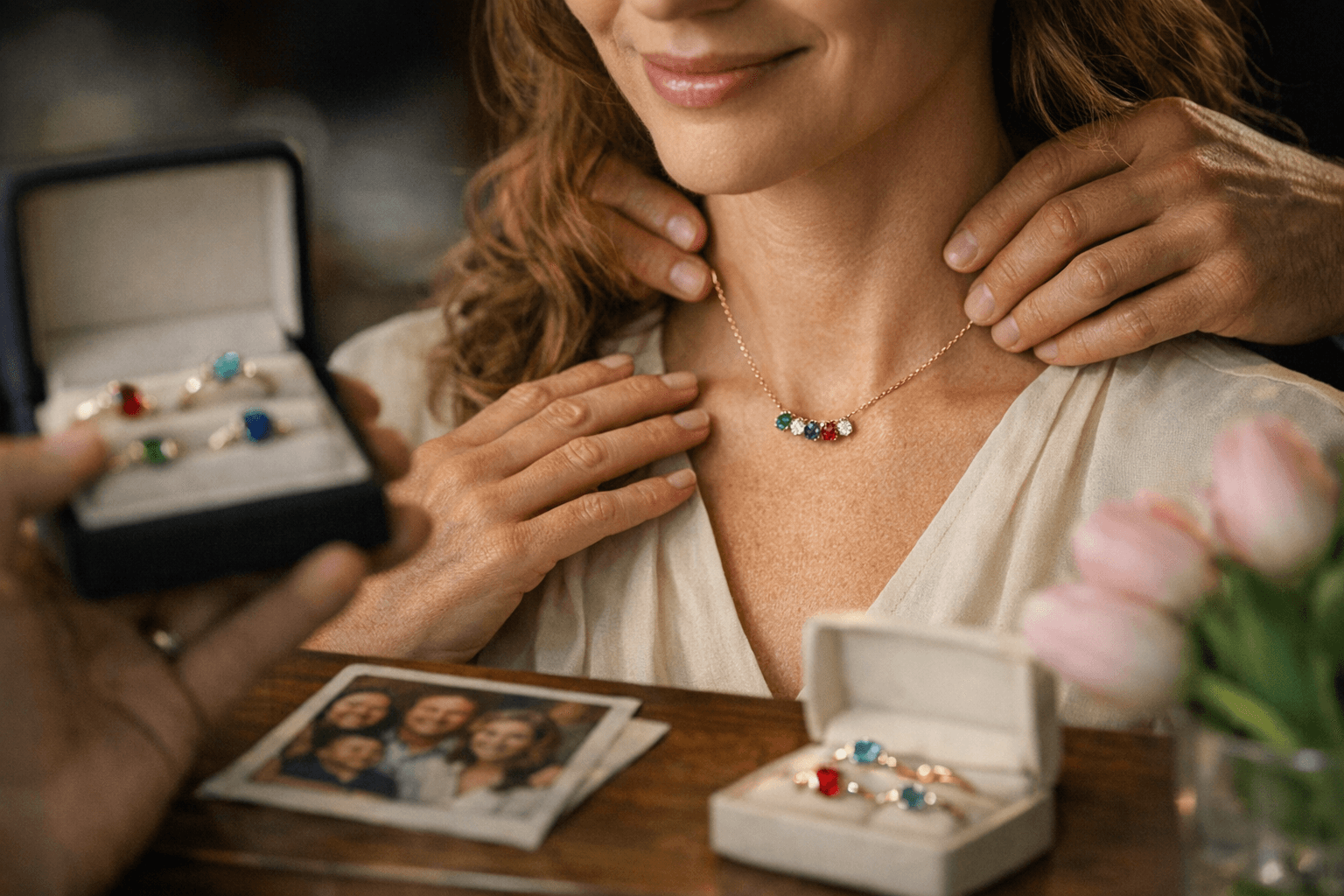
Birthstones have never been only about months. Right now, retailers are selling them as identity in miniature, folding names, dates, initials, symbols and letters into pieces that feel less like accessories and more like private archives. That is the logic behind the spring Storyteller trend JCK identified: jewelry that carries a life story in plain sight, especially in birthday stacking rings, family birthstone necklaces and milestone gifts.
The timing makes sense. Demand for meaningful jewelry has stayed strong since the pandemic, when buyers began treating adornment as something emotional, not merely decorative. De Beers has been tracking the same shift in consumer desire, saying shoppers increasingly want jewelry that expresses individuality, authenticity and personal meaning. Its Desert diamonds concept, first unveiled at the JCK Las Vegas Show, became a surprisingly loud signal of that appetite, generating more than 250,000 mentions and 450 million views across digital platforms over two years.
A tradition with real depth
Part of birthstones’ power is that they feel rooted rather than invented. Jewelers of America says the official U.S. birthstone list dates to 1912, when it was established by the American National Retail Jewelers Association. The International Gem Society notes that the modern list was standardized that same year and differed from older traditional lists by favoring transparent gems, a practical choice that helped jewelers create more customized designs, including mother’s rings with multiple family stones.
That history matters because it gives the category a legitimacy many trend-driven gifts lack. Birthstones were once linked to older religious and symbolic traditions, but their present-day appeal is more intimate: they can mark a child, a parent, a partner or even a self-gift. In an era when shoppers are looking for objects that say something specific, that mix of heritage and personalization is hard to beat.
Why retailers are leaning in now
The commercial case is strong enough to make birthstones feel less like a seasonal flourish and more like a stable business. Statista says the U.S. jewelry market was valued at about $63 billion in 2023, and Signet Jewelers had more than $7.1 billion in revenue in 2024. That scale helps explain why the category keeps getting new layers of storytelling, from bespoke engraving to birthstone combinations built around families rather than fixed month-by-month formulas.
It also helps that jewelry is already one of the most emotionally legible purchases in American retail. Statista says jewelry is commonly bought as a gift to show appreciation and affection, and Americans planned to spend the most on jewelry for Valentine’s Day. Birthstones fit that behavior neatly: they turn a beautiful object into a pointed gesture, one that can read as romantic, filial or personal without needing much explanation.
How to shop the category without losing the plot
The best birthstone jewelry does not try to say everything at once. A piece feels strongest when one idea leads, whether that is a single stone on a slim chain, a trio of family gems or a ring that uses engraving as the quiet frame for color. Too many references can make the design feel crowded; the most convincing pieces usually leave some visual breathing room so the stone, and the story behind it, can register clearly.
For shoppers building a piece from scratch, a few principles help keep the result personal rather than overly trend-driven:
- Start with the relationship that matters most, then choose the number of stones to match it. One stone reads cleanly, while three or more can make sense for family pieces.
- Let scale do some of the storytelling. A small stone in a band can feel intimate; a larger center stone in a pendant feels more declarative.
- Match the design to the way it will be worn. Rings see more impact, so a protected setting can be wise; necklaces and earrings can take slightly more openness.
- Favor combinations that feel emotionally coherent, not simply colorful. Family birthstones work best when the palette feels intentional, even if the stones do not perfectly match.
Settings matter as much as stones
This is where craftsmanship separates a keepsake from a trinket. A bezel setting wraps a stone in metal and gives it a sturdier, more modern outline, which is especially useful for everyday rings that will brush against desk edges, door handles and keys. A prong setting exposes more of the gem, letting light do more work, which can be beautiful for transparent or lively stones in pendants and earrings.
That distinction is useful with birthstones because the category spans everything from durable gems to more delicate materials. GIA notes that some months now have multiple birthstones, and June is the clearest example, with pearl, alexandrite and moonstone. Those three stones behave very differently in jewelry: pearls bring softness and luster, alexandrite rewards light with color change, and moonstone depends on a hazy inner glow. The setting should support the stone’s character, not fight it.
From mother’s rings to modern identity pieces
The old mother’s ring is the direct ancestor of today’s family birthstone necklace. International Gem Society points out that the modern birthstone list’s flexibility made it easier for jewelers to build pieces around several family members, rather than force every design into one rigid calendar month. That idea has only grown more relevant as customers look for jewelry that marks blended families, chosen families and self-selected milestones.
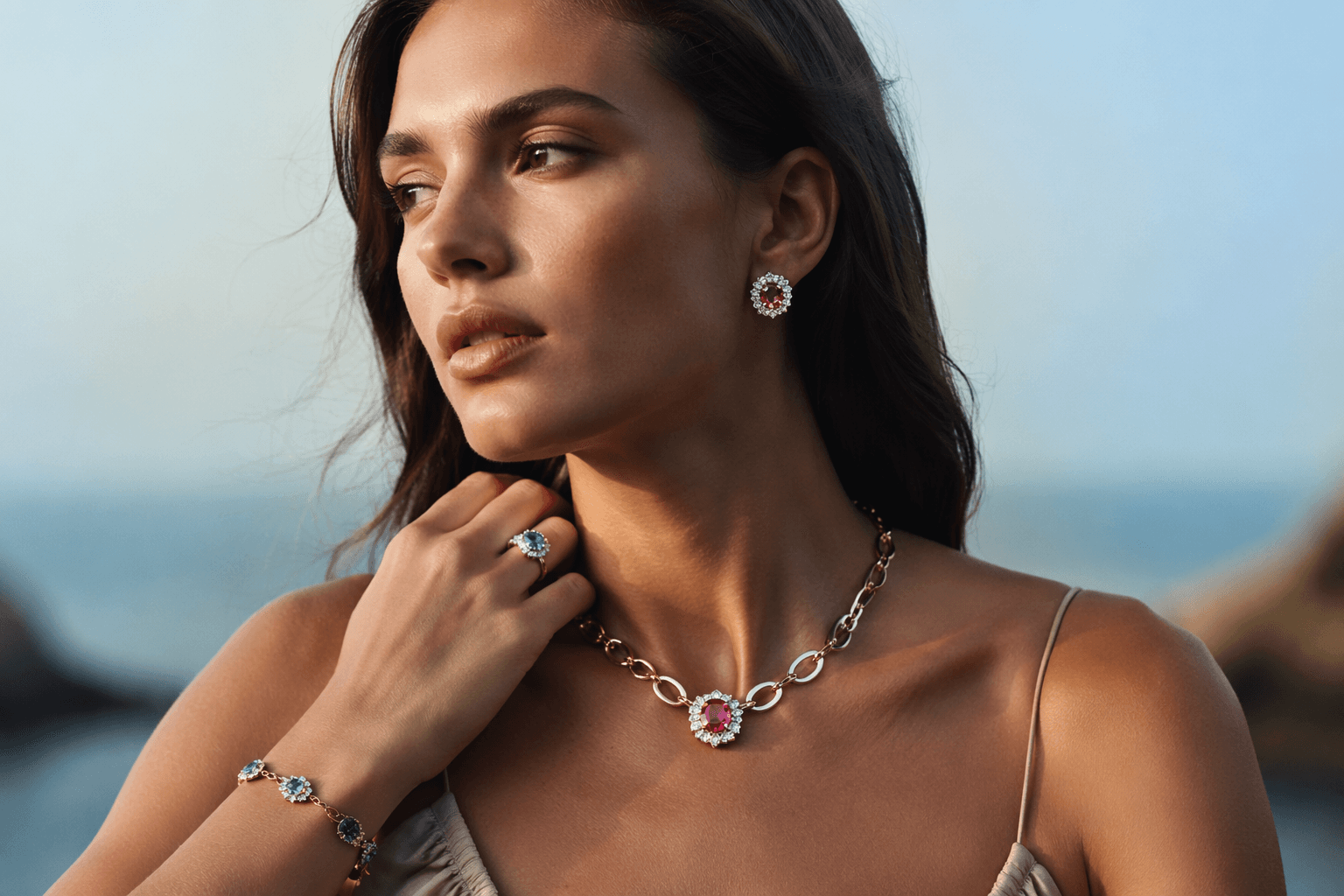
What is striking now is how portable that idea has become. Birthstones are widely available across rings, bracelets, necklaces and earrings, so the same symbolic language can be worn close to the hand, the throat or the ear. That breadth lets retailers present birthstones as wearable art rather than just a commemorative category, which is exactly why the trend feels larger than a single season.
The appeal is emotional, but the draw is also practical
Birthstone jewelry works because it solves a problem many luxury gifts have: it is personal without being hard to wear. A family necklace can sit under a shirt collar and still feel deeply specific. A birthday ring can be stacked with plain gold bands and remain visible only to the person who knows what it means. Even a small pair of birthstone earrings can carry the weight of a relationship while staying easy enough for everyday life.
That is why this category keeps returning with force. It sits at the intersection of history, sentiment and commerce, which is exactly where the strongest jewelry often lives. In a spring market hungry for gifts with a name, a date or a memory attached, birthstone jewelry offers something more durable than a trend: a story people can wear.
This article was produced by Prism’s automated news system from verified source data, official records, and press releases, then run through automated quality and moderation checks before publishing. The system is built and supervised by the people who set the standards it runs under. Read our full AI policy.
Did this article answer your question?