Birthstones Through History, From Aaron's Breastplate to Modern Jewelry Charts
Aaron's breastplate may be the oldest known birthstone reference, but it took a 1912 trade association list to make the tradition truly democratic.
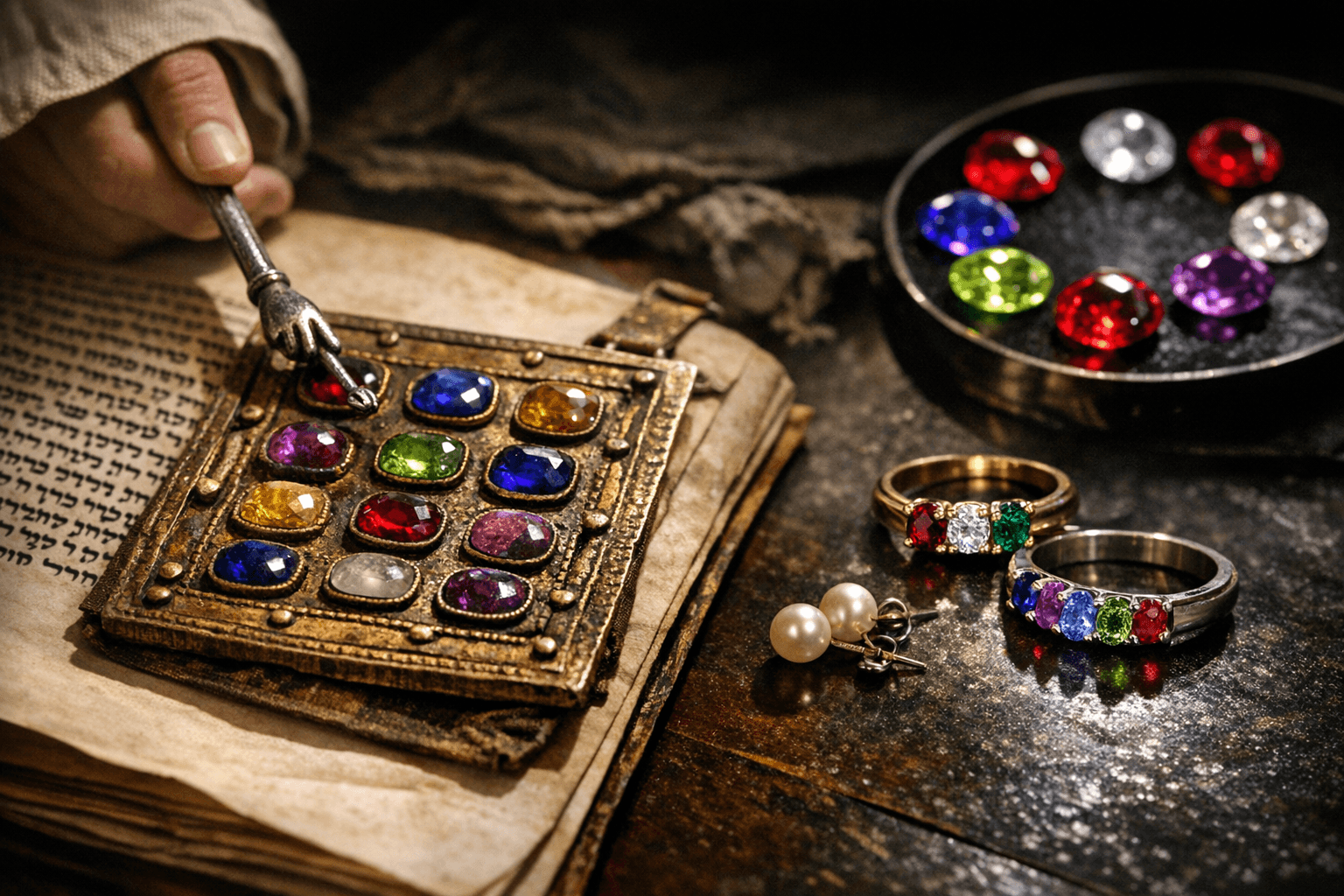
The story of birthstones begins not in a jewelry case but in scripture. The breastplate of Aaron, as described in the Hebrew Bible, was set with twelve stones representing the twelve tribes of Israel, a piece of sacred adornment that scholars and gemologists have long recognized as the earliest known framework linking specific gems to specific human identity. From that biblical anchor, the tradition wound its way through ancient Egyptian and Mesopotamian lore, through European royal courts, and eventually into the hands of anyone who wanted it.
That democratization came slowly, then all at once. For most of recorded history, the gemstones now casually gifted as birthday presents were the exclusive province of royalty and the aristocratic wealthy. The stones carried spiritual and protective significance: cultures across the ancient world believed certain gems could heal the body, shield the wearer from harm, or forge a connection to something beyond the material. These were not decorative objects. They were talismans.
The shift began in the 19th century, when advances in mining technology, gem-cutting precision, and mass production collectively dismantled the barriers that had kept fine gemstones out of ordinary hands. What had required a king's treasury could now be manufactured, distributed, and sold at a scale that made personalized gemstone jewelry a realistic aspiration for a growing middle class.
The decisive moment of standardization came in 1912, when the American National Retail Jewelers Association, now known as Jewelers of America, published an official birthstone list. That list assigned specific stones to each month of the calendar year and created the framework that most jewelers and consumers still recognize today. It was a commercial decision with cultural staying power: by anchoring birthstones to birth months rather than to astrological systems or royal heraldry, the association made the tradition legible, consistent, and marketable across a newly industrialized jewelry industry.
The meaning attached to birthstones has shifted considerably in the century since. The protective and healing properties that once defined a gem's value have largely given way to a different kind of significance, one rooted in personal narrative and aesthetic pleasure. A garnet worn in January today is less likely to be chosen for its purported protective properties than for its deep red saturation against a winter pallor, or because it belonged to a grandmother. The stones remain the same; the stories we tell about them have simply evolved.
What the 1912 standardization could not fully anticipate was how durable and adaptable the birthstone concept would prove. The list has been updated over the decades, with stones added and occasionally debated, but its essential logic remains intact. A tradition that began with twelve jeweled settings on a high priest's ritual garment now drives one of the most consistent categories in the contemporary jewelry market, proof that the oldest frameworks, when they speak to something genuinely human, have a way of enduring.
This article was produced by Prism’s automated news system from verified source data, official records, and press releases, then run through automated quality and moderation checks before publishing. The system is built and supervised by the people who set the standards it runs under. Read our full AI policy.
Did this article answer your question?