CAD, AR and AI deliver three practical impacts for birthstone jewelers
RapNet’s industry blog shows how CAD, AR try-on and generative AI are already reshaping how birthstone jewelers design, display and sell online.

1. CAD: faster bespoke birthstone design with engineering-grade precision
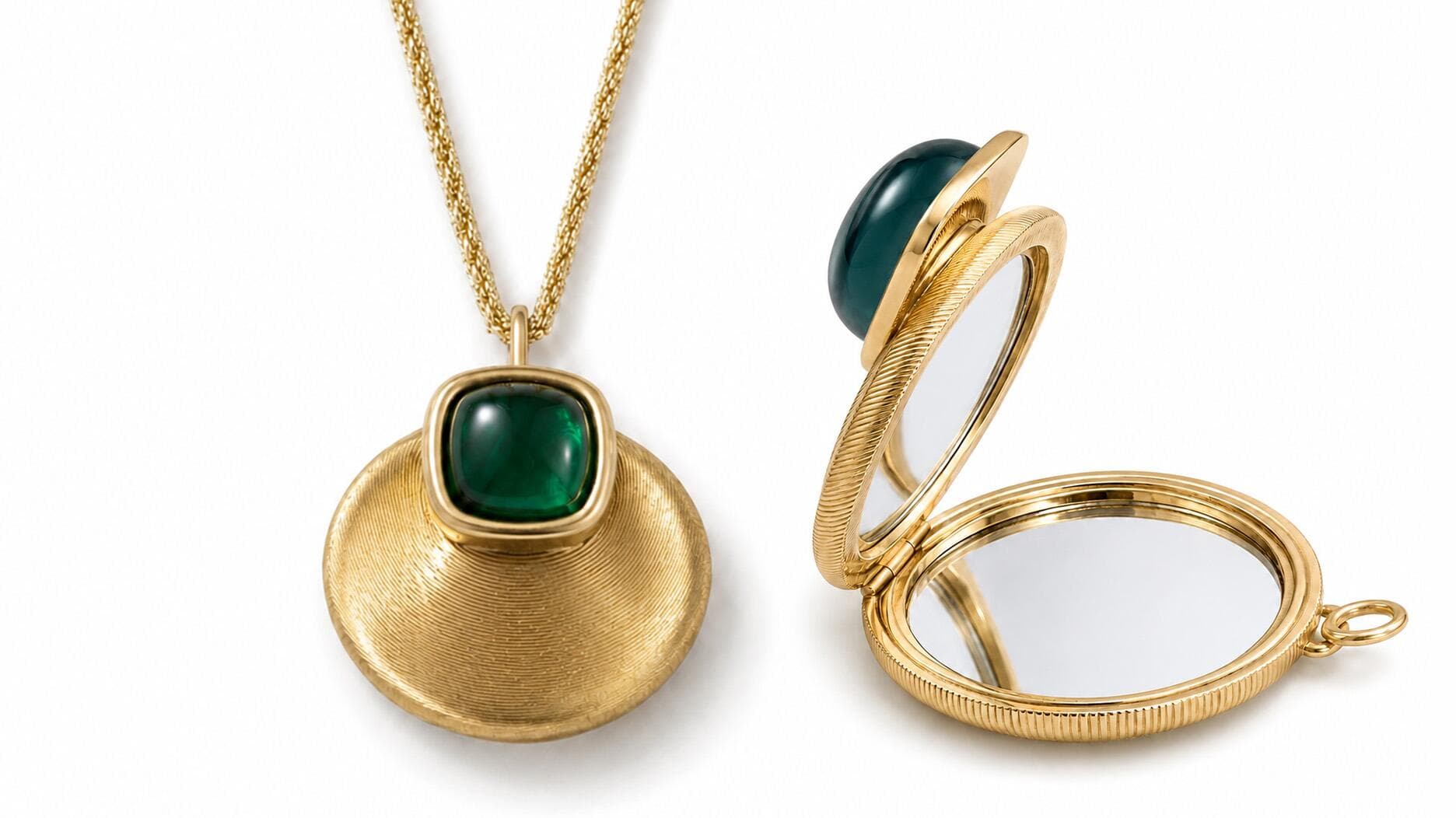
Computer-aided design removes the guesswork between an idea and a finished ring, a fact RapNet’s industry blog noted on Feb 18, 2026 when outlining how jewelers are using CAD to present birthstone pieces online. For makers of birthstone jewelry, whether fitting a fragile opal for October or securing a deep green emerald for May, CAD allows precise control of bezel wall thickness, prong geometry and pavilion clearance so settings protect fragile stones without obscuring their identity. That level of control matters: a low-bezel, flush setting that flatters a faceted amethyst (February) is a different engineering problem from the tall, airy prong setting that shows off a six-prong sapphire (September); CAD files document those tolerances in microns and export directly to 3D printers or CNC mills to shorten the prototyping loop. RapNet highlights that jewelers are also using CAD to produce accurate scale renders for online shops, a virtual “sample” that reproduces true size and stone placement so bench time is spent refining, not guessing.
2. AR try-on tools: converting curiosity into confident purchases
RapNet’s Feb 18, 2026 post emphasizes that augmented reality try-on tools have moved beyond novelty to measurably influence buying behavior for gemstone and birthstone jewelry sold online. AR allows shoppers to see a January garnet, an April diamond or a December tanzanite at true scale on their own wrist or hand under simulated lighting, and not all stones behave the same under light: AR must render opal’s play-of-color differently than it renders the strong dispersion of a white diamond or the pleochroism of tanzanite. That fidelity reduces uncertainty, which in practice lowers return rates and increases conversion; it also permits layered styling (stacking birthstone bands, showing how pendant length sits under a collar) so customers understand proportion before checkout. Importantly for independent designers, RapNet points out that these AR modules can be embedded into product pages and social commerce channels, giving small studios the same immersive presentation once reserved for flagship boutiques.
3. Generative AI: scaling voice, personalization and creative iteration
Generative AI is described in RapNet’s industry blog (Feb 18, 2026) as the third technology changing how birthstone jewelers present and sell: it writes product descriptions, proposes styling pairings and accelerates early-stage design ideation without replacing bench skill. For a birthstone collection, AI can generate dozens of SEO-rich descriptions tailored by month, one description emphasizing the symbolism of peridot for August, another foregrounding the durability and care tips for garnet, freeing jewelers to focus on stone selection and finishing. On the creative side, generative models can propose variant patterns (different halo sizes, mixed metal palettes, alternative prong counts) that a CAD operator can convert into parametric files; RapNet notes this shortens the designer’s iteration cycle and helps match specific customer briefs while retaining artisan oversight. Finally, AI-driven personalization engines can suggest complementary pieces, a birthday set that pairs a February amethyst pendant with matching stud earrings, improving average order value by surfacing curated combinations that respect carat weight, metal compatibility and the practicalities of settings.
Conclusion Taken together, a CAD file that guarantees fit, AR that proves the piece in the customer’s hand, and AI that scales voice and creativity, these three technologies create a new workflow for birthstone jewelers highlighted by RapNet’s Feb 18, 2026 analysis. The result is not homogenized jewelry but more confident buying and more precise making: jewelers can protect a fragile opal with engineering-calculated bezel proportions, let a buyer see how a deep emerald sits on their skin under realistic light, and deliver a story-driven description that speaks directly to a customer’s month and meaning. For anyone who crafts or collects birthstone jewelry, the imperative is clear: master the tools so craftsmanship, the cut, the setting, the finish, remains the thing that distinguishes the final object.
This article was produced by Prism’s automated news system from verified source data, official records, and press releases, then run through automated quality and moderation checks before publishing. The system is built and supervised by the people who set the standards it runs under. Read our full AI policy.
Did this article answer your question?