Curated Gift Guide Highlights Personal, Wearable Jewelry Picks for Every Budget
Birthstone jewelry bridges the personal and the wearable — here's how to choose pieces that mean something, whatever your budget.
There is a particular alchemy to jewelry that carries meaning beyond its materials. A birthstone pendant worn close to the skin, a signet ring engraved with a month's gem — these are not merely decorative objects but wearable declarations of identity, affection, and memory. The challenge, for anyone navigating the market, is knowing how to separate the pieces worth wearing for decades from those that simply photograph well.
Why Birthstone Jewelry Endures
Birthstones occupy a unique position in fine jewelry: they are simultaneously ancient in concept and endlessly adaptable in execution. Each of the twelve stones carries centuries of symbolic association — January's garnet, a deep wine-red pyrope or almandine, has represented protection and constancy since antiquity; June's alexandrite shifts from green to red under different light, a phenomenon called pleochroism that makes it one of the most technically fascinating gemstones in existence. These are not arbitrary assignments. They carry cultural weight, and that weight translates into pieces that feel genuinely personal in a way that, say, a generic diamond solitaire cannot always achieve.
For gift-givers, birthstone jewelry solves the hardest problem in the category: it is inherently specific. A garnet pendant is not just a red stone — it is January, it is a particular person, it is an occasion remembered.
The Pieces Worth Knowing
Within birthstone jewelry, two silhouettes consistently emerge as the most wearable and the most giftable: the delicate pendant necklace and the small signet ring. These are not trends. They are archetypes that have persisted precisely because they function so well in real life.
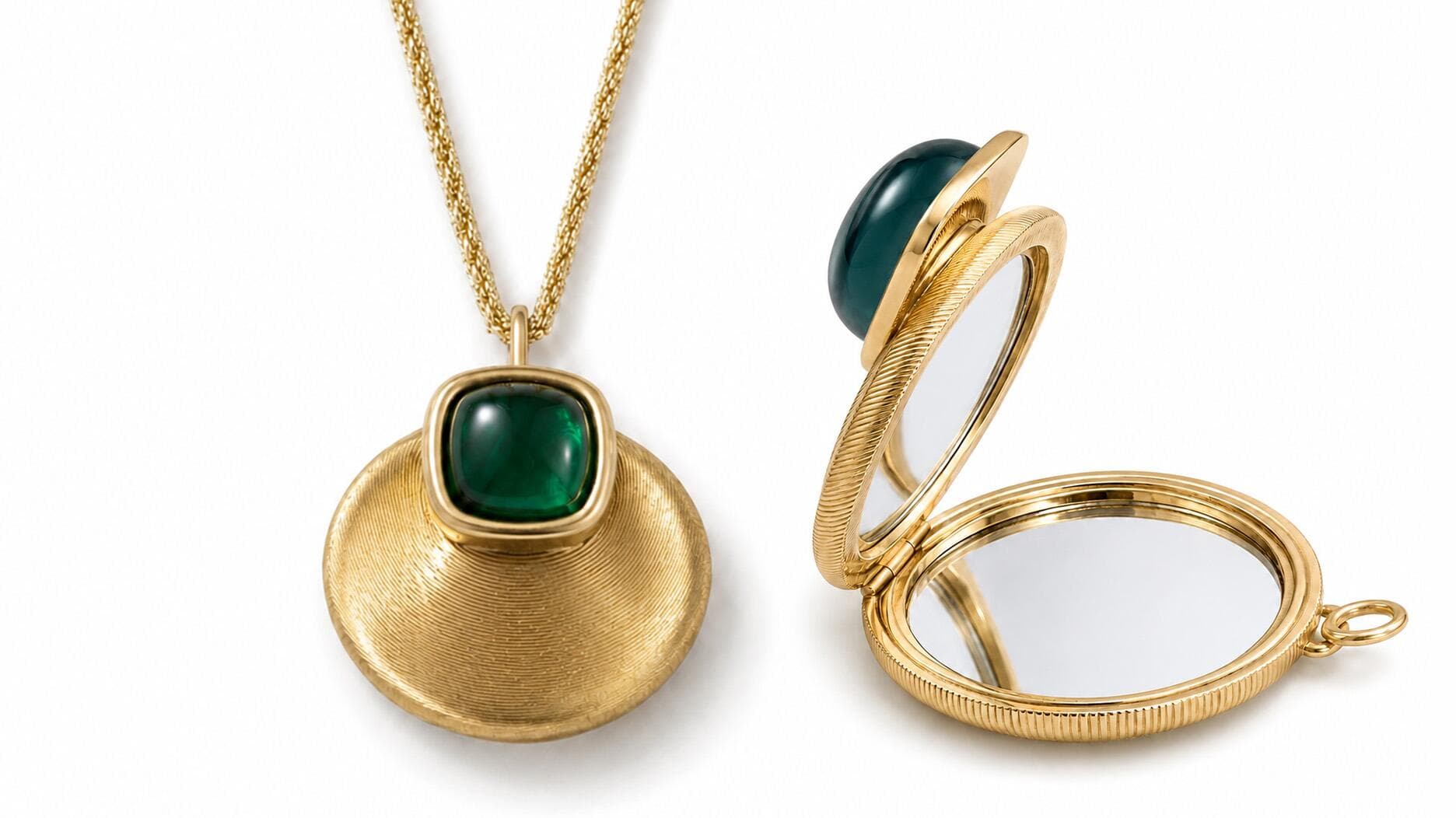
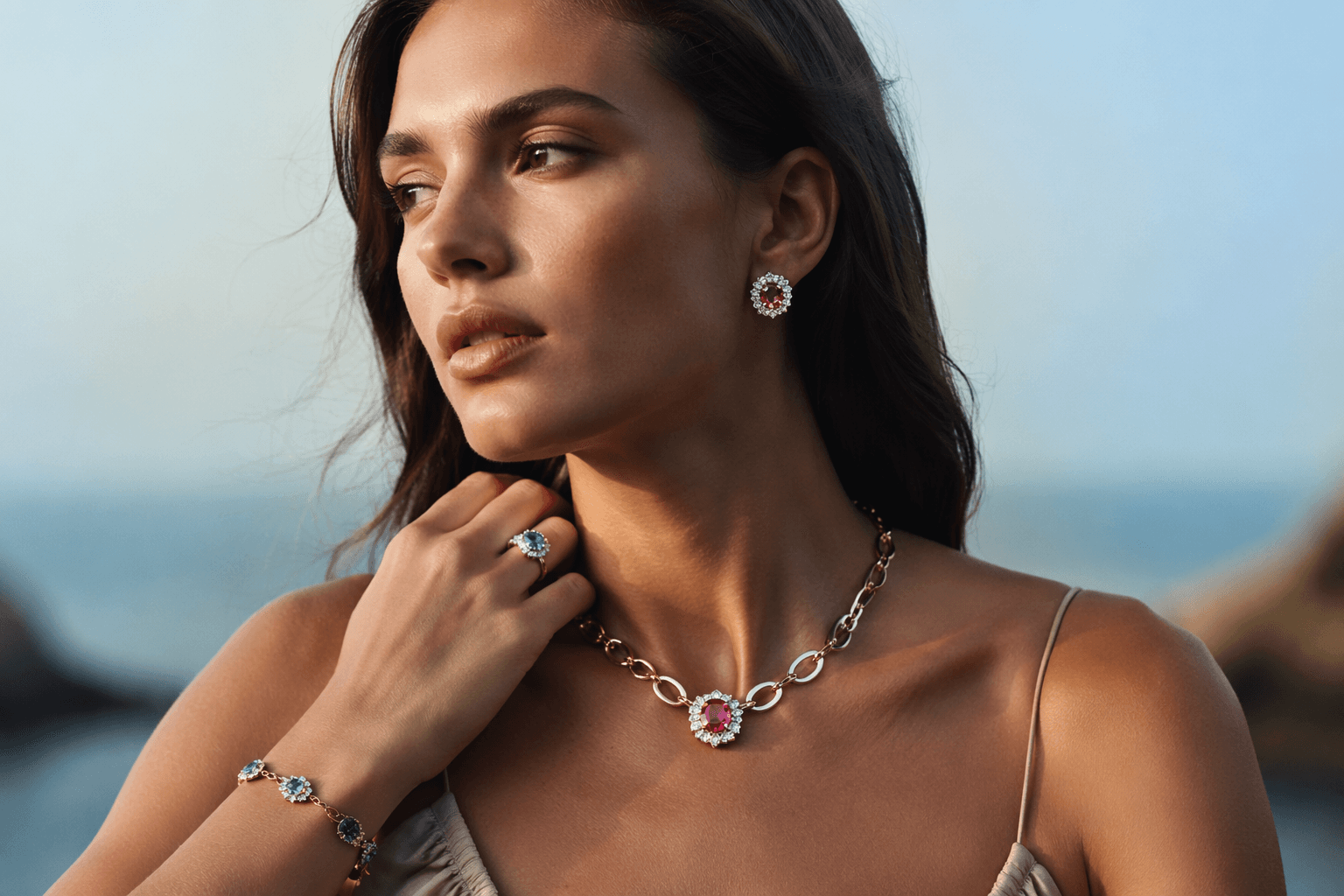
The delicate pendant necklace, typically set on a fine chain between 16 and 18 inches, positions a birthstone at the collarbone — a placement that catches light without competing with other jewelry. The best versions use bezel settings for stones with lower hardness ratings (opals, for instance, sit at 5.5 to 6.5 on the Mohs scale and require the protective metal surround a bezel provides), while harder stones like sapphires and rubies can tolerate the more exposed geometry of a prong or claw setting. The choice of setting is not aesthetic preference alone; it is a matter of gemological practicality.
The small signet ring has experienced a genuine cultural revival, moving far beyond its origins as a seal of heraldic identity. In birthstone jewelry, a signet format allows for a flat-set or flush-set stone that sits cleanly against the finger without snagging — a practical virtue that matters enormously for everyday wear. A small oval garnet set flush in a yellow gold signet, or a round aquamarine in a sterling silver version, achieves a quiet elegance that scales across occasions. These are rings worn to the office and to dinner without a second thought.
Shopping by Budget: What Changes, and What Shouldn't
Price in birthstone jewelry is driven by three variables: the quality and origin of the stone, the metal used, and the caliber of the setting work. Understanding this hierarchy prevents the most common gifting mistakes.
At the accessible end of the market, sterling silver settings with lab-created or lower-grade natural stones offer genuine wearability without significant investment. Lab-created gemstones are chemically and physically identical to their mined counterparts — a lab-created alexandrite displays the same color-change phenomenon as a natural one — and the quality of the stone's cut is often superior at this price point because manufacturers optimize for consistency. A well-made sterling silver pendant with a lab-created birthstone in the $50 to $150 range is a more considered gift than a poorly set natural stone at the same price.
In the mid-range, gold vermeil (sterling silver with a substantial gold plating, legally required to be at least 2.5 microns thick in the United States) and solid 9-karat or 10-karat gold settings bring durability and warmth that silver cannot match. This is the tier where the setting craftsmanship begins to matter most: a well-executed prong setting in 14-karat yellow gold holding a natural peridot or blue topaz is a piece that will look as good in ten years as it does on the day of purchase, provided the prongs are checked periodically by a jeweler.
At the fine jewelry level, the stone itself becomes the primary investment. Natural alexandrite, padparadscha sapphire (the rare orange-pink variety of corundum), and fine opal with strong play-of-color command prices that reflect genuine rarity. Here, provenance matters: a Colombian emerald and a Zambian emerald are both emeralds, but their color profiles differ, and the market prices them differently. At this tier, buying from a jeweler who provides a gemological certificate — from GIA, AGL, or Gübelin, for instance — is not optional. It is the baseline.
Occasions and the Jewelry That Fits Them
Birthstone jewelry has historically been associated with Mother's Day, and for good reason: a piece incorporating a child's birthstone, or multiple children's stones set together in a single pendant or ring, carries a narrative specificity that few other gifts can match. The multi-stone format, popular in family jewelry, requires careful attention to stone compatibility: harder stones set alongside softer ones risk surface damage over time, so a jeweler who specializes in custom work will arrange settings to minimize contact between stones of different hardness.
Beyond Mother's Day, birthstone pieces work well as milestone gifts — significant birthdays, graduations, anniversaries — precisely because they function as wearable markers of time. A woman who receives a sapphire pendant for her September birthday at forty has an object that will mean something different, and perhaps more, when she wears it at fifty. That accumulation of meaning is what separates jewelry from accessories.
What to Look for Before You Buy
Before committing to any birthstone piece, a few practical considerations are worth keeping in mind:
- Check the Mohs hardness of the stone: anything below 7 (opals, pearls, turquoise) requires a protective setting and careful storage away from harder stones.
- Ask whether the stone has been treated: heat treatment in sapphires and rubies is industry-standard and acceptable; fracture filling is more controversial and should be disclosed.
- Examine the setting construction: prongs should be even and well-seated, bezels should be smooth without gaps, and the metal should show no visible porosity or casting flaws.
- For gold pieces, confirm the karat: 14-karat gold (58.5% pure gold) offers the best balance of durability and warmth; 18-karat gold is richer in color but softer.
- Consider chain weight relative to pendant size: an undersized chain overwhelms a substantial stone, while a heavy chain overpowers a delicate one.
The best birthstone jewelry earns its place in rotation because it was built to be worn, not stored. The pieces that endure — a small garnet signet passed down through a family, a sapphire pendant that has traveled through twenty years of daily life — are the ones where the maker understood that wearability and beauty are not in tension. They are the same ambition, expressed in metal and stone.
This article was produced by Prism’s automated news system from verified source data, official records, and press releases, then run through automated quality and moderation checks before publishing. The system is built and supervised by the people who set the standards it runs under. Read our full AI policy.
Did this article answer your question?