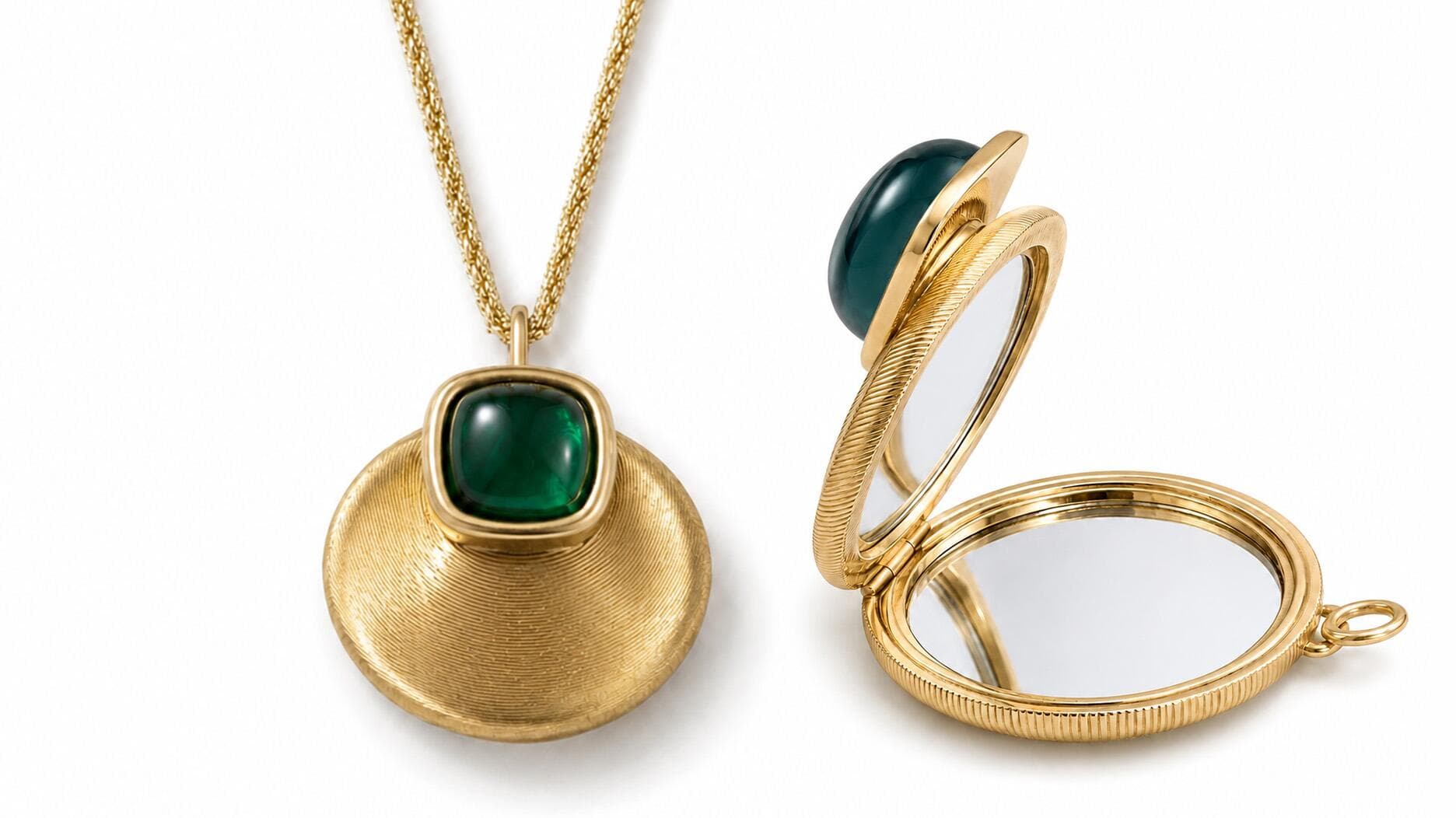
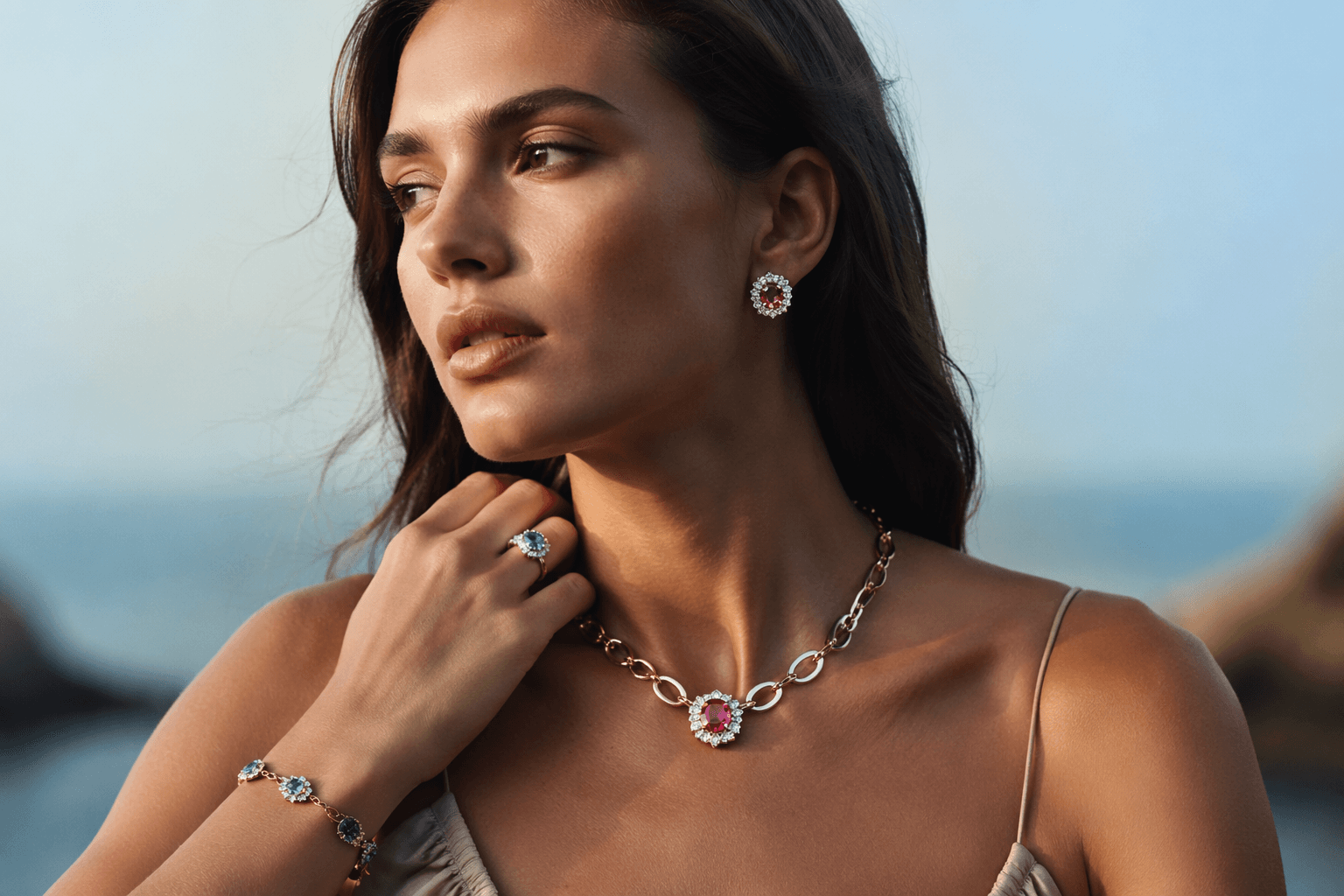
Garnet birthstone jewelry, a durable, personal gift for January birthdays
Garnet brings January a richer kind of romance: ancient, durable, and versatile enough to read heirloom, modern, or minimal depending on the setting.
January’s most personal birthstone
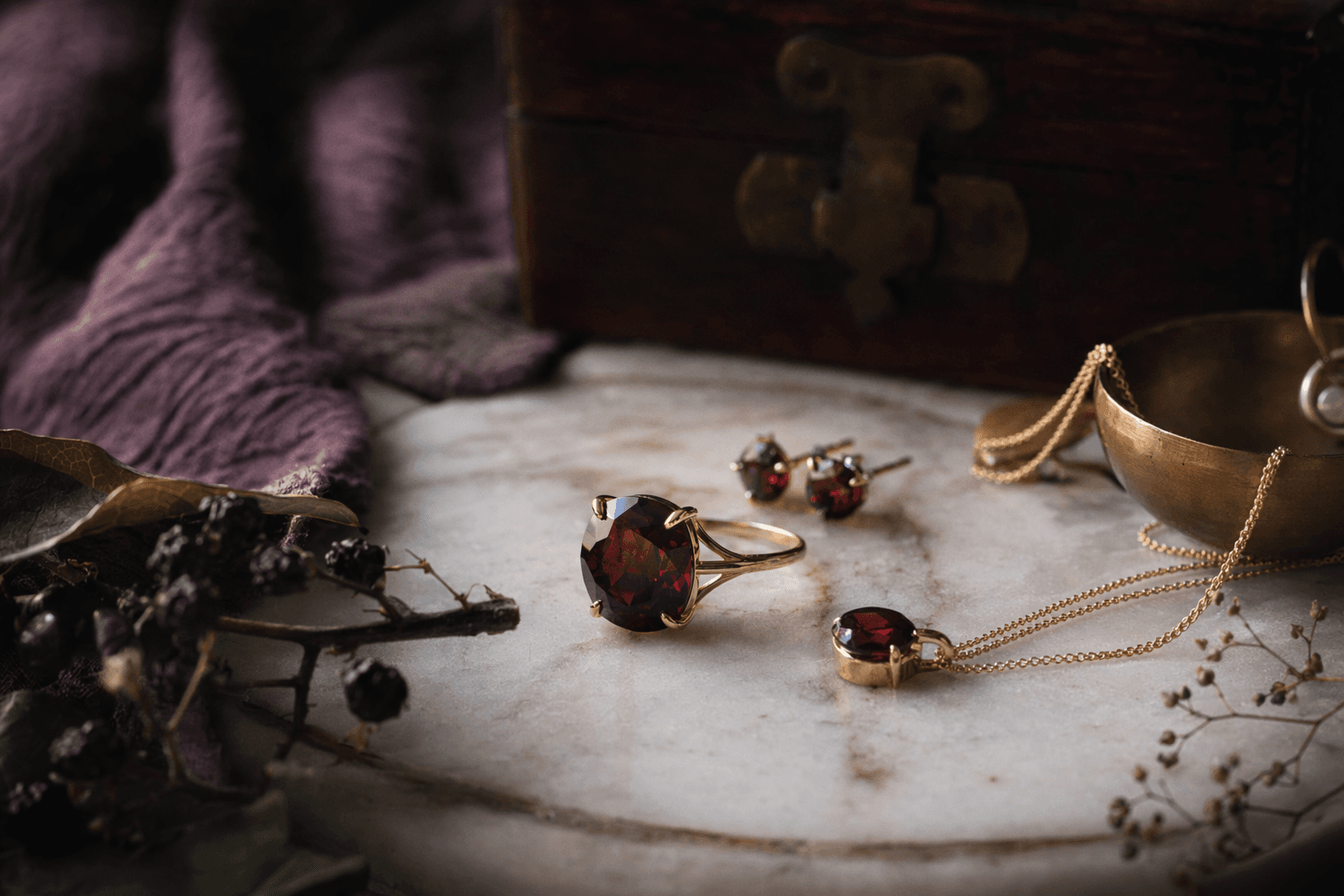
Garnet is January’s official birthstone, and it has a way of feeling less like a token and more like a message. Its color range is broader than many expect, running from deep red to orange, yellow, purple, green, and even color-change varieties, but the classic red stone still carries the strongest emotional pull.
That appeal is not only visual. GIA traces garnet’s use back to the Bronze Age and notes that red garnet necklaces adorned the pharaohs of ancient Egypt. The name itself comes from the medieval Latin granatus, meaning pomegranate, a reminder that this gemstone has always been associated with richness, abundance, and seed-like intensity.
Why garnet works so well for jewelry you actually wear
Part of garnet’s appeal is practical. The American Gem Society places garnet at 6.5 to 7.5 on the Mohs scale, which makes it durable enough for rings and necklaces meant to move through daily life. That hardness range matters: a stone that can withstand regular wear becomes a better gift because it is more likely to stay in circulation, not in a box.
That durability also changes how garnet feels on the body. In a necklace, it gives you color close to the skin without requiring delicate handling. In a ring, it can hold its own as a daily signature, especially when the setting protects the stone rather than exposing every edge.
The color tells the story
A garnet’s color depth shapes the mood of the gift. A saturated red stone reads romantic and ceremonial, especially in darker tones that recall antique jewelry and candlelit interiors. Lighter red, orange, or even green garnets feel more contemporary and less traditional, which is useful if you want the piece to feel personal rather than symbolic in a strictly conventional way.
Collectors know the range matters as much as the species. Color-change garnets bring another layer of intrigue, while green garnets can feel unexpectedly fresh in a landscape still dominated by red birthstone expectations. If the goal is sentiment, the classic red garnet remains the clearest language. If the goal is individuality, the less expected hues say more.
Necklaces and rings for different kinds of recipients
Romantic
A romantic garnet piece usually leans into color depth and intimacy. A pendant with a faceted or rose-cut garnet set close to the throat feels tender and personal, especially when the stone is framed in warm yellow gold. The combination recalls old-world jewelry without becoming costume, and it suits a recipient who values feeling over flash.
Rings with prong settings bring more light into the stone and make even a modest garnet feel lively. That style can read especially romantic when the stone is oval, cushion, or pear-shaped, because the setting highlights the gem itself rather than the metal around it. For a gift that wants to say affection plainly, a visible stone and a warm metal usually do the work best.
Heirloom-inspired
If you want the piece to feel like it already belongs to a family story, look to historical cues. Smithsonian records note Bohemian pyrope garnets from the Czech Republic as the principal source of the red garnets that were so popular in Victorian jewelry from 1837 to 1901. Victorian garnet jewelry often used close-set rose-cut stones in yellow gold, gold plate, and mixed-metal settings, a combination that still reads as richly layered and substantial.

That style is especially strong in necklaces and rings with clustered stones or tightly framed layouts. The close-set effect gives the piece density and visual weight, which makes even a smaller garnet feel more formal. For someone who loves antique references, this is the version of garnet that feels inherited even when it is new.
Minimalist
A minimalist garnet jewel should be quiet, not forgettable. A bezel setting is often the best choice because it smooths the edges of the stone and makes the design feel modern, clean, and wearable. In a necklace, a single garnet in a pared-back bezel can look like a punctuation mark rather than a declaration.
For rings, minimalism is strongest when the metal and proportion stay restrained. A small stone in a slim bezel or an understated prong setting keeps the emphasis on the color itself, which is ideal if the recipient favors jewelry that can be worn every day and layered without competing with other pieces. The beauty here is restraint: garnet does not need ornament to feel meaningful.
How setting style changes the message
Setting style is not a technical footnote. It is part of the gift’s emotional grammar. Prong settings tend to make garnet look brighter and more open, which can feel more celebratory and jewelry-forward. Bezel settings suppress a little sparkle but add security and polish, which often makes the piece feel more contemporary and easy to live with.
Close-set arrangements, especially those echoing Victorian jewelry, create an entirely different message: abundance, tradition, and visual richness. That makes them ideal when the present is meant to feel special and a little ceremonial. A single-stone design, by contrast, can feel intimate and modern, especially when the stone is chosen for color quality rather than size.
Why price point changes the meaning
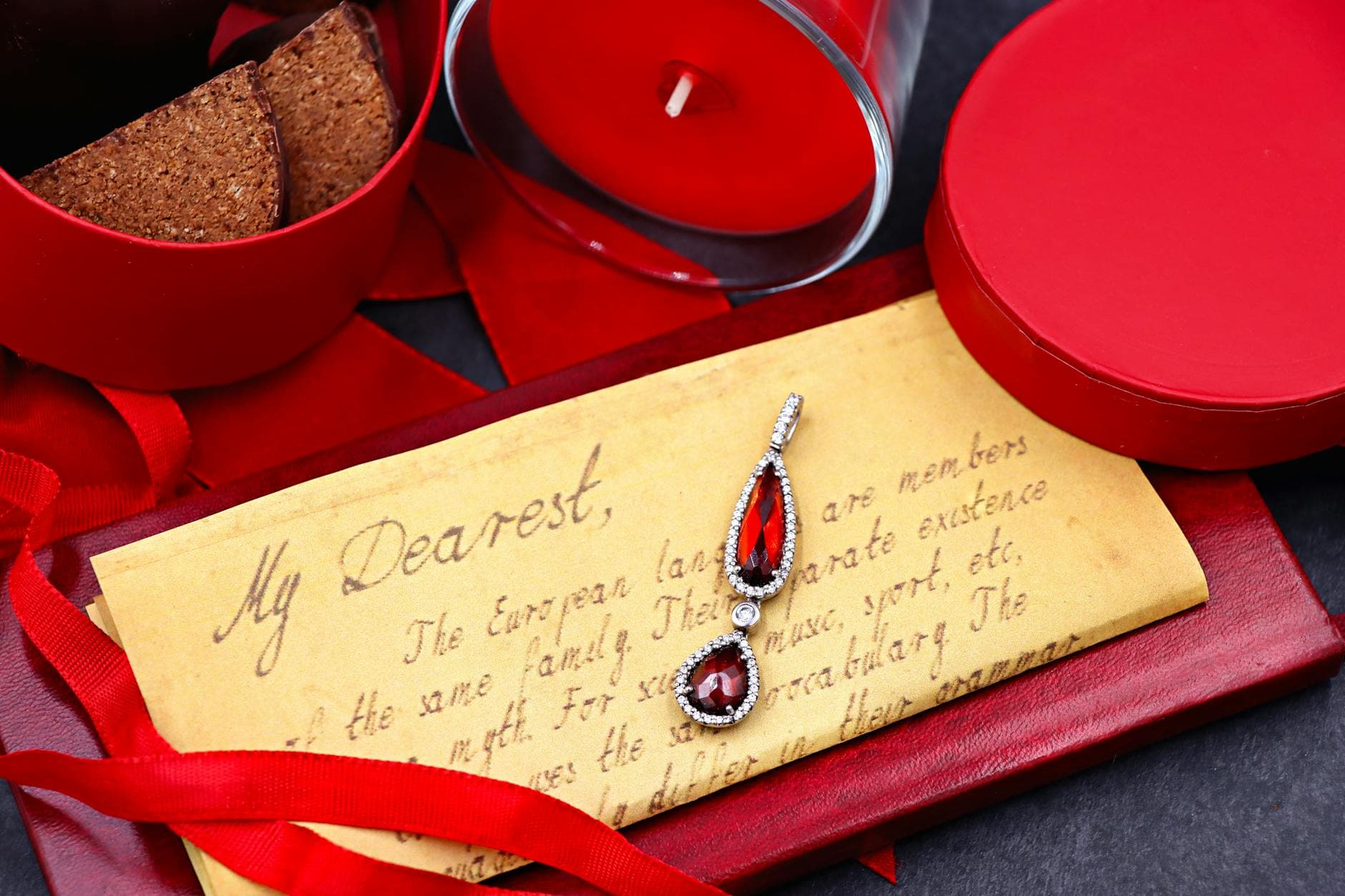
Price affects more than budget. In garnet jewelry, a higher price often signals more thoughtful metal work, a better-cut stone, stronger color saturation, or a more carefully sourced gem, all of which make the gift feel intentional rather than incidental. Lower price points can still be lovely, but they often read as simpler and more casual, especially if the piece uses lighter construction or less precious metal.
That distinction matters because garnet is a stone of emotional language. A refined setting in solid gold suggests permanence and occasion. A lighter, more accessible version can still feel personal, but it sends a different signal: easy, wearable, everyday. Both have a place; they simply speak in different tones.
A modern garnet should also feel responsibly chosen
The most compelling birthstone gifts in 2026 are not only personal, they are accountable. Personalized jewelry remains a major category this year, and birthstone jewelry is having a major moment, which makes sourcing part of the story rather than a side note. Recycled metals, responsibly sourced gemstones, traceability, and provenance all deepen the meaning of a piece, especially when the gift is meant to mark a birthday that recurs every year.
That is where garnet becomes especially persuasive. Its history stretches from the Bronze Age to ancient Egypt to Victorian garnet jewelry, yet it still feels current when it is set with care and chosen with intention. For January birthdays, it offers something rare in jewelry: emotional resonance, enough durability for real life, and a visual range that lets the giver decide whether the story should read romantic, heirloom-inspired, or quietly modern.
This article was produced by Prism’s automated news system from verified source data, official records, and press releases, then run through automated quality and moderation checks before publishing. The system is built and supervised by the people who set the standards it runs under. Read our full AI policy.
Did this article answer your question?