How to Choose Birthstone Jewelry: Meanings,
Birthstone jewelry spans a 3,000-year tradition, but knowing a stone's Mohs rating and setting requirements separates a piece you'll love forever from one you'll regret wearing daily.

The Tradition Behind the Tradition
The modern birthstone list did not arrive from ancient wisdom alone. Its origins trace back to the Breastplate of Aaron described in the Book of Exodus, but the modern standardized list was established by the American National Association of Jewelers in 1912, and updated again by Jewelers of America in 2016. What emerged from that century of refinement is the framework jewelry professionals still use today: a calendar of gems that function as symbols of personal identity, cultural heritage, and meaningful occasion. Understanding that framework, and when to work within or around it, is the difference between buying a piece that resonates and buying one that simply matches a month.
Month by Month: Meaning and What You're Actually Wearing
According to the GIA Gem Encyclopedia, Mohs hardness ranges widely across birthstones: pearl can sit around 2.5 to 4.5, opal is about 5 to 6.5, while ruby and sapphire reach 9 and diamond sits at 10. Before exploring each stone's meaning, know where yours falls on that spectrum, because it shapes every decision that follows.
January: Garnet (Mohs 6.5–7.5). Garnet is most commonly deep red, though the most valuable variety is the vivid green tsavorite. The stone carries associations with protection and strength. Its hardness is moderate, manageable for rings with careful handling but best protected in a bezel setting for daily wear.
February: Amethyst (Mohs 7). This purple variety of quartz has long been admired for its stunning colour and affordability. Symbolically, amethyst represents clarity, calm, and balance. It's robust enough for most jewelry forms, though rings benefit from protective settings.
March: Aquamarine (Mohs 7.5–8). A member of the beryl family (which also includes emeralds), aquamarine's gemstone durability at 7.5–8 on the Mohs scale allows for everyday wear in rings, pendants, and earrings. Its delicate, cool blues reward transparent settings that let light move through the stone.
April: Diamond (Mohs 10). Diamond is the hardest natural substance on earth, rated 10 on the Mohs scale, and has always represented strength, clarity, and eternal love. Its wearability is unmatched — the rare case where symbolism and science say exactly the same thing.
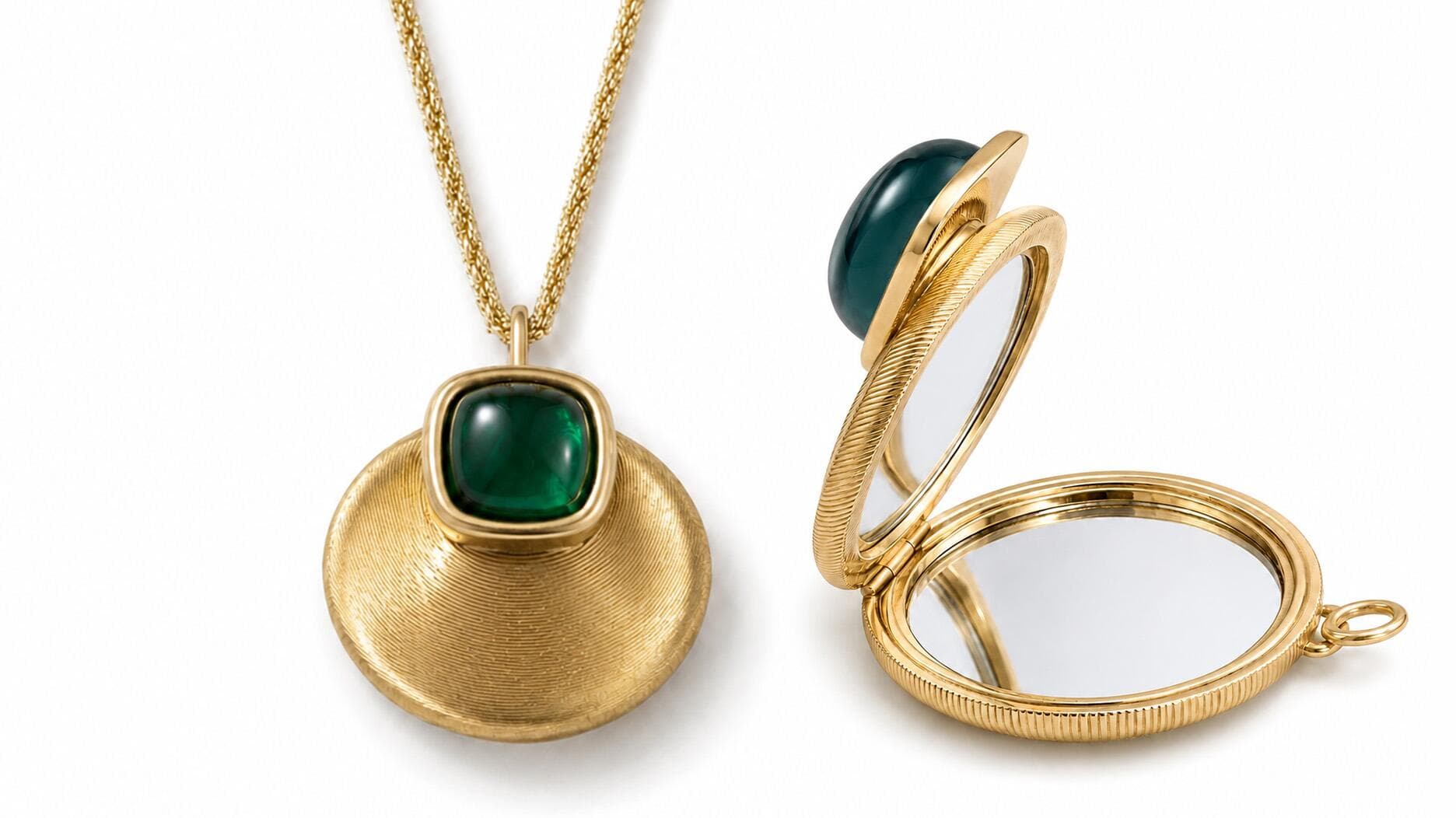
May: Emerald (Mohs 7.5–8, treat with care). Emerald's vibrant green hue represents rebirth, love, and growth. Throughout history it has been a gemstone of royalty and elegance. The caveat: emeralds are typically included, meaning their crystal structure can be internally fractured, which makes them more vulnerable to impact than their hardness rating alone suggests. Skip ultrasonic and steam cleaners entirely; the heat and vibration are bad for both the stone and its treatment.
June: Pearl (Mohs 2.5–4.5), Moonstone, or Alexandrite (Mohs 8.5). June offers three options: pearls symbolize purity and wisdom, alexandrite is known for its color-changing magic, and moonstone evokes intuition and protection. Pearl's very low hardness means it is the most vulnerable birthstone of all — a necklace or earring rather than a daily ring.
July: Ruby (Mohs 9). With its fiery red color, ruby symbolizes passion, strength, and vitality, and is believed to bring good fortune. At Mohs 9, ruby is genuinely hard-wearing and one of the most durable colored stones available.
August: Peridot (Mohs 6.5–7) or Spinel (Mohs 8). August's birthstone carries associations with good luck, protection, and joy, and has one of the stranger origin stories in gemology: some peridot has been found inside meteorites. Ancient Egyptians called it "the gem of the sun" and mined it on a volcanic island in the Red Sea. Spinel, the month's alternative stone, offers considerably more durability and comes in a spectrum of colors from vivid red to deep blue.
September: Sapphire (Mohs 9). Sapphire is September's birthstone and, after diamond, one of the most durable gemstones available for jewelry. As September's birthstone, sapphire is closely tied to personal truth, spiritual focus, clarity, and loyalty. It is, for practical purposes, the most versatile colored stone in fine jewelry.
October: Opal (Mohs 5–6.5) or Tourmaline (Mohs 7–7.5). Opal represents hope, purity, love, truth, and harmony. Its play-of-color is unlike anything else in the gem world, but its low hardness demands respect: rings require protective settings and gentle daily habits. Tourmaline offers the same month's energy with considerably more resilience.
November: Citrine or Topaz (Mohs 7–8). Amethyst and citrine are among the most affordable birthstones, typically ranging from $5–$50 per carat for fine quality. Citrine's warm golden hues and topaz's rich range from sky blue to imperial orange make November one of the most versatile months for stone choice.
December: Blue Topaz (Mohs 8), Tanzanite (Mohs 6–7), or Turquoise (Mohs 5–6). December's three options span a wide durability spectrum. Blue topaz is the most wearable. Tanzanite is breathtakingly beautiful in its deep violet-blue, but its lower hardness makes it better suited to pendants and earrings than rings worn daily.
The Gemological Basics That Change Your Decision
The Mohs hardness scale ranks minerals on a scale from 1 to 10 based on their scratch resistance. For rings intended for everyday wear, a hardness rating of at least 7 is recommended to ensure durability. That single guideline eliminates much of the confusion around stone selection: anything below a 7 belongs in a pendant, earring, or special-occasion ring, not on a hand that types, gardens, or cooks.
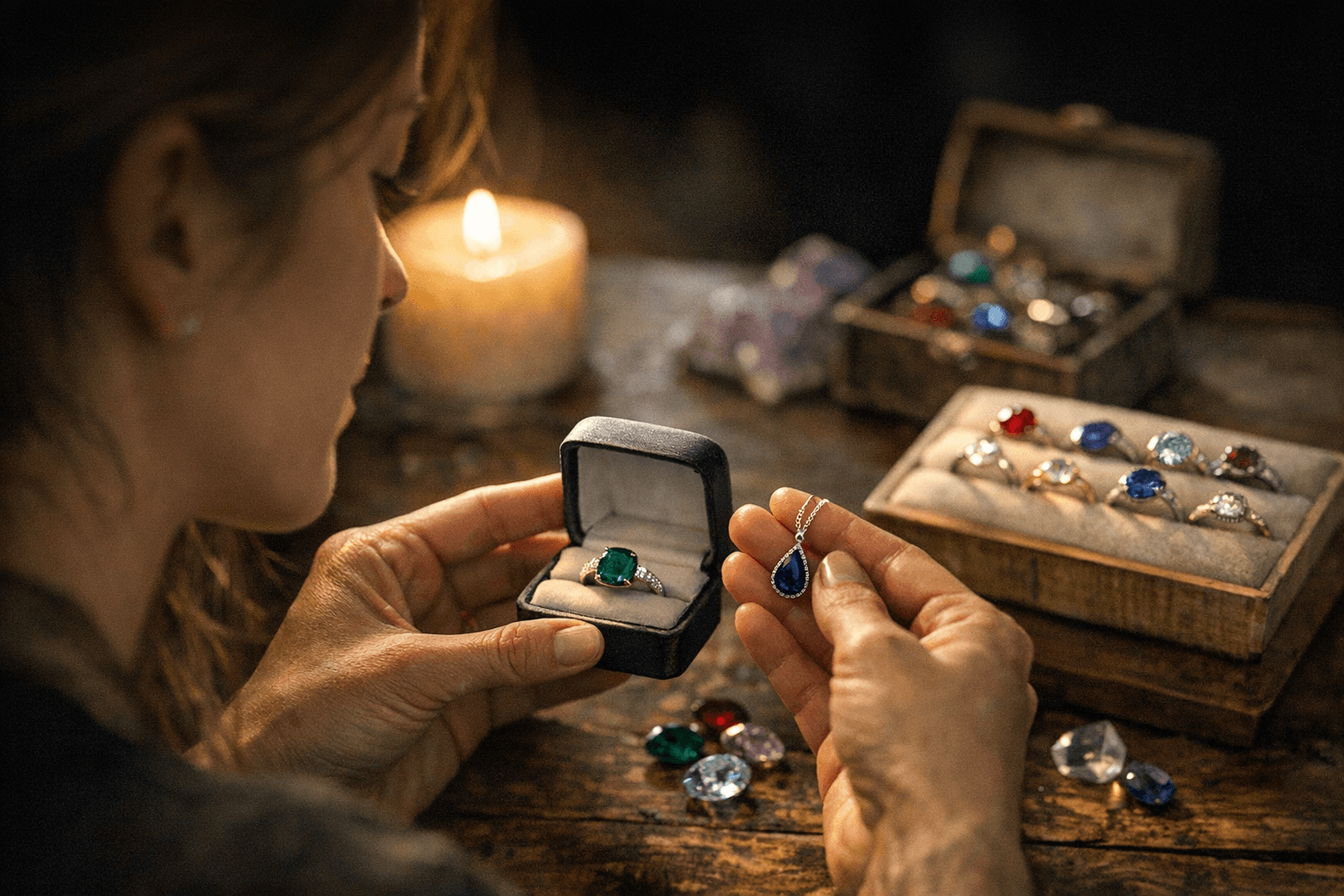
Hardness, however, is only part of the picture. Toughness (resistance to chipping and breaking) is a separate property. Emerald scores 7.5–8 on hardness but rates poor on toughness because of its characteristically included crystal structure. Tanzanite is similar: respectable hardness but directional cleavage that makes it susceptible to a sharp impact. When shopping for anything other than a necklace or drop earring, ask about both.
Common treatments are the other variable buyers routinely overlook. Emeralds are routinely oiled with cedar oil to minimize the appearance of fractures, a treatment considered industry standard but one that requires periodic re-oiling every few years. Rubies and sapphires are frequently heat-treated to improve color, a permanent and widely accepted enhancement. Turquoise is often stabilized with resin to improve hardness and prevent color change. None of these treatments make a stone inferior, but knowing about them shapes how you care for the piece and whether you want laboratory verification of treatment status.
Natural, Lab-Grown, or Simulant: When Each Makes Sense
Lab-grown stones have the same chemical and physical properties as natural, earth-mined stones. A lab-grown ruby is a ruby in every material sense. The meaningful difference is provenance and, increasingly, price: lab-grown options allow purchasers to acquire substantial gemstones (5–10 carats or more) without significant investment.
Natural stones retain the rarity narrative and are better suited to heirloom and investment pieces. If the intention is a generational piece or one with intrinsic resale value, natural provenance matters. If the intention is a deeply personal piece worn daily, a lab-grown emerald or ruby makes enormous practical sense: same beauty, same chemistry, far less anxiety about damage.
Simulants are a separate category entirely. A cubic zirconia is not a diamond in any gemological sense; it mimics appearance only. For birthstone purposes, simulants dilute the meaning of the tradition and are worth avoiding unless budget is the only priority.
Colored sapphires deserve a special mention as durable stand-ins for rarer or softer stones. Blue sapphire stands in for aquamarine with three additional Mohs points of hardness. Pink sapphire approximates the warmth of morganite or rose quartz with the durability of a corundum. Yellow sapphire offers citrine's warmth with sapphire's resilience. Rubies also score a 9 on the Mohs scale, making them a durable and enduring choice for daily wear jewelry. If your birth month produces a fragile stone but your lifestyle demands a ring, a sapphire in the right color family is not a compromise — it is a considered upgrade.
Setting and Metal: Matching the Piece to the Stone
The setting is where gemological knowledge becomes practical. Bezel and low-profile settings are safest for active lifestyles, while subtle pavé or solitaire prong settings are elegant choices for professional environments. More specifically: a bezel setting wraps the stone's girdle in a continuous rim of metal. It is the most protective setting available and the correct choice for anything below Mohs 7, especially opals, pearls, and garnets used in rings.
Prong settings, by contrast, hold the stone with four or six metal claws, maximizing light entry and visual impact. They suit hard stones well — diamond, sapphire, and ruby can withstand the minor catches and bumps that prong settings expose. A six-prong setting for a garnet ring is asking for trouble; a four-prong setting for a diamond solitaire is a classic for good reason.
For metal choice: platinum and 18-karat gold are the most appropriate settings for precious colored stones. Platinum's density and hardness provide the most secure prong setting over decades of wear. White gold offers a similar visual with lower cost but requires rhodium plating maintenance. Yellow gold's warmth enhances the depth of rubies, garnets, and yellow sapphires. Rose gold reads beautifully against the cool greens of emerald and peridot.
Care, Cleaning, and Storage: The Rules That Prevent Real Damage
Hard, non-porous stones such as diamond, sapphire, and ruby tolerate warm soapy water for cleaning. A soft-bristle brush, mild dish soap, and a thorough rinse covers most maintenance needs for the top tier of birthstones. Ultrasonic cleaners work well for diamonds but should be avoided for anything with inclusions, fractures, or treatments — which includes most emeralds and many sapphires and rubies that have been clarity-enhanced.
For softer and more porous stones, the protocols tighten considerably. For emeralds, skip ultrasonic and steam cleaners entirely; for home cleaning, lukewarm water, a drop of mild soap, and a soft brush is all you need. For opal, periodic storage overnight in a sealed plastic bag with a damp cloth will keep the gemstone hydrated. Opals are approximately 5–10% water by composition; low humidity environments can cause them to craze, developing fine surface cracks that are irreversible.
Store emerald pieces on their own, since harder stones scratch them in a shared box. That rule extends to any gem below Mohs 8: store pieces individually in fabric-lined compartments or soft pouches. A diamond resting against a garnet will scratch the garnet. A garnet resting against an opal will do the same. The jewelry box matters as much as the jewelry inside it.
The Case for Mixed-Stone Family Pieces
The most resonant contemporary application of birthstone tradition is the family piece: a ring, pendant, or bracelet that carries the stones of multiple family members. The design challenge is selecting stones that are compatible in hardness, so one doesn't damage another in the same setting, and that work together visually without requiring a color palette that exists nowhere in nature.
The most practical approach is to anchor a family piece in a hard, neutral stone (diamond, white sapphire, or clear quartz) and use the birthstones as accents rather than center stones. This protects softer gems from daily contact wear and allows the piece to remain wearable across generations. A mother's ring that combines July's ruby, March's aquamarine, and May's emerald is a beautiful concept; a jeweler who understands the respective hardness of each will design it in a way that protects all three for decades. That intersection of sentiment and craft is what distinguishes birthstone jewelry worth keeping from a piece worn a handful of times and eventually forgotten.
This article was produced by Prism’s automated news system from verified source data, official records, and press releases, then run through automated quality and moderation checks before publishing. The system is built and supervised by the people who set the standards it runs under. Read our full AI policy.
Did this article answer your question?