January birthstone jewelry shines in garnet’s rainbow of colors
January’s garnet is not one shade but a whole palette, from deep wine red to vivid green and rare color-change stones. The cut and setting decide whether it reads heirloom or modern.
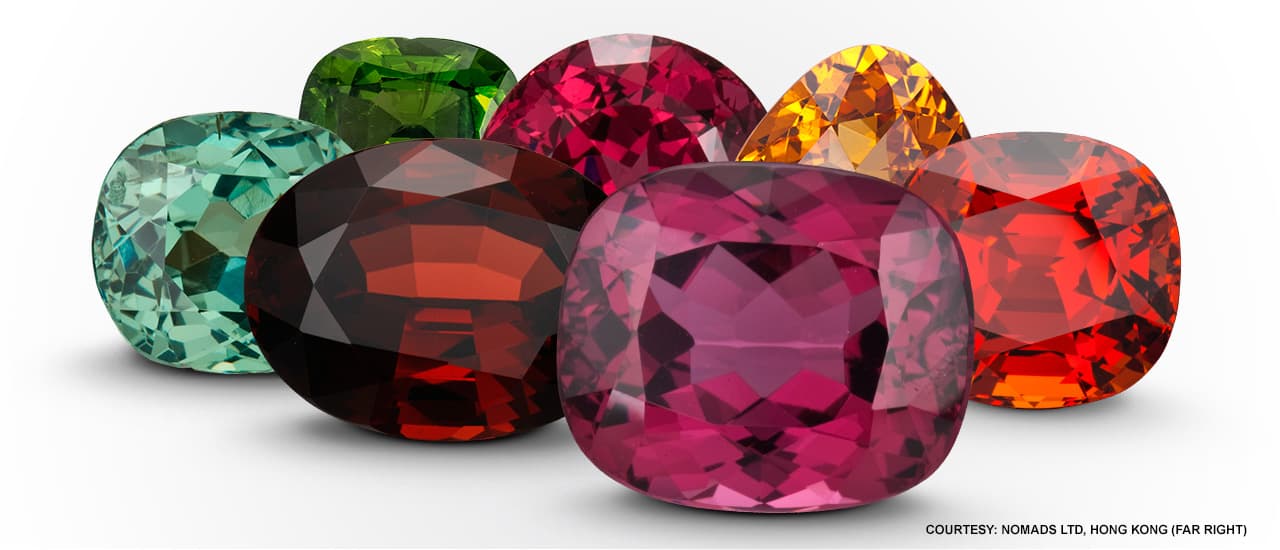
A garnet ring can be wine-red in yellow gold or vivid green in platinum, and both stones still count as January’s birthstone. Garnet is not one gem but a closely related family of minerals, and the color range runs from orange and yellow to purple, vibrant green, and rare stones that shift from blue to purple in different light. That spectrum gives January pieces different style personalities, from antique-looking pendants to crisp, modern rings.
Garnet is a family, not a single color
Garnet is a group of closely related minerals, with gemstones in almost every color. The range can be overwhelming, which is exactly why color matters more than carat weight when you are choosing a January piece. A classic deep red garnet will always feel familiar, but the same birthstone can look entirely different when it appears as a warm spessartine, a pinkish rhodolite, or a bright green tsavorite.
The six common garnet minerals are almandine, andradite, grossular, pyrope, spessartine and uvarovite. Within that family, jewelers name varieties such as demantoid, tsavorite, hessonite and rhodolite. Those names tell you something about the stone’s color, rarity, and how it will read once it is set in metal.
Color decides the mood of the jewel
For the most traditional look, deep red garnet remains the most accessible choice for pendants, stackable rings, and birthstone settings that nod to vintage jewelry. Those darker stones work especially well when the goal is a rich, heirloom feel. Set in yellow gold or rose gold, they can look warmer and softer, with a glow that suits engraved bezels, milgrain edges, and other antique details.
If you want January jewelry that feels less expected, spessartine brings a vivid orange tone that reads fresh and contemporary. Hessonite is an orangy red garnet and rhodolite a pink-red variety, both of which shift the birthstone story away from standard garnet red. Green garnets are even more striking: tsavorite is the vivid green grossular variety, while demantoid is the bright green garnet long prized for its horsetail inclusions. In white metals, those greener stones pop with a cool clarity that makes the setting feel modern rather than nostalgic.
Color-change garnets sit in a category of their own. Some stones transform from blue to purple in different lighting, which makes them particularly strong conversation pieces in rings and pendants.
The setting changes the style identity
The same garnet can look like two different jewels depending on how it is mounted. A deep red stone in yellow gold can feel Victorian, while the same color in a sleek platinum or white-gold bezel can lean graphic and contemporary.
Round brilliants and oval cuts usually intensify color, which suits darker almandine and pyrope stones that need help flashing light. Step cuts, especially in brighter green varieties like demantoid or tsavorite, can show off clarity and make the color feel cleaner and more architectural. A collector comparing two rings might see one as an affordable wine-red almandine and another as a rarer green garnet with much greater visual lift; the difference is in the stone itself, not just the craftsmanship around it.
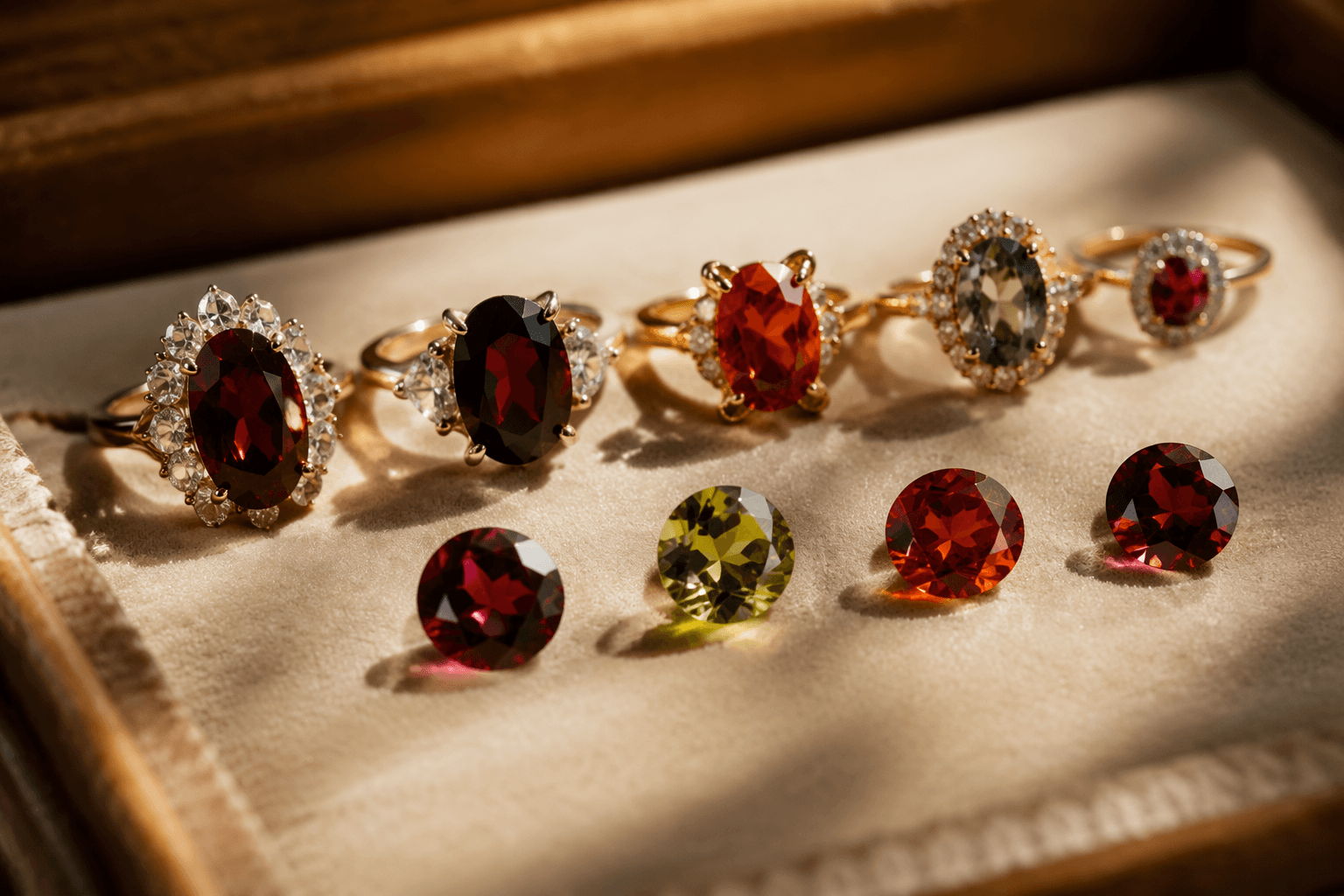
If a piece is simply labeled garnet, you do not yet know whether you are looking at a widely available red stone or a rarer green variety with a very different market position. Ask for the variety name along with the setting metal.
What to ask for before you buy
A smart garnet purchase starts with the variety name, then moves to color, cut, and setting. If the seller cannot tell you whether a stone is almandine, tsavorite, demantoid, spessartine, or another type, the piece is not being described with enough precision. Think in color terms first, which is the easiest way to compare pieces side by side.
A good jewelry counter should be able to explain whether the stone is being set to warm it up or to emphasize contrast. Dark reds often glow in yellow or rose gold, while green garnets usually stand out in white metal settings that leave the color unobstructed. If the piece is meant to feel antique, look for details like closed backs, halo framing, or engraved gallery work; if it is meant to feel minimal, the stone may be mounted in a clean bezel or four-prong head that keeps the profile sharp.
Demantoid is often discussed for its vivid green and distinctive horsetail inclusions, so a setting that gives the stone room to be seen is more compelling than one that buries it in ornament. Tsavorite, by contrast, is prized for a bright green body color.
Why garnet keeps earning its place
Garnet’s appeal is not only visual. The U.S. Geological Survey traces the name to the Latin word granatus, meaning like a grain, a reference to crystals that resemble grains or seeds in rock.
The U.S. Geological Survey identifies garnet as an essential industrial mineral as well as January’s birthstone, and garnet has been mined in the United States, including in New York, Maine, and Idaho.
The American Gem Society traces the idea of birthstones to ancient tradition, and modern birthstone lists were standardized in 1912, with garnet as January’s signature stone.
This article was produced by Prism’s automated news system from verified source data, official records, and press releases, then run through automated quality and moderation checks before publishing. The system is built and supervised by the people who set the standards it runs under. Read our full AI policy.
Did this article answer your question?