Jewelers of America Guide Explains Modern and Traditional Birthstones for Every Month
The modern birthstone list traces back to a 1912 industry standard — and some months offer surprising alternatives most buyers never consider.

From the biblical Breastplate of Aaron to a trade association meeting in 1912, the birthstone has traveled an unlikely path from sacred artifact to jewelry counter staple. The idea of wearing a specific stone for each month is believed to have originated with that ancient breastplate, a biblical artifact adorned with twelve stones, each representing one of the twelve tribes of Israel. Over time, those stones became connected to the zodiac, and later to the calendar months we recognize today. The modern list was officially standardized in 1912 by the American National Retail Jewelers Association, the organization now known as Jewelers of America, which continues to publish an authoritative, retailer-focused birthstone guide explaining both modern and traditional lists alongside practical buying guidance.
That history matters, because it explains something buyers often find confusing: why some months have one birthstone, others have three, and why certain stones appear on both traditional and modern lists. The 1912 standardization was not a clean slate. It was a consolidation, and the seams still show.
The Stones, Month by Month
The list below reflects traditional birthstones along with alternative options recognized across both historical and contemporary contexts. Some months have long carried a single stone with near-universal agreement; others have accumulated alternatives over centuries of use and periodic industry revisions.
- January: Garnet, with spinel also included as an alternative. The deep red pyrope garnet is what most people picture, though garnets actually occur in nearly every color.
- February: Amethyst. The purple quartz variety has held this month since antiquity, and its relatively accessible price point makes it one of the most widely purchased birthstones.
- March: Aquamarine, with bloodstone as an alternative. Aquamarine's pale blue-green hue, caused by traces of iron in beryl, has made it a perennial favorite in fine jewelry. Bloodstone, a dark green chalcedony flecked with red jasper, represents the older, traditional designation.
- April: Diamond, with spinel recognized as an alternative. April's primary stone needs little introduction, though the spinel alternative is worth noting for buyers seeking color or a lower price point at comparable hardness.
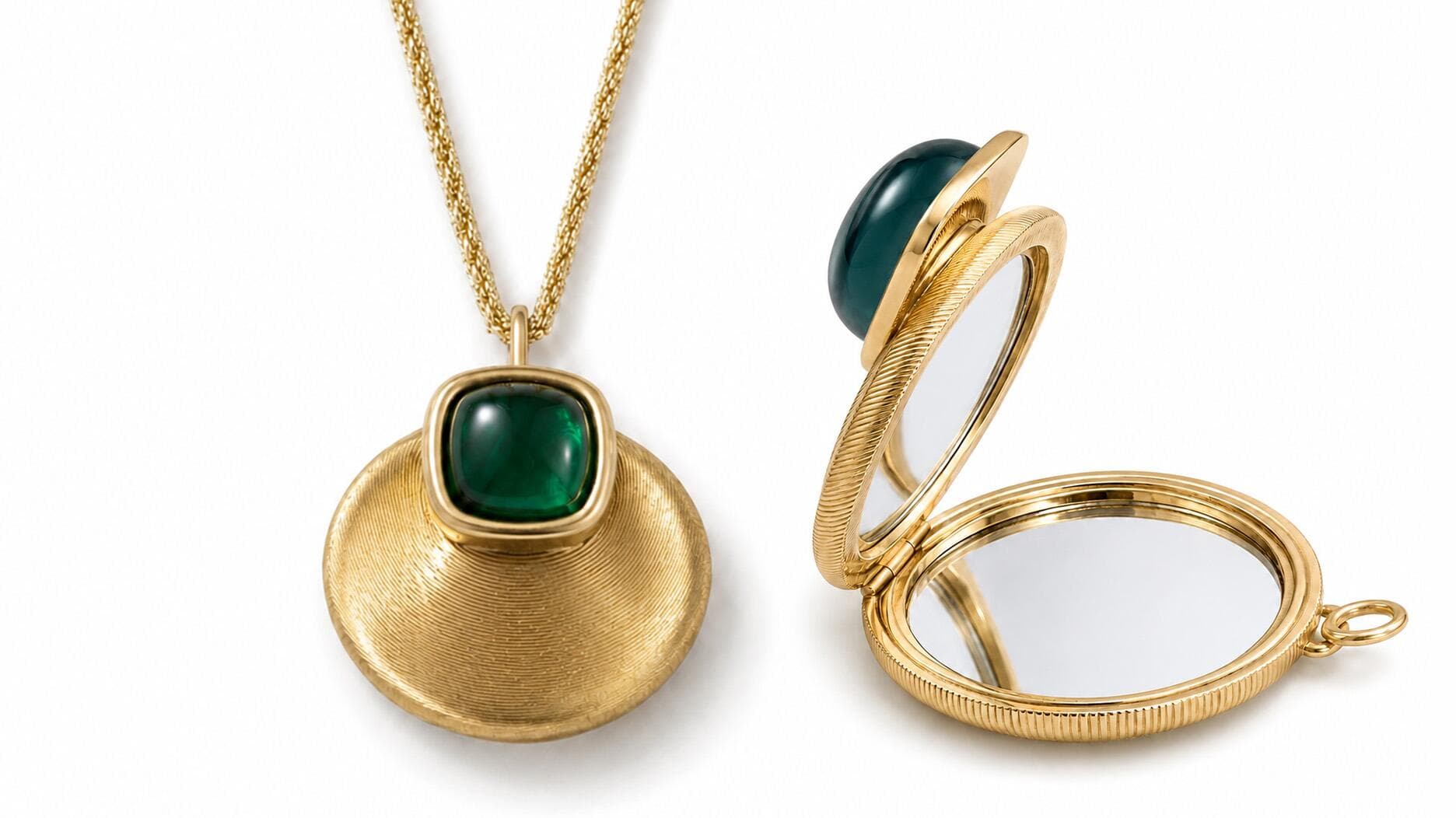
- May: Emerald. The most prized variety of beryl, and one of the four precious gemstones alongside diamond, ruby, and sapphire. Fine emeralds command significant premiums; inclusions, referred to in the trade as "jardin," are considered characteristic rather than flaws.
- June: Pearl, Alexandrite, and Moonstone. June is the only month with three recognized birthstones, and they could hardly be more different from one another. Pearl is organic, formed inside a mollusk. Alexandrite is one of the rarest color-change stones in the world, shifting from green in daylight to red-purple under incandescent light. Moonstone, a variety of feldspar, is prized for its adularescence, the billowing glow that moves across its surface.
- July: Ruby. The most valuable of the colored gemstones by per-carat price at the top end of the market, fine rubies from Burma (Myanmar) in an unheated "pigeon's blood" red are among the most sought-after stones in existence.
- August: Peridot, Spinel, and Sardonyx. Peridot is one of the few gemstones that forms in only one color, an olive to lime green determined by iron content. Spinel, long confused with ruby in historical gems (the Black Prince's Ruby in the British Imperial State Crown is actually a spinel), finally received its own official August designation. Sardonyx, a banded variety of onyx, is the oldest of August's three options.
- September: Sapphire. Blue sapphire, the corundum variety colored by iron and titanium, is September's stone and one of the most commercially significant colored gemstones globally. Sapphires also occur in virtually every other color, including the coveted padparadscha, a delicate salmon-pink.
- October: Opal and Tourmaline. Opal's play-of-color, the spectral flash across its surface, is unlike any other gem optical effect. Tourmaline offers perhaps the widest color range of any stone on this list, from chrome green to Paraiba neon blue-green to deep red rubellite.
- November: Citrine and Topaz. Both stones share warm yellow and orange tones, which explains their pairing. Blue topaz, while commercially popular, is a treated variety; the natural "Imperial Topaz" in golden orange-yellow is the more historically significant stone for this month.
- December: Turquoise, Tanzanite, and Zircon. Turquoise is among the oldest gemstones in human ornamentation. Tanzanite, a blue-violet variety of zoisite discovered only in 1967 near Mount Kilimanjaro in Tanzania, is the youngest stone on the entire official list. Zircon, often mistaken for a synthetic due to name confusion with cubic zirconia, is in fact a natural mineral of considerable brilliance.
How to Wear a Birthstone: Four Design Approaches Worth Knowing
The birthstone's meaning is personal, but how it is set determines whether a piece functions as a heirloom or an afterthought. The setting style shapes not only the aesthetic but also the stone's protection and wearability, and these four approaches represent the most considered ways to incorporate birthstones into fine jewelry.
Two-Stone (Toi et Moi) Rings
The toi et moi, French for "you and me," places two stones side by side in a single ring, a format with a history stretching from Napoleon's proposal to Joséphine to Harry Styles's much-photographed collection. "Representing two people coming together, a birthstone paired with another gem (like a diamond) creates a romantic and meaningful design, or combine both of your birthstones for a unique spin on the idea." The format works particularly well when the two stones offer contrast: a deep red garnet beside a white diamond, or a green emerald alongside a blue sapphire from a partner's birth month.
Sidestones
Sidestones are the most versatile entry point for birthstone jewelry. Placing a birthstone as a flanking accent to a central diamond integrates personal meaning without demanding that the birthstone carry the design entirely. "Placing birthstones as side accents to a central diamond adds a personalized touch without overwhelming the ring. Blue sapphires for the September birthstone are a classic choice but you can do this with other gems as well." This approach is particularly well-suited to stones with strong color saturation, where even a small calibrated stone reads clearly against a white diamond center.
Eternity Bands
An eternity band set entirely in birthstones, or alternating a birthstone with diamonds, offers a different symbolic register. "A birthstone eternity band can symbolize everlasting love while incorporating the colors that are most meaningful to you." From a gemological standpoint, the choice of setting style within the band matters considerably: channel settings protect smaller stones better than prong settings for everyday wear, while bezel settings offer the most security for softer stones like opal or moonstone.
Halo Settings
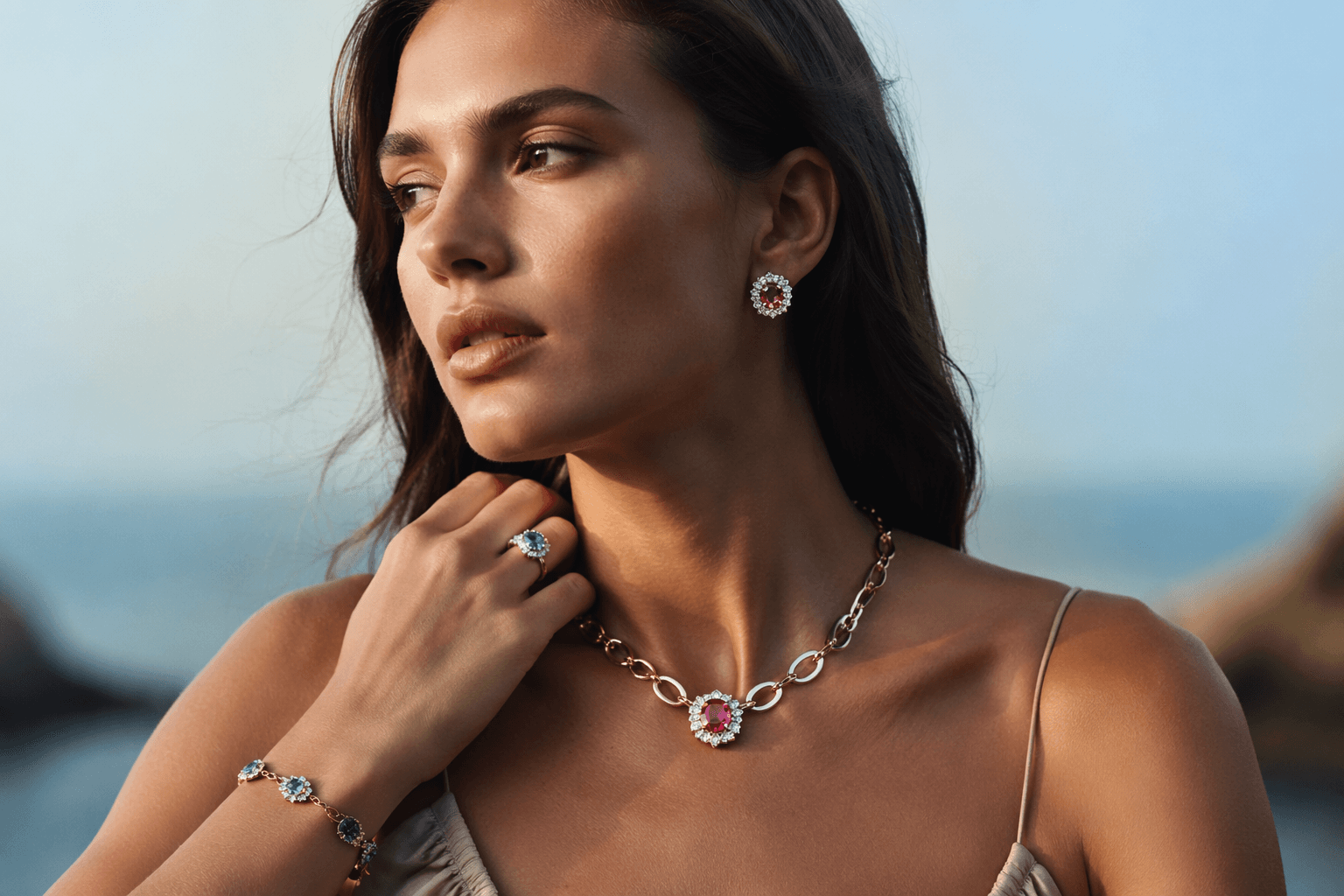
The halo, a ring of smaller stones surrounding a central gem, translates particularly well to birthstone jewelry. "Surrounding a central diamond with a halo of birthstones is a gorgeous way to blend tradition with a pop of personalized color." A halo of vivid blue sapphire rounds encircling a white diamond center, for example, creates a piece that reads as both classically structured and immediately personal.
Why the 1912 Standard Still Shapes What You Buy
The fact that Jewelers of America traces its birthstone list to 1912, and still maintains it as the authoritative U.S. retail standard, is commercially significant for anyone buying or gifting birthstone jewelry today. The list has been updated incrementally since its original publication, which explains the presence of tanzanite (added in 2002) and the more recent formal recognition of spinel as an August stone. When a retailer describes a stone as a "modern" birthstone versus a "traditional" or "alternative" one, they are typically navigating that layered history.
For buyers, the practical implication is that you have more options than the single-stone approach suggests. June alone offers pearl, alexandrite, and moonstone, three stones with dramatically different price points, aesthetics, and wearability profiles. Understanding which designation applies, modern, traditional, or alternative, lets you make a more intentional choice rather than defaulting to whatever a retailer happens to carry.
The birthstone list is, at its core, a framework for meaning. It was codified by a trade association but its roots reach back to scripture and astronomy. That combination of the ancient and the commercial is, in many ways, the story of the gem trade itself.
This article was produced by Prism’s automated news system from verified source data, official records, and press releases, then run through automated quality and moderation checks before publishing. The system is built and supervised by the people who set the standards it runs under. Read our full AI policy.
Did this article answer your question?