Kris Averi's rainbow sapphire ring turns birthstone style into armor
Kris Averi's Prism Thorn ring turns September sapphire into rainbow armor, pairing lab-grown stones with a sculptural look built for self-purchasers.
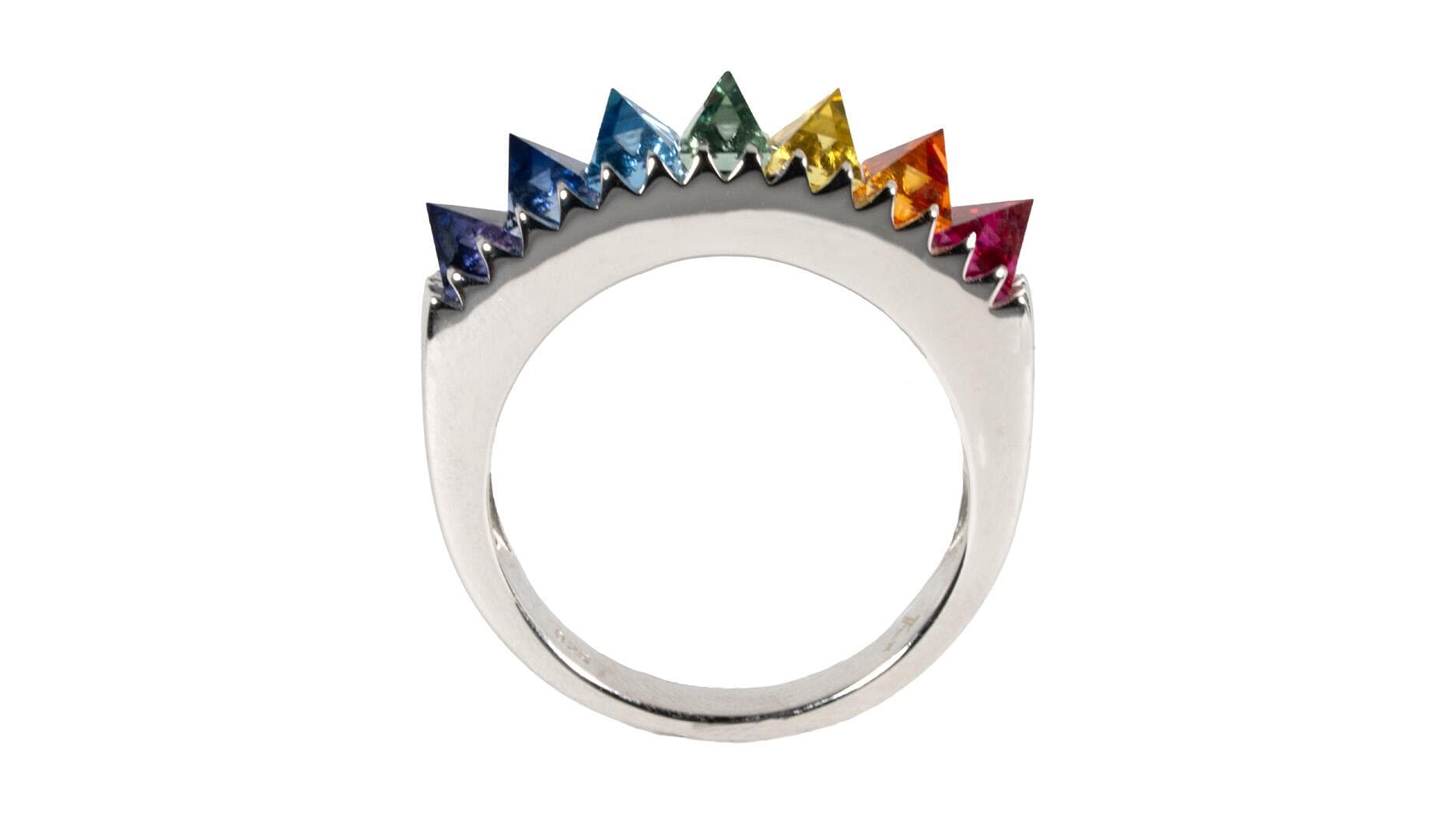
Kris Averi’s Prism Thorn ring makes a clear case for birthstone jewelry that does more than signal a month. The rainbow version turns sapphire into a sharp, angular statement, with lab-grown stones arranged so the ring reads less like a classic solitaire and more like a small suit of armor. It is a timely example of how color, identity, and wearability are converging in fine jewelry.
Birthstone symbolism, remixed
Sapphire has long carried built-in meaning, and the Gemological Institute of America places it firmly in the September birthstone slot. GIA also ties sapphire to the 5th and 45th anniversaries, which gives the gem more than one reason to stay in rotation for self-purchases, milestone gifts, and modern heirlooms. What makes the Prism Thorn ring different is that it pushes beyond the familiar blue and into a full rainbow of corundum color.
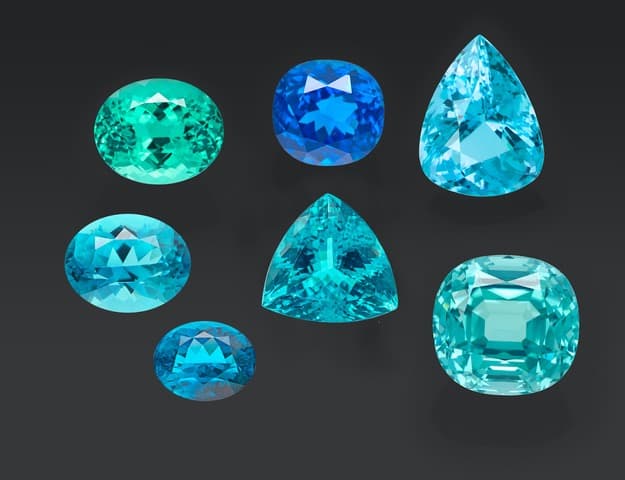
That broader color family matters. GIA notes that sapphire is not only blue, but also appears as violet, green, yellow, orange, pink, purple, and intermediate shades. In other words, the rainbow version of Kris Averi’s ring is not a gimmick layered on top of sapphire tradition. It is a vivid way of showing how wide the category already is.
How the ring is built
Kris Averi sells the design as the Prism Thorn Ring in Rainbow Sapphire, and the construction is what gives it its edge. The brand describes the stones as angel-cut gemstones set face down and point up, creating a crown of angular shapes that throw light in multiple directions. National Jeweler identifies the rainbow version more specifically as using octahedral, lab-grown flame fusion sapphires in a ROYGBIV colorway, reverse-set for maximum impact.
The design comes out of a collaboration between Kris Harvey, Kris Averi’s founder and creative director, and lapidarist Oke Millett. That partnership is visible in the finish: the ring feels engineered, not merely decorated. The reverse-setting turns each stone into a tiny point of color and geometry, which is why the piece reads as sculptural first and ornamental second.
Why it feels like armor
The armor comparison is not just styling language. Sapphire rates 9 on the Mohs hardness scale, which makes it one of the hardest gemstones regularly used in jewelry and a practical choice for pieces meant to be worn often. That durability explains why a ring this dramatic can still function as everyday jewelry rather than living only in a velvet box.
The silhouette also does some of that work. Because the stones are set face down and point up, the ring gains height, texture, and a spiky profile that feels protective without becoming bulky. It is the kind of piece that can sit on the hand like a statement object, but still survive real life, which is exactly what many buyers want from a ring they plan to keep on.
Who this aesthetic speaks to
Kris Averi frames itself as a custom jewelry house making one-of-a-kind engagement rings and heirloom fine jewelry for all love stories. The brand’s queer-led, inclusivity-focused positioning gives the rainbow version of Prism Thorn a specific cultural charge, especially for shoppers drawn to Pride-adjacent styling without wanting overt novelty. The multicolor sapphires give the ring what Kris Averi calls a prideful edge, but the deeper appeal is broader: it makes room for individuality in a category that has often been coded as conservative.
That is part of why expressive, symbolic jewelry continues to gain traction with self-purchasers. A birthstone ring no longer has to mean a neat, traditional stone in a predictable setting. It can be a declaration, a gift to oneself, or a marker of identity, with the color story doing as much emotional work as the metal and setting.
Why lab-grown sapphire changes the equation
Lab-grown sapphires are central to the ring’s appeal. Suppliers market them as having the same chemical and physical properties as natural sapphires, while also presenting them as a more accessible and more ethical alternative to mined stones. That combination is especially potent in a ring built around dramatic color, because it lowers the barrier to wearing a large, visually loud sapphire look without leaning on mined rarity as the only source of value.

This is where the value conversation gets more interesting than price alone. A lab-grown rainbow sapphire ring offers the visual punch of a statement piece, but it also fits the way many contemporary buyers think about provenance, sustainability, and self-funding. The appeal is not just that the stones are colorful. It is that the color arrives with less compromise, at least as the lab-grown category is being positioned by the trade.
How to wear a rainbow sapphire ring
A ring like Prism Thorn works best when it has space to speak. The angular crown and reverse-set stones already create enough movement, so pairing it with cleaner shapes lets the rainbow palette lead. A plain metal band, a pared-back stack, or a simple manicure keeps the focus on the geometry rather than competing with it.
The style also benefits from contrast. Against tailoring, a black dress, denim, or a crisp white shirt, the ring reads as deliberate rather than costume-like. Because sapphire is hard and suited to regular wear, it can move from occasion jewelry into day-to-day rotation, which is exactly where a symbolic piece earns its keep.
The broader lesson in sapphire
The Prism Thorn ring landed as a same-day Piece of the Week spotlight on June 26, 2026, which says something about how current this look feels. It sits at the intersection of three forces that are reshaping fine jewelry: the search for personal symbolism, the appetite for color beyond the obvious, and the demand for materials that feel easier to justify emotionally and financially. GIA’s role as an independent nonprofit founded in 1931, with research, education, and laboratory services, remains the cleanest reference point for understanding sapphire itself, but the market around the gem is clearly moving toward bolder storytelling.
Rainbow sapphire succeeds because it does not ask buyers to choose between meaning and spectacle. It gives them both, wrapped in a form that looks protective, modern, and ready to be worn rather than merely admired.
This article was produced by Prism’s automated news system from verified source data, official records, and press releases, then run through automated quality and moderation checks before publishing. The system is built and supervised by the people who set the standards it runs under. Read our full AI policy.
Know something we missed? Have a correction or additional information?
Submit a Tip