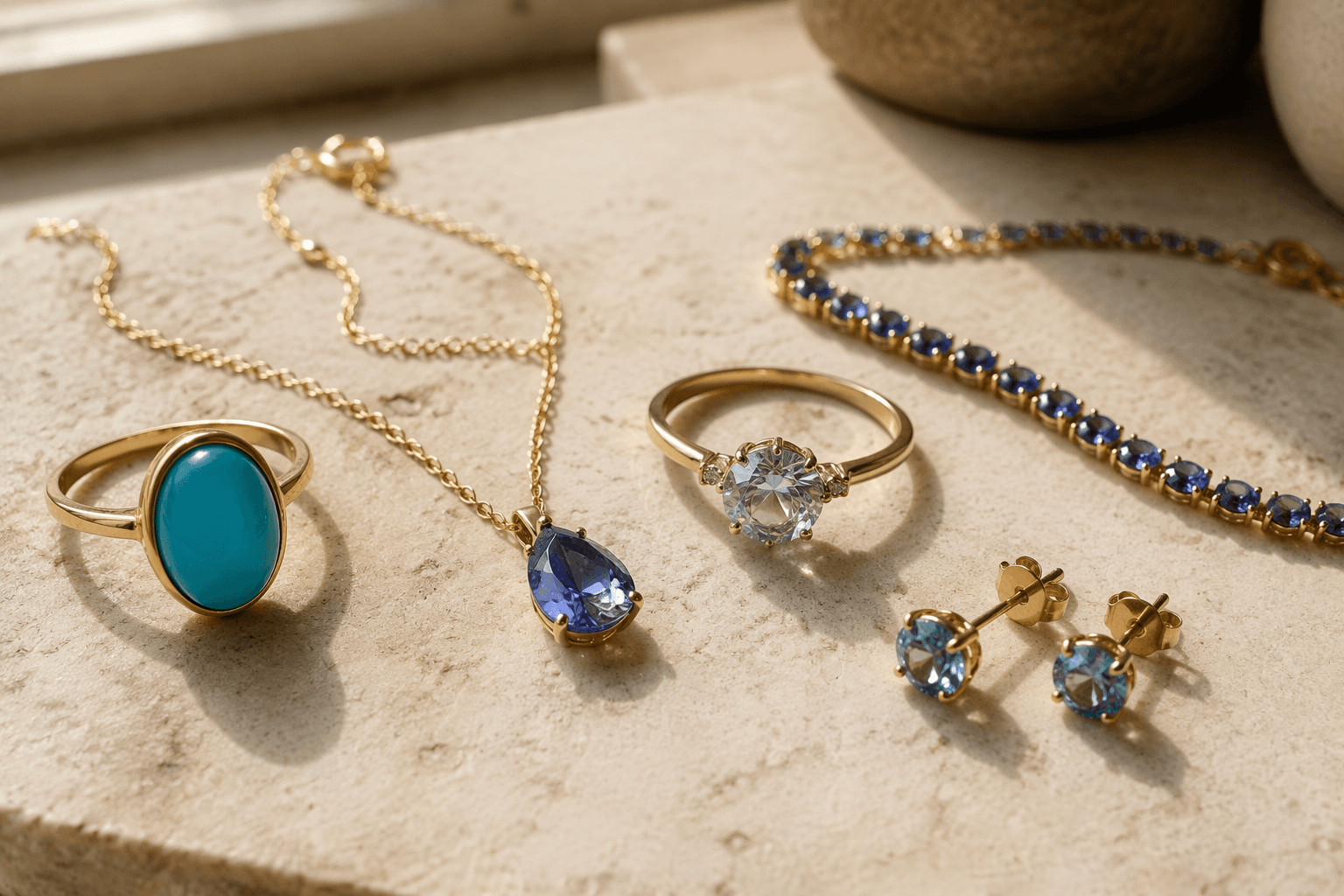
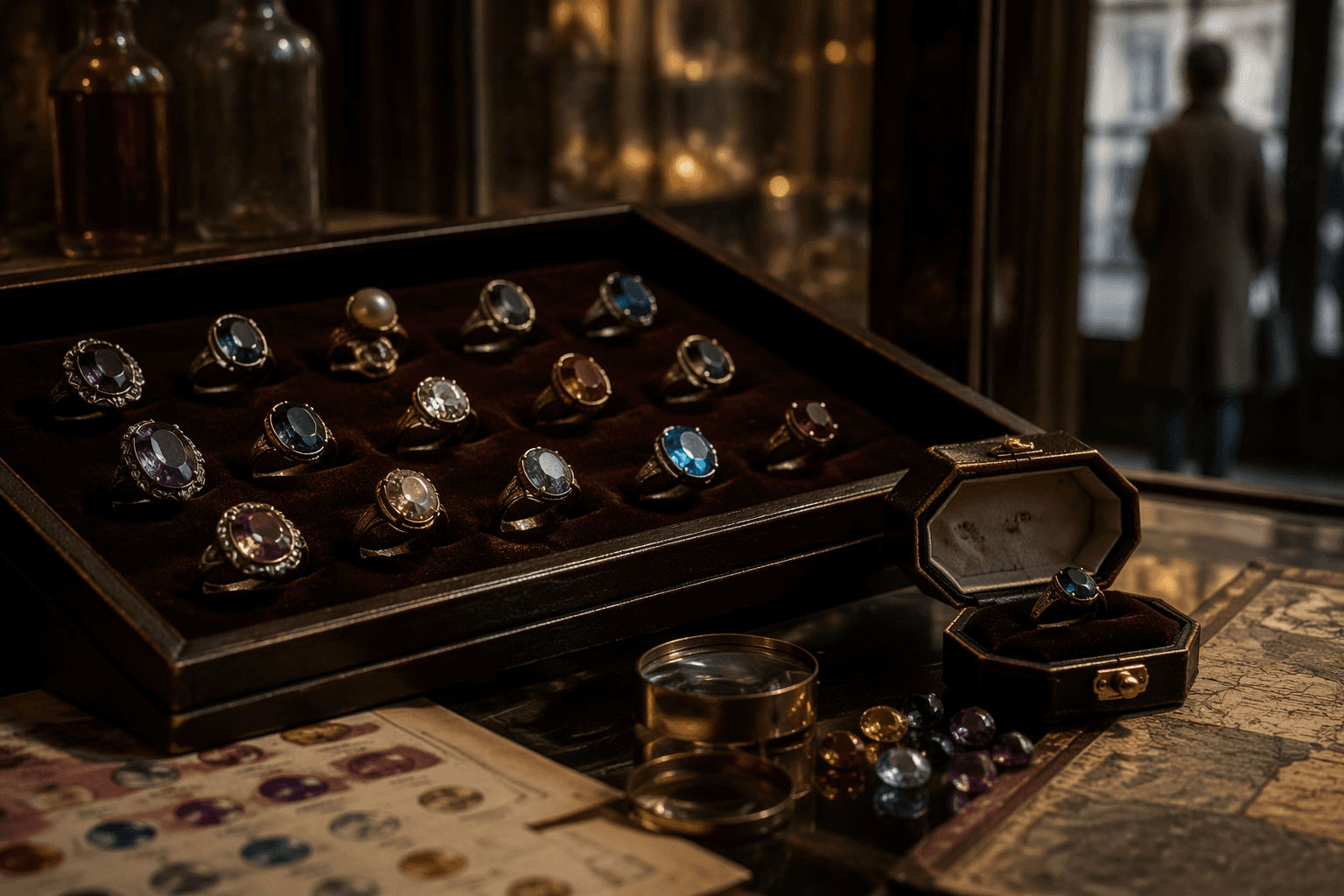
March birthstones offer two looks, aquamarine and bloodstone
March gives you a choice between aquamarine’s clean blue polish and bloodstone’s red-flecked drama, two stones for very different buyers.

Aquamarine and bloodstone are both March birthstones, but they live at opposite ends of the style spectrum: one reads as airy and polished, the other as dark, old-world, and memorable. Both have long been tied to protection and well-being, and the American Gem Society classifies both as beautiful jewelry stones.
Aquamarine: the clear, easy-going classic
Aquamarine is the stone most shoppers picture first when they think of March. Its name comes from aqua and marina, and its color ranges from pale sky blue to deeper ocean tones, a palette that feels instantly familiar in rings, pendants, and earrings. Faceted aquamarines are often exceptionally clear, sometimes “as clear as water,” as the Gemological Institute of America puts it, which is part of why the stone reads so cleanly in modern settings.
This is the March birthstone for the person who wants something wearable without needing to explain it. It suits a gift buyer looking for a safe but still elegant choice, a self-purchaser who wants a cool-toned everyday gem, and a style-led dresser who prefers jewelry that slips easily between denim, tailoring, and evening wear. Aquamarine’s folklore only strengthens that appeal: it was linked to sailors and fishermen, and it was also thought to support the happiness of marriages, which makes it feel especially apt for anniversaries and milestone gifts.
Why aquamarine is so easy to wear
The International Gem Society gives aquamarine a Mohs hardness of 7.5 to 8, which puts it in the practical range for daily wear jewelry, including engagement rings. Aquamarine is one of the rare colored stones that can look refined and still live comfortably on the hand. It is also often heat-treated to reduce greenish tones and bring out a cleaner blue, although some buyers now specifically appreciate untreated stones that keep a faint sea-glass cast.
Value follows color, but not in a blunt way. Deeper-colored aquamarines generally command higher prices, yet a well-cut light aquamarine can still be extraordinary because its beauty depends so much on transparency and proportion. That makes the stone a particularly good buy for people who care more about cut and light performance than about a saturated look.
Provenance adds another layer. Aquamarine is mined mainly in Brazil, but also in Nigeria, Madagascar, Zambia, Pakistan, and Mozambique, giving collectors and gift buyers plenty of origin stories to explore. One of the most famous examples, the Dom Pedro aquamarine at the Smithsonian National Museum of Natural History, was cut from a 100-pound crystal found in the late 1980s and now weighs about 4.6 pounds. It traveled from Brazil to Germany and then to collectors in the United States before becoming a finished jewel.
Bloodstone: the stone for someone who wants character
Bloodstone takes March in the opposite direction. It is a dark-green variety of chalcedony, part of the cryptocrystalline quartz family, and it is usually set as a cabochon so the surface can show off its identity: vivid red spots of iron oxide scattered across the green ground. That combination gives it immediate personality. Where aquamarine feels open and fluent, bloodstone feels compact, earthy, and slightly mysterious.
This is the better choice for the buyer who does not want the obvious March answer. A self-purchaser with an eye for antique references will find more intrigue here, and a style-driven dresser who likes jewelry with texture and symbolism will likely gravitate toward it as well. Primary sources are India, Brazil, Australia, and the United States, which gives bloodstone a global reach, but its emotional weight comes as much from lore as from geography.
Bloodstone has been treasured since ancient times and long served as March’s birthstone. Medieval Christians carved it into scenes of the crucifixion and martyrs, which is why it earned the nickname “martyr’s stone.” Its alternate name, heliotrope, comes from an old belief about how the polished stone reflected light, and Pliny the Elder described a tradition in which the gem, when immersed in water, would capture the sun as a blood-red image.
How to choose the right March stone
If the goal is a gift that feels universally flattering, aquamarine is the safer and more versatile bet. Its pale-to-deep blue range works across skin tones, its clarity gives it a polished finish, and its durability makes it easy to wear often. It is the March stone that looks polished in a solitaire ring, quiet in a pendant, and fresh in a pair of earrings.
If the goal is to buy something with presence, bloodstone is the more distinctive choice. Its red flecks and darker body color make it read as more sculptural, more symbolic, and more archival. It suits the buyer who wants jewelry to feel a little less expected, a little more personal, and a lot more specific.
Modern birthstone lists only loosely reflect ancient beliefs and were shaped by availability and cost, which is why March ends up with two such different answers. The International Colored Gemstone Association also connects aquamarine and bloodstone with the 19th anniversary.
This article was produced by Prism’s automated news system from verified source data, official records, and press releases, then run through automated quality and moderation checks before publishing. The system is built and supervised by the people who set the standards it runs under. Read our full AI policy.
Did this article answer your question?