Rare Aquamarine March Birthstone Jewelry Sale Features 60 Stunning Lots
A specialist auction closed February 24 with 60+ aquamarine lots spanning rings, earrings, and necklaces set in 14K and 18K gold.
Aquamarine has always occupied a singular place in the gemological imagination: cool, luminous, and possessed of a blue so precise it reads less like color and more like clarity itself. When a specialist sale devoted entirely to aquamarine birthstone jewelry closes with more than 60 catalogued lots, it signals something meaningful about the stone's enduring appeal, particularly among collectors who understand that March's birthstone is not a consolation prize behind sapphire or emerald, but a gem worthy of its own focused attention.
The sale, titled "Aquamarine March Birthstone Jewellery," catalogued and closed on February 24, 2026, bringing together a concentrated selection of fine pieces that spanned nearly every jewelry category a serious collector or first-time buyer might consider. Rings, necklaces, drop earrings, cocktail settings, and halo configurations all appeared across the 60-plus lots, making this one of the more comprehensive single-stone specialist auctions to close in recent memory.
The Stone Itself
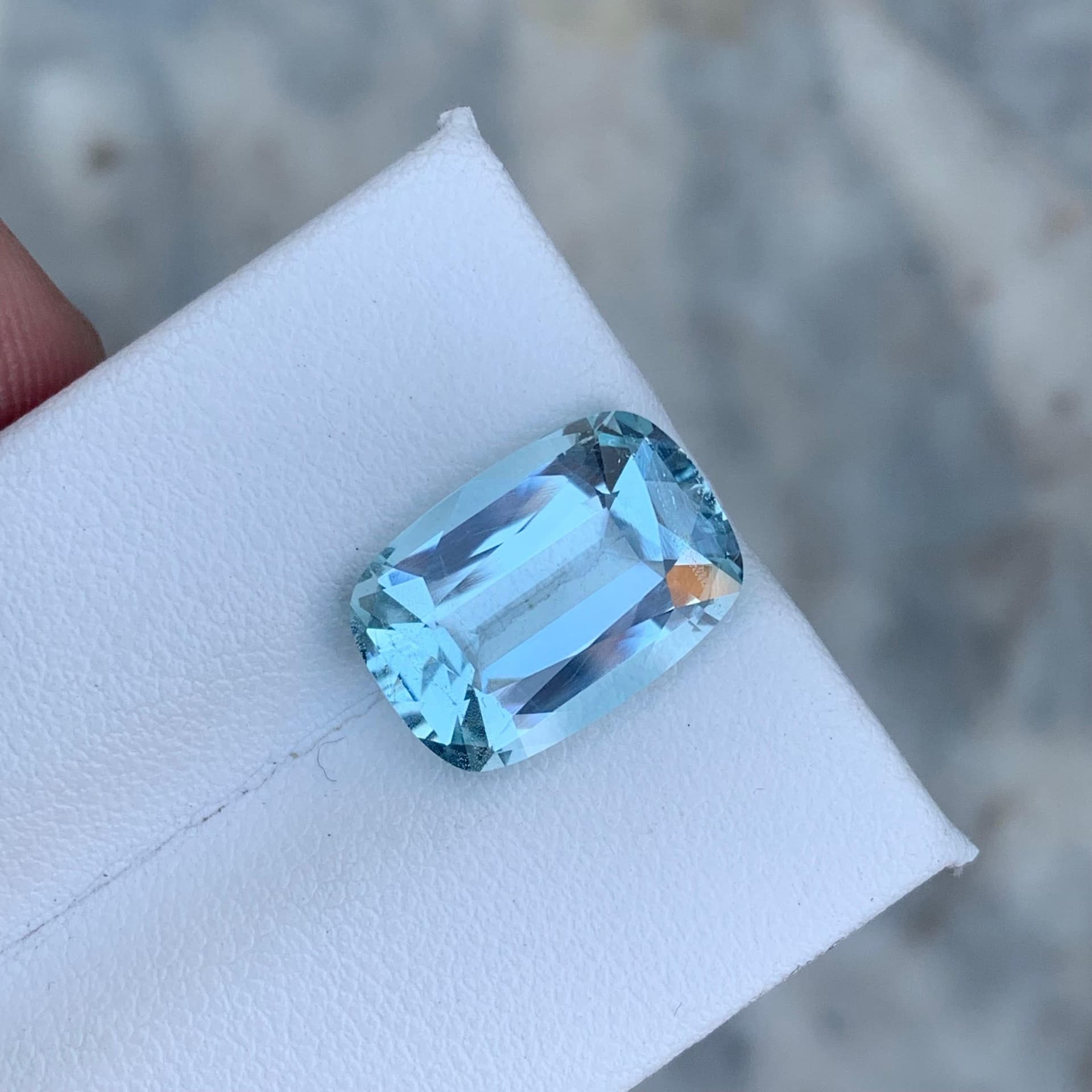
To appreciate what was on offer, it helps to understand aquamarine's particular character as a gem. A member of the beryl family, aquamarine shares its mineral lineage with emerald, but diverges dramatically in temperament. Where emerald is dense with inclusions and saturated with green, aquamarine tends toward exceptional clarity, often eye-clean even in larger carat weights, with a color range that moves from the palest icy blue through to a rich, deeply saturated blue-green. The finest specimens, particularly those from Brazilian deposits, carry a vivid medium blue that gemologists describe as intensely desirable, and which commands the highest prices at auction and retail alike.
This clarity and size potential make aquamarine particularly well-suited to the bold, architectural settings that appeared throughout this sale. A stone that is visibly clean and naturally large can hold its own in an oversized cocktail ring or a statement pendant in ways that cloudier gems simply cannot.
Settings and Metal Choices
The catalog's lots were primarily executed in 14K and 18K gold across all three major alloy colors: yellow, white, and rose. This range is not incidental. Each metal choice creates a fundamentally different relationship with aquamarine's cool blue.
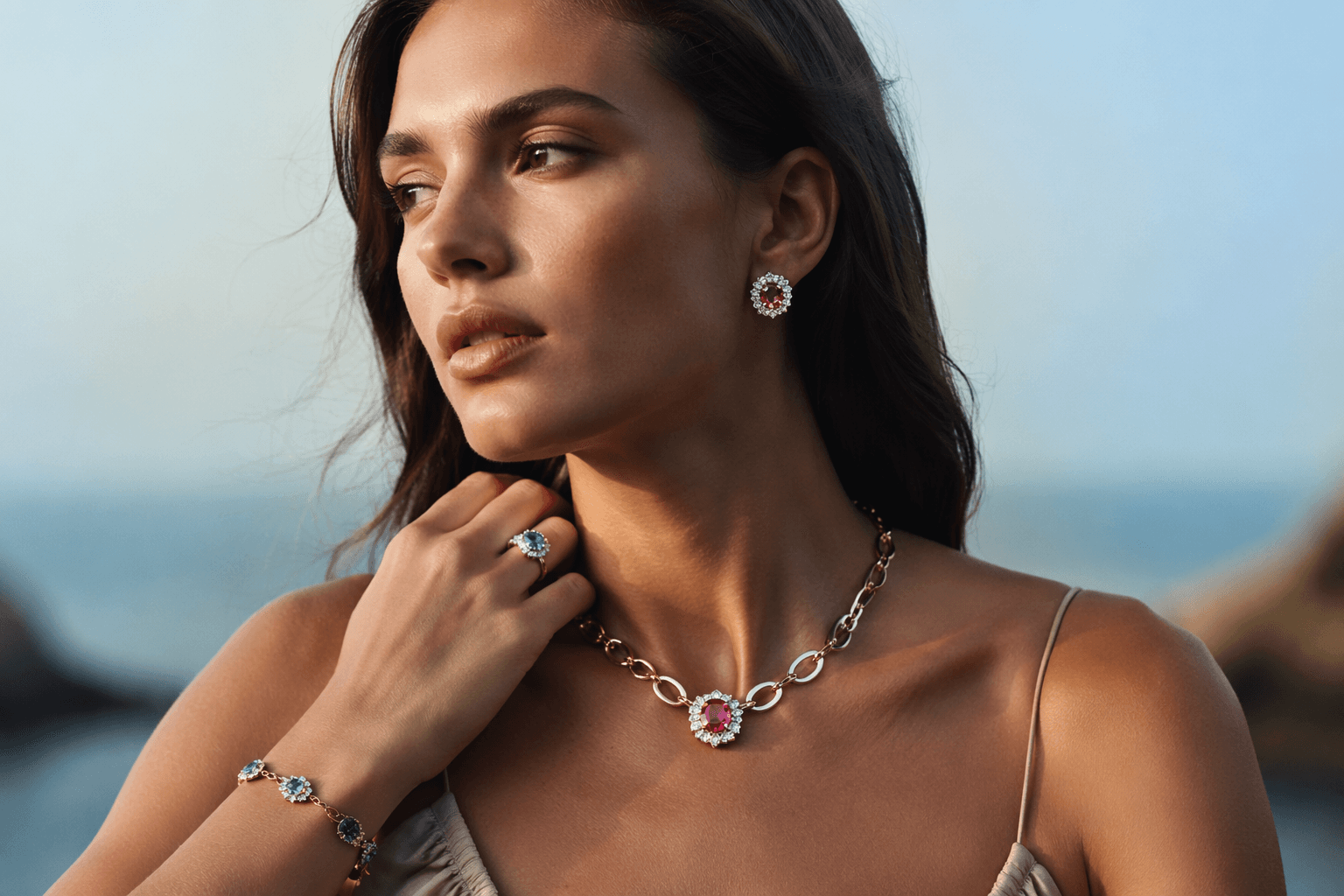
White gold, predictably, is the most popular pairing in contemporary fine jewelry, and for good reason: it recedes visually, allowing the stone's color to dominate. A halo setting in white gold, in which a central aquamarine is surrounded by a frame of pavé-set diamonds, creates an effect of almost suspended brilliance, the blue center appearing to float within a constellation of white light.
Yellow gold, by contrast, introduces a tension that many collectors find more interesting. The warmth of 18K yellow gold against aquamarine's cool clarity creates a chromatic conversation rather than a monologue, a pairing with roots in Victorian and Edwardian jewelry that has enjoyed a confident revival over the past decade.
Rose gold brings its own logic to the combination. The pink-tinged alloy softens the stone's sometimes severe coolness, lending pieces a more romantic quality. It is a pairing that has found particular favor in drop earrings and delicate pendant necklaces, where the goal is often warmth rather than drama.
The Lots: A Survey of Forms
The breadth of this catalog made it relevant to buyers across a wide range of tastes and intentions. Rings dominated the offering, as they tend to in birthstone-focused sales, ranging from the solitaire simplicity of a single bezel-set aquamarine in a low-profile band to more elaborate cocktail configurations in which the stone is given theatrical presence through sculptural metalwork and accent stones.
The distinction between a bezel setting and a prong setting matters here more than in many other gemological contexts. Aquamarine's hardness, rated 7.5 to 8 on the Mohs scale, makes it reasonably durable, but its clarity means any inclusion or chip is highly visible. A bezel setting, in which metal wraps continuously around the stone's girdle, offers greater protection and a clean, modern silhouette. Prong settings, four or six-claw in most configurations, maximize light exposure and emphasize the gem's transparency. Both approaches appeared in this sale, each making a different argument for how aquamarine should live on the hand.
Halo rings, in which the central stone is encircled by a border of smaller diamonds or accent gems, represent one of the most commercially sustained designs in contemporary fine jewelry, and their appearance in this catalog is unsurprising. They work particularly well with aquamarine because the contrast between the colored center and the white diamond surround sharpens both elements, making the blue read more intensely and the diamonds appear more brilliant by comparison.
Necklaces in the catalog ranged from simple pendants suited to daily wear through to more substantial statement pieces. A well-chosen aquamarine pendant in 18K white gold on a fine chain is one of the most versatile pieces in fine jewelry: genuinely appropriate from the office through to a formal evening, and capable of being layered with other chains or worn alone depending on context.
Drop earrings rounded out the offering in a category that has seen enormous commercial momentum over the past several years. Long, linear aquamarine drops in yellow gold carry a distinctly Art Deco sensibility, a reference the stone supports naturally given its prevalence in jewelry from that period. Shorter drops in rose gold read as more contemporary and daytime-appropriate.
Aquamarine in the Collector's Context
Specialist auctions like this one serve a purpose beyond simple transaction. They establish a reference market for quality and value in a stone category that does not receive the same sustained auction attention as diamonds, rubies, or sapphires. For buyers considering their first serious aquamarine acquisition, a 60-lot catalog presents an unusually complete education: you can see the full range of how the stone is used, how metal choices affect its presentation, and what the market currently regards as desirable across different forms.
For more experienced collectors, the concentration of lots allows for meaningful comparison shopping in a way that browsing individual retail listings cannot replicate. When you can evaluate a bezel-set cocktail ring against a prong-set halo ring within the same catalog, you develop a calibrated sense of relative value that informs every subsequent purchase.
March birthdays have always had something of the sea about them, and aquamarine has served as the emblematic expression of that connection for centuries. A sale of this scope, presented at precisely the right moment in the calendar year, affirms that the stone's collectors are not seasonal enthusiasts but year-round advocates for one of the most intellectually satisfying gems the earth produces.
This article was produced by Prism’s automated news system from verified source data, official records, and press releases, then run through automated quality and moderation checks before publishing. The system is built and supervised by the people who set the standards it runs under. Read our full AI policy.
Did this article answer your question?