Which birthstones are durable enough for everyday wear?
The prettiest birthstones are not always the best for daily rings. Pearl, opal, turquoise, and moonstone need smarter settings, while harder stones and protective mounts carry more of the load.

A ring that lives on the hand all day needs a different stone, and often a different setting, than a pendant worn against a sweater or a pair of earrings that never meet a countertop. American Gem Society has helped people buy jewelry safely since 1934. Beauty matters, but so does whether the gem can survive real life.
The first question is not the month, it is the wear pattern
Birthstones are a popular, colorful introduction to gemstones, with appeal across age, gender, nationality and religion. People do not buy birthstone jewelry only for celebration; they buy it for birthdays, anniversaries, self-gifting, family storytelling, and the kind of everyday sentiment that has to coexist with sinks, keyboards, gym bags, and door handles.
Jewelers of America calls this a bezel setting, in which the gemstone is completely surrounded by a precious-metal border. That construction is not just a stylistic preference. It is one of the most practical ways to reduce the chance of needing to replace a gemstone or a mounting if the piece is meant for daily wear.
The softer birthstones ask for restraint
Pearl is the clearest example of why a birthstone can be beautiful and still be a poor choice for a hard-working ring. GIA ranks pearl at 2.5 on the Mohs hardness scale, which means it is very soft and easily scratched or abraded. Pearls are organic and warm to the touch. That softness makes pearl best suited to pendants and earrings, or to rings that are worn with care rather than constantly.
Opal is equally seductive and equally particular. GIA places opal between 5 and 6.5 on the Mohs scale, gives it very poor to fair toughness, and puts its water content at up to 20%. That internal chemistry explains why heat matters so much: intense light can cause crazing, while high heat or sudden temperature changes can fracture the stone. If opal is going into a ring, a protective bezel or a low-profile design is the safer choice; if you want the gem to last, a pendant or earrings are usually the calmer home.
Turquoise has a stronger everyday reputation than pearl or opal, but it still asks for discipline. GIA lists turquoise at 5 to 6 on the Mohs scale with fair to good toughness, yet warns that chemicals, cosmetics, skin oils, and perspiration can discolor it. Natural turquoise can also absorb cleaning products, perfume, and metal polish, and beads or rings that touch the skin may gradually darken as they absorb skin oils. Warm, soapy water is safe, but steam and ultrasonic cleaners should never be used. For that reason, turquoise can work in daily jewelry, but it works best in pieces that are protected from abrasion and frequent exposure to lotions and cleanser.
Moonstone sits in the middle of the pack on hardness, but it still does not belong in the same category as a diamond or sapphire ring worn through every errand. GIA gives moonstone a Mohs rating of 6.0 to 6.5 and says it is vulnerable to scratching, chipping, or cleaving if hit against a hard surface. GIA's FAQ puts moonstone below sapphire, diamond, or amethyst in durability and specifically advises against wearing moonstone rings during sports or at the gym. That makes moonstone a stronger candidate for pendants and earrings, or for a ring that is loved but not lived in.
Settings matter as much as stone choice
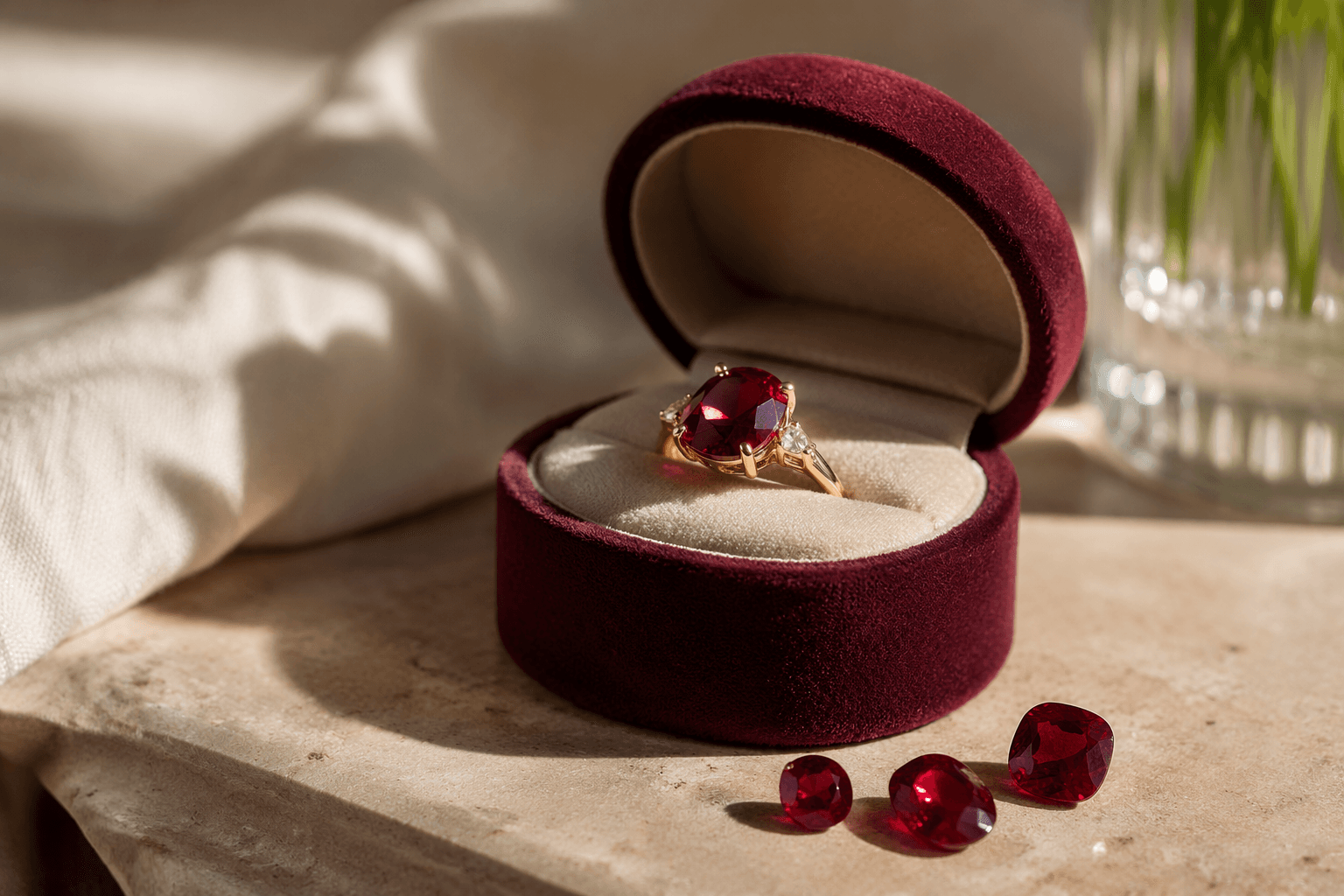
This is where design vocabulary becomes practical. A bezel setting wraps the stone in a precious-metal border and gives the gem a shield at its edges, where chips and knocks often begin. For pearls, opals, turquoise, and moonstone, that kind of protection can mean the difference between a piece that ages gracefully and one that returns to the jeweler after a few unlucky impacts.
Sturdier prongs can also help, especially when the stone is not especially soft but still needs support. American Gem Society’s guidance is straightforward: if you want to wear a piece every day, choose a protective setting style such as a bezel or sturdier prongs. A poorly chosen setting can turn a sentimental ring into a recurring repair bill, while a more protective mount can preserve both the gem and the emotional value attached to it.
Pendants and earrings are often the smarter homes
The softer, more porous, and more impact-sensitive a birthstone is, the more it benefits from distance. Pendants and earrings avoid the constant contact that rings and bracelets endure. They are less likely to strike hard surfaces, less likely to absorb hand lotion and hand soap, and less likely to suffer the small collisions that slowly dull a favorite stone.
That does not mean soft birthstones should be banished from rings entirely. It means the ring should be built around the gem’s limitations, not against them. A lower-profile bezel, a protected cabochon, or a setting that keeps the stone away from direct impact can make a meaningful difference in long-term wearability.
June offers shoppers a rare advantage
June is one of only three months with three birthstones, alongside August and December, and GIA identifies June’s trio as pearl, alexandrite, and moonstone. That variety gives shoppers real flexibility. If pearl feels too delicate for the life you live, moonstone gives you another June option with a different look and a different level of durability; if you want a jewel that can take more abuse, alexandrite offers a separate path entirely.
Diamond remains the durability benchmark
Diamond remains the durability benchmark for everyday birthstone jewelry because of its durability, brilliance, and beauty.
This article was produced by Prism’s automated news system from verified source data, official records, and press releases, then run through automated quality and moderation checks before publishing. The system is built and supervised by the people who set the standards it runs under. Read our full AI policy.
Did this article answer your question?