Anjin Investments Halts Zimbabwe Diamond Mining Amid Weak Global Prices
Anjin Investments, a joint venture between China's Anhui Foreign Economic Construction Company and Zimbabwe's military, suspended diamond mining at Marange as workers went seven months without pay.
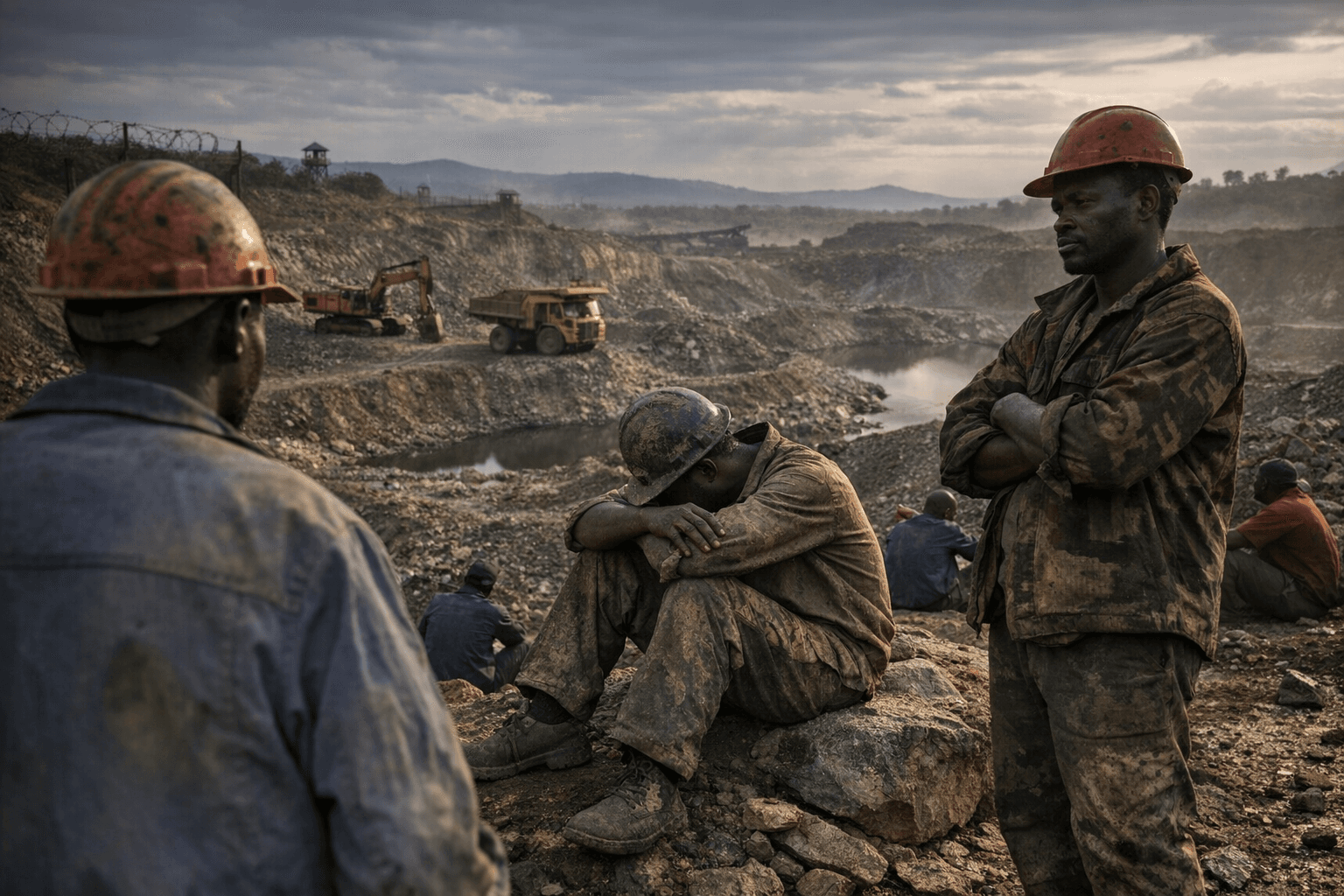
The machines at Marange have gone quiet. Anjin Investments, one of Zimbabwe's last remaining private diamond miners, placed its Chiadzwa operation under care and maintenance in March 2026, suspending production as a prolonged collapse in global rough diamond prices made extraction financially untenable.
Anjin is a joint venture between China's Anhui Foreign Economic Construction Company and the Zimbabwean military's investment arm, Matt Bronze. The decision to halt operations came as the company found itself caught in a deepening financial crisis that had already devastated its workforce. Anjin owed employees seven months' worth of unpaid salaries by the time the shutdown was formalized, a detail that crystallizes just how severe the strain had become.
Workers at the site described conditions that had grown desperate. "We have gone for seven months without salaries. Our efforts to engage management have produced nothing. Management attributes its failure to settle salaries to falling prices," one source said. Some employees had been dismissed after raising concerns over unpaid wages, a pattern that drew further scrutiny to conditions at the field.
The price environment driving the shutdown is stark. Global diamond prices collapsed from US$3,400 per carat in 2020 to a mere $900 in 2024, a 74% decline. Zimbabwe's Marange stones, which already trade below the global average, felt that compression acutely. The per-carat export value of Zimbabwean diamonds stood at just $53.18 in 2023, down from $90.29 per carat in 2021 — a figure that was already well below the broader market. The precious mineral is succumbing to high tariffs from the United States and the emergence of lab-grown diamonds.
The state-owned Zimbabwe Consolidated Diamond Company, which operates alongside Anjin at Marange, has faced parallel difficulties. ZCDC's management responded to the slump by withholding diamond parcels from the international market to avoid selling at a loss — but this strategy deprived the company of critical revenue needed to meet operational and salary obligations, leading to retrenchments. The Zimbabwe Diamond and Allied Minerals Workers Union condemned the layoffs as "unfair and procedurally flawed" and petitioned Mines and Mining Development minister Winston Chitando to intervene.
Erratic power supplies have compounded the crisis, further disrupting operations across the diamond-mining sector. For Anjin specifically, the care and maintenance status is not without precedent. The current turmoil marks yet another chapter of difficulty for the company. In 2016, the government suspended operations of all seven firms mining in the area, before Anjin was eventually readmitted under Zimbabwe's new political administration. Anjin began its current phase of operations at Marange on 1 March 2019, subsequently taking over the highly profitable "Portal B" block from ZCDC.
The shutdown raises pointed questions about provenance and accountability that have long shadowed Zimbabwe's diamond sector. Diamonds from Zimbabwe carry Kimberley Process certification, which means they are supposed to be traceable — but critical questions about accountability and transparency in the country's diamond-mining sector have resurfaced in recent months. For buyers and jewelers who care where a stone has been, the silence now coming from Chiadzwa is itself a kind of answer: when prices fall this far, this fast, the supply chain does not wind down gracefully. It simply stops.
Know something we missed? Have a correction or additional information?
Submit a Tip