Comparing Lab-Grown and Natural Diamonds on Price, Value, and Certification
Lab-grown diamonds now cost up to 95% less than natural stones, but they can lose nearly 80% of their resale value. Here's how to decide which trade-off fits your life.
Before you spend a single dollar on a diamond, there is a question the industry rarely poses clearly: are you buying a stone or buying a story? The answer shapes everything from your budget to what happens decades from now, whether you're passing the ring to the next generation or trying to sell it back to a jeweler.
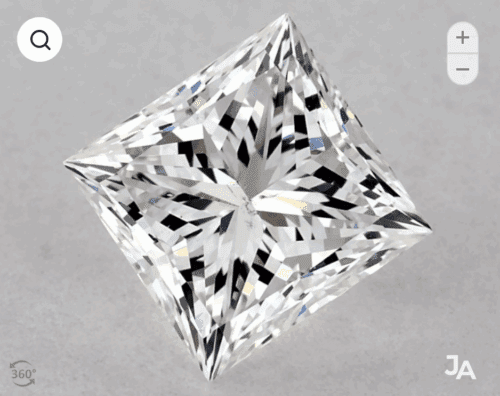
The chemistry won't help you decide. Lab-grown diamonds are physically, chemically, and optically identical to natural diamonds. Both score a perfect 10 on the Mohs hardness scale. Both are pure crystalline carbon. A trained gemologist cannot tell them apart with the naked eye, and only specialized laboratory equipment can detect the subtle growth markers that distinguish one origin from the other. Where the two diverge is in market economics, long-term value trajectory, and the story you tell yourself about the object on your finger. Understanding all three will keep you from paying for something you didn't consciously choose.
How lab-grown diamonds are made
Lab-grown diamonds are created through one of two methods. High-Pressure High Temperature (HPHT) replicates the geological conditions of Earth's mantle, using extreme pressures of around 5 to 6 gigapascals and intense heat to transform carbon into diamond in a matter of days. Chemical Vapor Deposition (CVD) grows diamonds layer by layer inside plasma chambers at approximately 2,000°C over two to six weeks, producing stones that tend to have fewer metallic inclusions and cleaner colorless grades. Neither method creates a simulant. Both produce real diamond. The distinction between a lab-grown diamond and a cubic zirconia or moissanite is categorical, not cosmetic.
The price gap and what drives it
As of 2025, quality lab-grown diamonds sell for around $1,000 per carat, compared to approximately $4,200 per carat for a comparable natural stone, according to an analysis by Diamonds.pro. By 2024, lab-grown diamonds had become roughly 90% cheaper than natural equivalents of equivalent quality. The trajectory continues downward: in 2026, prices are projected to fall another 20 to 30% as CVD factory output from India and China increases further.
That gap unlocks a genuine lifestyle decision. The same budget that buys a 0.5-carat natural center stone can buy a 2-carat lab-grown one. If you want maximum visual impact per dollar, the arithmetic is unambiguous. If you want something whose value is partly rooted in geological scarcity, a stone that took a billion years to form, then the premium on natural is the point, not the problem.
A decision tree: matching the diamond to your life
This is where the conversation needs to get personal. Four axes determine which category fits you.
Size vs. rarity: For buyers who want the largest, most visually impressive stone within a set budget, lab-grown is the clear answer. For buyers who want finite supply and geological provenance to be part of what they're wearing, natural is the category. Neither priority is wrong; they are simply different.
Daily wear vs. occasion: Both lab-grown and natural diamonds are equally hard and equally durable for everyday wear. Durability is not a differentiating factor. What matters is replacement cost: a lost or damaged lab-grown stone costs significantly less to replace. For a piece you plan to archive after a single significant moment, that equation shifts.
Heirloom intent: If you intend to pass a piece to the next generation as a store of value, the resale trajectory of natural diamonds is substantially more stable. Lab-grown diamonds behave more like consumer electronics than hard assets. They depreciate quickly and heavily as production scales.
Upgrade plans: Many lab-grown retailers offer trade-up programs allowing you to exchange your stone for a larger one as your budget grows. If you're planning to upgrade within five to ten years, buying lab-grown now and trading up later is financially coherent, but only if the retailer's upgrade terms are spelled out in writing before you buy.
The resale reality
Natural diamonds typically resell for between 20% and 60% of their original retail price. That's not a spectacular return, but there is a functioning secondary market through estate jewelers, auction houses, and private buyers. Lab-grown diamonds face a steeper picture. A stone that retailed for $4,000 a few years ago may now fetch $1,500 to $2,000 on the secondary market, a direct reflection of how sharply production costs have dropped. The honest framing: lab-grown diamonds are closer to a premium purchase than a financial instrument. Buy one for its beauty and its ethics. Don't buy it expecting appreciation.
The market has already registered this shift. Lab-grown stones accounted for just 1% of diamond sales in 2015. By 2024, they represented roughly 20% of total sales, and for center stones specifically, 52% of engagement ring centers were lab-grown in 2024, up from just 12% in 2019. That is a remarkable redistribution in under a decade, driven almost entirely by price.
Certification: what the grading report actually tells you
Every diamond worth purchasing should come with a grading report from an independent gemological laboratory. Two institutions dominate: the Gemological Institute of America (GIA) and the International Gemological Institute (IGI).
GIA is the industry's most respected authority. Its grading is strict, its reports are accepted by virtually every jeweler and estate buyer worldwide, and its certificates for lab-grown diamonds clearly state "laboratory-grown." For natural diamonds, GIA remains the gold standard. A GIA-certified diamond commands a 5 to 15% price premium over comparable stones certified by other labs, a premium that reflects global market confidence in the grade.
IGI, established in 1975, was among the first institutions to specialize in lab-grown diamond certification. Its reports are detailed, include inclusion diagrams, and are the dominant standard for lab-grown retail. IGI-certified diamonds are typically 12% cheaper than GIA-certified stones of equivalent stated grade, reflecting slight differences in grading approach and market perception. For lab-grown diamonds, IGI certification is widely trusted and routinely used by major online retailers. A third option worth knowing: GCAL (Gemological Certification and Assurance Lab) issues reports backed by a money-back accuracy guarantee, a feature no other lab offers.
One cautionary case illustrates why verification matters: IGI gemologists once documented a 6.18-carat lab-grown diamond being sold with a GIA natural diamond grading report, one of the largest documented cases of misrepresentation of this kind. The paper can be falsified. The stone cannot be read without equipment.
Sales-floor translation: what those phrases actually mean
Certain phrases surface reliably in jewelry stores. Here is what to verify before accepting them at face value.
- "Same as natural": Chemically accurate, but referring only to physical composition. It says nothing about resale trajectory, rarity, or market value. Ask which specific characteristic the salesperson means.
- "Certified": Meaningless without a named laboratory. Ask to see the actual certificate. Verify the report number directly on the issuing lab's online verification portal, not through the retailer's website. Acceptable issuers are GIA, IGI, and GCAL. In-house retailer grading is not independent certification.
- "Investment": Natural diamonds do not guarantee appreciation. Lab-grown diamonds, in the current production environment, almost certainly depreciate. This word is a sales framing device, not a financial promise.
- "IGI-certified" for a natural diamond: IGI is the standard for lab-grown stones, but GIA is more widely expected for natural diamonds. An IGI report on a natural stone isn't automatically suspicious, but it warrants closer scrutiny of the grading details.
- "Laser-inscribed": Every credibly certified diamond has its report number laser-engraved on its girdle. Ask to view the stone under a loupe and confirm the engraved number matches the report. If the inscription is absent or doesn't match, pause the transaction.
What to confirm on the certificate and receipt
Before any payment changes hands, check the following:
- The report number on the physical certificate matches the laser inscription on the diamond's girdle exactly.
- The origin is explicitly stated: "natural" or "laboratory-grown." No GIA or IGI certificate leaves this ambiguous; if yours is vague, that is a problem.
- The 4Cs (cut, color, clarity, carat weight) match what you were told verbally.
- The receipt itemizes the stone separately from the setting, listing its carat weight, shape, and grades. This matters for insurance, resale, and any future dispute.
The rise of lab-grown diamonds has given buyers real choices that didn't exist a decade ago. The decision is no longer simply about budget. It is about what you want a diamond to represent: a record of geological time, an ethical statement, a maximum-size showcase, or a piece built to outlast you. Each is a legitimate priority. The certificate and the receipt just need to confirm that the stone on the table matches the choice you actually made.
This article was produced by Prism’s automated news system from verified source data, official records, and press releases, then run through automated quality and moderation checks before publishing. The system is built and supervised by the people who set the standards it runs under. Read our full AI policy.
Did this article answer your question?