Diavik Diamond Mine to Halt Ore Production Permanently Next Week
Diavik's 23-year run yielding 150 million carats ends March 24, when Rio Tinto permanently halts ore extraction just below the Arctic Circle.
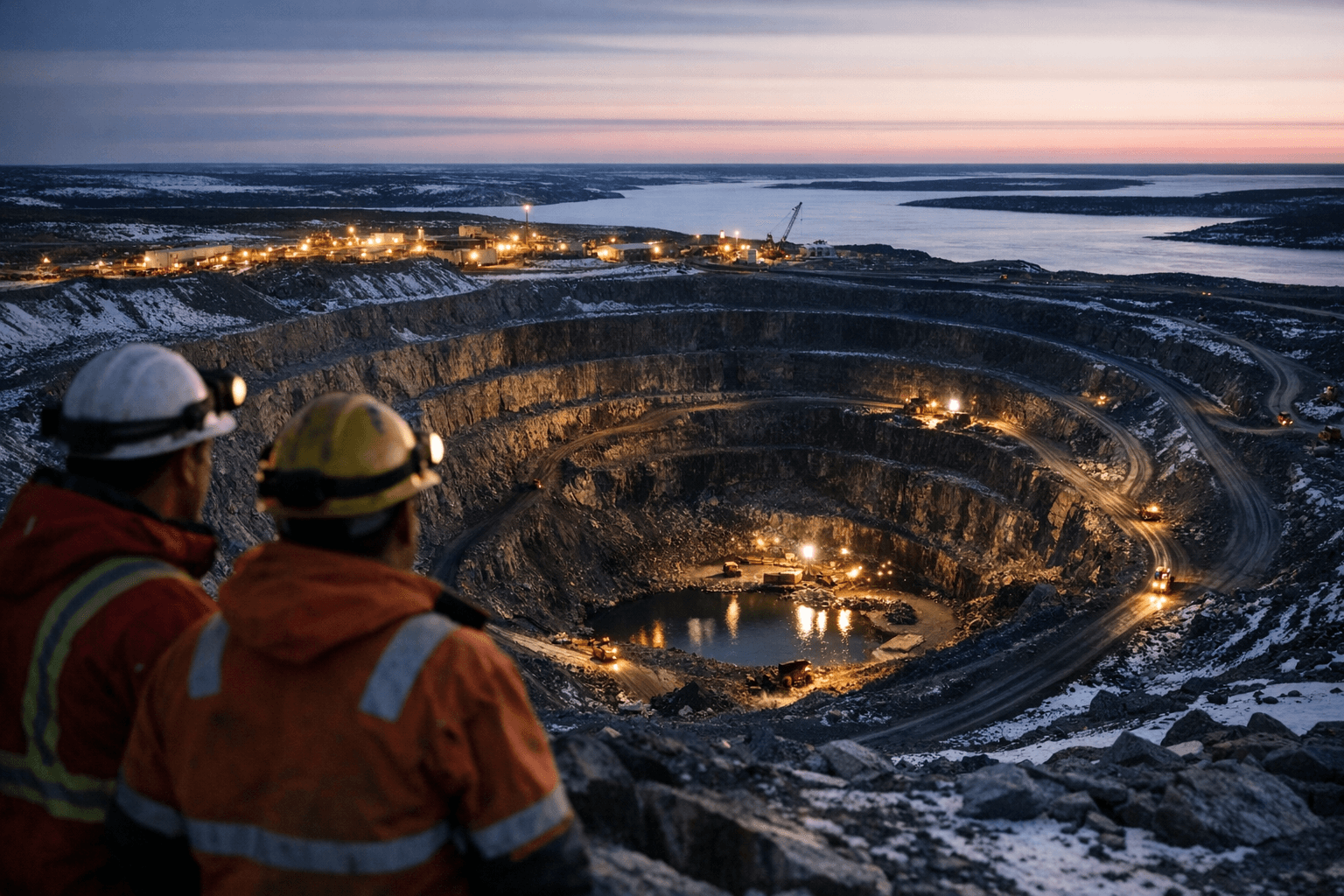
After 23 years and more than 150 million carats of diamonds pulled from the sub-Arctic permafrost, Rio Tinto's Diavik mine will extract its final ore on March 24. The company confirmed the date on March 17, ending months of anticipation around exactly when operations at one of the Northwest Territories' most consequential mines would formally cease.
"After the mined ore is processed by the end of March, Diavik will have successfully completed its planned operations, ending 23 years and more than 150 million carats of diamond production," the company stated. "The mine will then move into decommissioning and its active closure phase."
The mine sits on East Island, a 20-square-kilometer outcrop in Lac de Gras, 300 kilometers northeast of Yellowknife and just below the Arctic Circle. What began as open-pit operations in 2003 was progressively converted underground; production from the new underground workings began on March 25, 2010, and the mine completed its full conversion by September 2012. Three diamond-bearing kimberlite pipes, designated A154 South, A154 North, and A418, formed the heart of the deposit, which carried ore graded at 2.9 carats per ton as of March 2015. A fourth pipe, A21, received a $350 million development approval from Rio Tinto in November 2014.
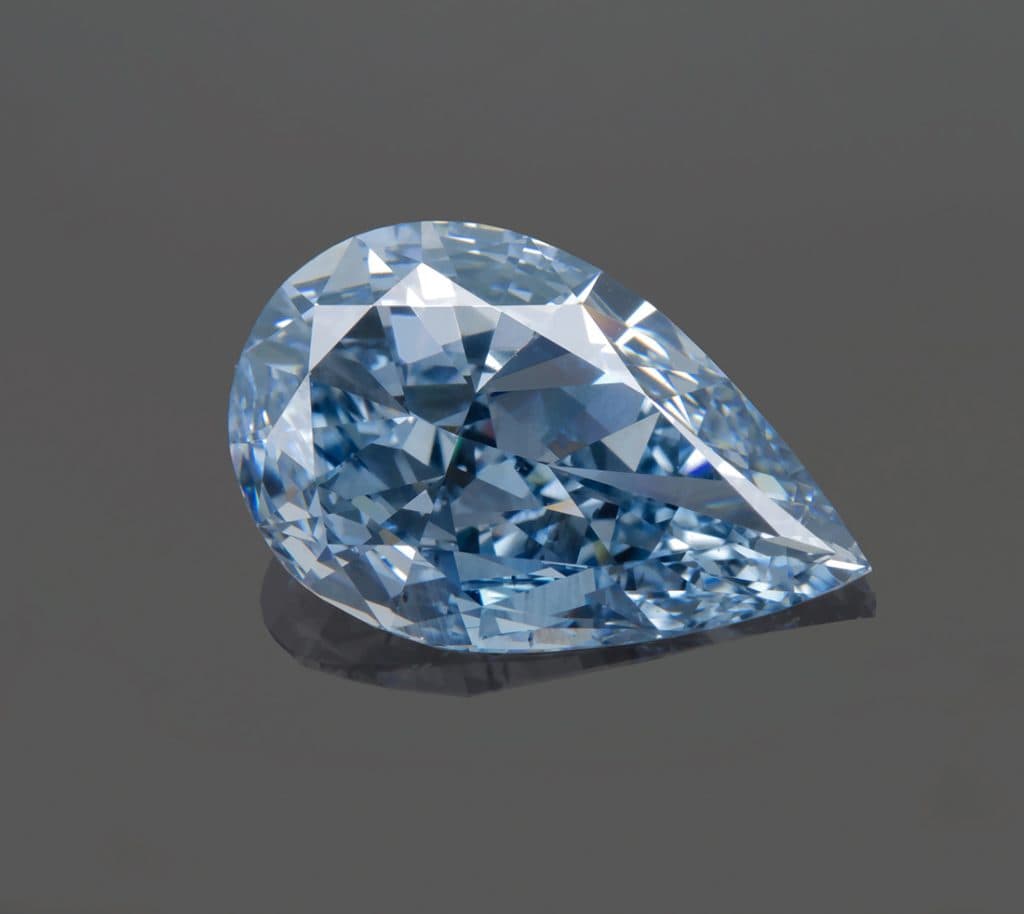
The mine's most celebrated single discovery came in December 2015, when workers recovered the Diavik Foxfire: a 187.7-carat gem-quality rough diamond that stands as one of the most significant Canadian stones on record. Recovered diamonds were sorted using X-ray illumination and photoelectric sensors that triggered air blasts to separate stones from the conveyor belt into collection receptacles, before preliminary evaluation and cleaning at Diavik's product splitting facility in Yellowknife. A permanent containment area at the center of East Island stores the remaining waste minerals from the operation's full run.
The mine is jointly owned by Diavik Diamond Mines, a Rio Tinto subsidiary, and Dominion Diamond Corporation. The closure comes as the broader diamond economy of the Northwest Territories contracts sharply. The region had reinvented itself through diamonds after its gold reserves depleted around the turn of the century, briefly becoming the world's third-largest exporter of the stones. That transformation built an economy deeply reliant on Indigenous skilled labor.
The human cost of the closure is sharpest in communities tied to the Tlicho region. Monfwi MLA Jane Weyallon Armstrong raised her concerns directly in the legislative assembly, warning that those communities will be particularly hard hit. Chief Fred Sangris, who leads the Yellowknife Ndilo community of the Dene First Nation, framed the uncertainty in direct terms: "It's kind of a scary situation. Where do we go from here? What's the next project? If we don't align ourselves with the government and come up with another big project, then this work force might be sitting idle, and it's not going to be good for the communities."
George Betsina, 55, a Dene First Nation member who put up prospecting stakes near the site in 1992 and was among the Indigenous men who moved from the dying gold mines into diamond work, represents a generation whose working lives were shaped almost entirely by Diavik. What replaces that economic anchor in the Northwest Territories remains, for now, an open question.
Know something we missed? Have a correction or additional information?
Submit a Tip