Drop Earrings Return, Diamonds and Red-Carpet Style Lead the Revival
From 1770 Rococo drawings to Chase Infiniti’s BAFTA look, diamond drop earrings are back, with leaner, hand-set silhouettes reading chic, not theatrical.
Why dramatic drops feel relevant again
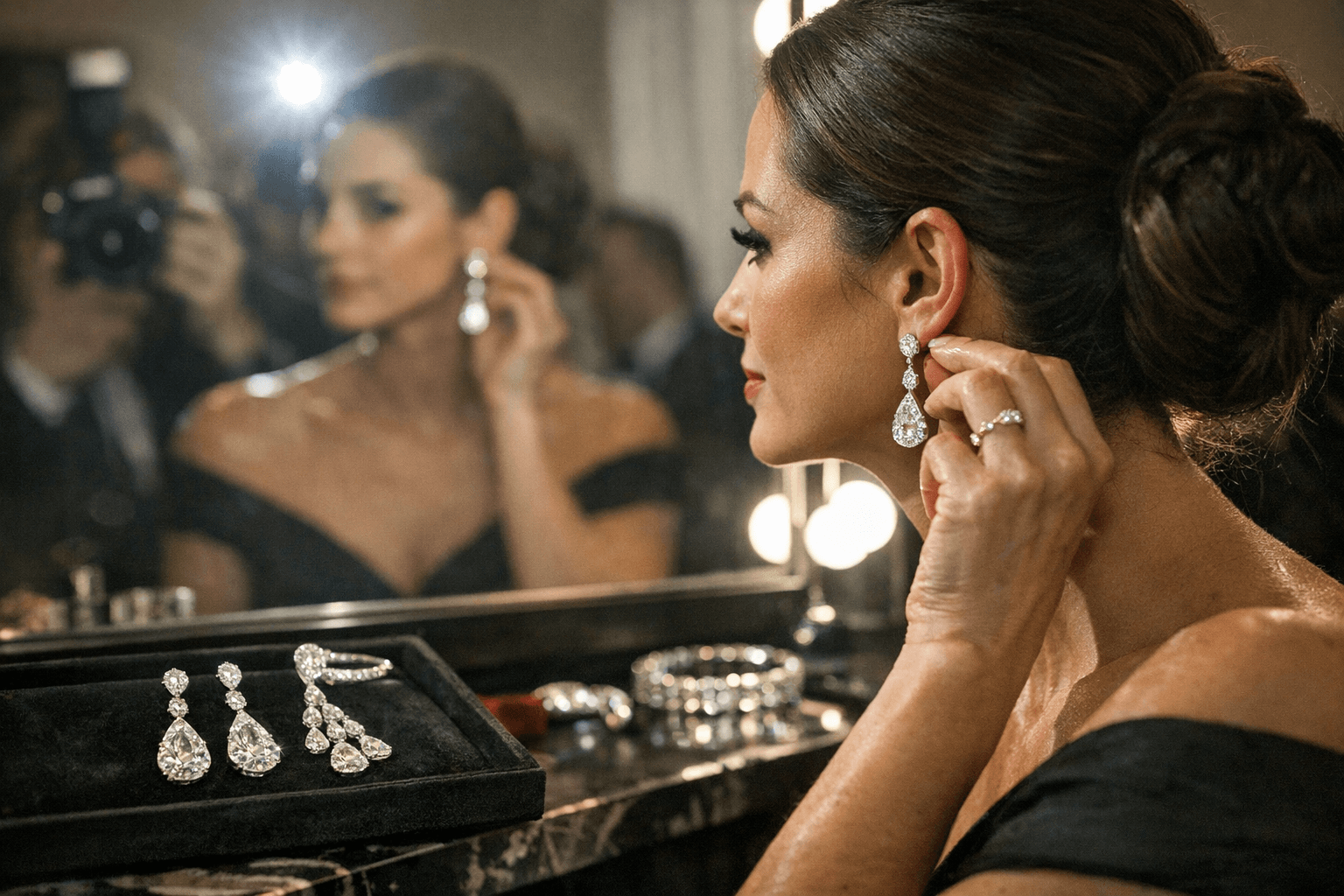
Drop earrings have returned with a very specific energy: dramatic, but not fussy. Vogue Singapore frames them as a spring accessory with real range, moving from antique girandoles to modern chandelier silhouettes, and the strongest examples now lean on diamond clarity, clean articulation and a shape that moves with the wearer instead of fighting her.
The red-carpet case is hard to ignore. Chase Infiniti wore De Beers’s Arpeggia Five Line high-jewellery earrings in rose gold at the 2026 BAFTAs, and the look does what the best statement earrings should do, it gives the face a vertical line and lets the diamonds do the talking. When a piece reads this crisp under camera lights, it stops looking like costume and starts looking like styling.
The diamond version that feels current
What makes a diamond drop earring feel modern is restraint inside the drama. De Beers describes the Arpeggia Five Line design as five lines of round brilliant diamonds suspended from a cluster of four diamonds at the ear, set in 18K rose or white gold. That structure matters because it creates movement without clutter, with each graduated row reading as a deliberate cascade rather than a dense mass of sparkle.
The material story matters too. De Beers says the diamonds are ethically sourced, selected by eye and hand-set. That language is important in a category where visual impact can easily mask weak construction, because hand-setting tends to produce a more refined, flexible finish, while a clustered ear fitting keeps the earring anchored and elegant instead of swinging wildly. If the goal is current, not theatrical, this is the kind of engineering to look for.
What separates a modern diamond drop from a chandelier that feels costume-like
The line between chic and overdone is mostly in the silhouette. A contemporary diamond drop usually favors one clear idea, such as a vertical chain of stones, a graduated line, or a narrow fan that falls away from the ear in an orderly way. A chandelier earring, by contrast, often adds width, multiple tiers and extra branches of movement, which can be striking on the runway but less controlled in everyday light.
Several details keep the look sharp rather than ornate:
- Round brilliant stones give the drop a bright, clean flash that feels polished rather than baroque.
- 18K rose or white gold keeps the setting precious but visually controlled, especially beside a full diamond line.
- A cluster at the ear creates a neat point of attachment, so the earring reads as one architectural object instead of separate dangling parts.
- Graduated rows, like De Beers’s five-line construction, add rhythm and movement without visual noise.
If you want the earring to feel wearable beyond black-tie, look for a silhouette that is long rather than wide, with enough space between the elements for light to pass through. The more air around the stones, the less costume-like the result.
The antique language behind the comeback
The modern revival has deep roots. The Metropolitan Museum of Art dates one girandole design drawing to 1770 and connects the style to Rococo taste in France and Europe during the reign of Louis XVI. Another Met design page shows a girandole earring decorated with flowers, ribbons and tassels, which is a reminder that the form has always lived somewhere between ornament and spectacle.
Antique Jewelry University defines a girandole as an earring with three dangling pear-shaped ornaments suspended from a central bow motif, and says the style was popular for about a hundred years, spanning part of the 17th century into the 18th century. That long run explains why the silhouette still feels familiar now, even when the materials shift from paste or colored stones to diamonds.
Authentic early examples are rare. Antique-jewelry specialist Elizabeth Doyle, quoted by Rapaport, notes that true 18th-century girandole earrings are increasingly hard to find, in part because many were dismantled or converted when the style fell out of favor. That scarcity gives today’s revival extra force: what looks new on a red carpet is often a revived language of old European jewelry.
Where the drop earring started before the diamond age
The story goes back even further than Rococo France. The Met says Roman women wore pearl-and-gold earrings known as crotalia, named for the jingling sound they made, and examples have been found at Pompeii and Herculaneum. That detail matters because it shows the appeal of the drop earring is not just decorative, it is kinetic. Jewelry that moves, catches light and frames the face has been desirable for centuries.
That classical precedent also helps explain why pearls and diamonds continue to work so well in drops. Both stones catch light differently, and both reward movement. A well-cut diamond drop feels modern because it throws flashes of light with every turn of the head, while still carrying the gravity of a historical form.
How to choose the right diamond drop for your face and occasion
Face shape changes the effect more than many buyers realize. A long, narrow diamond drop can lengthen a round face beautifully, while a design with a broader lower spread can balance a longer face. If your features are angular, a softer cascade with rounded brilliants and a gentle curve can add movement without hard edges.
For evening wear, choose a more pronounced drop with visible articulation, the kind that reads well across a room and in photographs. For day-to-night dressing, a cleaner line with fewer tiers feels less formal and more versatile, especially in white gold or rose gold. The best pieces should look considered from a distance and precise up close.
If you are weighing antique-inspired against overtly contemporary, use this rule: the more the earring resembles a disciplined cascade, the more current it feels. If it leans into bows, tassels and multiple dangling elements, it moves closer to historic quotation. Neither is wrong, but the diamond versions that feel most now are the ones that understand restraint.
The revival of drop earrings is not a passing mood. It is a return to a silhouette that has survived from Roman pearl earrings to Rococo girandoles and, now, to red-carpet diamond architecture, where the strongest pieces look less like decoration and more like light, shaped with intention.
This article was produced by Prism’s automated news system from verified source data, official records, and press releases, then run through automated quality and moderation checks before publishing. The system is built and supervised by the people who set the standards it runs under. Read our full AI policy.
Did this article answer your question?