Forbes Vetted picks Blue Nile and Brilliant Earth for diamond jewelry buyers
Blue Nile and Brilliant Earth stand out for diamond buyers because trust now matters as much as brilliance, with everyday options like Mejuri and Quince filling a different lane.

The smartest diamond purchase begins before the first stone is chosen. Forbes Vetted’s 2026 jewelry guides make that plain by separating heritage diamond houses from newer value players and by treating trust, variety, price, and service as part of the buy, not afterthoughts.
How Forbes Vetted draws the map
The June 12, 2026 jewelry guide names Mejuri as the top overall online jewelry pick, Quince for affordable online jewelry, and Blue Nile for special occasions, while also pointing readers toward Vrai and other everyday fine jewelry brands. A separate February 20, 2026 diamonds guide gives Brilliant Earth the top overall spot for buying diamonds online. That split is useful because diamond jewelry is not an impulse purchase, and the best choice depends on whether you care most about selection, customization, ethical sourcing, or value.
This is the real frame for online diamond buying now: one retailer may excel at engagement rings, another at everyday pieces, and another at bringing a more accessible price point to the same category. The intelligent shopper compares more than carat weight. Certification standards, upgrade programs, return windows, and warranty terms can matter as much as the ring itself, especially when the purchase is made sight unseen.
Blue Nile and the case for breadth
Blue Nile remains the classic online diamond name because it was founded in 1999 and calls itself the original online jeweler. It offers a broad assortment of engagement and fine jewelry, along with free secure U.S. shipping, which still matters in a category where the buyer wants both selection and reassurance.
Scale also explains Blue Nile’s staying power. In August 2022, Signet Jewelers announced it would acquire Blue Nile for $360 million in cash and said Blue Nile generated more than $500 million in revenue in calendar year 2021. That kind of business footprint signals a retailer built for serious comparison shopping, especially for engagement rings, where buyers often want a large inventory and the confidence of an established name. Blue Nile makes the most sense for the shopper who wants breadth first and sentiment second, then uses the breadth to narrow toward a ring that feels tailored rather than generic.
Brilliant Earth and the appeal of modern trust
Brilliant Earth occupies a different emotional register. Founded in 2005, it positions itself as a global leader in ethically sourced fine jewelry, and its 2026 reporting says it operates 42 showrooms across the United States, has served customers in more than 50 countries, and reported $422 million in full-year net sales in 2024. It also says it has posted positive adjusted EBITDA every quarter since its initial public offering in 2021, a sign of a business that has turned a values-led pitch into a durable commercial model.
For diamond buyers, those details matter because ethical sourcing is only part of the equation. The brand’s physical footprint gives shoppers a place to inspect stones and settings in person, which can be decisive when comparing brilliance, color, and cut. Forbes Vetted’s affordable engagement ring guide notes that Brilliant Earth settings start at $750 and diamonds at $180, a pricing structure that makes it an especially useful benchmark for buyers who want to balance provenance, design, and budget without moving into the ultra-luxury tier.
Mejuri and the rise of everyday fine jewelry
Mejuri represents the shift from occasion-only jewelry to daily adornment. The brand says its mission is to make fine jewelry for every day, and its 14k collection is made with 94% recycled gold and 6% newly mined gold. That material mix speaks to a younger, more sustainability-minded customer who wants pieces sturdy enough for repeated wear but polished enough to live beside more formal jewelry.
Noura Sakkijha, Mejuri’s CEO and co-founder, has said the company was built differently because the old idea of men buying jewelry for women did not resonate with her. That philosophy shows in the jewelry itself: the focus is on self-purchase, layering, and pieces that behave like wardrobe staples rather than ceremonial objects. Mejuri is not the place you go when you want a classic diamond solitaire with a deep catalog of settings. It is the place you go when you want the language of fine jewelry to feel less formal and more intimate.
Quince and the value argument
Quince takes the most direct value position of the group. It says it was built to make high-quality essentials, including fine jewelry, attainable at prices within reach, and a 2025 industry story said its fine jewelry and diamond assortment was priced 40% to 60% below competitors. That makes Quince compelling for buyers who are less concerned with heritage branding and more focused on how far their money goes.
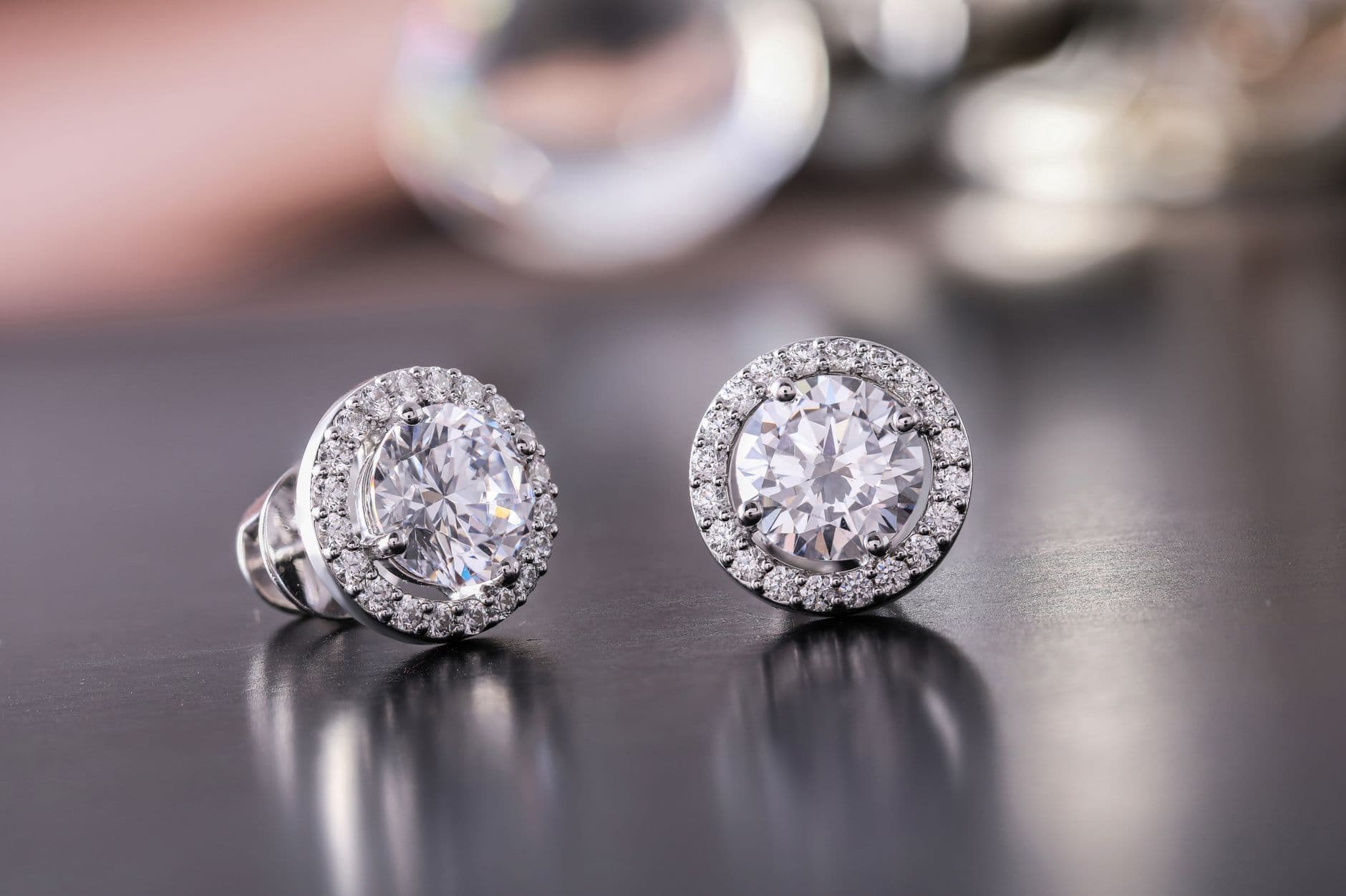
This is where the retailer’s identity matters. Quince is not trying to compete with Blue Nile on legacy or with Brilliant Earth on ethical diamond storytelling. It is speaking to the shopper who wants a lower entry price and is comfortable with a direct-to-consumer model that strips away some of the traditional retail theater. For everyday diamond studs, slim bands, or simple gold-and-diamond pieces, that can be exactly the point.
How to compare the trust details that matter most
The prettiest grid of stones means little if the post-purchase experience is weak. Certification should be first on the checklist: a credible grading report tells you what you are actually buying, and a retailer should be transparent about who graded the diamond and what standards were used. Upgrade programs matter next, especially for buyers who may begin with a smaller stone and later move to a larger one or a finer setting.
Return policies are equally important because online diamond shopping removes the tactile test. A ring can look ideal in a product photo and still feel wrong on the hand, or a setting can sit higher or lower than expected once worn. Warranty terms deserve close reading too, since prongs, clasps, and stone security are the parts that age under real use. A serious diamond retailer should make after-sale care feel like part of the purchase, not an exception to it.
The new diamond market is really three markets
What makes this guide valuable is not that it crowns a single winner. It shows that diamond jewelry now lives in distinct lanes: Blue Nile for heritage and selection, Brilliant Earth for ethically minded diamond buying, Mejuri for everyday fine jewelry, and Quince for stripped-down value. Each brand answers a different buyer’s brief, and the best one is the retailer whose standards, price, and after-sale protections match the way you intend to wear the piece.
This article was produced by Prism’s automated news system from verified source data, official records, and press releases, then run through automated quality and moderation checks before publishing. The system is built and supervised by the people who set the standards it runs under. Read our full AI policy.
Know something we missed? Have a correction or additional information?
Submit a Tip