GIA jewelry report clarifies diamond details for finished pieces
GIA’s Jewelry Report fills the paperwork gap for mounted diamond pieces, giving buyers stone counts, weight ranges, metal testing and photo documentation without unsetting the jewels.
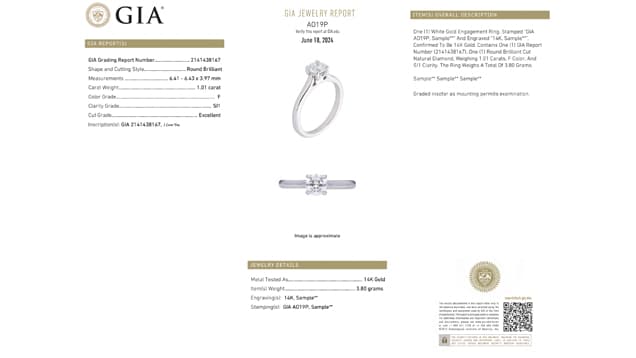
GIA launched the Jewelry Report as a pilot in June 2024 for finished pieces such as diamond tennis necklaces, heirloom rings, and vintage brooches. It documents finished pieces with mounted natural D-to-Z diamonds, giving buyers a clearer read on what is actually in the setting before they insure it, inherit it, or buy it pre-owned.
What the Jewelry Report covers
The service is aimed at mounted jewelry items that contain only natural D-to-Z diamonds. The central point is practical: grading is performed only to the extent the mounting permits, so the report reflects the piece as it exists, not a fantasy version dismantled for laboratory grading.
The report can include a comprehensive description of the submitted piece, metal verification, and ranges for clarity, color, and estimated carat weight. It can list the number of stones and their shapes, which matters in multi-stone designs where the center line, the side stones, and the overall layout all affect value.
What appears on the page
The report can also include a photo of the jewelry, metal testing results, total item weight, markings, and an overall jewelry description.
A diamond bracelet may look substantial on the wrist, but the report’s estimated total carat weight and stone count make it easier to compare one piece against another without pretending every stone has been individually removed and graded.
If the diamonds in the piece already have GIA report numbers, those specific grades are carried over and linked to GIA’s Report Check for verification.
How it differs from a loose-diamond report
GIA’s loose diamond grading reports are for unmounted natural D-to-Z diamonds only, and standard reports include a full 4Cs assessment. Standard round brilliant diamonds also receive a cut grade.
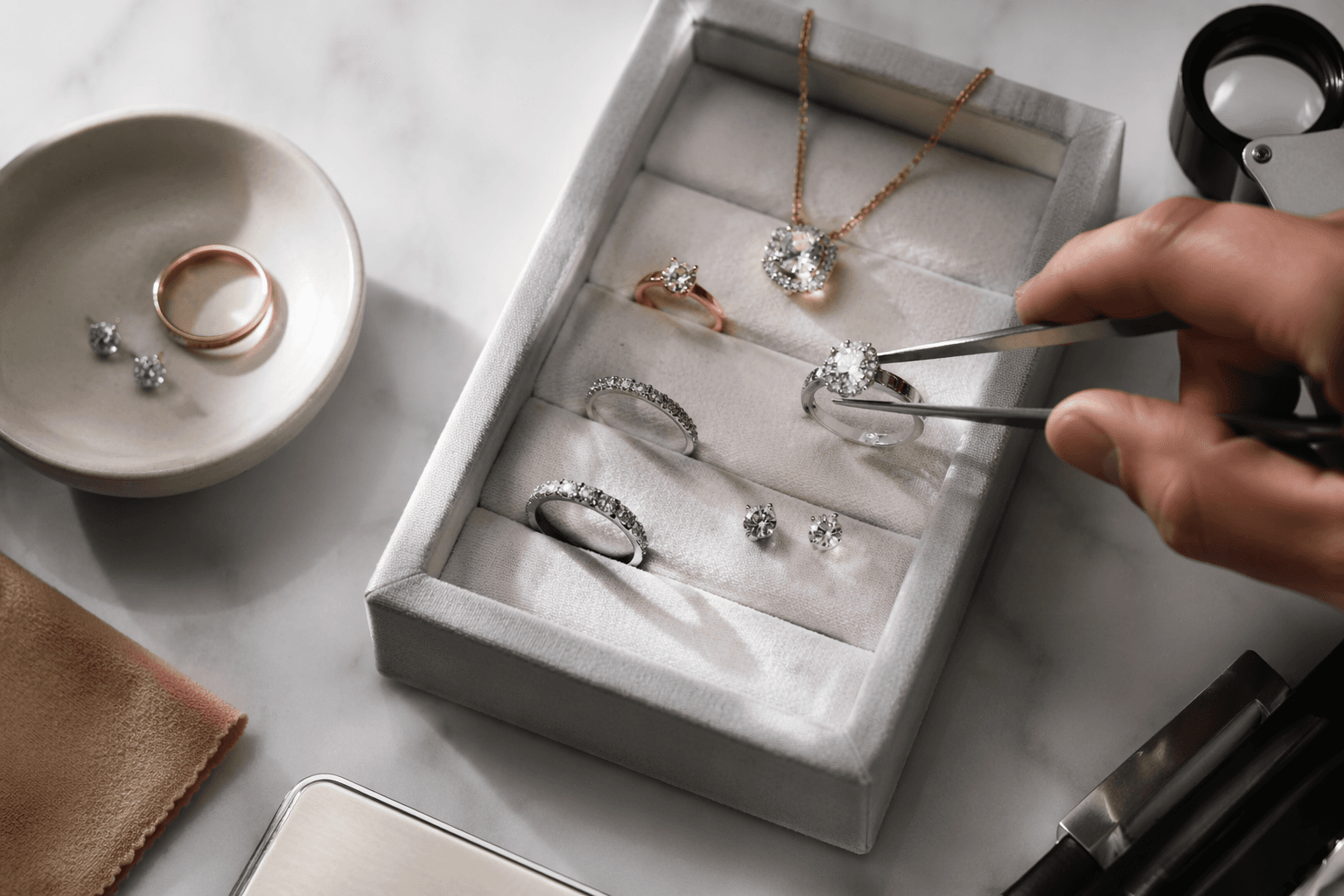
By contrast, the Jewelry Report is built for the finished object. It does not ask the grader to extract every stone from the setting, and it does not promise the same stone-by-stone treatment that a loose-diamond report delivers. Many mounted pieces cannot be fully disassembled, and many buyers do not want them disassembled just to answer basic questions about what they are buying.
If the jewel is still mounted and the question is about the whole piece, the Jewelry Report is the right tool. If the question is about an individual unmounted stone, especially a center diamond that will drive most of the value, a loose-stone GIA report remains the stronger document.
Where it helps most
The report is especially useful in estate jewelry, heirloom rings, diamond bracelets, vintage brooches, and other pieces where the setting matters as much as the stones. A collector evaluating a vintage diamond brooch can use the photo, markings, and total item weight to compare the piece with another example. An estate buyer can look at the color and clarity ranges, stone count, and shape mix without relying only on a seller description.
It also helps with insurance inventory and resale. A finished piece with documented metal testing, a unique report number, and linked stone grades is easier to inventory, easier to describe to an insurer, and easier to place in a secondary-market conversation than a jewel that has only a store receipt and a generic carat claim.
Tom Moses, GIA’s executive vice president and chief laboratory officer, framed the service as part of the laboratory’s broader commitment to consumer confidence and trust in jewelry.
Why the details matter when you are buying finished jewelry
Mounted diamond jewelry often asks a buyer to trust the whole package, even when the diamonds cannot be examined stone by stone. The Jewelry Report gives that package a more exact identity by tying together the mounting, the markings, the total weight, the stone ranges, and, when available, pre-existing GIA grades.
The pilot also included optional add-ons such as a 360-degree video and new engravings, positioning the format for finished pieces rather than loose stones alone. Even without those extras, the core report turns a ring, bracelet, or brooch into a documented object that can be compared, insured, inherited, and resold with far less guesswork.
This article was produced by Prism’s automated news system from verified source data, official records, and press releases, then run through automated quality and moderation checks before publishing. The system is built and supervised by the people who set the standards it runs under. Read our full AI policy.
Did this article answer your question?