Historic diamond ring found by detectorist sells for $22,400 at Noonans
A late 16th- to early 17th-century ring with eight hogback diamonds brought £17,000 at Noonans after a detectorist recovered a missing stone from saved soil.
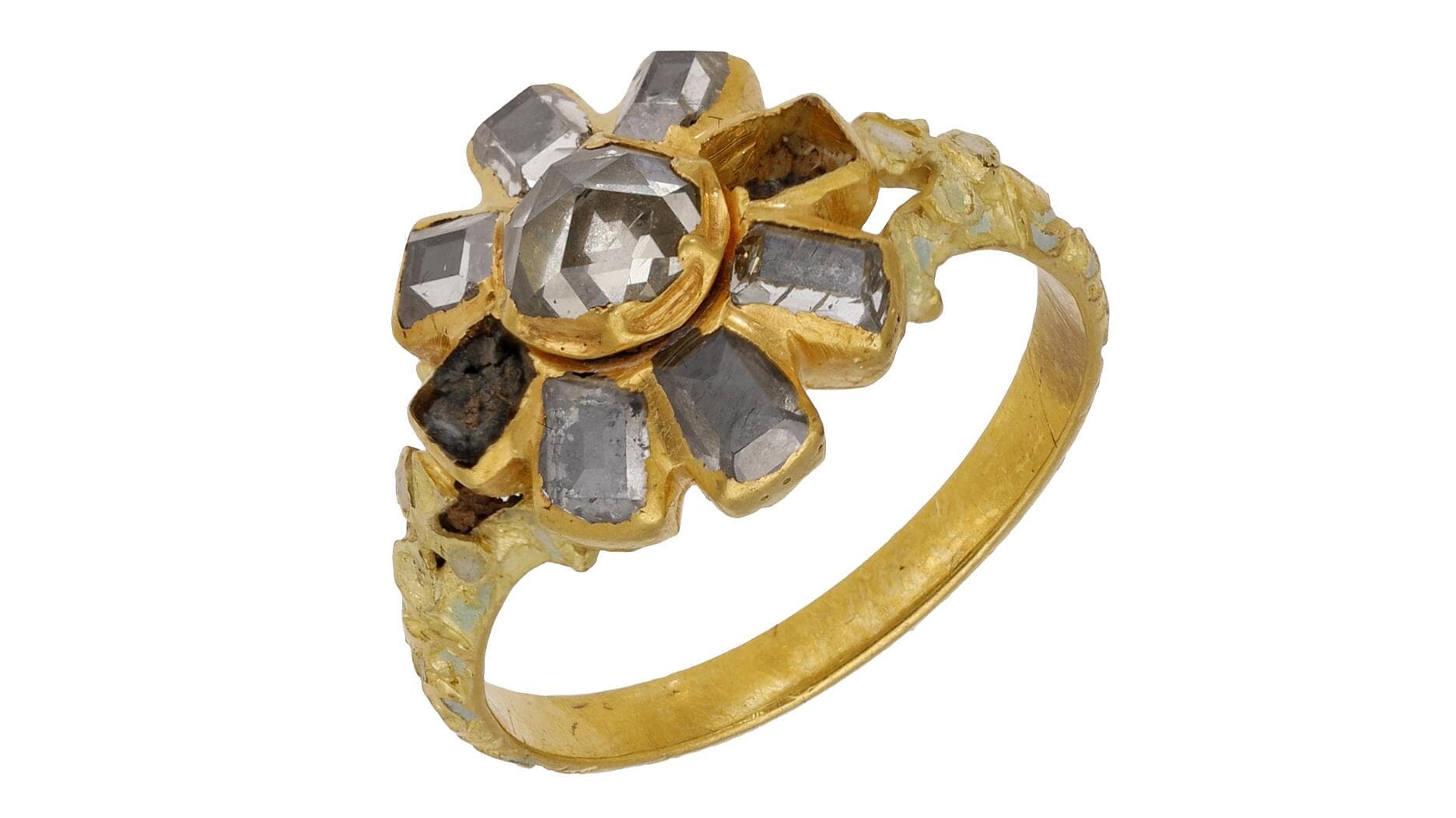
A late 16th- to early 17th-century diamond ring found by a metal detectorist in Gloucestershire sold for £17,000, about $22,400, at Noonans Mayfair, where its rarity and intact historical design pushed it well beyond a routine antique jewel. Offered as Lot 106 in the Jewellery, Silver & Objects of Vertu sale on June 23, 2026, the ring had been estimated at £15,000 to £20,000 and landed near the top of that range.
The piece, identified by Noonans as The Evesham Diamond Ring, was discovered in Wormington in November 2024 by Stuart Jones, a 42-year-old from Solihull who works as a welder-fabricator for Jaguar Land Rover. The ring was recorded on the Portable Antiquities Scheme database under ref. WMID-15FCDD and later disclaimed as Treasure under ref. 2025 T300. Two diamonds had come loose from their mounts, but Jones kept the soil from the findspot, and after washing and sieving it he recovered the missing stone.
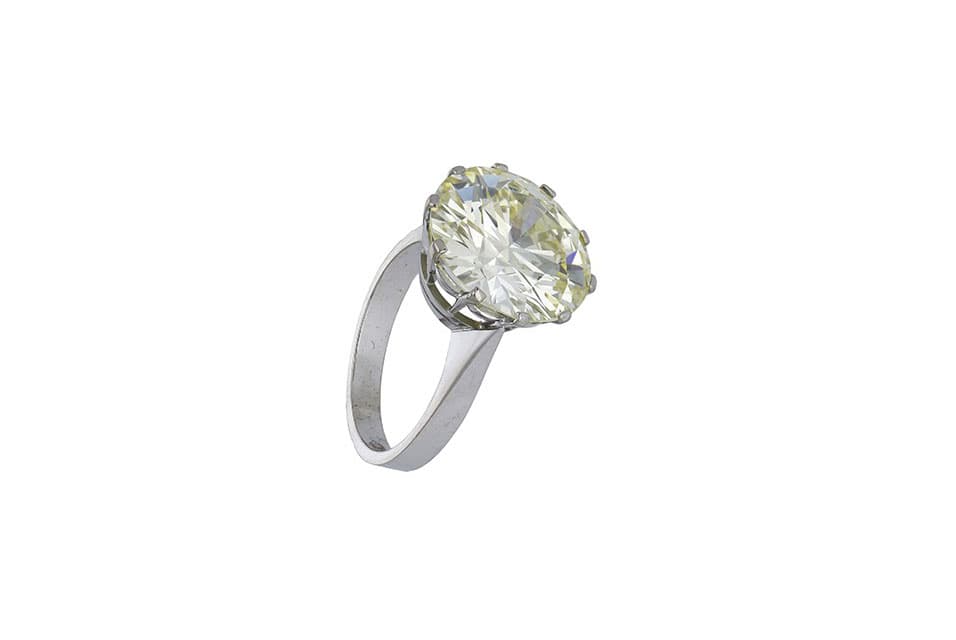
That detail matters as much as the price. Noonans described the bezel as a flowerhead cluster of eight hogback diamonds arranged around a central rose-cut diamond, a form that speaks to early diamond history rather than modern brilliance. The term hogback belongs to the language of historic cutting, associated with early decorative diamond forms discussed by Herbert Tillander and with the medieval table-cut tradition that preceded later faceting styles.
Frances Noble, Noonans’ head of jewellery, placed the ring firmly in the early 17th century, when diamond rings were moving away from simple solitaires and toward more elaborate clusters, including rosettes, pansies, crosses and fleur-de-lis. She said the ring likely belonged to someone of considerable wealth and status, possibly even royal. Noonans also pointed to nearby 16th-century manor houses, including Snowshill Manor and Wickhamford Manor, as the kind of elite circle such a jewel might once have inhabited.
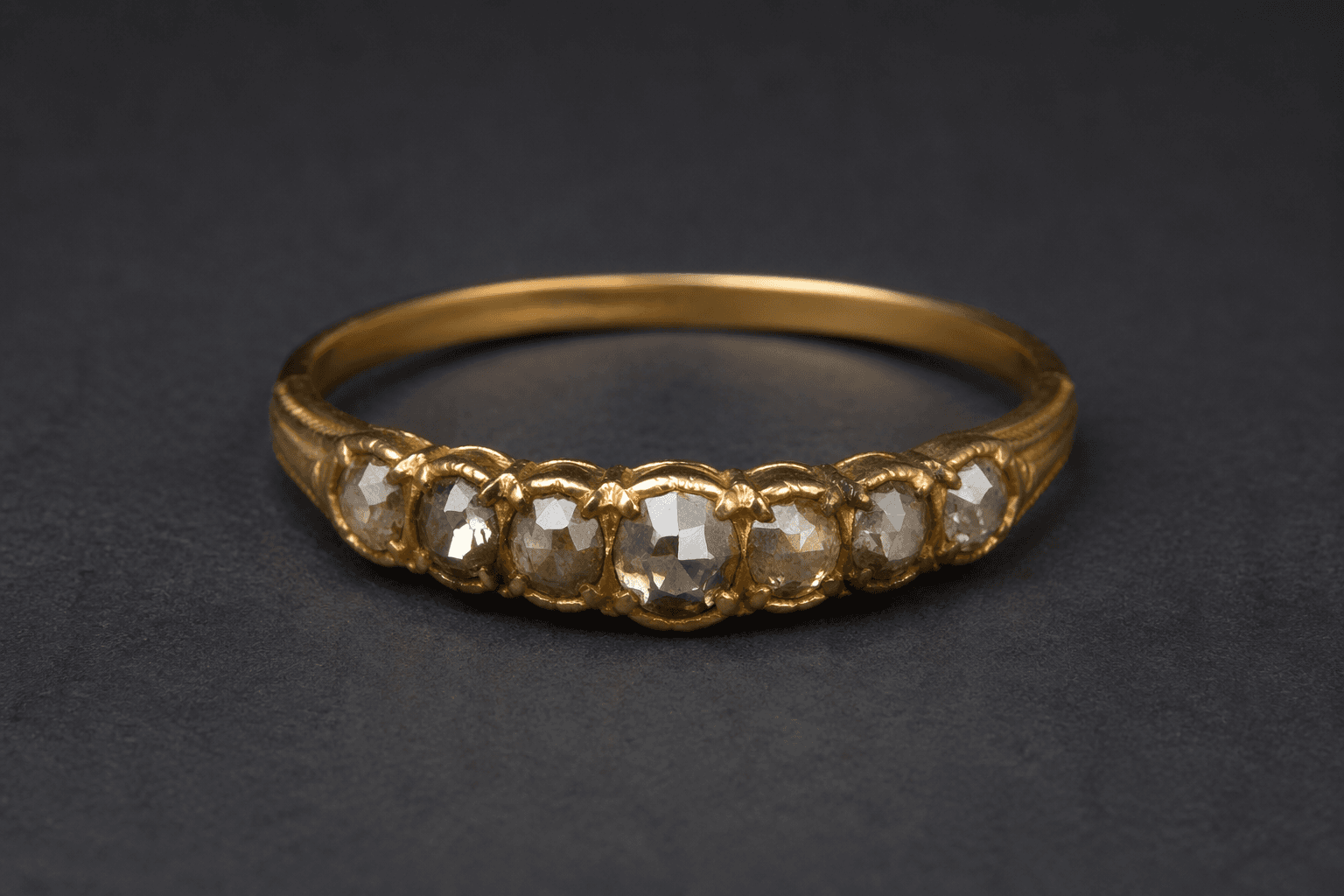
The auction result shows how strongly collectors now value antique diamond design when the craftsmanship survives alongside a documented history. A ring like this is not prized simply because it is old. It commands a premium because it preserves a specific moment in jewelry history, from its early baroque silhouette to the survival of a missing diamond recovered from the earth itself.
This article was produced by Prism’s automated news system from verified source data, official records, and press releases, then run through automated quality and moderation checks before publishing. The system is built and supervised by the people who set the standards it runs under. Read our full AI policy.
Know something we missed? Have a correction or additional information?
Submit a Tip