Natural diamonds keep premium as lab-grown prices slide in 2026 report
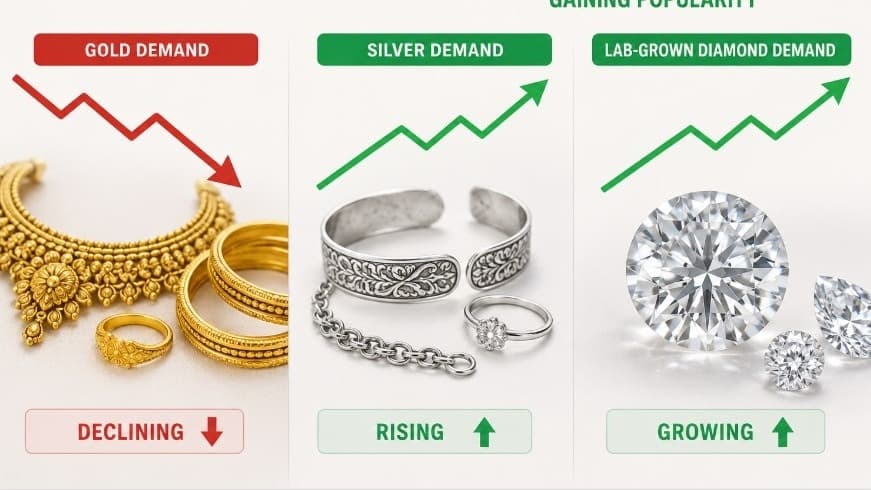
Natural diamonds still command the strongest premium, while lab-grown stones buy far more carat weight and keep sliding as 2026 pricing resets.
In CaratWire’s June 2026 pricing map, a 1-carat round brilliant natural diamond costs $5,500 to $9,500 per carat at retail, versus $390 to $780 per carat for an IGI lab-grown stone. A $5,500 budget still buys a respectable natural diamond, but the same money stretches far further in lab-grown, and the gap widens fast at $10,000 and $30,000. The premium is tightest in round brilliants and at the carat jumps that happen around 1.00, 1.50, and 2.00 carats, while oval, emerald, pear, and cushion cuts can run 15% to 30% less at the same spec.
What your budget really buys
On a simple per-carat basis, $5,500 sits right at the entry point of a 1-carat natural round brilliant, while the same outlay can cover roughly 7 to 14 carats of lab-grown stone at the quoted retail bands. At $10,000, the natural comparison stays in the 1-carat conversation, but the lab-grown side moves into a dramatically larger size range, about 13 to 26 carats on the same arithmetic. By $30,000, the split becomes impossible to ignore: natural still reads as a significant, carefully chosen jewel, while lab-grown pricing leaves room for about 38 to 77 carats of stone weight at the comparison bands.
In De Beers’ US consumer research, average natural diamond jewelry prices reached $4,063 per piece in 2025, up from $3,242 in 2023. The premium is showing up not just in loose stones but in finished jewelry too.
Why cut and shape can stretch the budget
Round brilliant remains the most expensive shape at a given set of color, clarity, and carat, and that is not just marketing polish. Prices per carat generally step up when weight crosses the magic numbers of 1.00, 1.50, and 2.00 carats, so a stone’s cost can jump simply because it lands on the wrong side of a threshold. That pricing psychology is why a well-cut stone just under a benchmark can feel like a smarter purchase than a larger one that has crossed it.
Fancy shapes are where value hunters can reclaim some ground. Oval, emerald, pear, and cushion diamonds typically run 15% to 30% cheaper than rounds at the same spec, which means you can buy visual spread without paying the round-brilliant premium. If your eye is drawn to finger coverage and clean lines more than the classic sparkle of a round, those shapes often deliver the best ratio of presence to price.
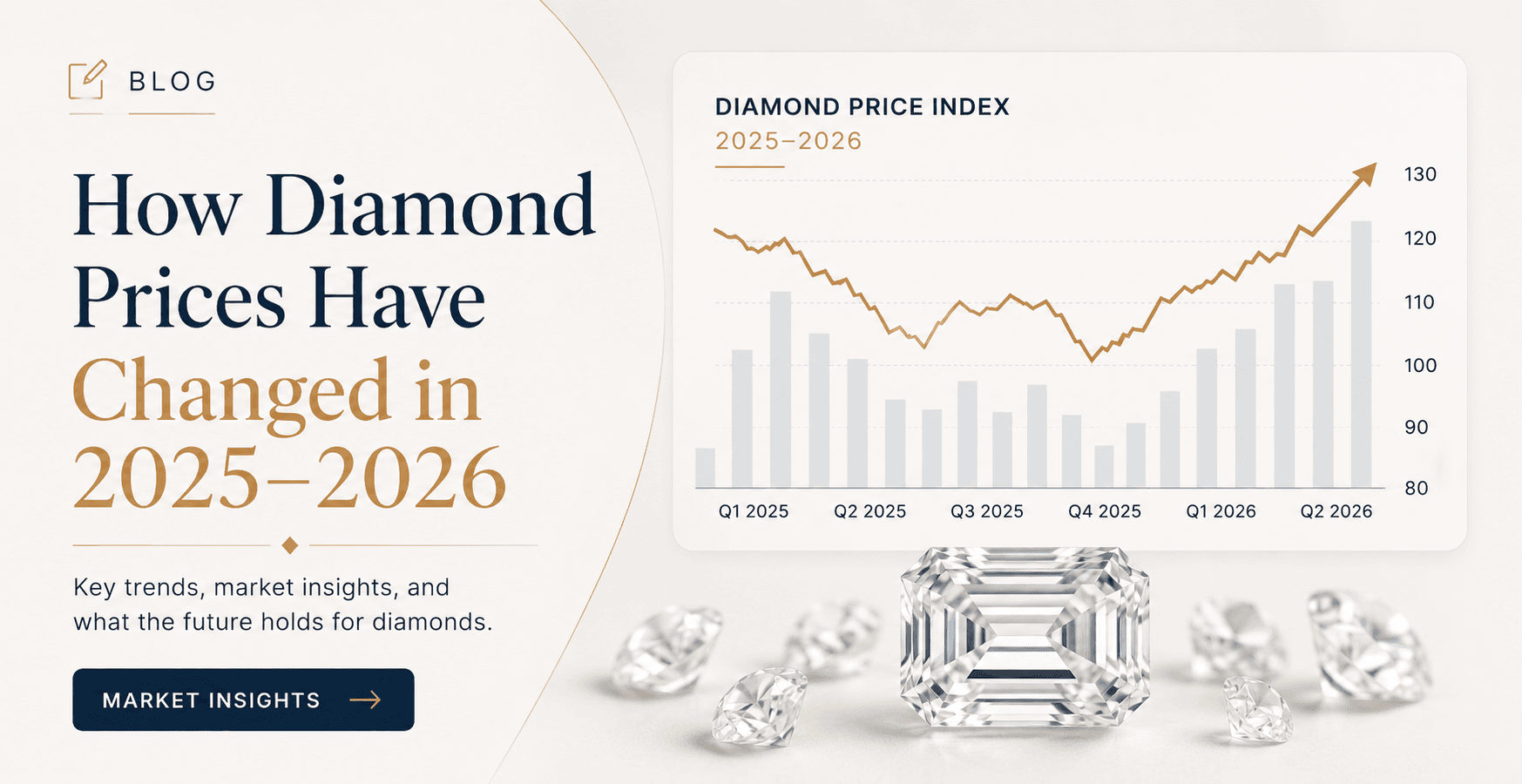
Rapaport’s 2026 RAPI tracks the 10% lowest-priced round diamonds in key quality categories on RapNet. That makes round stones the cleanest benchmark for comparing market movement, even if your final choice ends up being an oval or cushion. When round pricing hardens, fancy shapes often become the more honest value read.
Certification is part of the bill
Diamond price is only half the story; identification and grading shape the rest. GIA’s laboratory-grown diamond service uses a laser inscription on the girdle with the term “Laboratory-Grown” and the GIA report number, and the report itself is digital-only. Lab-grown stones are sold on disclosure and traceability as much as on size, while natural stones trade on a very different kind of rarity and documentation.
GIA’s new analysis and grading fee schedules took effect on April 1, 2026, so the total cost of buying and certifying a stone now reflects more than just the retail sticker.
IGI’s presence in CaratWire’s lab-grown comparison reflects how much the grading layer now shapes perception. A lab-grown diamond with a clean third-party report may be perfectly suitable for modern jewelry, but its value logic is different from a natural stone with the same paper.
What the market is signaling in 2026
In De Beers’ June 2026 industry research, lab-grown diamonds accounted for 15% of US independent jeweler diamond sales in 2025, compared with 85% for natural diamonds. Lab-grown retail prices have been on a downward trend even as volumes keep increasing, helped by fresh supply from China and India.
De Beers ranks natural diamond jewelry as the most desired jewelry item, ahead of lab-grown diamonds, other gems, and plain gold jewelry. That ranking helps explain why average natural diamond jewelry prices kept rising even as the market absorbed more lab-grown volume.
In De Beers’ first-quarter 2026 production report, rough diamond output was 7.1 million carats, up 17%, while 2026 unit-cost guidance remained about $80 per carat. Rapaport identified tariffs, synthetics, and weak consumer sentiment as pressure points that kept values under strain in 2025.
How to read the premium without overpaying
If you want the most defensible natural-diamond purchase, pay for what the market consistently rewards: a round brilliant with strong cut, a respected grading paper, and a size that justifies its jump over the next carat marker. If you want visual impact for less money, a fancy shape can be the sharper buy, especially when it avoids crossing a magic-number threshold. If you want the most carat weight for the dollar and accept that the value story is different, lab-grown makes that bargain obvious.
This article was produced by Prism’s automated news system from verified source data, official records, and press releases, then run through automated quality and moderation checks before publishing. The system is built and supervised by the people who set the standards it runs under. Read our full AI policy.
Know something we missed? Have a correction or additional information?
Submit a Tip