How fancy color diamonds defy the D-to-Z value scale
Fancy color diamonds invert the usual rule: the richest hue, not the whitest stone, often wins. Hue, tone, saturation, and cut decide whether a stone whispers or stops the room.
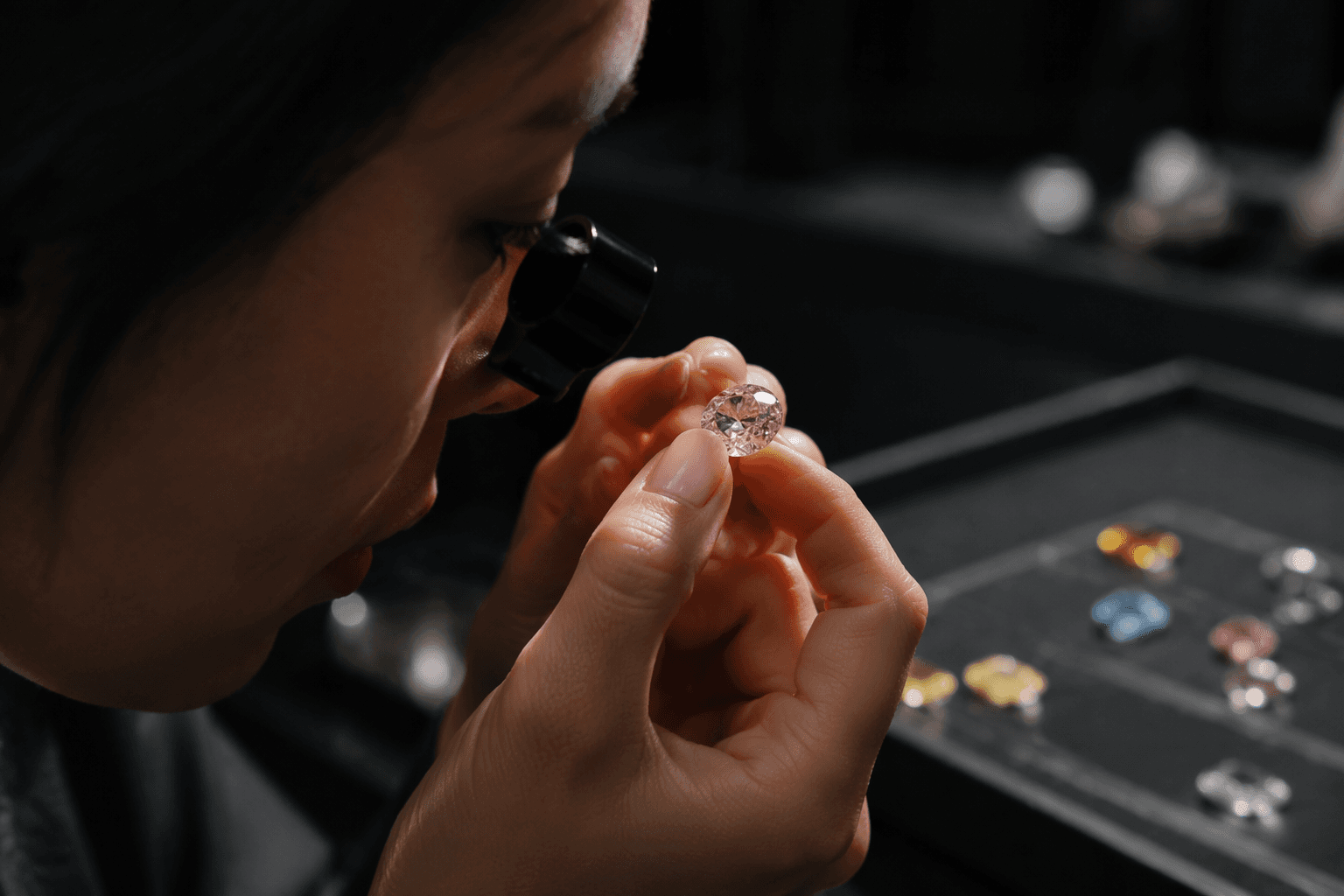
Fancy color diamonds break the logic most buyers learn from colorless stones. Outside the D-to-Z scale, a diamond is judged less by how close it comes to white than by how vividly it owns its color, whether that means yellow, brown, pink, blue, green, or another hue visible face-up. In this market, beauty and value can move in the opposite direction from engagement-ring shopping, which is exactly why the most useful lens is gemological, not conventional.
Why the D-to-Z scale stops making sense
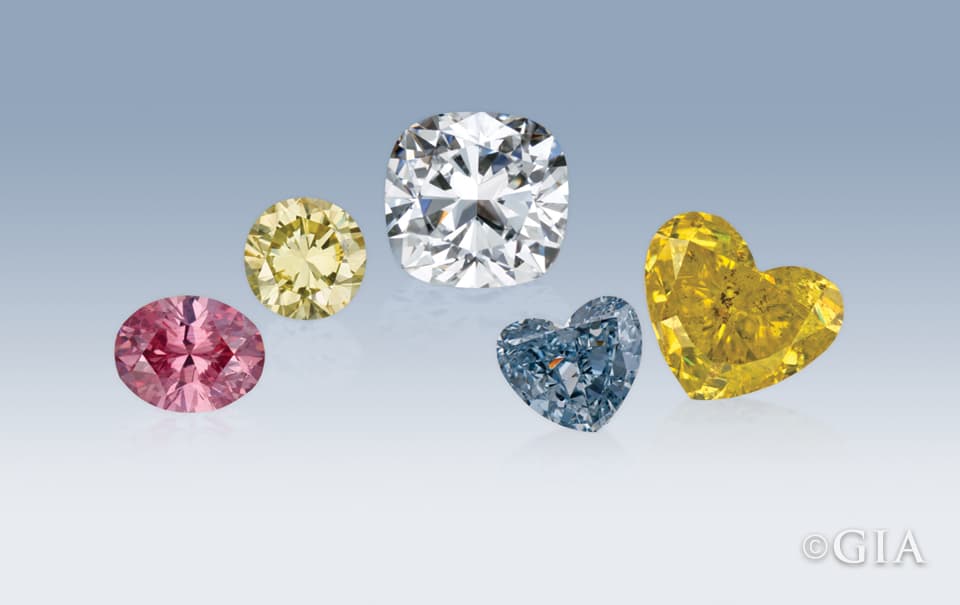
A standard colorless diamond is prized for what it lacks, so the less body color it shows, the more valuable it tends to be. Fancy color diamonds reverse that hierarchy. Once a stone falls outside GIA’s D-to-Z range, it is treated as a colored diamond, and those face-up colors are described in specific fancy-color terms rather than the familiar near-colorless grades.
That category is tiny. One GIA-related estimate puts fancy color diamonds at roughly one in 100,000 stones, which explains why a vivid pink or saturated blue can feel less like a commodity and more like a small geological event. GIA’s own guidance also makes clear that the rarest, most valuable fancy color diamonds are the saturated pinks, blues, and greens.
How GIA actually grades the color
The language of fancy color grading is built on three elements: hue, tone, and saturation. Hue is the color family you see first. Tone describes how light or dark that color appears. Saturation measures the strength or purity of the color, and in fancy stones that intensity often matters as much as the hue itself.
That is why two diamonds that both read as yellow can live in very different price brackets. GIA uses descriptive modifiers such as Fancy Light, Fancy, Fancy Intense, Fancy Vivid, Fancy Dark, and Fancy Deep to show how forcefully the color presents itself. Those words are not decoration; they are the shorthand that tells you whether the stone is airy, rich, or powerfully saturated.
Even very slight differences can make a serious difference in value. A Fancy Intense pink can feel much more arresting than a softer Fancy Light pink, just as a Fancy Vivid yellow will generally read as more electric than a stone with a gentler modifier. The category rewards nuance, and that is what makes it so easy to misread if you approach it with a D-to-Z mindset.
What the color looks like in real jewelry
Fancy color diamonds live or die by face-up appearance. Cut and shape influence how evenly the color spreads across the stone, which means the same rough material can look softer, richer, or more dramatic depending on how it is fashioned. A well-cut stone can concentrate color and make it read more saturated than a poorly proportioned diamond that leaks out its personality.
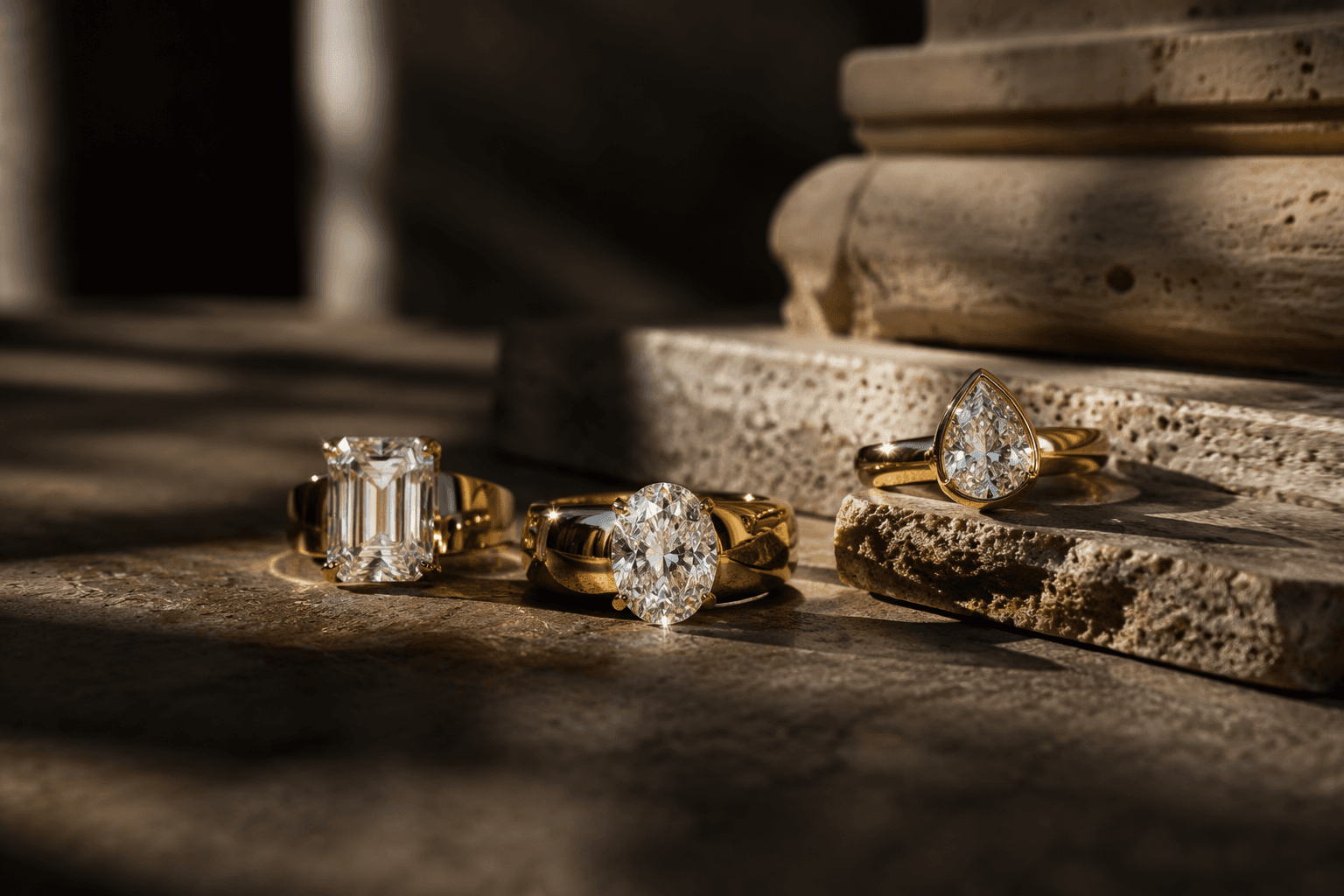
Metal choice changes the mood, too. A yellow diamond in white metal can look crisp and graphic, with the contrast making the color feel cleaner and more obvious. Set the same stone in yellow gold and the look becomes warmer and more blended, which can be beautiful when you want the jewel to feel cohesive rather than stark. Pink and blue stones often appear especially vivid when the setting stays restrained, because the eye has nowhere to go but the diamond itself.
- Fancy Light yellow in a slim bezel or halo can read as soft and polished, the kind of color that feels effortless rather than showy.
- Fancy Vivid yellow in a solitaire or a pared-back three-stone ring turns much bolder, because the saturated color has room to command the hand.
- Fancy Intense pink in white metal can feel romantic but unmistakable, while a pink with a lighter modifier can look delicate and almost blush-like.
- Blue and green fancy stones tend to feel most striking when the mounting stays quiet, because their rarity already gives them presence.
Subtle versus statement-making
If you want understatement, look for lighter modifiers and colors that blend naturally with the setting. Fancy Light and Fancy grades can read as a whisper of color, especially when the diamond is small, elongated, or framed in a setting that softens contrast. These stones suit buyers who want distinction without spectacle.
If you want a jewel that announces itself, saturation is the key. Fancy Intense and Fancy Vivid stones, particularly in pink, blue, and green, carry the most visual charge and are among the rarest and most valuable in the category. In those stones, the point is not to hide the color but to let it bloom, which is why simple mountings often serve them best.
The trick is not to apply colorless-diamond rules to the fancy world. A D-color stone is valued for restraint, but a fancy color diamond is valued for identity. The richer the color reads face-up, the more the piece can feel like wearable art rather than a neutral diamond with a different tint.
Why the market keeps paying attention
The appetite for fancy color diamonds has sharpened in the trade. Rapaport’s 2025 market coverage put fancy colored diamond prices up 205 percent since 2005, a striking reminder that rarity is not just a romantic idea but a measurable force in the market. Auction rooms reinforced that trend in 2023, when color had a notably strong year.
Institutional attention has followed. The Natural Diamond Council released its first fancy colour diamond report in 2025, a sign that the category has moved firmly into the center of public education and collector interest. Fancy colors still sit closer to auction catalogues and specialty jewelers than to mainstream bridal counters, but that distance is part of their appeal: they are diamonds that ask to be seen on their own terms.
The most useful way to judge them is also the simplest: ask how the hue reads, whether the tone supports it, and how strong the saturation feels when the stone is held face-up. Once you start reading fancy color diamonds that way, the old D-to-Z scale stops being the whole story and the stone itself finally becomes legible.
This article was produced by Prism’s automated news system from verified source data, official records, and press releases, then run through automated quality and moderation checks before publishing. The system is built and supervised by the people who set the standards it runs under. Read our full AI policy.
Did this article answer your question?