How Tiffany, Harry Winston and others shaped American diamond jewelry
Tiffany’s six-prong setting, Harry Winston’s rarity, David Webb’s color and Oscar Heyman’s precision turned American diamond jewelry into a modern language of prestige.

American diamond jewelry did not grow out of court privilege or inherited restraint. It was shaped in New York by self-made houses that treated craftsmanship, innovation and gemstone drama as their own kind of luxury code. Tiffany, Harry Winston, David Webb and Oscar Heyman each rewrote the rules in a different register, and together they built the template that still tells modern buyers what prestige should look like.
The American code began with invention, not inheritance
The difference starts in the culture that produced these houses. American jewelry grew in a world shaped by entrepreneurship, industrial innovation and self-made wealth, which encouraged designers to think like inventors as much as decorators. That made the jewel less about ceremonial display and more about technical ingenuity, visible stones and a silhouette that could be recognized from across a room.
European court jewelry prized tradition, hierarchy and a kind of controlled formality. The American approach was more forward-looking: larger stones, bolder proportions, cleaner engineering and a stronger sense that a jewel should express the person wearing it. That shift is why so much of American diamond design feels immediate rather than inherited.
Tiffany turned the engagement ring into a design object
Tiffany’s most influential contribution is also its most deceptively simple. The Tiffany Setting was introduced in 1886, and Tiffany describes it as the first ring design in history to lift the diamond off the band. That technical move changed everything about how a solitaire reads: more light, more height, more visibility, and a diamond that seems to float rather than sit.
The setting also gave the modern engagement ring its essential grammar. Instead of hiding the stone in heavy metal or surrounding it with ornate distraction, Tiffany made the diamond the entire point of the jewel. More than 130 years later, that six-prong silhouette remains one of the clearest examples of how a single engineering decision can become a luxury signature.
Harry Winston made rarity the spectacle
Harry Winston brought a different kind of authority to American diamond jewelry. He founded Harry Winston, Inc. in New York City in 1932, and the house built its identity around rare stones and exceptional colored gemstones. Winston became known as the King of Diamonds because he understood that prestige begins with what is impossible to find, not simply what is expensive to buy.
The house history also points to a defining early move: Harry Winston acquired the Arabella Huntington estate for $1.2 million. That kind of acquisition was more than a business transaction. It signaled a new American logic of luxury, where estate jewels, auctions and private collections could be remade into fresh statements of modern glamour.
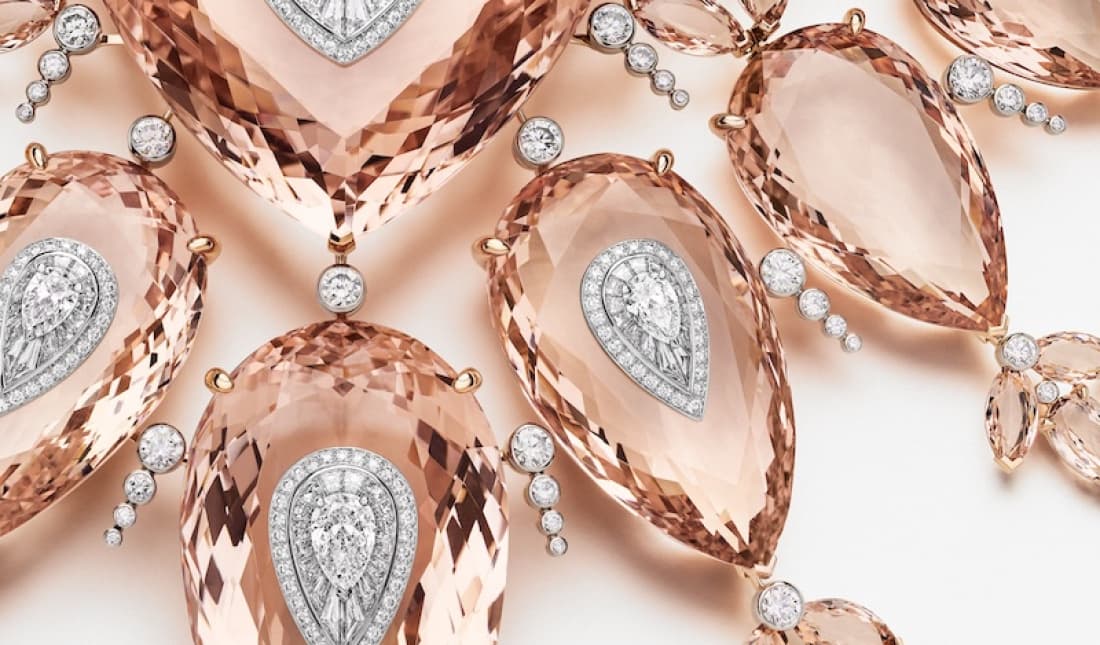
Winston’s early strategy of buying estate jewelry at auctions became a founding pillar of the house, and it still explains much of its appeal. The brand’s prestige rests on provenance, rarity and the drama of extraordinary stones, especially when the gem itself is the celebrity and the setting acts as frame rather than ornament.
David Webb made boldness feel civilized
If Tiffany refined the solitaire and Winston elevated rarity, David Webb pushed American jewelry toward color, personality and exuberance. He founded David Webb Inc. in New York in 1948, after an early background in metalworking and training at the Penland School of Craft. That foundation matters, because Webb’s work never treated jewelry as merely decorative. It was built with the confidence of a maker who understood structure, surface and weight.
Webb’s signature became unmistakable: colorful gemstones, enamel work and animal motifs that made his pieces feel alive. The house embraced statement jewelry at a scale that could dominate a room, but it did so with enough technical control that the pieces never lost their sophistication. In Webb’s hands, boldness was not a gimmick. It was a design principle.
Oscar Heyman proved that technical mastery can be its own luxury
Oscar Heyman & Brothers, founded in 1912 at 47 Maiden Lane in New York City, gave American diamond jewelry another of its defining strengths: engineering precision. The house was started by Oscar, Nathan and Harry Heyman, and Oscar Heyman says eight of the nine Heyman siblings worked for the firm over time. That family structure helped turn the business into a workshop of continuity, where skill passed through generations rather than being outsourced to fashion.
Oscar Heyman became widely recognized for platinum settings and technical mastery. That matters because platinum is not just a precious metal, it is a demanding one, prized for the way it holds stones securely while allowing fine, exacting work. In practical terms, the house helped define the idea that a diamond jewel should be as structurally intelligent as it is beautiful.
Why these houses still set the terms
These brands did more than create iconic pieces. They established the rules that modern diamond jewelry still follows: elevate the stone, refine the setting, make the silhouette legible and let personality drive the design. Tiffany taught the market to read a ring through its architecture. Harry Winston made rarity and provenance part of the fantasy. David Webb showed that color, enamel and animal form could carry luxury with the same force as a diamond solitaire. Oscar Heyman proved that invisible precision is part of visible prestige.
That is why today’s diamond houses still sell through signatures. A recognizable prong count, a distinctive mounting, a bold colored-stone composition or a jewel that feels engineered rather than merely decorated all trace back to this American inheritance. The most enduring lesson from these houses is not that diamonds should look rich, but that they should look deliberate, inventive and unmistakably personal.
American diamond jewelry earned its authority by refusing to imitate old-world reserve. It made room for scale, engineering and self-expression, and in doing so created the modern language of prestige that still governs the way diamonds are seen, worn and coveted.
This article was produced by Prism’s automated news system from verified source data, official records, and press releases, then run through automated quality and moderation checks before publishing. The system is built and supervised by the people who set the standards it runs under. Read our full AI policy.
Did this article answer your question?